
Reviewed · SCUBA DIVING
Catania: Scuba Diving Experience
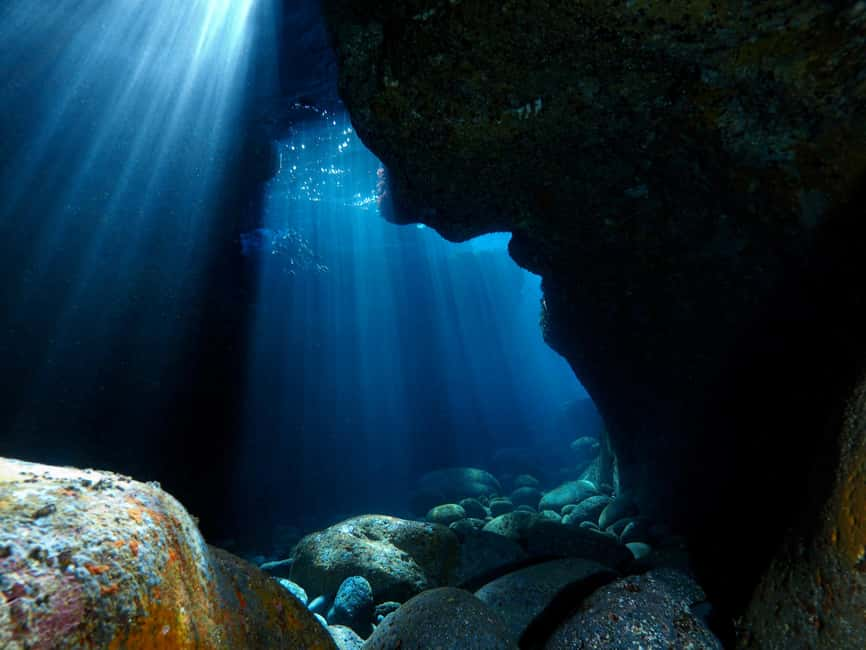
Catania’s volcanic coast gives this first scuba experience a fine setting: you descend only as far as 5 meters, then move above ancient lava flows, past underwater volcanic shapes, and among fish and perhaps octopus. It is a gentle introduction rather than a serious expedition, but the seabed has real character.
I like the small groups, limited to six, and the careful instructors. Samantha is especially good at calming nervous beginners, while Bruno and Vicki also receive praise for their patient, friendly teaching. I also like that the full kit, a snack, and photos are included.
The main consideration is the short format. Two hours includes registration, equipment, instruction, time in the water, and a follow-up, so your underwater time is limited. At $94 per person, the price is reasonable for a guided first experience, though it may feel high if you already have scuba training.
Key Points
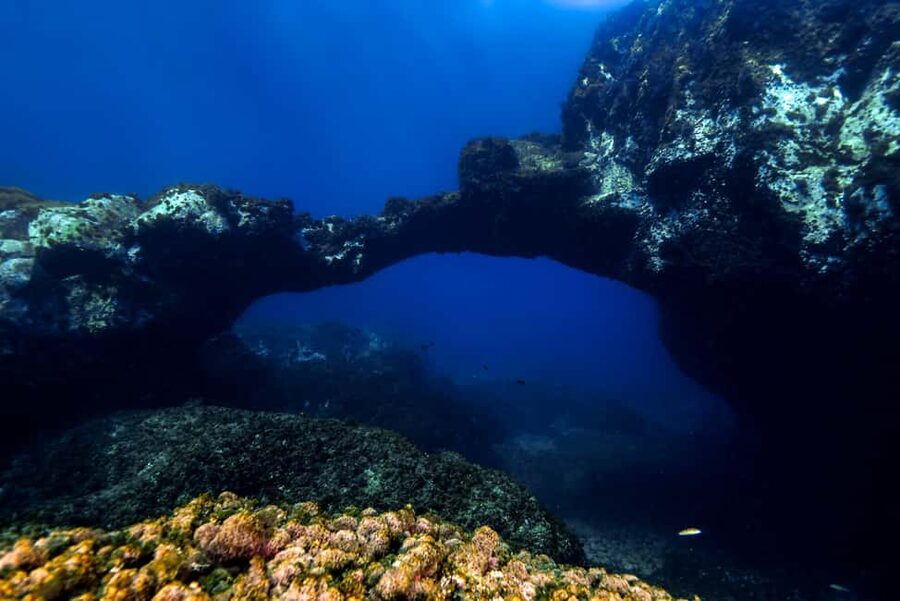
- Lava-shaped seabed: See underwater rock forms created by ancient flows, including lava that reached the sea about 15,000 years ago.
- Beginner-friendly depth: The session reaches a maximum of 5 meters, with an instructor beside you throughout.
- Patient personal support: Samantha, Bruno, and Vicki are among the instructors praised for clear explanations and calm help.
- Small group setting: No more than six participants means closer attention and less waiting.
- Marine life at close range: Fish and octopus may appear among the caves and lava formations.
- Easy but important planning: Bring a swimsuit, towel, and flip flops, and avoid Etna or flying for at least 12 hours afterward.
Catania’s Lava Coast Underwater
The appeal here is not simply putting on a tank and breathing underwater. Catania’s coast was shaped by fire, and the old lava flows continue below the Ionian Sea. The seabed has rough volcanic forms, openings, and submerged caves that give the setting more interest than a flat sandy bottom.
The most recent lava flow to reach the sea in this area dates to roughly 15,000 years ago. That gives the experience a useful sense of place. You are not looking at an artificial training pool or a generic patch of water. You are learning the basics of scuba above the geological remains of Sicily’s volcanic past.
At a maximum depth of 5 meters, this is designed for a first attempt. You will not be heading into a dark, distant underwater world. Instead, the instructor can keep close watch while you get used to breathing through a regulator, moving with fins, and managing the unfamiliar feeling of being below the surface.
That shallow depth matters if you feel nervous. Several people needed extra time at the beginning to settle their breathing, and the instructors were able to stop, explain, and offer reassurance. One participant found that air was used faster than expected, but the instructor stayed cautious and attentive. This is exactly the sort of support you want when your body is still learning what to do.
More Scuba Diving in Italy
- Polignano a Mare boat tour emotions, caves, diving and appetizers
★ 5.0 · 1,022 reviews - Catania: Gulf Scuba Diving Tour with Marine Biologist
★ 4.9 · 212 reviews - Diving for patented divers
★ 5.0 · 175 reviews
Meeting at Camping Jonio
You meet inside Camping Jonio in Catania, at the Jonio Pro-Dive Catania center. The setting may surprise you if you expect a polished marina office. One participant specifically advised not to be put off by the camping location. The practical point is simple: follow the meeting instructions carefully and allow enough time to find the center.
Once you arrive, you introduce yourself, register, and check in. The team then provides the equipment and explains how it works. You will receive a wetsuit, mask, fins, buoyancy jacket, regulator, tank, and weights.
The staff can teach in Italian, English, French, Spanish, or German. That language range is useful for a technical activity, since small misunderstandings about breathing or equipment can make a nervous beginner less comfortable.
The group limit of six is another practical advantage. You are not being processed in a large crowd, and the instructor has a better chance to notice if you need help with your mask, breathing, or position in the water. If you and a partner book together, the small format also makes it possible to enter the water together, as one couple did.
Learning the Equipment Before Entering the Water
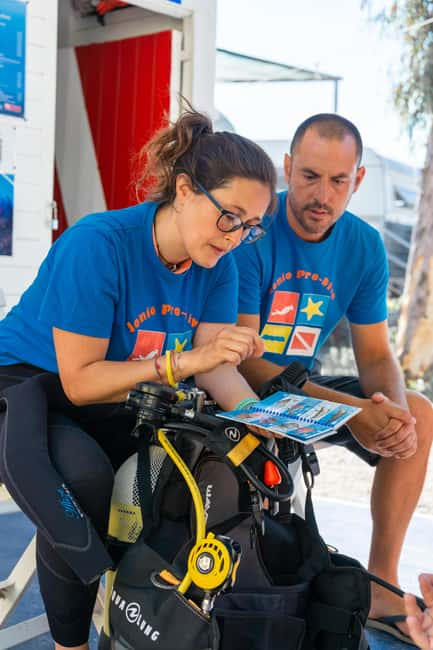
The briefing is an important part of the experience, not filler before the main event. The instructor explains the equipment and what will happen in the water. You learn the basic steps before you are asked to manage them below the surface.
For a first-time participant, the regulator takes the most getting used to. Breathing through your mouth while your nose is covered can feel odd, especially if you are already tense. One useful tip from a past participant is not to arrive with a blocked nose. That may sound minor, but breathing comfort matters a great deal when you are trying to relax underwater.
The wetsuit, mask, fins, buoyancy jacket, regulator, tank, and weights are supplied. You need to bring your own swimsuit, beach towel, and flip flops. Pack the towel even though it sounds obvious. You will appreciate having something dry after the water portion and the equipment removal.
The instructor’s manner matters as much as the gear. Samantha receives repeated praise for clear English, patience, and a calm approach with people who were frightened at first. Vicki is also praised for helping a nervous participant settle down, while Bruno is remembered as a reassuring guide who helped people feel comfortable.
Your First Minutes Below the Surface
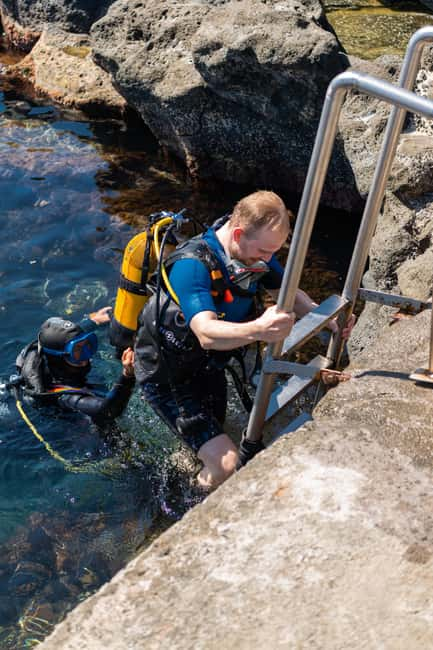
The entry into the water is the emotional center of the session. You may feel excited while still wondering if you can breathe normally. The staff’s job is to help you move through that first awkward stage without rushing.
Expect a gradual introduction rather than an immediate push into deeper water. The maximum depth is 5 meters, and the activity is conducted with an instructor. If you need to pause and regain your breathing rhythm, the format allows for that kind of help.
This is where the small group earns its keep. One participant became panicked at first, then managed to enjoy the full session after a few calm instructions. Another had trouble breathing comfortably and needed repeated assistance. Those details are useful because they show that beginner nerves are not treated as a nuisance.
Once your breathing settles, your attention can shift outward. The water becomes less about the equipment and more about the scene around you. You can look at the volcanic seabed, move over lava formations, and watch marine life in its natural surroundings.
Another way to get in the water in Italy:
- Diving for certified divers with PADI 5* Diving Resort – Taormina
★ 5.0 · 167 reviews - TuffAlcantara – dives, slides and lots of fun in the Alcantara river
★ 5.0 · 106 reviews - Exciting PADI Discover Scuba Diving Experience Isola Bella Marine Park Taormina
★ 5.0 · 96 reviews - Sea Baptism Scuba Experience in Polignano a Mare
★ 5.0 · 87 reviews
Lava Flows, Caves, Fish, and Octopus
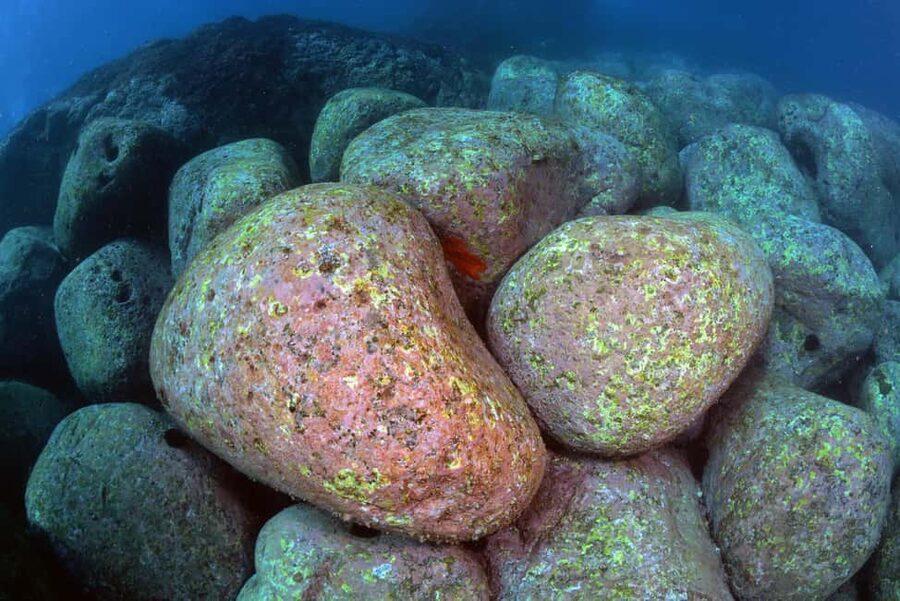
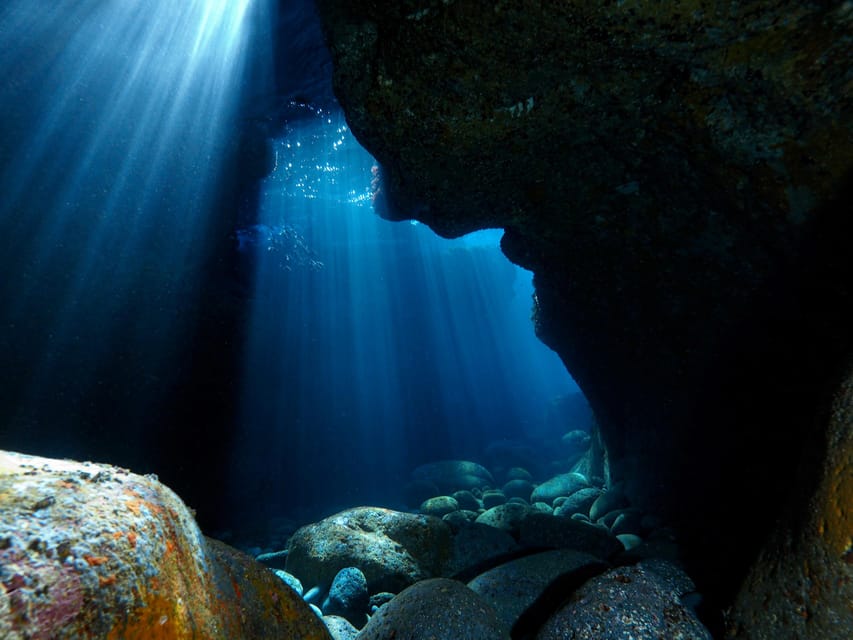
The underwater setting has three main points of interest: the lava flows, submerged caves, and marine life. The old lava gives the seabed its shape, with hard volcanic rock replacing the soft, open feel you might expect from a sandy coastal swim.
The caves add a little drama, though you should keep your expectations sensible. This is a shallow introductory session, not an extended cave exploration. You will see underwater openings and rock forms while staying under close instruction.
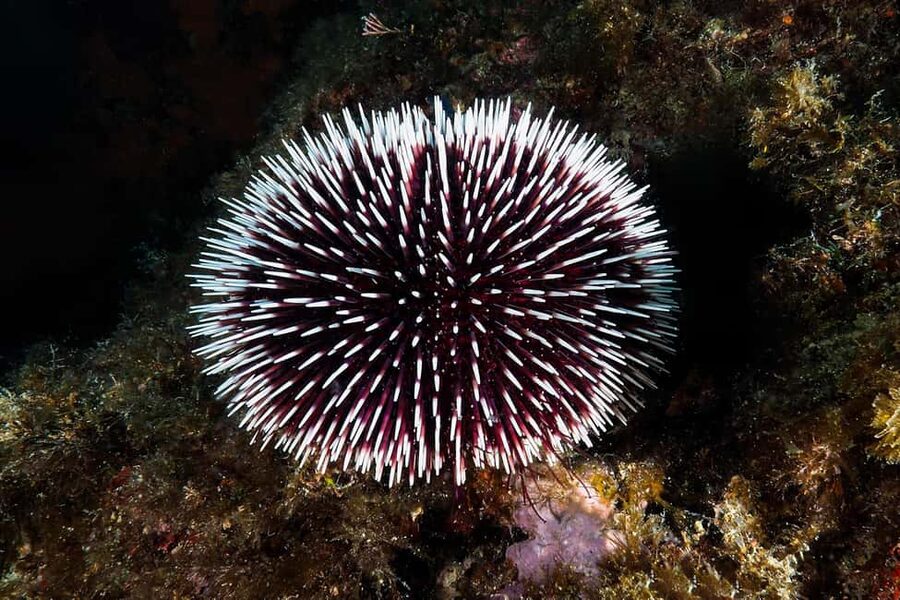
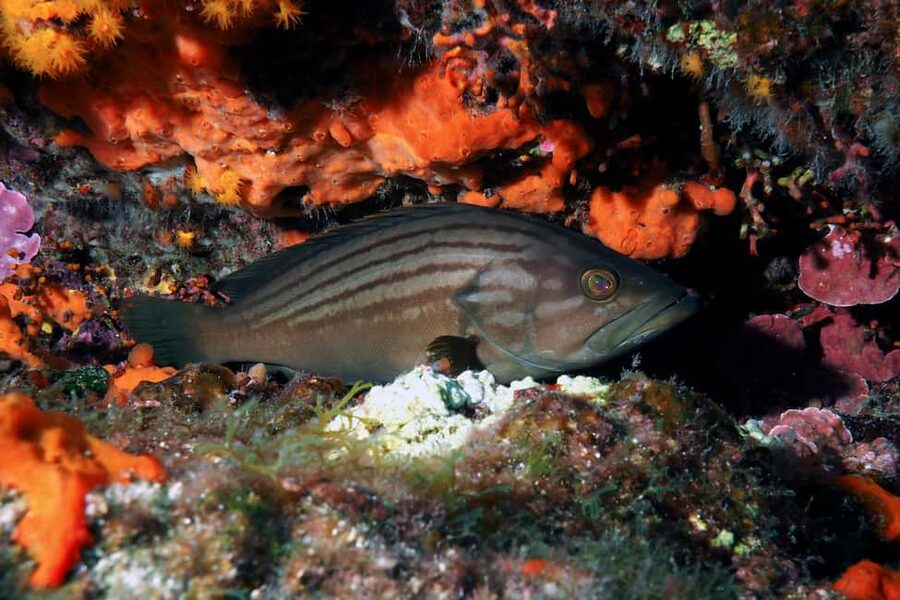
Fish are a major part of the appeal. One participant described seeing several kinds of fish and an octopus at close range. You might find marine life moving among the volcanic formations, but no wildlife sighting can be guaranteed. The value is in seeing how the animals use the rock and shelter around them, not in checking off a particular species.
I like the way the geology and biology work together here. You are not simply looking at fish in open water. The old lava creates the structure, and that structure gives the marine life places to move, hide, and feed. Even on a short outing, the setting offers more than a basic lesson beside a flat shoreline.
Visibility, conditions, and sea life can vary. The information provided does not promise a particular water temperature, exact route, or species list, so you should book this for the chance to explore Catania’s underwater coast rather than for a fixed wildlife program.
What Two Hours Really Includes
The advertised duration is two hours, but that does not mean two full hours underwater. Your time includes arrival, registration, fitting the equipment, the technical briefing, the water session, removal of the kit, and a final debriefing.
That is normal for a beginner activity. Learning to use the equipment safely takes time, and it would be a poor bargain if staff rushed through those steps just to increase underwater minutes.
After leaving the water, you regroup for a debriefing. The team offers a snack and takes the usual photos before saying goodbye. Those extras make the outing feel like a complete short activity rather than a bare equipment rental.
Still, keep the scale in mind. If you already hold scuba qualifications and want a long underwater route, this will probably feel limited. The 5-meter ceiling and two-hour schedule are aimed at newcomers who want a safe introduction, not experienced participants looking for technical challenges.
Is $94 a Fair Price?
At $94 per person, the cost sits in the reasonable range for a guided first-time scuba session, especially because the main equipment is included. You do not need to rent a wetsuit, regulator, tank, mask, fins, buoyancy jacket, or weights separately.
The value also comes from the instructor attention. A small group of six is more useful for a beginner than a cheaper session with a large crowd. If you are worried about breathing, equalizing, or moving correctly, personal help can make the difference between enjoying the experience and spending the whole time feeling overwhelmed.
The included snack and photos are pleasant additions, but they are not the reason to book. The real value is the guided access to a volcanic underwater site with the full kit provided.
You should also compare the price with your own goal. For a one-time holiday activity, $94 buys a memorable introduction in a distinctive setting. If you already know scuba and want a longer or deeper underwater route, you may prefer a more advanced outing. This session is priced for support and simplicity, not for maximum underwater distance.
Who Will Enjoy This Most
This is best suited to a healthy adult or child aged 10 and over who wants to try scuba for the first time. You must be able to swim, and the activity is not suitable for non-swimmers or pregnant women.
It is a good choice if you feel curious but slightly apprehensive. The instructors have a strong record of helping people who panic during the first minutes. Samantha’s calm support is especially useful if you worry that fear will take over once your face is in the water.
It also suits couples or friends who want to share a new activity. A couple was able to enter the water together, and the six-person limit keeps the group from feeling anonymous.
I would be more cautious about booking it if your main aim is a long exploration or a deep descent. The maximum depth is 5 meters, and the session is intentionally gentle. That is a strength for beginners, but a limitation for certified scuba users.
Timing, Health, and the Etna Rule
You need to be in good health for the activity. The operator also gives a clear post-session rule: do not climb above 600 meters for at least 12 hours after scuba.
That matters in Sicily because Etna is a natural part of many Catania itineraries. It also matters if you plan to fly soon afterward. You need to leave enough time between this activity and any flight or high-altitude visit.
The practical answer is to schedule the underwater session toward the middle of your stay, or at least before your final 12 hours if you have a flight or Etna trip planned. Do not treat this as a minor footnote. A good itinerary protects the time needed after the session.
Cancellation is flexible up to 24 hours before the start time for a full refund, and you can reserve now and pay later. That helps if your Catania plans are still shifting, though the health and altitude rules remain important even with flexible booking.
Should You Book It?
Book this experience if you want a short, well-supported introduction to scuba in a setting shaped by volcanic activity. The shallow depth, small group, full equipment package, and calm instructors make it particularly suitable for nervous beginners.
The strongest reason to choose it is the human support. Samantha, Bruno, and Vicki are praised for patience, clear explanations, and steady encouragement. That can matter more than the scenery when you are taking your first breath underwater.
Skip it if you cannot swim, are pregnant, are under 10, or need to climb Etna or fly within 12 hours afterward. Also think twice if you already have experience and want a longer, deeper route.
For a first attempt, though, $94 is a fair price for a carefully supervised look at Catania’s lava coast. You get the equipment, the instruction, a small group, the underwater session, a snack, and photos. Just bring your swimsuit and towel, arrive ready to learn, and give yourself enough time before your next high-altitude plan.
FAQ
Where does the scuba experience meet?
You meet at the Jonio Pro-Dive Catania center inside Camping Jonio in Catania.
How long does the experience last?
The activity lasts two hours, including registration, equipment preparation, instruction, the water session, debriefing, a snack, and photos.
How deep will I go?
The maximum depth is 5 meters.
Is equipment included?
Yes. The package includes a wetsuit, mask, fins, buoyancy jacket, regulator, tank, and weights.
What should I bring?
Bring a swimsuit, beach towel, and flip flops. These items are not included.
What languages can the instructor speak?
Instruction is available in Italian, English, French, Spanish, and German.
Can I go if I am nervous or have never tried scuba before?
Yes, the experience is designed as a supervised first session, but you must be in good health and able to swim. It is not suitable for children under 10, pregnant women, or non-swimmers.
Newest dives added in Italy
- Scuba diving in Calabria, Italy★ 5.0 · 23 reviews
- Discover Scuba diving in Calabria, Italy★ 4.5 · 3 reviews
- Discover Scuba Diving PADI – Trial dive in Sorrento★ 5.0 · 2 reviews
- Double dive in the Punta Campanella Marine Protected Area★ 5.0 · 11 reviews
- Guided diving for beginners without certification from Sorrento★ 5.0 · 22 reviews
- Try Scuba Dive (baptism of the sea)★ 5.0 · 5 reviews
- Scuba Diving Experience in Taormina★ 5.0 · 20 reviews
- Syracuse: Ortigia Deep Dive Cultural Tour (max 6 Guests)★ 5.0 · 9 reviews
Scuba Diving, compared.
Great Barrier Reef Snorkeling and Diving Cruise from Cairns
Read our review →
First-Time Scuba Diving in Honolulu + Free Videos
Read our review →
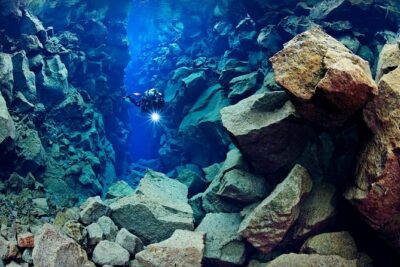
Diving Between Tectonic Plates – Meet on Location
Read our review →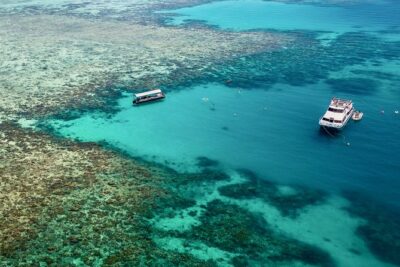
Ocean Freedom Great Barrier Reef Luxury Snorkel and Dive Cruise
Read our review →
Beginner Scuba Diving with Turtles and Videos, San Juan
Read our review →
Your First Scuba Diving Experience in Turtle Area
Read our review →
Browse the lists this dive appears in