
Reviewed · PADI COURSES & CERTIFICATION
Barcelona: PADI Scuba Diver Course Certification Training
Barcelona offers a practical way to earn PADI Scuba Diver certification in one long day. You begin with classroom instruction at 9:00am, then move to three supervised underwater sessions where you practice the skills you have just learned. By 7:00pm, you are scheduled to receive your certification.
I like the small group size, limited to six people, because learning to manage breathing, equipment, and underwater communication takes personal attention. I also like the calm teaching style reported from instructors such as Pau and Alex, who took time to explain things again when needed. The main drawback is the water itself: visibility may be poor, and there may not be much marine life to see at the training site.
Key points to know before booking
- Three practical sessions in one day: You learn the basics in the morning, then practice them with a PADI instructor.
- Small groups of up to six: This gives you more direct support than a crowded introductory class.
- Instructors speak three languages: Teaching is available in Spanish, English, and Italian.
- The full schedule runs from 9:00am to 7:00pm: Plan on a demanding, all-day activity rather than a short beach outing.
- You must wait 24 hours before flying: Schedule this course near the beginning of your trip, not just before your flight home.
- Water conditions affect the experience: The training remains useful, but visibility and marine scenery may be limited.
What this Barcelona course actually gives you
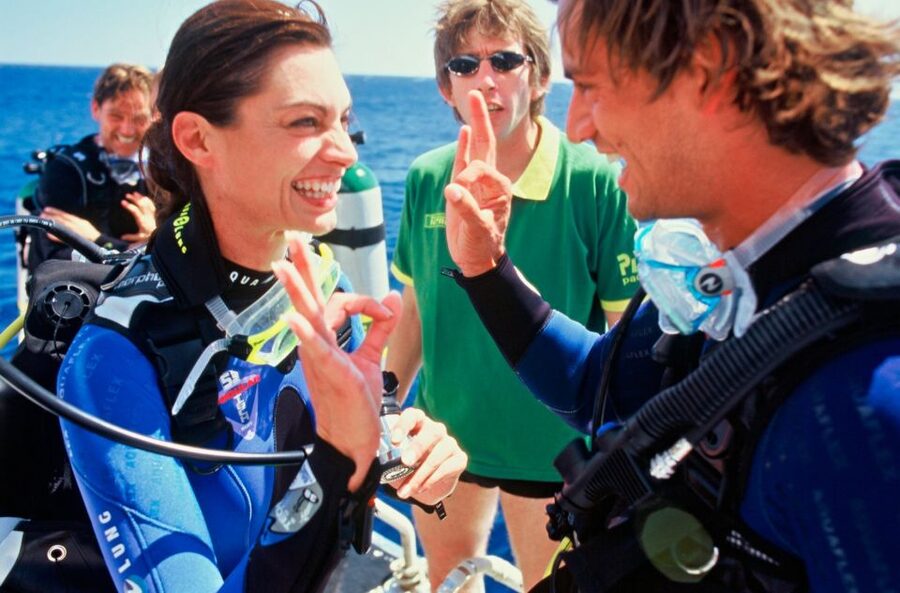
This is not a casual try-out with a quick swim and a few minutes below the surface. It is a structured PADI training course designed to give you basic scuba skills and certification after three practical sessions.
The day combines theory with hands-on practice. You first learn how the equipment works, how to communicate underwater, and how to behave safely in the water. Then you use that information with an instructor beside you.
The course description says you will finish as a certified PADI Scuba Diver. That matters if you want to continue with scuba activities in other places, since the certification is intended for use around the world. You should still understand the nature of the course: it is a beginner qualification, not advanced training.
I see this as a useful choice for someone who wants a proper starting point but has limited time in Barcelona. You do not need to spread the course over several days. The tradeoff is a very long day, with little room for a relaxed beach break or sightseeing between sessions.
More PADI Courses in Spain
- Barcelona: PADI Discover Scuba Diving
★ 4.7 · 1,016 reviews - Tossa de Mar: PADI Discovery Scuba Diving in Costa Brava
★ 4.7 · 392 reviews - Try Dive – PADI Discover Scuba Diving in Tenerife
★ 5.0 · 214 reviews
Starting at the iDive BCN office
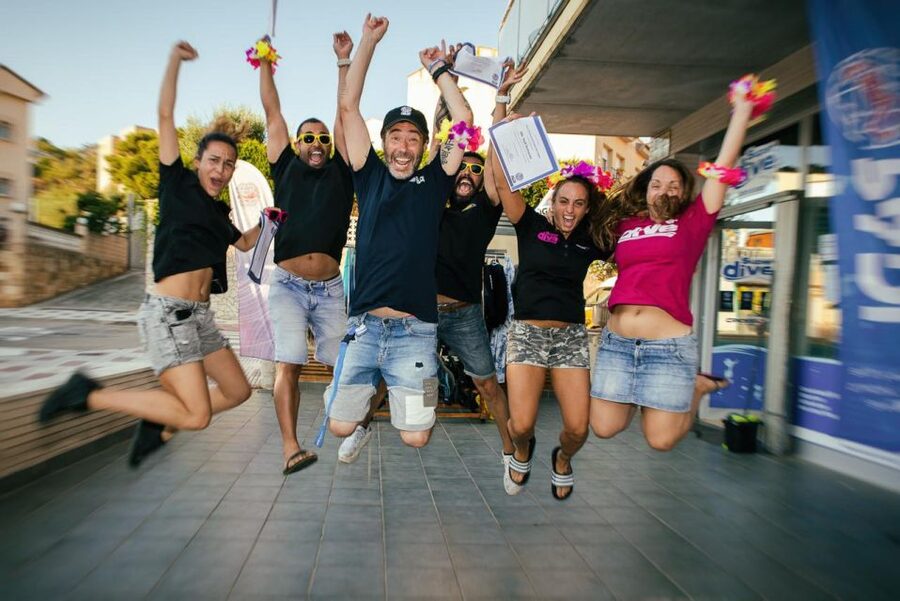
You meet at the iDive BCN office at Avinguda Diagonal, 72. The day begins at 9:00am, and you need to arrive 15 minutes early.
Take that arrival rule seriously. Anyone who arrives after the activity begins may be refused entry, with no refund or rescheduled appointment. The early arrival also gives you time to complete the required medical form without turning the morning into a rush.
At this point, you should have your swimwear, towel, and beachwear ready. Food and drinks are not included, so plan ahead for the long day. The supplied information does not specify meal breaks or food arrangements, so do not assume lunch will be provided at the training site.
The staff will also check your medical answers. If the questionnaire indicates that you need medical permission, you will not be allowed to take part. The stated requirements say you must be in good health and not taking medication prescribed by a doctor. This is strict, so check your situation before paying rather than hoping the issue can be sorted out on the morning.
The 9:00am theory session
The classroom portion is the foundation of the day. You learn what the equipment does, how to use it safely, and how to communicate underwater.
That communication lesson is especially important. Once you are below the surface, ordinary speech is not an option. Hand signals and clear attention to your instructor become central to the activity. The theory session gives you the language and procedures needed for the practical work.
You also learn in a controlled setting before dealing with the water. That order helps reduce confusion. Instead of receiving instructions while trying to manage a mask, breathing equipment, and movement at the same time, you have already heard the basic guidance.
This is where a patient instructor makes a real difference. Pau received particularly strong praise for explaining material clearly in English and calmly repeating points when someone needed more help. That approach is valuable for beginners, especially if you are nervous or have never used scuba equipment before.
The course is offered in Spanish, English, and Italian. If language affects your comfort or safety, select the option that lets you understand instructions without hesitation.
Three supervised underwater sessions
After the theory, you go to the water point for three separate practical sessions. The instructor guides you through the skills discussed earlier and watches as you put them into practice.
The supplied information does not list every individual exercise, so I would not expect a detailed public breakdown of each session. The important point is the progression: learn the procedure, practice it under supervision, and build confidence through repetition.
Three sessions in one day can be useful because the instruction stays fresh. You do not have to remember a lesson from several days earlier. On the other hand, the schedule is concentrated. By the final session, you may be tired from the early start, the equipment, and the steady focus required underwater.
Your instructor is there to keep the process controlled. Alex was praised for making participants feel comfortable and safe, and for adjusting the timing around weather and personal needs. That flexibility can help, although the advertised schedule still runs from morning until 7:00pm.
The training area is not presented as a major sightseeing site. One participant found the water visibility poor and saw little around the site, while still enjoying the staff and the activity. That is useful context: book this primarily to learn and qualify, not because you are guaranteed a spectacular marine view.
Another way to get in the water in Spain:
- Tenerife: Your First Scuba Diving Experience in Turtle Area
★ 4.7 · 1,679 reviews - Mallorca: Discover Scuba Diving for Beginners
★ 4.7 · 805 reviews - Lanzarote Introductory Scuba Diving Experience
★ 5.0 · 766 reviews - Tenerife: Beginner’s Dive at a Spot with Turtle Sightings
★ 4.7 · 627 reviews
What the underwater setting may be like
Barcelona gives you a convenient place to learn, but the local water conditions may not deliver the clear, colorful views associated with famous scuba locations.
Visibility can change, and the available information specifically warns that the water sight may be poor. You might find the underwater scenery limited. This does not cancel the value of the course, since the main purpose is skill training, but it can affect your expectations.
If you are choosing between this course and a dedicated marine-life excursion, think carefully about your priority. This program is better suited to earning a qualification and learning basic procedures. It is less certain as a wildlife-viewing outing.
The modest scenery may actually keep your attention on the skills. You can focus on breathing, signals, equipment, and safe movement instead of treating the session as a sightseeing trip. Still, anyone booking mainly for fish, reefs, or excellent visibility should ask about current water conditions before committing.
Videos and photos are not included. If you want a record of the day, ask the provider about those options before the course, since the supplied information does not include image service in the price.
Is $312 a fair price?
At $312 per person, the cost is not low, but it includes the equipment and PADI certification. It also pays for a full day of instruction, theory, and three supervised practical sessions with a small group.
The value depends on your goal. If you want only a short introduction to scuba, the price and ten-hour schedule may feel excessive. If you want a formal qualification that you can use for future scuba activities, the included certification makes the price easier to justify.
The group limit of six is another important part of the value. A cheaper class with a large crowd may give you less direct attention, which is not where I would cut costs when learning a water activity. Personal guidance matters most when you are still figuring out equipment and underwater signals.
Remember the extras. Lunch, drinks, photographs, and videos are not included. Bring what you need for the day and budget for food separately. The course includes equipment, so you do not need to bring your own scuba set.
The provider offers free cancellation up to 24 hours before the activity and a reserve-now, pay-later option. Those policies give you some flexibility, but they do not protect you from arriving late or failing the medical screening. Late arrival and health-related refusal do not qualify for a refund or a new appointment.
The instructors shape the day
A beginner course depends heavily on the instructor. Equipment can be supplied and the schedule can be printed, but you need a teacher who can explain clearly and remain calm when a new skill takes time.
Pau is noted for patient explanations and strong English communication. He made sure each person understood the material and did not pressure anyone to hurry. That style suits first-time participants who need to hear a procedure more than once.
Alex also received praise for creating a safe, comfortable atmosphere and adapting the schedule to weather and individual needs. Since weather can influence water activities, that flexibility is useful.
There is no promise that you will be assigned Pau or Alex. They are examples of the teaching approach available through the school, not a guaranteed instructor selection. If a particular language or concern matters to you, contact the provider before booking.
The group size also helps. With no more than six participants, you are not simply following a large crowd. You have a better chance of getting corrections and answers during the practical work.
Who should take this course?
This suits adults and older teenagers who want a fast route into basic scuba training and can handle a full day of instruction.
It is especially useful for:
- First-time participants who want formal instruction rather than a brief trial
- People planning future scuba activities in other destinations
- Visitors who can spare one full day in Barcelona
- Anyone comfortable learning in a small group
- Participants who understand that training value matters more than guaranteed marine scenery
The course is not suitable for children under 12 or people over 70. It is also not suitable for pregnant women, wheelchair users, or people with mobility, back, heart, respiratory, or diabetes-related conditions.
The restrictions also cover people with pre-existing medical conditions and recent surgery. Since the final decision is tied to the medical questionnaire, you should be honest and check with the provider if you have any doubt. Do not treat this as a minor formality.
People taking prescribed medication are also told not to participate. If that applies to you, clarify eligibility before booking.
Planning the rest of your Barcelona trip
This course takes most of the day. You start at 9:00am and finish at about 7:00pm, so do not pair it with an important afternoon museum reservation, a long-distance train, or a fixed evening commitment.
You must also wait at least 24 hours before flying. That is one of the most important planning details. Schedule the course early enough in your trip to leave a full day before your flight home.
The rule also affects anyone arriving in Barcelona by air. If you land in the morning, you will not be able to take the course immediately unless the timing and health requirements work for you. The available information does not provide a detailed transfer plan, so give yourself plenty of time to reach Avinguda Diagonal, 72.
Bring swimwear, a towel, and beachwear. Bring food or arrange a meal, since none is included. Alcohol and drugs are not allowed, and you should arrive ready for a serious training day rather than a casual party outing.
Should you book the Barcelona PADI course?
Book it if your main aim is to gain basic PADI certification in a single day, learn with a small group, and receive close instruction in English, Spanish, or Italian. The patient approach associated with instructors such as Pau and Alex is a strong reason to consider it, especially if you feel unsure about your first time underwater.
Think twice if your main goal is spectacular scenery or abundant marine life. Visibility may be poor, and the training site may offer little to see. You should also avoid booking if the medical rules apply to you, if you cannot manage a long day, or if you need to fly within 24 hours.
For the right participant, the $312 price includes the key pieces: equipment, instruction, three supervised sessions, and certification. I would book this as a qualification course with an underwater component, not as Barcelona’s most scenic marine excursion.
FAQ
Where does the course begin?
You meet at the iDive BCN office at Avinguda Diagonal, 72.
What time does the course start?
The course starts at 9:00am. You must arrive 15 minutes before the scheduled start.
What time does the course finish?
The full day is scheduled to finish at 7:00pm.
How many underwater sessions are included?
The course includes three separate practical underwater sessions with a PADI-certified instructor.
Is scuba equipment included?
Yes. Diving equipment is included in the price.
Is the PADI certification included?
Yes. PADI certification is included, and the course description says you will be certified as a PADI Scuba Diver after completing the training.
What languages are available?
Instruction is available in Spanish, English, and Italian.
How large is the group?
The group is limited to six participants.
What should I bring?
Bring swimwear, a towel, and beachwear. Food and drinks are not included, so plan for those separately.
Can I fly after the course?
You must wait 24 hours before flying after completing the course.
Who cannot take part?
The course is not suitable for children under 12, people over 70, pregnant women, wheelchair users, or people with back, mobility, heart, respiratory, diabetes, recent surgery, or other pre-existing medical conditions. The stated requirements also say participants must be in good health and not taking medication prescribed by a doctor.
Newest dives added in Spain
- Scuba Diving in Turtle and Ray Area★ 5.0 · 7 reviews
- Scuba Experience in Tenerife with Guide★ 5.0 · 30 reviews
- Try Scuba Diving Puerto Colon★ 5.0 · 2 reviews
- Try Dive in Abades Bay with a private instructor★ 4.0 · 4 reviews
- First Dive Experience in Tenerife★ 4.5 · 69 reviews
- Scuba Adventure – 2 Guided Dives from Our Boat in Tenerife★ 5.0 · 12 reviews
- Tenerife Under The Sea – dive into 1-1 personalised experience★ 5.0 · 15 reviews
- Scuba Diving for Certified Divers in Costa Adeje★ 5.0 · 69 reviews
PADI Courses & Certification, compared.
Tossa de Mar: PADI Discovery Scuba Diving in Costa Brava
Read our review →
Full-Day Beginner Scuba Course with Private Tuition, Racha Yai
Read our review →
Heraklion: Beginner Scuba Diving Lesson with PADI Instructor
Read our review →
Discover Scuba Diving with No Certification in St Thomas
Read our review →
Try Dive – PADI Discover Scuba Diving in Tenerife
Read our review →
Browse the lists this dive appears in