Reviewed · SCUBA DIVING
Hartley Helmet Diving in Bermuda
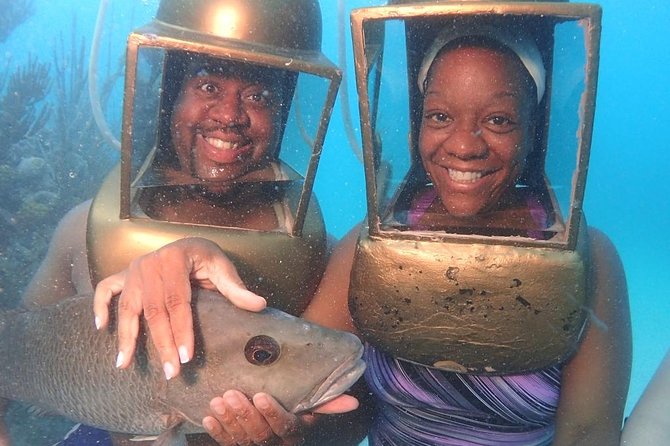
Hartley Helmet Diving lets you walk on Bermuda’s ocean floor without learning to snorkel or use standard scuba gear. You descend from the boat, hold a grab bar, and stroll or kneel over a sandy seabed surrounded by coral, snapper, hogfish, eels, and other reef life. The helmet supplies air over your head, so you breathe normally.
I like the easy setup and the close contact with marine life. Greg Hartley’s personal guiding style gives the trip a memorable, family-run feel, and children as young as five can take part. The main drawback is that the 30 to 40 minutes underwater may be split into groups, leaving you waiting on the boat for an hour or more.
Key points to know before you book
- You walk in only 11 to 14 feet of water: This is a shallow seabed walk, not a technical scuba trip.
- The helmet lets you breathe normally: You do not need to manage a mouthpiece, mask, or breathing tank.
- Greg Hartley guides the underwater visit: His son Ben may help on board and in the water, with signs and hand signals used below the surface.
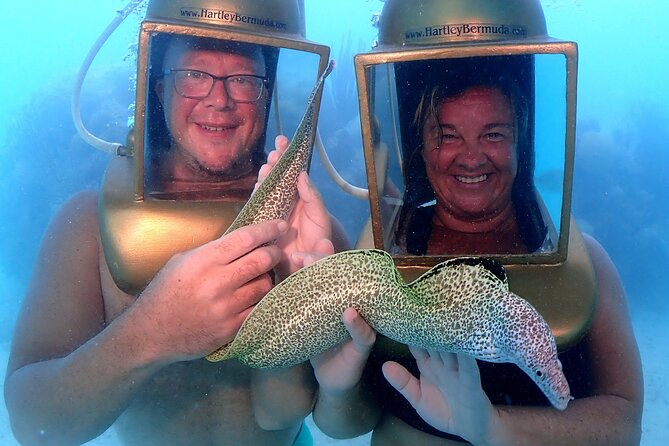
- Expect close-up marine life: Fish may include snapper, hogfish, squirrel fish, angel fish, parrot fish, shrimp, eels, and trained resident fish.
- The full outing takes about 3.5 hours: The actual time on the seabed is usually 30 to 40 minutes.
- Bring a swimsuit and towel: Equipment is supplied, along with wetsuits and hot chocolate when the water is below 80 degrees.
Walking the seabed in a Hartley helmet
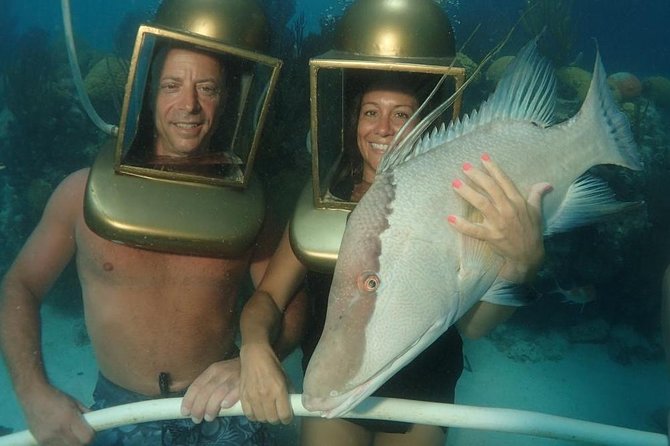
The unusual part of this Bermuda outing begins when you put on a large Hartley helmet and climb down from the boat. Instead of floating above the reef, you place your feet on the sandy bottom and move around at walking pace.
The water is only about 11 to 14 feet deep. You hold a seven-foot grab bar made from one-inch PVC pipe while Greg Hartley guides the group along. The bar gives you something solid to steady yourself, which matters when you are getting used to the weight of the helmet and the movement of the water.
You breathe normally inside the helmet. That simple fact makes this a good choice if snorkeling feels awkward or if the idea of scuba equipment is intimidating. You do not have to kick, float, clear a mask, or coordinate a mouthpiece. You simply walk, smile, and look around.
The seabed is sandy rather than steep or rugged. Several people find themselves kneeling as much as walking, especially when looking closely at coral or fish. That is worth knowing if you expect a long stroll across the ocean floor.
More Scuba Diving in the world
- Great Barrier Reef Snorkeling and Diving Cruise from Cairns
★ 4.5 · 3,714 reviews - First-Time Scuba Diving in Honolulu + Free Videos
★ 5.0 · 3,123 reviews - Oahu Shark Dive
★ 5.0 · 2,903 reviews
The boat ride from Dockyard to the reef
The meeting point is at 2 N Arm in Dockyard, Bermuda, and the trip returns to the same place. If you are arriving by cruise ship, the location is convenient, though hotel pickup and drop-off are not included.
The boat is equipped with a bathroom, changing area, shaded space, and a sundeck. The description also presents it as a glass-bottom boat, although one account specifically noted that the boat did not appear to have a glass bottom. If that feature matters to you, confirm it before booking rather than counting on it as a major part of the outing.
The ride out is used for instruction and orientation. You receive an explanation of what you will see, how the helmet works, and how the underwater portion is organized. Greg Hartley is the central personality of the operation, and his years of experience show in the way he explains reef life and settles nervous first-timers.
This is also when you complete the required health questionnaire. Asthma, heart conditions, and some other medical concerns may require permission from your doctor. Contact the operator before booking if you are unsure.
Meeting Bermuda’s resident fish
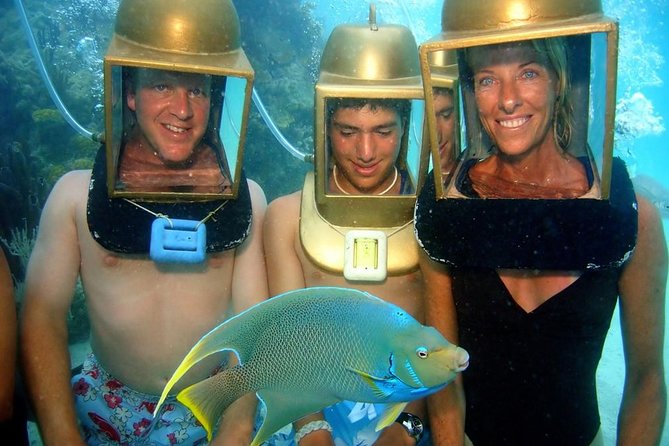
The marine life is the heart of this trip. You are not merely looking down at fish from the surface. You are placed at their level, moving slowly through their territory while Greg points out coral and individual animals.
The operation has several familiar fish with names and personalities. George is a blue-striped grunt, while Herb is a red-speckled hind. Other animals you might see include snapper, hogfish, squirrel fish, angel fish, parrot fish, shrimp, and an eel.
Some of the fish have been trained to approach people. You may be able to hold or gently caress certain animals under the guide’s direction. This is a rare feature, but it is also the part that deserves the most thoughtful consideration. One person found the use of trained animals uncomfortable and viewed it as poor treatment. If you prefer to observe marine life without direct contact or feeding, tell the crew before the underwater portion begins.
For many people, the close access is exactly what makes the outing memorable. You can study coral from only a short distance away, watch fish gather around the group, and see details that are easy to miss from a boat. The pace is slow and controlled, giving Greg time to identify what you are seeing.
What communication feels like below the surface
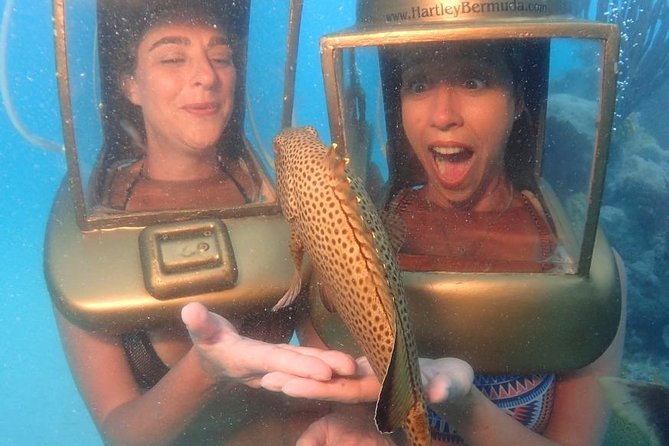
You should not expect an ordinary conversation once the helmets are on. The sound and equipment make normal speech difficult, so Greg uses wooden signs and hand signals to identify animals and direct the group.
That system works, but it takes a moment to get used to. Pay close attention during the briefing. If you miss a signal, stay with the group and wait for the guide to point out the next feature.
The underwater group remains together rather than spreading out to explore freely. This helps the crew keep everyone safe and makes it possible to guide a mixed-age group, but it can limit your independence. If you want to wander alone over a broad reef, this is not the right format.
I see that structure as a fair trade for the simplicity of the helmet. You do not need prior snorkeling or scuba experience, and the guide manages the route, equipment, and animal encounters. The result feels more like a guided nature walk than a self-directed water activity.
Another way to get in the water in the world:
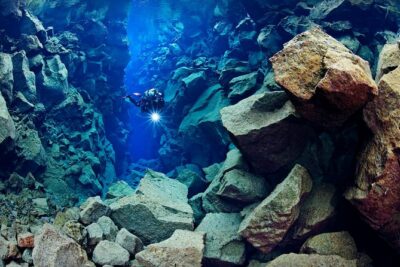
- Silfra: Diving Between Tectonic Plates – Meet on Location
★ 5.0 · 2,139 reviews - Ocean Freedom Great Barrier Reef Luxury Snorkel and Dive Cruise
★ 5.0 · 1,895 reviews - Beginner Scuba Diving with Turtles and Videos, San Juan
★ 5.0 · 1,743 reviews - Tenerife: Your First Scuba Diving Experience in Turtle Area
★ 4.7 · 1,679 reviews
The 30 to 40 minutes underwater
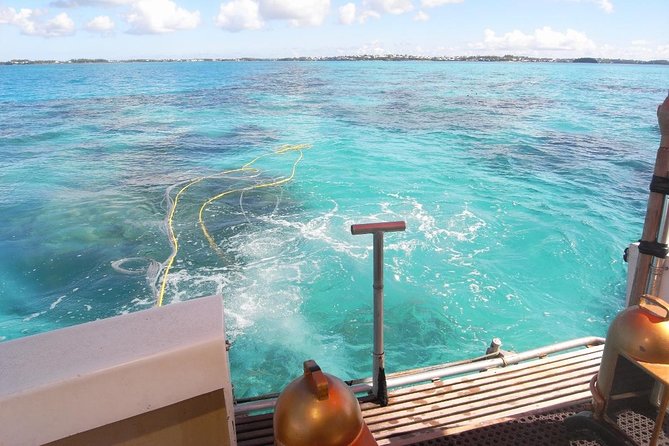
The seabed portion lasts about 30 to 40 minutes. That may sound short for a 3.5-hour outing, but the helmet fitting, instruction, boat ride, group changes, and equipment handling fill much of the schedule.
In some departures, participants go down in three separate groups. If that happens, your waiting time can reach an hour or even an hour and a half. The boat has shade, a sundeck, a changing area, snacks, and drinks, so the wait is manageable, but you should not book this expecting continuous activity.
The group size can reach 21 people. A larger group does not mean all 21 people are on the seabed at once. The staggered format helps the crew manage the underwater walk, though it can make the day feel less efficient.
The best approach is to treat the time on the boat as part of the outing. Bring a book, enjoy the views, talk with the other people in your group, and plan for a relaxed half-day rather than a tightly timed excursion. This matters especially if you have a cruise departure, dinner reservation, or another activity afterward.
Equipment, clothing, and comfort
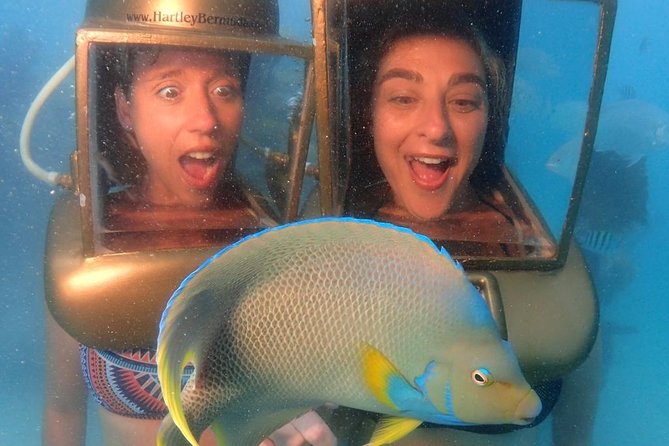
You need to bring a swimsuit and towel. The operator provides the helmet and other required equipment, and wetsuits are supplied when the water is below 80 degrees. Hot chocolate is also available in cooler conditions.
The helmet does the work that a mask and snorkel usually do, but you still need to be comfortable climbing down a ladder from the boat and standing or kneeling on the seabed. The minimum age is five, and the activity is designed for most people who can participate in ordinary boat and water activities.
One especially useful point is that swimming skill is not the main requirement. The helmet and guide system allow people who cannot swim well, or who struggle with snorkeling, to take part. You still need to complete the health questionnaire and follow crew instructions, but the activity does not demand the same skills as traditional underwater sports.
The boat has storage for clothes, towels, and valuables. I would still bring only what you need and keep important items secured.
Photos and video are worth considering
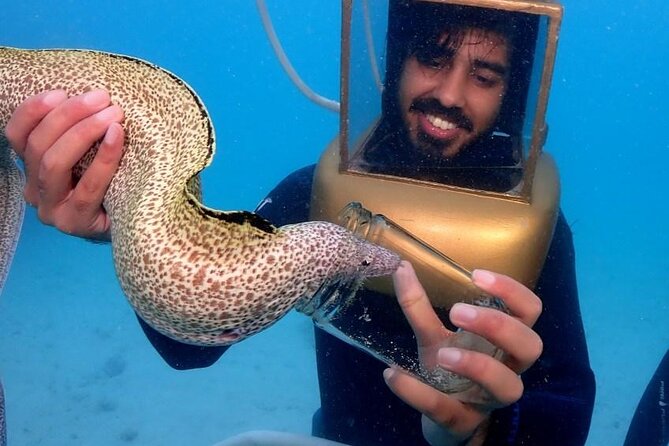
Underwater photos and a short video are available for an additional charge. The supplied pricing varies slightly, with one figure listing about $20 per person plus $10 for a thumb drive, and another giving an approximate total of $25 per person.
The photo option is not just a quick souvenir purchase. When crew members photograph you, they often spend extra time near your group and help position you around the fish. One family received roughly 50 photos and video clips for their group, so the package may offer more than the basic wording suggests.
You can also bring an underwater camera or GoPro. If you plan to record your own footage, remember that you will still need to pay attention to hand signals and the group’s movement. A camera can be useful, but it should not distract you from the animals around you.
At $150 per person, the outing is not cheap. I think the price makes sense if you want a distinctive Bermuda activity and have no interest in learning to snorkel or scuba. It is less compelling if you mainly want a long swim, independent reef time, or the lowest-cost way to see fish.
The guide makes the difference
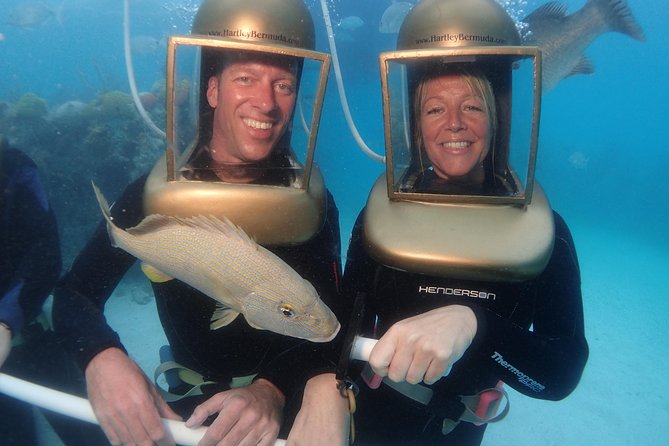
Greg Hartley is the defining character of the experience. He acts as guide, teacher, and animal handler, and his informal style can make the trip feel personal rather than polished like a large resort excursion.
His son Ben may also help with the boat and participants. The family operation has been associated with Bermuda since 1947, and the long-running approach is part of its identity. You can expect plenty of explanation about fish, coral, and the unusual behavior of the resident animals.
Greg’s style is not for everyone. Most of the experience is educational and focused, but some people may find the surface commentary too personal or political. If you prefer a strictly neutral, tightly scripted guide, this relaxed family-business style could feel distracting.
Underwater, the focus is more consistent. Greg is active in keeping people calm, directing attention, and showing the group the reef. The crew also receives praise for making first-timers feel safe.
How the experience compares with snorkeling
Snorkeling gives you more freedom and usually lets you cover a wider area. You can also spend longer in the water if conditions and the tour allow it. But snorkeling requires you to float comfortably, breathe through a tube, and keep a mask clear.
Hartley’s helmet walk removes most of those barriers. You stand on the seabed, breathe normally, and receive direct guidance. That makes it appealing for children, older participants, people who cannot swim well, and anyone who has tried snorkeling and found it frustrating.
The tradeoff is freedom. You follow a route, hold the grab bar, and move at the guide’s pace. You also spend part of the 3.5-hour schedule waiting for other groups. Think of it as a guided encounter with a reef, not an open-water play session.
Who should book this Bermuda outing?
I would recommend it to families with children five and older, cruise passengers looking for something unusual, and adults who want to see coral without becoming snorkelers or scuba users.
It also suits solo participants. The crew’s instruction and the group format make it easier to take part without a companion. People with limited swimming ability may find this one of the most approachable water activities in Bermuda, provided they meet the medical and participation requirements.
You may want to skip it if you dislike close contact with animals, have difficulty climbing a boat ladder, or want a fast, active water sport. It may also disappoint you if you expect pristine Pacific-style marine variety or long periods of independent exploration.
Weather matters. Strong winds can cause a cancellation, in which case you receive the choice of another date or a full refund. The operator also requires a minimum number of participants, so a small booking may be canceled and refunded. Standard cancellation is free up to 24 hours before the start time, but there is no refund for cancellations within 24 hours.
Should you book Hartley Helmet Diving?
Book it if you want an easy, unusual way to meet Bermuda’s reef life and you are happy to spend several hours on a small boat for less than an hour on the seabed. The helmet makes the underwater portion approachable, and Greg Hartley’s direct instruction adds character and useful context.
Set your expectations correctly. This is not a free swim, the boat may divide the group into separate sessions, and the fish encounters involve trained animals. For families, cruise passengers, and nervous first-timers, the unusual format is likely worth the $150 price. For strong swimmers seeking open water and independence, snorkeling may offer better value.
FAQ
Where does Hartley Helmet Diving begin and end?
The activity begins at 2 N Arm in Dockyard, Bermuda, and ends at the same meeting point. Hotel pickup and drop-off are not included.
How long does the full activity take?
The complete outing takes approximately 3 to 3.5 hours. The underwater seabed walk lasts about 30 to 40 minutes.
How deep is the underwater walk?
The activity takes place in approximately 11 to 14 feet of water on a sandy bottom.
Do I need to know how to swim?
The helmet allows you to stand and walk on the seabed while breathing normally, and the activity is suitable for people who do not swim well. You must still complete a health questionnaire and meet the operator’s participation requirements.
What is the minimum age?
The minimum age is five years old.
What equipment is provided?
The operator provides the helmet and all required equipment. Wetsuits are provided when the water temperature is below 80 degrees.
Can I bring an underwater camera?
Yes. Underwater cameras and GoPros are allowed. Photos and a short video from the crew are also available for an additional charge.
What happens if bad weather cancels the activity?
If high winds or other poor weather cause cancellation, you can choose an alternative date or receive a full refund. If the minimum number of participants is not reached, the operator offers another date or activity, or a full refund.
Newest dives added in the world
- Athens: Single or Double Scuba diving for certified divers★ 4.8 · 8 reviews
- Athens: Discover Scuba Diving Experience for Beginners★ 5.0 · 6 reviews
- First Experience underwater. Try Scuba Diving★ 5.0 · 2 reviews
- Antalya Scuba Diving Tour, With Lunch & Return Transfers★ 4.3 · 8 reviews
- Antalya, Side and Alanya: Scuba Diving with Lunch & 2 Dives★ 4.3 · 16 reviews
- Aqaba Dive Adventure: Explore The Red Sea On A Tour★ 5.0 · 15 reviews
- Antalya/ Belek Scuba Diving Tour With 2 Time Dive & Lunch★ 4.2 · 11 reviews
- From Antalya| Kemer: Diving Tour with Experienced Instructor★ 3.5 · 4 reviews
Scuba Diving, compared.
Great Barrier Reef Snorkeling and Diving Cruise from Cairns
Read our review →
First-Time Scuba Diving in Honolulu + Free Videos
Read our review →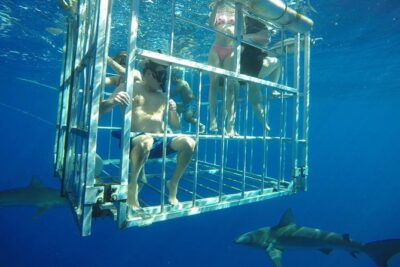
Diving Between Tectonic Plates – Meet on Location
Read our review →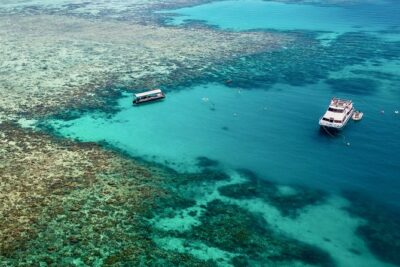
Ocean Freedom Great Barrier Reef Luxury Snorkel and Dive Cruise
Read our review →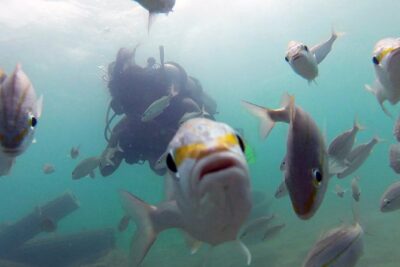
Beginner Scuba Diving with Turtles and Videos, San Juan
Read our review →
Your First Scuba Diving Experience in Turtle Area
Read our review →