
Reviewed · PADI COURSES & CERTIFICATION
Padi Advanced open Water Diver Courses (Start at Koh Chang)
The most useful part of this PADI Advanced Open Water course is its mix of required skills and personal choice. You complete five underwater training sessions, learning deeper-water control and navigation while choosing three subjects that fit your interests, such as wreck exploration, night work, photography, or buoyancy.
I like the small maximum group of three and the chance to discuss your choices with the instructor. I also like that lunch, drinks, equipment-related activities, hotel transfers, and professional instruction are included. The main drawback is the price, $550.30 per person, plus the Koh Rang national park entrance fee.
- Five specialty sessions: Two are required, deep-water training and underwater navigation, while you choose the other three.
- Small class size: The course accepts a maximum of three participants, which can mean more direct coaching.
- Useful instructor choice: Instructors named in course feedback include Chang, Pierre, Charles, Julia, Quentin, Adam, Marcus, Sheila, and others.
- Full boat day support: Hotel pickup, lunch, drinks, coffee, tea, snacks, and light refreshments are included.
- West-coast pickup only: Transfers are offered from hotels on Koh Chang’s west coast.
- Plan around flights: You should leave at least 18 hours between your final underwater session and flying.
Five underwater sessions that build real control
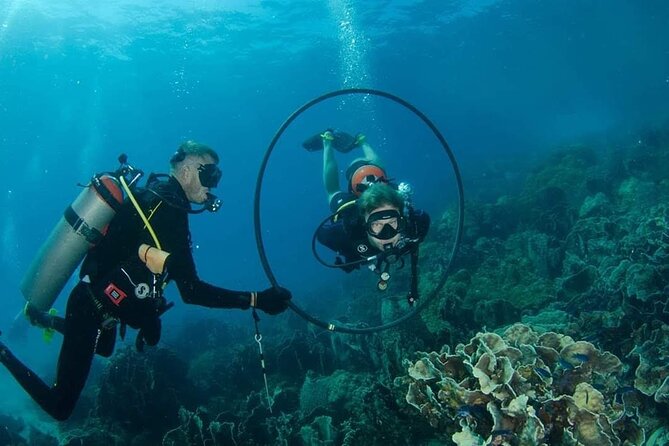
This is not simply a certificate with a few extra hours in the water. The course is built around five focused training sessions, each with a different job.
Two sessions are fixed. The first covers deep-water procedures, helping you work at greater depth with better awareness of control, air use, and comfort. The second focuses on navigation, where you practise finding your way underwater rather than relying only on an instructor or a line of sight.
The remaining three sessions are your chance to shape the course. Your options may include a wreck session, digital photography, naturalist study, multilevel planning, peak performance buoyancy, search and recovery, or night work. You can talk through these choices with your instructor after the course begins, which is useful if you arrive unsure of what best matches your goals.
I would not choose all three options based only on what sounds exciting. If your buoyancy feels shaky, peak performance buoyancy may help more than photography. If you want to make future trips easier, navigation and multilevel work may have more practical value. If you already feel comfortable with the basics, a wreck or night session may give you a more memorable challenge.
The course is designed to improve your feel in the water, not just add three letters to a certification card. That makes it a good next step for someone who has completed entry-level training but still feels stiff, slow, or overly dependent on a guide.
What the two-day schedule is likely to feel like
The advertised duration is about two days, with an 8:00 am start from Ko Chang. The exact order of sessions can depend on conditions, instructor planning, and the options you select.
Your day begins with pickup if you are staying on the west coast of Koh Chang. The transfer is part of the package, but do not assume it covers every hotel on the island. Confirm your accommodation before booking if you are staying elsewhere.
Once at the meeting point, you complete the health questionnaire required before taking part. This matters. Conditions such as asthma or heart problems may prevent you from participating, so you should speak with a doctor before booking if you have a relevant medical concern.
On the boat, the course combines instruction with practical work. The included buffet lunch, drinks, coffee or tea, snacks, and light refreshments make the day easier, especially since underwater training can leave you hungry and tired. The boat has been described as clean and well organized, and the equipment is reported as well cared for.
The five sessions may be spread across two full days, though the supplied information does not give fixed departure times for each session or guarantee a particular order. Treat the 8:00 am start as firm and ask the operator for the detailed schedule after confirmation.
The activity ends back at the meeting point. That makes the arrangement simple if you are staying nearby, but you should leave enough time after the course for rest, especially if you plan another activity or transport connection.
More PADI Courses in Thailand
- Full-Day Beginner Scuba Course with Private Tuition, Racha Yai
★ 5.0 · 368 reviews - La Bombona Diving Koh Tao Open Water Course
★ 5.0 · 172 reviews - Padi open water diver course, become a diver in 3 days
★ 5.0 · 113 reviews
The required deep-water and navigation work
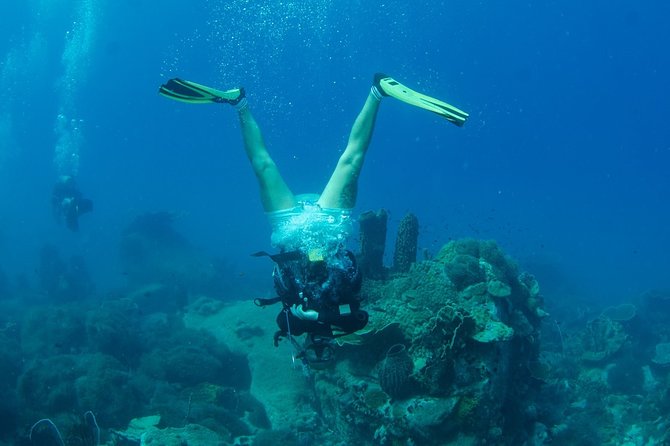
The deep-water session is one of the two central parts of the qualification. It gives you a chance to become more comfortable at greater depth while paying closer attention to control and procedure.
This is valuable because many new certified participants feel fine in shallow water but become less relaxed when depth, visibility, or task demands change. The aim here is not bravado. It is to help you understand how your body, buoyancy, and equipment respond as you go deeper.
The navigation session is just as practical. Underwater, it is easy to lose your sense of direction. Learning to work with a compass and natural reference points gives you a better chance of staying oriented and returning where you intend to go.
These two sessions are not optional, so the course suits you best if you want structured skill work rather than a purely recreational boat outing. You should expect to listen carefully, repeat exercises, and accept corrections from your instructor.
Choosing the three optional subjects
The choice of three additional sessions is where the course becomes personal.
Wreck training can appeal if you are interested in underwater sites and want to practise observing a structure rather than simply swimming over open seabed. Keep in mind that a wreck session is still a training exercise, so the focus remains on safe technique and awareness.
Digital photography is a good option if you already use an underwater camera or want to learn how to compose images without losing control of your position. Photography can make you slow down and observe small details, but it also adds a task. If your basic control needs work, buoyancy training may be the wiser choice first.
Naturalist training is suited to you if identifying marine life and understanding the underwater setting matters more than technical challenge. It can make a standard session feel more attentive and less rushed.
Multilevel training helps you think about changing depth during a session. It is a useful option if you want stronger planning habits for future recreational trips.
Peak performance buoyancy is perhaps the most broadly useful choice. Better control can make you calmer, reduce accidental contact with the bottom, and help conserve energy. If you are unsure what to choose, I would ask about this option early.
Search and recovery adds a problem-solving element. It is useful for practising a planned search rather than swimming around at random.
Night training offers a different atmosphere and requires you to rely more carefully on your equipment, light, and communication. The supplied information lists it as an option, but it does not promise that every selected subject will run on every date.
The key point is simple: do not wait until the last minute to think about your three choices. Arrive with two or three priorities, then let the instructor explain what fits the conditions and your current ability.
Instructors and the value of a small class
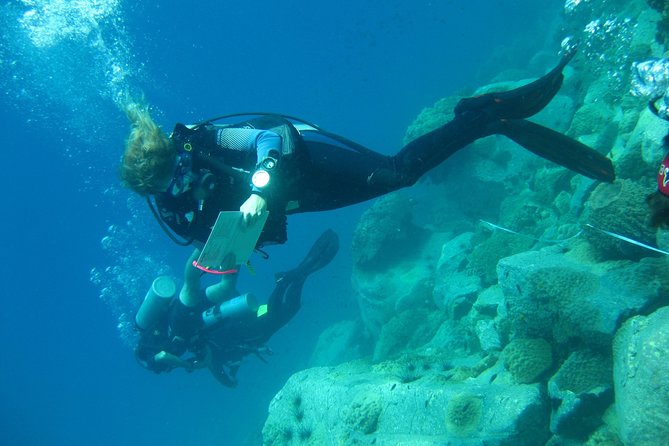
The course accepts no more than three participants. That is one of its strongest practical features.
A small group gives the instructor more time to watch your technique and adjust the pace. It can also make it easier to ask questions without holding up a large class. If you are the only person booked, the course may become nearly one-to-one, as happened for at least one participant who received direct attention from Chang.
Several instructors are named in the course feedback, including Chang, Pierre, Charles, Julia, Quentin, Adam, Marcus, Sheila, Chris, Karim, Delphine, Maik, and Seb. The strongest praise centers on patience, safety, clear teaching, and a good sense of humor. Charles and Julia are noted for careful organization, while Adam is praised for empathy and teaching skill. Pierre is described as respectful and attentive, and Quentin received especially warm praise for energy and seriousness.
Language may also matter. French-speaking instruction has been available with instructors such as Seb and Quentin, and one participant specifically chose the center for that reason. If you want instruction in a particular language, ask before you arrive rather than assuming it can be arranged on the day.
A small class does not guarantee a private instructor. The maximum is three, not one, and instructor assignment depends on availability. Still, it is a better setup than a crowded course if you want close correction and a calmer learning pace.
Another way to get in the water in Thailand:
- Ko Tao: Try Scuba Diving 1-Day Experience
★ 4.8 · 452 reviews - Phuket: Scuba Diving Maithon Or Racha Islands For All Levels
★ 4.8 · 245 reviews - Scuba Dive in Koh Lanta, Thailand
★ 5.0 · 212 reviews - Phuket: Discover Scuba Diving to Racha Yai Island
★ 4.9 · 173 reviews
Boat comfort, food, and equipment
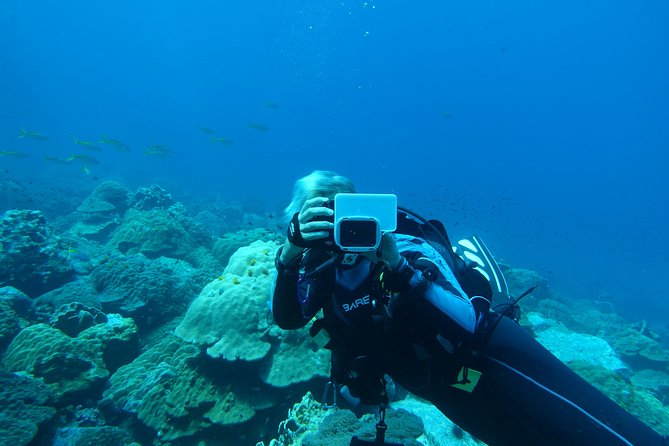
The included support is more generous than the basic course description might suggest. You receive hotel pickup and drop-off within the stated area, lunch, beverages, coffee or tea, snacks, and light refreshments.
That matters on a two-day water course. You are not left to arrange food between sessions, and you can keep your attention on the training rather than searching for lunch. The boat has been described as clean and organized, which is reassuring when you are handling masks, tanks, fins, and other gear.
One practical note concerns rental fins. A past participant developed blisters and the operator explained that socks are available if needed, though they may not always reach you in time. Boots are not used with the rental fins because they create equipment complications.
If your feet are sensitive, bring this up before leaving shore. Ask whether socks are available and consider bringing your own suitable footwear if you already have it. This is a small detail, but sore feet can spoil an otherwise good two-day course.
The national park entrance fee for Koh Rang is not included. Budget for that extra cost, and ask whether it is payable separately on the day.
Is $550.30 a fair price?
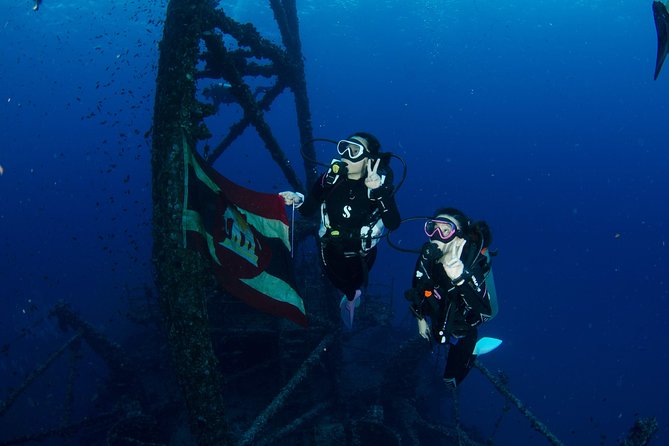
At $550.30 per person, this is not a cheap add-on to a beach holiday. The value comes from the amount packed into roughly two days: five specialty sessions, instruction, boat transport, hotel transfers in the covered area, lunch, drinks, and refreshments.
The maximum group size also affects the calculation. You are paying for a structured course with a small cap, not simply a large boat trip where an instructor has limited time for each person. If you need confidence, corrections, or help choosing the right training subjects, that personal attention can justify the price.
The cost feels less attractive if you mainly want relaxed underwater sightseeing and do not care about the certification. In that case, a standard recreational outing may suit you better. You also need to add the Koh Rang national park entrance fee, which is specifically excluded.
I would compare the price with the cost of taking the course elsewhere, but I would not compare it only with the price of a single recreational boat day. This package includes formal training and five separate objectives. For someone ready to progress beyond entry-level certification, the price is reasonable if the small group and included meals matter to you.
Health, flights, and practical limits
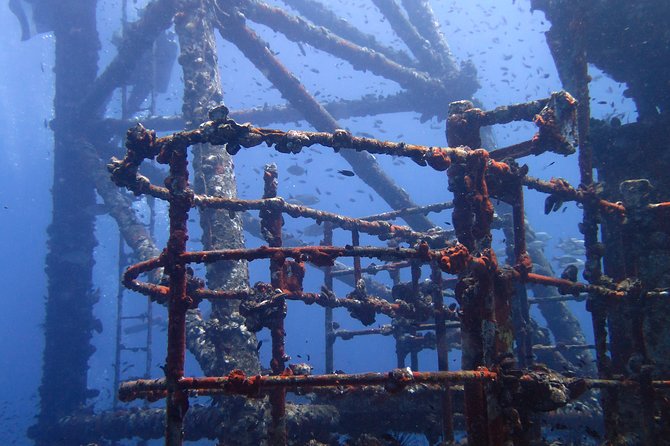
You must complete a health questionnaire before taking part. Some existing medical conditions can prevent participation, and the operator advises consulting a doctor if you have concerns such as asthma or heart problems.
Do not schedule a flight within 18 hours of your final underwater session. This is one of the most important planning points. If you are leaving Koh Chang by air soon after the course, build in extra time rather than trying to fit the course into a tight travel plan.
Service animals are allowed, and the meeting point is near public transportation. Most people can participate, but the health screening still applies. The course returns to its starting point, and pickup is limited to hotels on Koh Chang’s west coast.
Confirmation is sent within 48 hours of booking, subject to availability. You can cancel for a full refund up to 24 hours before the start time. Changes or cancellations inside that 24-hour window are not accepted for a refund.
Who should book this PADI course?
I would choose this course if you already hold basic certification and want a clear, guided route to better underwater control. It is especially suitable if you like learning by doing and want to choose subjects that match your interests.
It also suits solo participants and couples who value a small group. The reports of one-to-one attention, patient teaching, and instructors who can work in different languages are useful signs for anyone feeling nervous about the next step.
You may want to reconsider if you are not medically cleared, have a flight soon after the course, or are staying outside the west-coast pickup area without arranging your own transport. The additional national park fee should also be part of your budget.
Should you book it?
Book this PADI Advanced Open Water course if you want five focused sessions, close instruction, and a practical way to build confidence after entry-level training. The combination of required deep-water and navigation work with three personal choices gives the course a useful balance.
I would ask about instructor language, pickup coverage, the national park fee, and your preferred three options before paying. If you are ready for more structured underwater skills and can spare two days without a tight flight connection, this is a strong choice from Koh Chang.
Newest dives added in Thailand
- Discover Scuba Diving in Koh Lanta, Thailand★ 5.0 · 72 reviews
- Phuket: PADI Discover Scuba Diving 1 beach dive★ 5.0 · 2 reviews
- Try Scuba Diving★ 5.0 · 11 reviews
- “Premium” Non Certified Beginner Scuba Diving in Racha Yai/Noi★ 5.0 · 10 reviews
- Scuba Diving Daytrip to Racha Yai★ 4.5 · 43 reviews
- SCUBA Diving tour Racha and Coral islands full day tour★ 4.0 · 4 reviews
- Racha Noi and Racha Yai Dive Trip from Phuket★ 4.5 · 5 reviews
- Private diving on shared trip at Racha Noi and Racha Yai from Phuket incl. lunch★ 5.0 · 12 reviews
PADI Courses & Certification, compared.
Tossa de Mar: PADI Discovery Scuba Diving in Costa Brava
Read our review →
Full-Day Beginner Scuba Course with Private Tuition, Racha Yai
Read our review →
Heraklion: Beginner Scuba Diving Lesson with PADI Instructor
Read our review →
Discover Scuba Diving with No Certification in St Thomas
Read our review →
Try Dive – PADI Discover Scuba Diving in Tenerife
Read our review →
Browse the lists this dive appears in