
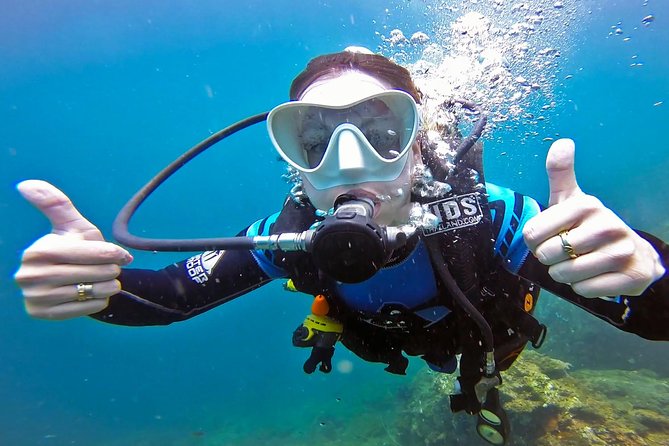
Reviewed · PADI COURSES & CERTIFICATION
PADI Scuba Diver Course in Koh Phangan
Koh Phangan’s PADI Scuba Diver Course is built for visitors who want real underwater training but cannot spare the usual full Open Water schedule. In about two days, you study the basics, practice in an on-site pool, then complete two open-water sessions around Koh Phangan under professional supervision.
I like the compact format and the small maximum group of four. I also like that the price includes the learning materials, scuba equipment, certification, and resort transfers, so the main cost is clear from the start. The trade-off is important: this is a limited certification, not the full PADI Open Water Diver qualification, and certified participants are restricted to 12 meters and professional supervision.
Key points to know before booking
- Two-day format: A practical choice if your Koh Phangan stay is short.
- Pool work first: You learn and test basic skills in an on-site pool before heading into open water.
- Two open-water sessions: The course gives you a real introduction to scuba around Koh Phangan.
- Maximum depth of 12 meters: The Scuba Diver certification comes with meaningful limits.
- Small group size: No more than four people are scheduled for the activity.
- Transfers have limits: Resort pickup is offered, but taxi fees apply in Thong Nai Pan, with no transfers from Haad Yuan or Haad Tien.
What the PADI Scuba Diver certificate really means
This course is best understood as the first half of a longer training path. You earn a PADI Scuba Diver certification, but not the full PADI Open Water Diver certification.
That distinction matters. After certification, you can scuba to a maximum of 12 meters, but you must remain under the direct supervision of a professional. You also have to follow the limits attached to the Scuba Diver qualification rather than treating it like a full independent certification.
For someone with limited holiday time, that can be a smart compromise. You get formal training, pool practice, open-water experience, and a recognized PADI qualification without setting aside a longer block of your trip. You can later continue your training and complete the remaining work needed for the full Open Water Diver certification.
I would choose this course if your goal is to begin properly, not simply try a one-time underwater activity. You learn the basic procedures and use real equipment, then put those skills into practice in Koh Phangan’s open water.
More PADI Courses in Thailand
- Full-Day Beginner Scuba Course with Private Tuition, Racha Yai
★ 5.0 · 368 reviews - La Bombona Diving Koh Tao Open Water Course
★ 5.0 · 172 reviews - Padi open water diver course, become a diver in 3 days
★ 5.0 · 113 reviews
Day one: study, equipment, and the on-site pool
Your first stage is the knowledge portion. You can complete it through independent online study or in a classroom, depending on the arrangement with the center. The course includes the required learning materials, so you do not need to purchase a separate manual or arrange your own training package.
The study work gives you the foundation for the practical sessions. You learn the basic ideas behind scuba use, equipment, safety, and underwater procedures before being asked to perform the skills in the pool.
The next step takes place at the center’s on-site swimming pool. This is a useful feature because you can focus on the equipment and basic techniques in a controlled setting before dealing with open water.
The pool session is where you get used to wearing the scuba gear and handling the first skills. It also gives the instructors a chance to check that you can manage the basics before progressing.
You should expect a hands-on session rather than a quick demonstration. The course requires adequate swimming skills and a moderate level of physical fitness, so you need to be comfortable in the water and able to take part in practical training.
The pool is also where any uncertainty becomes clear. If the mask, regulator, buoyancy equipment, or other gear feels unfamiliar, you have time to get used to it before the open-water sessions. That gradual progression is especially helpful if you have never used scuba equipment before.
Day two: two open-water sessions around Koh Phangan
The course includes two open-water sessions in Koh Phangan. These are the part of the program that turns pool practice into a real scuba experience.
The supplied schedule describes the course as approximately two days, though the exact daily timing is not provided. The center is open from 7:00 AM to 6:00 PM, and you should allow enough flexibility in your island plans for the full training process, transport, and weather.
The open-water sessions are not simply sightseeing trips. You are still completing certification requirements, so expect the instructors to keep attention on your skills and safety as well as the surroundings.
That balance is valuable. You get to experience scuba in the sea, but you are not left to figure things out alone. Professional supervision is part of the certification and remains a requirement after you finish.
Koh Phangan gives the course a strong sense of place. You are not completing the practical work in an artificial training environment alone. After the pool work, you move into the island’s coastal waters and learn how the equipment and skills feel in a natural setting.
The limitation is that the available information does not specify the exact site, boat arrangements, marine life, visibility, or daily sea conditions. I would not book this course expecting a particular reef, animal sighting, or underwater view. The reliable promise is training and two open-water sessions, not a guaranteed wildlife encounter.
Why the four-person maximum matters
The activity has a maximum of four participants. That is one of its strongest practical features.
A small group gives the instructor fewer people to watch while you practice. It can also make the pool work feel less crowded and give you more room to ask questions or repeat a skill if needed.
Small groups are especially useful in beginner scuba training. You are learning several things at once: how the equipment feels, how to respond underwater, how to move comfortably, and how to follow instructions. A large class can make that process feel rushed.
The group limit does not guarantee a private course, and the supplied information does not state the instructor-to-participant ratio. Still, four is a manageable maximum and a better setup than a packed introductory class.
The friendly working atmosphere associated with Asia Blue – Scuba is another reason this course may suit nervous beginners. Staff members named in the supplied information include Francois and Asia Blue’s wider team. One account describes the instructors as welcoming, accommodating, kind, and fun, with a family-like feel. That is useful context if you care as much about the teaching environment as the certificate itself.
Still, the named staff should not be treated as a promise that a specific person will teach your session. Ask the operator if you need to know who your instructor will be.
Another way to get in the water in Thailand:
- Ko Tao: Try Scuba Diving 1-Day Experience
★ 4.8 · 452 reviews - Phuket: Scuba Diving Maithon Or Racha Islands For All Levels
★ 4.8 · 245 reviews - Scuba Dive in Koh Lanta, Thailand
★ 5.0 · 212 reviews - Phuket: Discover Scuba Diving to Racha Yai Island
★ 4.9 · 173 reviews
Equipment, transfers, and what is included
The package includes all required learning materials and scuba equipment. That improves the value because you do not have to arrange a separate rental package for the course.
It also includes the PADI Scuba Diver certification and resort transfers. When comparing the $342.53 price with other options, count those inclusions. A cheaper-looking course may not include equipment, certification costs, or transport.
Transfers are offered, but the coverage is not universal. If you are staying in Thong Nai Pan, a taxi fee is payable. No transfers are provided from Haad Yuan or Haad Tien.
That detail can affect the real price. If you are staying outside the included transfer area, ask about the taxi cost before booking and add it to your budget. You should also confirm the pickup point and timing, since the supplied information does not give a fixed meeting address or collection schedule.
The center operates daily from 7:00 AM to 6:00 PM. The activity has mobile ticketing, and confirmation is received at the time of booking, which is useful when you are arranging the course around ferries, accommodation, and other island plans.
Is $342.53 good value?
At $342.53 per person, this is not a casual, low-cost tryout. You are paying for a certification course with study materials, equipment, pool instruction, two open-water sessions, certification, and transfers.
For a short stay, the value comes from the compressed format. You can make meaningful progress without dedicating the longer schedule normally associated with the full Open Water course.
The price is less attractive if you only want to see what scuba feels like once. In that case, a short introductory session may be more suitable, though this course offers more formal training and a qualification.
It is also worth considering your future plans. If you expect to scuba regularly, the Scuba Diver certificate is a useful step toward Open Water certification, but it is not the final qualification. You may eventually pay for additional training, so think of this as part of a longer path rather than the end of it.
The best value applies to a person who wants a recognized beginning, has only two days available, and expects to continue training later or wants supervised scuba within the 12-meter limit.
Physical requirements and preparation
You must be at least 10 years old, in good physical health, and have adequate swimming skills. The activity also recommends a moderate level of physical fitness.
Those requirements are not minor details. Scuba training involves pool work, equipment handling, and open-water sessions. You should be honest about your comfort in the water and your ability to take part in the practical exercises.
The course is not presented as an extreme physical challenge, but it is active. Plan to arrive ready for instruction rather than treating the day as a passive boat outing.
I would also avoid packing your schedule tightly around the course. The duration is listed as approximately two days, and the activity depends on suitable weather. Keep some flexibility in case poor conditions require a different date.
Weather, cancellations, and timing
The course requires good weather. If poor conditions force a cancellation, you are offered another date or a full refund.
You can cancel for a full refund if you do so at least 24 hours before the experience start time. Cancellations made less than 24 hours in advance are not refunded, and changes within that period are not accepted.
The practical lesson is simple: do not wait until the morning of the course if your plans change. The cutoff follows local time, so check the timing carefully if you are booking from another time zone.
Because the activity is usually booked about 15 days ahead, it is sensible to reserve early if your island schedule is fixed. At the same time, leave room in your itinerary for weather-related changes.
Who should choose this course?
I would recommend it to:
- First-time scuba learners who want formal instruction rather than a one-off trial
- Visitors with about two days available on Koh Phangan
- People who are comfortable with a supervised, 12-meter certification
- Anyone planning to continue later toward the full PADI Open Water Diver qualification
- Beginners who prefer a small group, with a maximum of four participants
- Families with participants aged 10 or older who meet the health and swimming requirements
I would think twice if you want to scuba independently after the course. The certificate does not provide the same freedom as the full Open Water qualification.
I would also look elsewhere if your main goal is a specific reef, a particular boat trip, or guaranteed marine life. Those details are not specified here, and the course is built around instruction rather than a sightseeing guarantee.
Should you book the Koh Phangan PADI Scuba Diver Course?
Book it if you want a serious but compact introduction to scuba. The two-day schedule, on-site pool, small group limit, included equipment, and two open-water sessions make it a practical fit for a short Koh Phangan stay.
Go in with clear expectations. You will not receive the full Open Water Diver certification, and the 12-meter limit plus professional supervision will continue to apply. Confirm transfer costs if you are in Thong Nai Pan, and arrange your own transport if you are staying in Haad Yuan or Haad Tien.
For the right person, this is a useful first step with a clear path forward. It gives you proper instruction and real sea experience without asking you to give up a large part of your holiday.
FAQ
How long does the PADI Scuba Diver Course take?
The course lasts approximately two days.
What certification do I receive?
You receive a PADI Scuba Diver certification. This is a step toward the full PADI Open Water Diver certification, which can be completed later.
How deep can I go after certification?
You can scuba to a maximum depth of 12 meters, or 40 feet, once certified.
Can I scuba without professional supervision after the course?
No. The PADI Scuba Diver certification requires you to remain under professional supervision.
How many open-water sessions are included?
The course includes two open-water sessions in Koh Phangan.
Is pool training included?
Yes. You complete two confined-water sessions at the on-site pool to learn basic scuba skills.
Is scuba equipment included?
Yes. The required scuba equipment and learning materials are included.
Is transportation included?
Resort transfers are included, but a taxi fee applies if you are staying in Thong Nai Pan. Transfers are not available from Haad Yuan or Haad Tien.
What are the age and fitness requirements?
You must be at least 10 years old, in good physical health, and have adequate swimming skills. A moderate level of physical fitness is also recommended.
What happens if poor weather cancels the course?
You can choose a different date or receive a full refund if the activity is canceled because of poor weather.
Newest dives added in Thailand
- Discover Scuba Diving in Koh Lanta, Thailand★ 5.0 · 72 reviews
- Phuket: PADI Discover Scuba Diving 1 beach dive★ 5.0 · 2 reviews
- Try Scuba Diving★ 5.0 · 11 reviews
- “Premium” Non Certified Beginner Scuba Diving in Racha Yai/Noi★ 5.0 · 10 reviews
- Scuba Diving Daytrip to Racha Yai★ 4.5 · 43 reviews
- Racha Noi and Racha Yai Dive Trip from Phuket★ 4.5 · 5 reviews
- SCUBA Diving tour Racha and Coral islands full day tour★ 4.0 · 4 reviews
- Private diving on shared trip at Racha Noi and Racha Yai from Phuket incl. lunch★ 5.0 · 12 reviews
PADI Courses & Certification, compared.
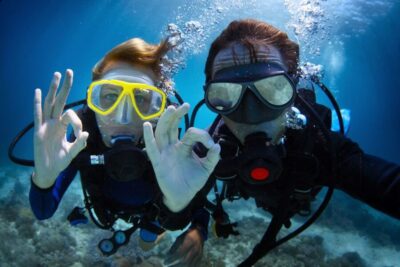
Tossa de Mar: PADI Discovery Scuba Diving in Costa Brava
Read our review →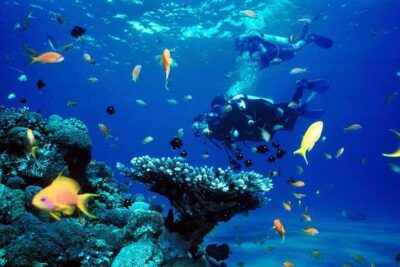
Full-Day Beginner Scuba Course with Private Tuition, Racha Yai
Read our review →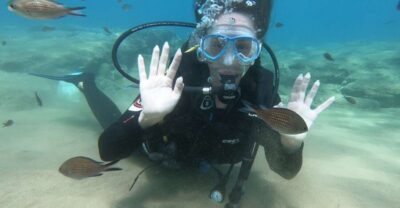
Heraklion: Beginner Scuba Diving Lesson with PADI Instructor
Read our review →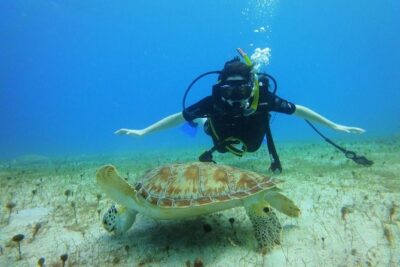
Discover Scuba Diving with No Certification in St Thomas
Read our review →
Try Dive – PADI Discover Scuba Diving in Tenerife
Read our review →
Browse the lists this dive appears in