
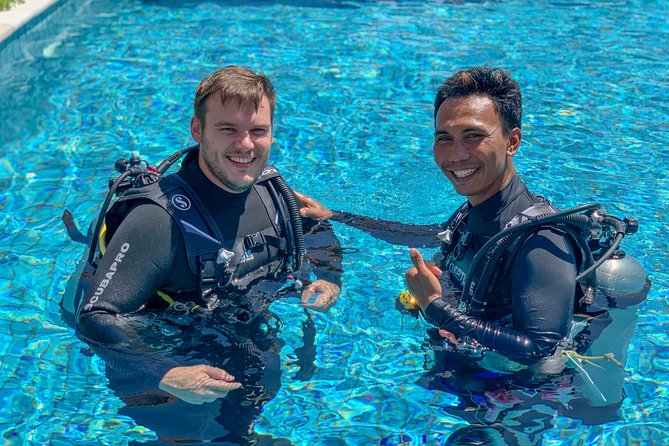
Reviewed · PADI COURSES & CERTIFICATION
PADI Open Water Course
Bali’s PADI Open Water Course gives you more than a quick underwater introduction. Over three days, you learn the basic theory, practice essential skills in a pool, then complete four open-water sessions at Padang Bai and Tulamben. It is a proper beginner certification, with a maximum depth of 18 meters once you qualify.
I like the small group limit of three, which should give you more instructor attention when clearing your mask, controlling your breathing, or sorting out buoyancy. I also like that transport, lunch, snacks, drinks, and hotel pickup are included, so you are not left arranging complicated logistics between Sanur and Bali’s east coast.
The main consideration is time. This is a serious three-day course, not a casual half-day activity, and you must complete a health questionnaire before entering the water. Flying soon after the course also requires care, since scuba activity within 18 hours of a flight is not recommended.
Key points
- Three-stage certification: Complete theory, pool training, and four open-water sessions over about three days.
- Two classic east-coast sites: Padang Bai and Tulamben provide the setting for your qualifying sessions.
- Small groups: The course accepts a maximum of three participants, useful for beginners who need patient coaching.
- Named instructors and guides: Staff members such as Gede Ariawan, Muli, Sia, and Agus have worked with recent course groups.
- Transport and meals included: Air-conditioned minivan transport, hotel pickup, lunch, drinks, and snacks are covered.
- Clear health and flight rules: You must complete a medical questionnaire, and flying within 18 hours of scuba activity is not advised.
Three days to earn a real scuba qualification
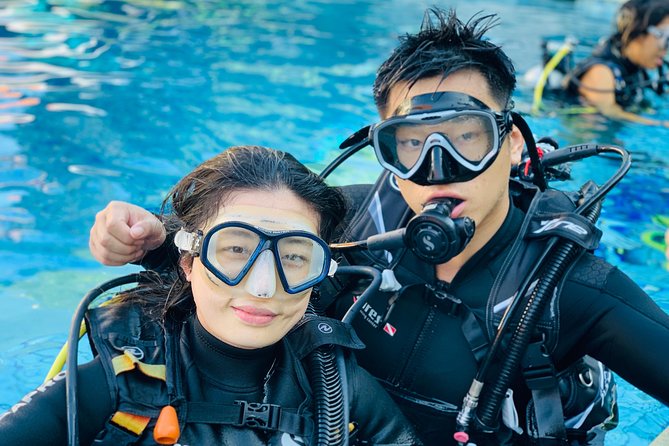
This course is built for someone starting from scratch. You do not simply put on a mask and swim around for an hour. Instead, you work through the main skills and safety ideas required for a PADI Open Water certification, then show that you can use them in open water.
The schedule has three parts: knowledge development, pool training, and four open-water sessions. That structure matters. The theory explains what your equipment does and how pressure affects your body. The pool gives you a controlled place to practice. The sea sessions then test those skills in a real setting.
Once certified, you can use your training to scuba safely to a maximum depth of 18 meters, subject to the usual conditions and your own comfort. The qualification is intended to make you a confident, independent diver, but it does not mean you should stop learning. You will still need to make sensible decisions about conditions, equipment, health, and your own limits.
The course takes about three days, so you should protect those days in your Bali plans. Trying to squeeze certification between temples, beach time, and a late flight is a poor idea. You need enough energy to focus, especially when learning skills that may feel awkward at first.
More PADI Courses in Bali
- Bali: 3-Days PADI Open Water Diving Course
★ 4.8 · 98 reviews - Padi Discover Scuba Diving In Amed Bali
★ 5.0 · 66 reviews - Sanur Open Water Course learn diving in 3 Days – Get certified & Dive everywhere
★ 5.0 · 9 reviews
Starting at Neptune’s Sanur center
The course begins at Neptune Scuba Diving’s center on Jalan Suka Merta in Sanur Kauh, Denpasar Selatan. The listed opening hours are 7:00 AM to 6:00 PM, Monday through Sunday, during the stated operating period.
Hotel pickup and drop-off are included, and transport is by air-conditioned minivan. That is useful in Bali, where the east-coast sites are not close to the Sanur meeting point. Pickup also keeps you from having to arrange a separate car for an early start, though you should confirm the exact pickup time after booking.
The center is near public transportation, but most people will likely find the included pickup simpler. The activity ends back at the meeting point, so plan your evening around returning to Sanur rather than assuming you will finish at Tulamben or Padang Bai.
The group limit is three people. That is one of the strongest practical features here. Beginner training involves repeated questions and small corrections. With only a few participants, your instructor should have a better chance to watch your technique instead of managing a crowded class.
Instructor assignments can vary. Names connected with recent courses include Gede Ariawan, Muli, Sia, and Agus. Gede is described as a dive master and instructor in the supplied information, while Sia and Agus have worked together with course participants. You cannot choose a particular instructor from the information provided, but you can expect a professional team with different staff members handling instruction and guiding.
Knowledge development before the water work
The first phase covers the ideas you need before handling scuba equipment underwater. You learn how the equipment works, how pressure affects your body, and what safe procedures look like.
This part can feel less exciting than the sea sessions, but it is where many important decisions are made. You need to understand how to respond if a mask fills with water, how to manage your air supply, and how to communicate underwater. These are not decorative classroom topics. They are the foundation of a safe session.
Some people complete theory online before arriving, as one course arrangement connected with the center allows. The information supplied does not say that online study is required for every booking, so ask the operator what your package includes. If online study is available, it can free more time for practical work once you reach Bali.
I would not rush this phase. If you are a nervous swimmer or completely new to scuba, ask for explanations until the steps make sense. One participant began with little swimming experience and still completed the course with patient instruction, but that should encourage preparation rather than overconfidence.
You will also complete a health questionnaire before entering the water. The course requires your respiratory and circulatory systems to be in good health, and all body air spaces must be normal and healthy. Current colds or congestion, coronary disease, epilepsy, serious medical problems, alcohol use, and drug use can prevent you from taking part.
If you have asthma, a heart condition, or another existing medical issue, speak with a doctor before booking. Do not treat the questionnaire as a formality. It exists because pressure changes affect the body in ways that matter.
Pool training where mistakes are easier to manage
The second phase moves into pool training. This is where you learn to use the equipment and repeat essential skills in a more controlled setting before heading to Padang Bai and Tulamben.
You may work on mask clearing, regulator use, buoyancy control, equipment handling, and basic emergency procedures. The supplied information does not list every individual skill, so the precise lesson plan will depend on the instructor and PADI requirements. The important point is that the pool is your practice ground, not a shortcut around learning.
Buoyancy can take time. One student specifically needed help with buoyancy control, and the instructor Muli provided that support. This is a useful reminder that good underwater movement is not automatic. You may need to adjust your breathing, body position, and equipment before you feel stable.
Patient instruction matters here. Gede is described as especially patient with a young participant, and Muli is noted for encouraging a student who was not a strong swimmer. Those details make this course sound suitable for beginners who need calm coaching, though you still need to be comfortable in the water and able to meet the health requirements.
The pool phase also lets you discover whether scuba feels right before the open-water sessions. If you feel anxious, tell your instructor early. A small group gives you a better chance of getting personal help rather than quietly falling behind.
Another way to get in the water in Bali:
- Bali: Padangbai Blue Lagoon Beginner’s Dive Experience
★ 4.9 · 202 reviews - Scuba Diving in Nusa Penida – Manta Point
★ 5.0 · 198 reviews - Tulamben Diving USS Liberty Shipwreck Scuba Dive
★ 5.0 · 186 reviews - Day Trip certified divers – 3 Dives in Tulamben (pick-up & drop-off included)
★ 5.0 · 178 reviews
Four open-water sessions at Padang Bai and Tulamben
The final practical phase includes four open-water sessions at Padang Bai and Tulamben. These are not simply sightseeing trips. They are the point where you apply the skills from the classroom and pool in actual sea conditions.
Padang Bai and Tulamben are well-known scuba locations on Bali’s east coast, and using two sites gives you a change of setting during the course. You get to practice in more than one environment, while the instructor checks that you can manage your equipment and follow procedures away from the pool.
Expect the open-water portion to require focus. You will be watching your air, communicating with your buddy and instructor, managing your position in the water, and responding to instructions. The scenery is part of the appeal, but certification comes first.
Tulamben also helps explain why this course is more than a resort-pool lesson. It gives you a proper sea setting in which to gain experience, rather than certifying you without exposing you to open-water conditions. Padang Bai adds another location and breaks up the training across Bali’s east-coast sites.
Conditions can affect how comfortable the sessions feel. The supplied details do not promise a particular visibility level, wildlife encounter, wreck visit, or exact site route. That is a good reason to judge the course by its training structure rather than by expecting a specific underwater attraction.
Staff support appears to continue beyond the instructor. Sia and Agus are associated with a three-day course followed by additional sessions, while Gede has worked as both instructor and guide. The team also handles the movement between sites, which is helpful when equipment and timing are involved.
What the $530 price really covers
At $530 per person, this is not a cheap introduction to scuba. You are paying for a three-day professional certification course, not only for time in the water.
The price includes taxes, fees, and handling charges, along with bottled water, coffee or tea, snacks, and lunch. It also includes a driver or guide, a professional guide, hotel pickup and drop-off, and transport by air-conditioned minivan.
That package has real value if you are staying in the Sanur area or elsewhere where the operator provides pickup. Transport to Padang Bai and Tulamben could otherwise become a separate planning problem. Meals and drinks also keep the three-day schedule simpler.
The value depends on your goal. If you only want to try scuba once, this may feel expensive compared with a short introductory session. If you want a recognized qualification that lets you continue scuba activity to 18 meters, the price is easier to justify.
Souvenir photos are not included, though they can be purchased separately. The supplied details do not identify other possible personal costs, so ask what equipment, certification materials, and any optional items are included before you pay. A clear question at booking can prevent an unpleasant surprise.
The course is booked an average of 11 days ahead, which suggests you should not leave it until the last minute during a busy Bali trip. A little planning also helps you place the course safely away from your flight home.
Who should take this course
I would recommend it most strongly to a first-time scuba student who wants a full qualification rather than a brief introduction. The three-day format gives you time to build skills instead of trying to absorb everything in one rushed session.
It also suits:
- Adults and children aged 10 or older who meet the health requirements
- Solo participants who want a small group setting
- Couples or friends who want to qualify together
- Nervous beginners who value patient, individual instruction
- People planning more scuba activity after Bali
The minimum age is 10, but age alone does not guarantee suitability. You still need to be comfortable enough in the water to take part and must pass the health screening.
You should think carefully if you have a current cold, congestion, a serious medical condition, or concerns involving your heart, lungs, or circulation. Alcohol and drugs are also incompatible with the activity. If you are unsure, ask a doctor before booking rather than hoping the issue will not matter.
This course is less suitable for someone with only one free morning, someone who must fly shortly after the final session, or someone seeking a guaranteed wildlife encounter. The focus is certification and safe skill building.
Planning your Bali schedule around the course
Allow all three days for the course. Do not book a late-night arrival before the first morning, and do not plan a flight within 18 hours after your final scuba session.
The 18-hour flight rule is one of the most important practical details. Pressure changes after scuba activity can create health risks, so leave a proper buffer before flying. If you are moving around Bali, also remember that the activity returns to the Sanur meeting point.
Wear practical clothing for transport and pool work, and bring anything you normally need for a full day away from your hotel. Lunch, snacks, drinks, and transport are provided, but the supplied details do not list every personal item you may want.
Confirmation is provided at booking, and cancellation is free up to 24 hours before the start time. Changes or cancellations made less than 24 hours ahead are not accepted for a refund. Since the course occupies three days, check your health, flight, and accommodation plans before committing.
Should you book the PADI Open Water Course?
Book it if you want a proper beginner certification in Bali and can give the course three full days. The combination of theory, pool training, four open-water sessions, small groups, east-coast sites, transport, and meals makes the $530 price reasonable for someone planning to continue scuba activity.
I especially like the small group limit and the repeated signs of patient instruction from staff such as Gede Ariawan and Muli. Those details matter more than flashy promises when you are learning skills for the first time.
Skip it if you only want a quick underwater look, have no room in your schedule, or need to fly within 18 hours. For the right beginner, though, this is a structured way to leave Bali with a useful qualification rather than a single isolated water activity.
FAQ
How long does the PADI Open Water Course take?
The course lasts approximately three days. It includes knowledge development, pool training, and four open-water sessions.
Where does the course begin and end?
It begins at Neptune Scuba Diving in Sanur, at Jalan Suka Merta, Sanur Kauh, Denpasar Selatan, Bali. The activity ends back at the meeting point.
Which locations are used for the open-water sessions?
The four open-water sessions take place at Padang Bai and Tulamben.
What is included in the price?
The price includes taxes, fees, handling charges, bottled water, lunch, coffee or tea, snacks, a driver or guide, a professional guide, hotel pickup and drop-off, and air-conditioned minivan transport.
What is the minimum age?
The minimum age is 10 years. Every participant must also complete a health questionnaire and meet the stated medical requirements.
Can I fly soon after completing the course?
Flying within 18 hours of scuba activity is not recommended. Plan your flight with that waiting period in mind.
Newest dives added in Bali
- Tulamben Diving Tour Shipwreck USS Bali★ 5.0 · 13 reviews
- Tulamben Diving USS Liberty Shipwreck Scuba Dive★ 5.0 · 186 reviews
- Bali: Tulamben Bay and the USAT Liberty Wreck Dive★ 4.9 · 58 reviews
- Bali: Tulamben Bay Beginner’s Dive Experience★ 5.0 · 66 reviews
- Sanur Open Water Course learn diving in 3 Days – Get certified & Dive everywhere★ 5.0 · 9 reviews
- Bali: 3-Days PADI Open Water Diving Course★ 4.8 · 98 reviews
- 2 Days & 1 Night – 2 Dives in Lembongan/Penida (for certified divers)★ 5.0 · 76 reviews
- Scuba Diving Nusa Penida Manta Point 3 dives for certified divers★ 5.0 · 35 reviews
PADI Courses & Certification, compared.
Tossa de Mar: PADI Discovery Scuba Diving in Costa Brava
Read our review →
Full-Day Beginner Scuba Course with Private Tuition, Racha Yai
Read our review →
Heraklion: Beginner Scuba Diving Lesson with PADI Instructor
Read our review →
Discover Scuba Diving with No Certification in St Thomas
Read our review →
Try Dive – PADI Discover Scuba Diving in Tenerife
Read our review →
Browse the lists this dive appears in