
Reviewed · DIVES FOR CERTIFIED DIVERS
Double Dive in the Bay Park for certified divers
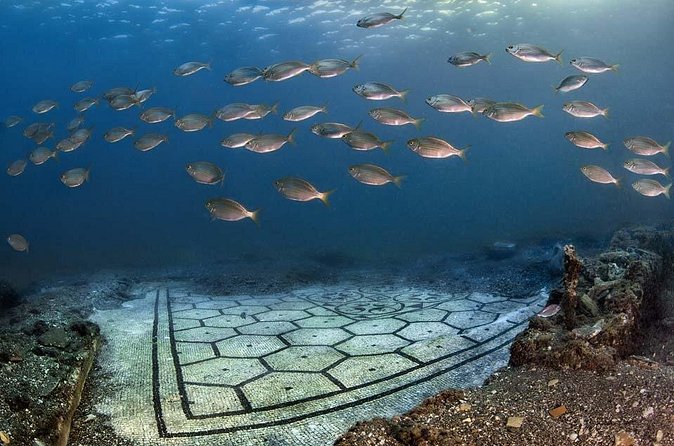
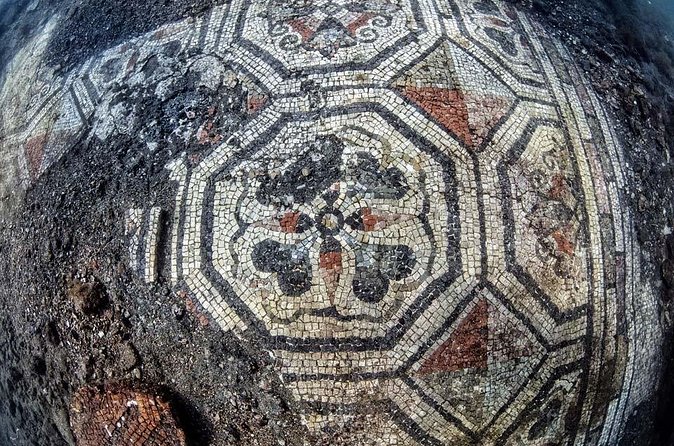
Baia’s sunken Roman city is the star here. In water no deeper than about 5 meters, you’ll see villa foundations and mosaics beneath the Bay of Naples, then return for a second underwater session at another site. The scenery is not a coral reef spectacle. It is an unusual meeting of archaeology and scuba, with ancient stonework under the water instead of behind glass.
I like the two 45-minute sessions, which give you time to settle in and then see a second part of the park. I also like the small maximum of five participants, plus the short RIB ride from the center to the park. The main consideration is visibility: sand used to cover and protect the mosaics can make the water cloudy, especially in winter.
Key points
- Two shallow scuba sessions: Each lasts about 45 minutes, with roughly an hour spent at the buoy for each site.
- Ancient Roman remains underwater: Expect villa foundations and mosaics, not a large variety of sea life.
- Small group size: The maximum is five participants, allowing close attention from the guide.
- Named guide: Alessandro handles the briefing and can adjust the schedule when other groups are using the area.
- Simple logistics: Equipment, insurance, park admission, boat transport, showers, and changing rooms are included.
- Winter tip: In January, the water was reported at 17 C. A 3 or 5 mm pair of gloves can make your hands more comfortable.
Why Baia’s sunken city is worth your air tank
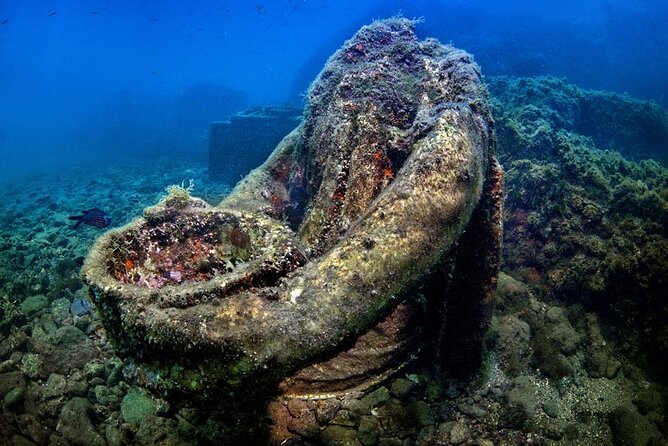
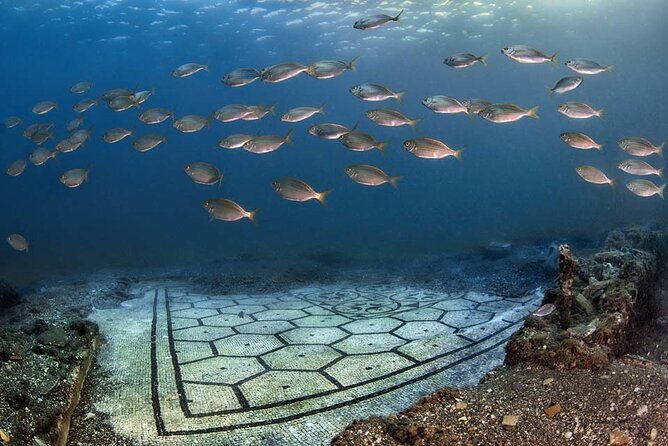
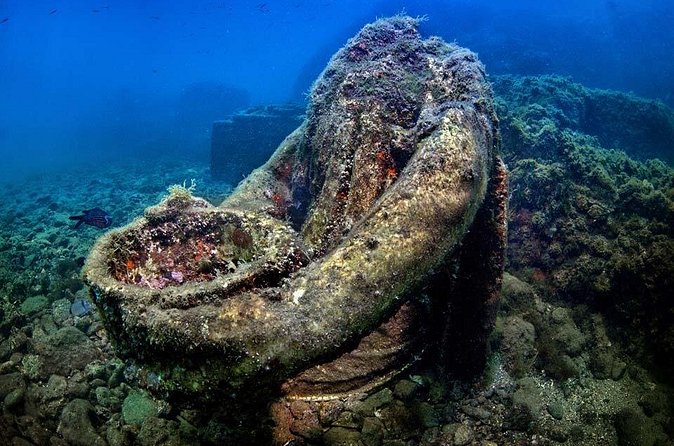
Baia was once a Roman resort area around the Bay of Naples. Parts of its former villas and streets now sit below the water, the result of volcanic activity and gradual changes in the ground. You are not touring a fully preserved city with walls rising around you. Instead, you’ll see archaeological remains spread across the seafloor, with mosaics and foundations marking the footprint of Roman luxury.
That setting makes this experience different from a standard coastal scuba outing. The focus is not on colorful fish or dramatic rock formations. It is on looking down at human-made remains and imagining rooms, courtyards, and villas where the water now moves above ancient floors.
I find the shallow depth a real advantage. At a maximum of about 5 meters, you will not use your air quickly simply because of depth. You can spend more time observing the site, listening to the guide, and taking in the details without the pressure of a deep descent.
The tradeoff is that archaeology calls for restraint. You are there to look, not handle the mosaics or stir up the bottom. Sand is used to cover and recover sections of the remains, and that can affect visibility. The water may be clearer in summer, but conditions can change with weather and site work.
More Dives for Certified Divers in Italy
- Diving for certified divers with PADI 5* Diving Resort – Taormina
★ 5.0 · 167 reviews - Scuba Diving in La Maddalena & Lavezzi Park for certified divers.
★ 5.0 · 20 reviews - Diving at the Baia Submerged Park for certified divers
★ 5.0 · 11 reviews
A calm start at the Baia diving center
Plan to arrive at the center on Via Lucullo about one hour before the scheduled start. That early arrival is useful, not wasted time. The staff supplies the scuba equipment, checks what you need, and gives a briefing about the underwater park and the specific sites planned for the day.
Alessandro is named as one of the guides, and the organization of the briefing is one of the strong points of this outing. The schedule can be adjusted if another group is using a site at the same time. That matters in a protected archaeological area, where timing and site access are not entirely in your hands.
The center provides showers and changing rooms after the activity. You will not need to arrange separate equipment rental, park admission, or boat transport. Insurance and taxes are also included, which makes the $144.19 price easier to assess.
The listed language is English. The group limit is five people, so this is not a large boat operation where you disappear into a crowd. You should still expect a proper group briefing and shared boat time rather than a private charter.
The five-minute ride to the Submerged Park
Once you are dressed and ready, the embarkation point is only a few steps from the center. The RIB reaches the Submerged Park of Baia in less than five minutes.
That short ride keeps the day efficient. You are not spending an hour crossing open water before reaching the archaeological area. It also means the activity stays focused on the underwater sites rather than becoming a full-day boat trip.
The plan allows about an hour at each buoy, with the actual underwater portion lasting around 45 minutes. The remaining time at the site allows for entry, exit, surface arrangements, and any needed coordination between groups.
You should think of this as two archaeological visits underwater, not a single long session. The first one helps you get used to the water and the site. The second gives you a chance to compare a different area and look more carefully.
Tempio di Venere and the Roman remains
The Tempio di Venere is one of the named points connected with the Baia area. Its name reflects the Roman character of the site and the way ancient religious and leisure buildings shaped this coastal resort zone.
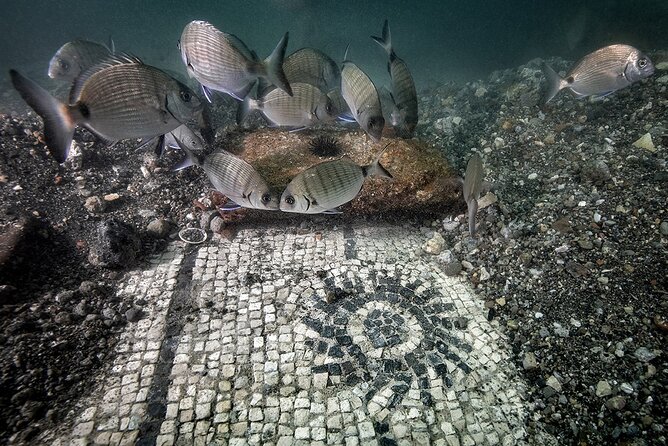
The underwater experience itself centers on remains such as villa foundations and mosaics. You might find that the outlines are easier to understand after the guide’s introduction on land. Without that context, a low wall or scattered stones can look like an ordinary seabed feature.
The shallow water is especially helpful here. You can stay close enough to study the pattern and form of the remains without rushing. At the same time, the bottom sand may drift into view and reduce sharpness, so do not expect every mosaic to appear perfectly clear.
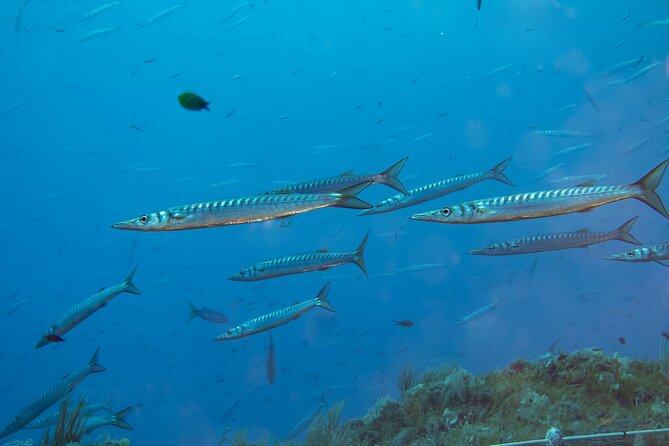
The archaeological focus also means sea life is secondary. You may see some marine life, but the attraction is the Roman site. If your ideal scuba outing means schools of fish and broad underwater scenery, this is not the best match.
More Scuba Diving in Italy
- Polignano a Mare boat tour emotions, caves, diving and appetizers
★ 5.0 · 1,022 reviews - Catania: Gulf Scuba Diving Tour with Marine Biologist
★ 4.9 · 212 reviews - Diving for patented divers
★ 5.0 · 175 reviews - TuffAlcantara – dives, slides and lots of fun in the Alcantara river
★ 5.0 · 106 reviews
Baiae and the park’s protected archaeology
Baiae, also spelled Baia, is the central idea behind the day. The former Roman resort is now represented by remains on land and underwater, with the submerged sections protected as an archaeological park.
The itinerary also includes the Centro Visite AMP Parco Sommerso di Baia, which connects the activity to the official protected area. The park entrance is included, so you are not paying an extra admission fee after arriving.
You should listen closely during the briefing because the guide’s explanation gives meaning to what you see below. A mosaic fragment or foundation line becomes more interesting when you understand that it belonged to a larger Roman villa complex.
The park setting also explains why the experience can feel less predictable than a normal recreational scuba trip. Site access, boat positioning, sand cover, and visibility all relate to the care of the remains. That is a fair trade for seeing archaeology in its original setting.
Castello Aragonese, Rione Terra, and Pozzuoli
The route names Castello Aragonese di Baia Napoli, Rione Terra, and Pozzuoli as part of the wider area connected with the activity. These places help you understand that Baia is not an isolated underwater attraction. It sits within a broader historic and volcanic zone around Pozzuoli.
The Castello Aragonese gives the area a later layer of history, long after the Roman villas. Rione Terra and Pozzuoli add to the sense that this coast has been shaped by settlement, trade, volcanic activity, and changing ground levels over many centuries.
Do not read these points as promises of extended land visits during the four-hour activity. The practical focus is the two scuba sessions in the Submerged Park. Still, knowing these names helps you place the underwater remains within the wider Bay of Naples area.
If you have extra time before or after the activity, the named locations can help you plan a broader visit around Baia and Pozzuoli. The information provided does not specify added stops or admission arrangements for them, so treat them as area context rather than included sightseeing.
Monte Nuovo, Campi Flegrei, and Vesuvius
Monte Nuovo and the Campi Flegrei are also named in the route. These volcanic features explain why the region has such unusual archaeological conditions. The ground around the Bay of Naples has shifted over time, and those changes helped place ancient sites below the modern waterline.
Vesuvius National Park appears in the wider itinerary as well. It is important to keep your expectations sensible: this four-hour experience begins and ends in Baia, and the supplied details do not describe a land excursion to Vesuvius or a separate visit to the national park.
What you do get is a connection between the underwater city and the volcanic setting of southern Italy. That connection adds useful context to the ruins. Baia is not simply an ancient settlement that happened to flood. Its position in an active volcanic region is part of the story.
For a first visit to the area, I like having these names in mind. They make the day feel connected to Naples’ wider archaeological and volcanic character rather than limited to a boat and a few submerged stones.
What the equipment and timing mean for you
All scuba equipment is included, along with boat transport, a guide, park admission, insurance, showers, changing rooms, and taxes. This is a strong package for someone who does not want to assemble separate rentals and tickets.
You must hold at least Junior Open Water Diver or Scuba Diver certification. This is not an introductory session for someone with no scuba qualification. If you are not certified, the operator points you toward a snorkeling visit to the archaeological park or a Discover Scuba Diving program instead.
The stated duration is about four hours, and that timing is realistic. It includes the arrival period, briefing, equipment preparation, short boat trip, two underwater sessions, and return to the center. One participant specifically found the four-hour timing accurate, which is useful if you are fitting this between other plans in Naples.
The activity is offered in English. Service animals are allowed, and the meeting point is near public transportation. The data also says most people can participate, but the certification requirement remains firm.
Winter water, visibility, and comfort
A January visit had water at about 17 C, with a 5 mm wetsuit and boots supplied in good condition. That is manageable for many certified divers, but comfort varies greatly once you are in the water for two 45-minute sessions.
For winter, I would bring 3 or 5 mm gloves if you have them. The extra hand protection was specifically useful in January. You should also remember that two sessions can feel quite different from one short swim, even at shallow depth.
Visibility may be affected by the sand used to cover and uncover the mosaics. The water can be cloudy, and that is not necessarily a sign of poor organization or poor conditions. It is partly a consequence of protecting the archaeological remains.
Summer may offer better conditions, but the supplied information does not promise a specific visibility level or water temperature. Weather is important enough that the activity can be canceled in poor conditions. If that happens, you are offered another date or a full refund.
Is $144.19 a fair price?
At $144.19 per person, the price is reasonable if you need equipment and want two guided sessions in a protected archaeological site. You are paying for more than boat transport. The package includes a guide, all scuba gear, park entry, insurance, showers, changing rooms, and taxes.
The small group limit improves the value. A maximum of five participants gives the guide a manageable group and makes it easier to follow the briefing and stay oriented at the site. It does not turn the outing into a private trip, but it is more personal than a large boat operation.
The value is weaker if you already have all your own equipment and mainly want a long independent session. You are also paying for archaeology rather than abundant sea life, so your satisfaction depends on what you want to see underwater.
Lunch is not included. It can be arranged at a partner restaurant for 35 euros per person, including 10 appetizers, a first course, a second course chosen from the menu, dessert, water, and wine. That is a substantial meal, but you should budget for it separately and request it in advance.
Who will enjoy this experience most?
I would recommend this for a certified scuba enthusiast who likes ancient sites, shallow water, and a small group. It suits you especially well if you are already visiting Naples and want an activity that feels specific to the Bay of Naples rather than interchangeable with a beach resort excursion.
It is also a good choice for a diver who prefers relaxed depth and a strong historical focus. The maximum depth of about 5 meters reduces air consumption and leaves room to study the remains.
I would hesitate if your priority is clear tropical-style water, abundant marine life, or a dramatic wall descent. The archaeological park is the point, and the water may be cloudy. You should also reconsider if you are not certified, since the minimum qualification is Junior Open Water Diver or Scuba Diver.
The experience received a top rating across seven reviews, with particular praise for communication, professional handling, accurate timing, and Alessandro’s briefing. Those qualities matter here because archaeological sites require more organization than a casual swim.
Should you book the two-session Baia experience?
Book it if you want to see Roman foundations and mosaics in shallow water, have the required certification, and appreciate a guide-led outing with gear and park admission included. The two 45-minute sessions give you a better look at the area than a single short visit, while the five-minute boat ride keeps the day compact.
Skip it if you want a wildlife-heavy scuba trip or if cloudy water would ruin the experience for you. For winter, bring gloves, expect 17 C water to feel cool, and leave room in your schedule for the full four hours.
The best reason to choose this outing is simple: ancient Baia is not only something you view from a museum path. You can see its remains below the water, at close range, with enough time for a second site and a guide to explain what you are seeing.
FAQ
How long does the experience last?
The activity lasts approximately four hours. Each underwater session lasts about 45 minutes, with roughly an hour spent at the buoy for each site.
What certification do I need?
You need at least Junior Open Water Diver or Scuba Diver certification. If you are not certified, you can consider the snorkeling visit to the archaeological park or the Discover Scuba Diving program.
Is scuba equipment included?
Yes. Scuba equipment, boat transport by RIB, the archaeological park entrance ticket, insurance, a diving guide, showers, changing rooms, taxes, and fees are included.
Where does the activity begin and end?
It begins at Via Lucullo, 80070 Baia NA, Italy, and ends back at the same meeting point.
Is lunch included?
No. Lunch is not included in the price. It can be booked on request at a partner restaurant for 35 euros per person, including appetizers, a first course, a second course, dessert, water, and wine.
What happens if bad weather cancels the activity?
The experience requires good weather. If it is canceled because of poor conditions, you can choose another date or receive a full refund. You can also cancel for a full refund if you do so at least 24 hours before the start time.
Newest dives added in Italy
- Scuba diving in Calabria, Italy★ 5.0 · 23 reviews
- Discover Scuba diving in Calabria, Italy★ 4.5 · 3 reviews
- Discover Scuba Diving PADI – Trial dive in Sorrento★ 5.0 · 2 reviews
- Double dive in the Punta Campanella Marine Protected Area★ 5.0 · 11 reviews
- Guided diving for beginners without certification from Sorrento★ 5.0 · 22 reviews
- Try Scuba Dive (baptism of the sea)★ 5.0 · 5 reviews
- Scuba Diving Experience in Taormina★ 5.0 · 20 reviews
- Syracuse: Ortigia Deep Dive Cultural Tour (max 6 Guests)★ 5.0 · 9 reviews
Dives for Certified Divers, compared.
Two-Tank Morning Dive Trip for Certified Divers
Read our review →
2 Tank Lanai Cathedral Scuba Dive Via Boat for Certified Divers
Read our review →
Wreck and Bridge Span Dive for Certified Divers
Read our review →
Certified Diver: 2-Tank Deep Wreck and Shallow Reef Dive Off Oahu
Read our review →
Certified Diver: 2-Tank Shallow Reef Dives off Oahu
Read our review →
2 Dives in the morning for certified divers in Bora Bora
Read our review →
Aruba 2-Tank Dive Excursion for Certified Divers
Read our review →
2-Dive adventure-Safe & Top-rated boat for Certified Divers
Read our review →Browse the lists this dive appears in