
Reviewed · SNORKELING
Snorkeling among the Submerged Archaeological Finds of Baia da Napoli
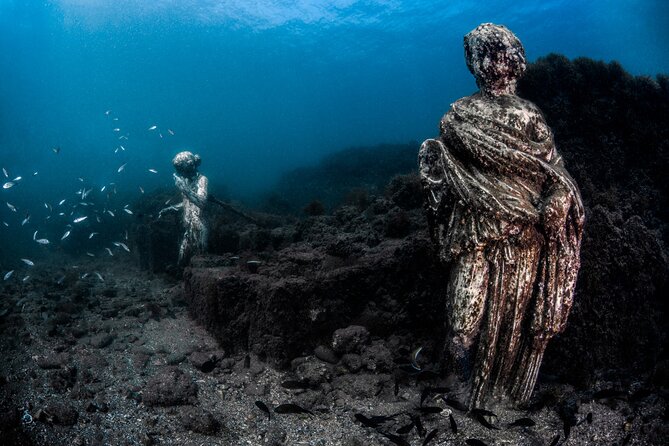
Roman ruins usually mean dusty stones under the hot Italian sun. At Baia, some of the best remains are underwater: mosaics, statues, columns, and sections of an ancient city wall resting in the shallow sea. This four-hour outing takes you to two sites, where you can see them from the water with scuba equipment and an instructor close by.
I like the small maximum group of four, which allows for patient instruction, and I like the easy depth reported by past participants, reaching about 20 feet. Carlo and Alex are among the guides praised for calm teaching, humor, and good English. The main consideration is cost: the tour is $126.71 per person, and the Naples transfer costs an extra €65 paid directly to the driver.
Key points to know before booking
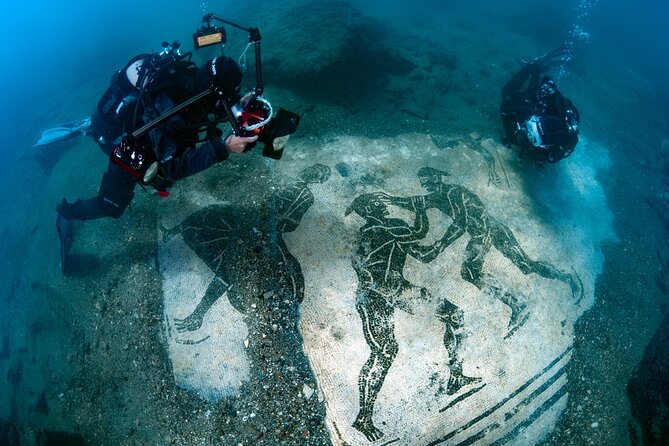
- Two underwater archaeological sites: See Roman mosaics, statues, columns, vases, sea life, and part of the old city wall.
- Shallow water: The maximum depth is about 20 feet, with one underwater session lasting up to 39 minutes.
- Very small group: The experience accepts no more than four people, useful for first-time participants.
- Patient instruction: Carlo and Alex are among the named instructors praised for clear guidance, humor, and encouragement.
- Short boat ride: The trip from the dock to the underwater sites takes only a few minutes.
- Extra transport cost: An air-conditioned vehicle from Naples costs €65, paid directly to the driver.
Roman Baia beneath the sea
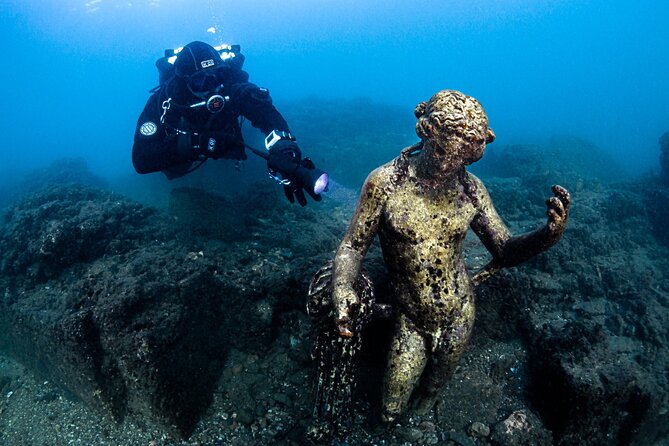
Baia was once a favored resort area for wealthy Romans, and parts of that ancient world now lie beneath the water. Here, archaeology is not displayed behind glass or roped off on dry land. You look down through the sea and see remains in the place where they were left.
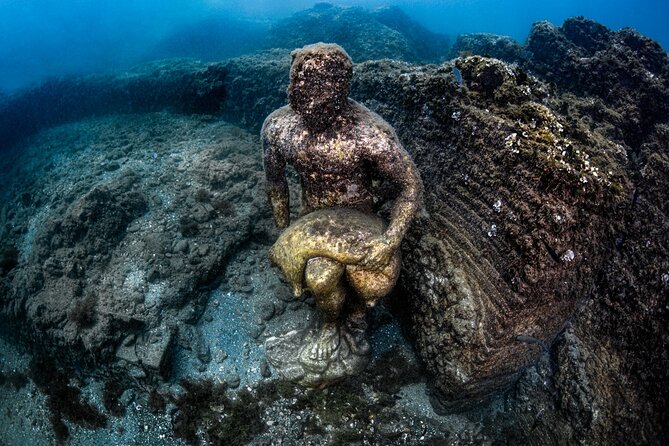
The underwater park includes mosaics, statues, columns, a vase, and sections of the ancient city wall. The remains are not presented as a polished museum display. They sit among the water and marine life, which gives the visit a different feel from walking through Pompeii or Herculaneum.
I like this setting because it connects the Roman past with the natural world. You may spot sea life around the stonework while examining the human-made remains. That combination is the reason to choose Baia instead of another standard archaeological stop in the Naples area.
The sites are shallow, with a reported maximum depth of about 20 feet. That matters. You are not being sent into a demanding underwater environment, and the depth gives beginners a more comfortable introduction. Still, you should be at ease in the water and follow the instructor’s directions carefully.
More Snorkeling in Italy
- Polignano a Mare luxury boat tour, aperitif, diving and snorkeling
★ 5.0 · 51 reviews - Snorkeling and Diving in the Gulf of Tavolara with Fishing
★ 5.0 · 6 reviews - Great Barrier Reef Snorkeling and Diving Cruise from Cairns
★ 4.5 · 3,714 reviews
What happens during the four-hour outing
The experience lasts about four hours and includes underwater visits at two different locations. The exact order of the sites can vary, but the basic rhythm is straightforward: meet the team, receive an explanation of the area and the equipment, travel a short distance by boat, and visit the two archaeological spots.
Before entering the water, the instructors explain the history and layout of the site. This briefing is especially useful because the ruins can be easy to miss if you do not know what you are looking at. A column or wall may look like an ordinary shape beneath the surface until someone points out how it fits into the ancient settlement.
Then comes the first water session. One reported session lasted 39 minutes, giving you enough time to look around rather than rush past each object. The shallow setting also makes it easier to keep your bearings and listen to the guide.
The second site adds variety. You are not repeating the same view in the same place, and the two locations help show how broad the submerged settlement is. Depending on visibility and conditions, you might see mosaics, statues, columns, wall fragments, a vase, and marine life.
The boat ride from the dock is reported to take only a few minutes. That is a small but useful detail. You spend most of the scheduled time on instruction and underwater sightseeing, not sitting in transit.
A gentle introduction for first-time participants
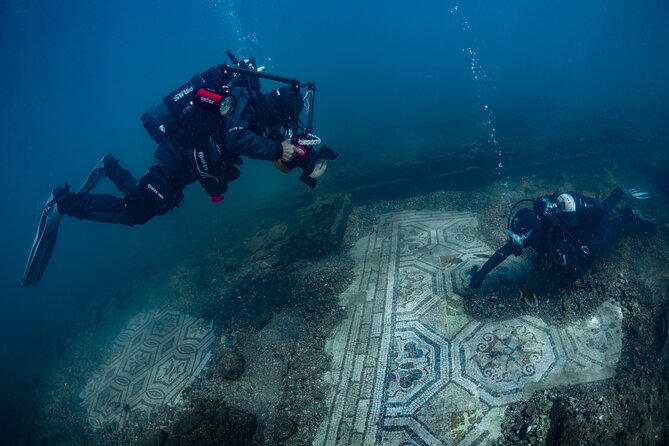
The most encouraging part of this outing is the way the instructors handle beginners. People with no previous scuba experience have been able to take part, with patient explanations and close guidance throughout the underwater sessions.
That does not mean you can treat the activity casually. You still need to be comfortable participating in a water-based activity and able to follow instructions. But the shallow depth and small group create a less intimidating setting than a large commercial boat trip with many people waiting their turn.
The guides receive strong praise for their manner. Carlo is described as experienced, humorous, and able to communicate well in English. Alex is also singled out for making the basics clear and staying with the group underwater. Those personal details matter more here than a fancy boat or a long list of equipment. A good instructor can turn a confusing first underwater visit into an enjoyable one.
If you have previous scuba experience, you may find the 20-foot maximum depth modest. That is part of the appeal for beginners, but experienced participants should book this for the archaeology rather than for technical challenge, deep water, or a long open-sea session.
What you actually see underwater
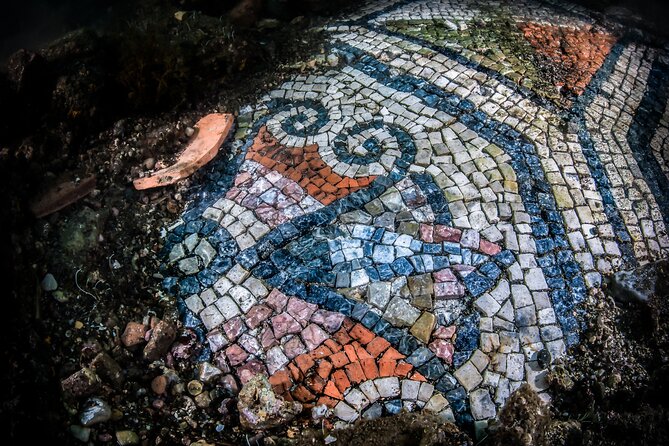
The underwater ruins are the main event, but they are not arranged like a conventional museum gallery. You need to look carefully and let the guide identify the important features.
Mosaics are among the most memorable finds. Their patterns and stone surfaces connect directly to Roman domestic and public spaces. Statues offer another kind of evidence, showing the decoration that once filled the settlement. Columns and wall sections help you picture the scale of the buildings, even when only fragments remain.
A vase may seem like a small object compared with a statue or wall, yet small finds can make the site feel more personal. They suggest daily life rather than only grand architecture. Sea life moving around the ruins adds a present-day layer to a place shaped by people nearly two thousand years ago.
Water clarity can affect how much detail you see. The activity requires good weather, so poor conditions can lead to a new date or a full refund. That policy is sensible for an outdoor archaeological outing, since rough water or poor visibility would reduce both comfort and the quality of the view.
Bring a waterproof camera if you have one. It is a practical tip for this particular outing because the unusual setting is difficult to describe afterward. You should still keep your attention on the guide and the site rather than spending the whole session trying to frame photographs.
Another way to get in the water in Italy:
- Polignano a Mare boat tour emotions, caves, diving and appetizers
★ 5.0 · 1,022 reviews - Catania: Gulf Scuba Diving Tour with Marine Biologist
★ 4.9 · 212 reviews - Diving for patented divers
★ 5.0 · 175 reviews - Diving for certified divers with PADI 5* Diving Resort – Taormina
★ 5.0 · 167 reviews
Equipment, comfort, and what is included
Use of scuba equipment is included, along with bottled water and all fees and taxes. That keeps the base price clearer than an activity that adds equipment charges at the end.
The supplied details do not specify every piece of personal gear you should bring, so you should confirm any packing questions with SuBaia Diving Center before departure. A waterproof camera is useful if you want pictures. You should also plan around being in the water for a meaningful part of the day rather than treating this as a quick shoreline visit.
The experience is offered in English. That is important during the briefing and underwater guidance, where clear instructions matter. Carlo is specifically praised for his English, while the instructors as a group are described as patient and encouraging.
Bottled water is provided, but food is not listed as included. A nearby area has good food, so you can plan a meal before or after the activity, but the tour itself should be treated as a half-day water excursion rather than a lunch outing.
The Naples transfer and the real price
The listed price is $126.71 per person. For a small-group archaeological activity with equipment, instruction, two sites, bottled water, and included fees, I find that a reasonable price if underwater Roman remains are high on your Naples wish list.
The group limit makes the price easier to justify. A maximum of four people gives the instructor more time to explain what you are seeing and help anyone who needs extra support. You are paying for access to a special site, but also for supervision and equipment in an environment where a good guide matters.
The catch is transportation. An air-conditioned vehicle from Naples costs €65, paid directly to the driver. The supplied information does not state whether that amount is per vehicle or per person, so confirm the arrangement before booking. If the charge is shared by a small party, it may be manageable. If you are alone, it changes the total cost considerably.
Pickup is offered, which can make the outing easier than arranging your own route. The extra transport charge means you should calculate the full price from your hotel or meeting point, not just the advertised per-person amount.
Who will enjoy Baia most
I would recommend this to anyone interested in archaeology who wants more than a standard land-based ruin. The experience gives you a direct look at Roman remains while you are in the sea, and the two sites provide more variety than a single underwater stop.
It also suits first-time participants who want a gentle introduction. The shallow water, small group, and patient instruction are meaningful advantages. A family with an older teenager may find the format appealing, provided everyone can participate safely in the water. One 18-year-old with no previous experience found the activity suitable, according to the experience details.
Older adults can also consider it if they are comfortable with the physical demands of getting into the water and using scuba equipment. A couple in their 50s enjoyed the outing, showing that it is not limited to young or highly athletic people. Still, the available information does not give detailed accessibility guidance, so ask the provider about any mobility or health concerns before booking.
This is less suitable if you want a long, deep, technical session. The maximum depth is about 20 feet, and the focus is on archaeological viewing, not advanced scuba practice. It is also not the best choice for someone who dislikes water, cannot follow underwater instructions, or wants a completely flexible schedule.
How Baia fits into a Naples itinerary
Baia works well as a change of pace from Naples museums and city streets. You can spend one day looking at Roman objects on land, then see another part of the same ancient world beneath the water.
Allow about four hours for the activity itself, plus transfer time from Naples. Since the boat ride to the sites is short, the main planning issue is the journey between the city and the diving center, not time at sea.
The nearby food options make it practical to pair the outing with a meal in the area. You could also plan time to see ruins near the site, as long as you do not crowd the schedule too tightly. Weather can change plans, so avoid placing an important same-day connection immediately afterward.
Booking is often made well ahead, with the activity averaging about 34 days in advance. If your Naples dates are fixed, reserve early, especially because the group limit is only four people.
Cancellation and weather considerations
You can cancel up to 24 hours before the start time for a full refund. Changes or cancellations made less than 24 hours before the activity are not accepted for a refund, and the cut-off follows local time.
Good weather is required. If conditions force cancellation, you are offered another date or a full refund. That gives you useful protection, but I would still keep a little flexibility in your itinerary rather than placing this on the day of a flight or train departure.
Should you book this underwater Roman adventure?
Book it if you want a small, personal outing focused on Roman remains in an unusual setting. The shallow water, two archaeological sites, short boat ride, and patient instructors make it approachable, while the mosaics, statues, columns, and wall fragments give it real substance.
Think carefully if the added €65 Naples transfer makes the total cost uncomfortable, or if you want challenging scuba rather than a guided archaeological visit. For the right person, though, Baia offers something few Naples activities can match: a chance to look at Roman buildings, objects, and decoration where the sea now covers them.
FAQ
How long does the Baia underwater archaeology experience last?
The activity lasts approximately four hours.
How many underwater sites will I visit?
The experience includes two underwater archaeological sites.
What can I see beneath the water?
You may see Roman mosaics, statues, columns, a vase, parts of the ancient city wall, and sea life.
How deep is the water?
The reported maximum depth is about 20 feet.
Is equipment included?
Yes. Scuba equipment, bottled water, and all fees and taxes are included.
Does the experience include transportation from Naples?
Pickup is offered, but an air-conditioned vehicle from Naples costs €65 and is paid directly to the driver.
Newest dives added in Italy
- Scuba diving in Calabria, Italy★ 5.0 · 23 reviews
- Discover Scuba diving in Calabria, Italy★ 4.5 · 3 reviews
- Discover Scuba Diving PADI – Trial dive in Sorrento★ 5.0 · 2 reviews
- Double dive in the Punta Campanella Marine Protected Area★ 5.0 · 11 reviews
- Guided diving for beginners without certification from Sorrento★ 5.0 · 22 reviews
- Try Scuba Dive (baptism of the sea)★ 5.0 · 5 reviews
- Scuba Diving Experience in Taormina★ 5.0 · 20 reviews
- Syracuse: Ortigia Deep Dive Cultural Tour (max 6 Guests)★ 5.0 · 9 reviews
Snorkeling, compared.

Great Barrier Reef Snorkeling and Diving Cruise from Cairns
Read our review →
Ocean Freedom Great Barrier Reef Luxury Snorkel and Dive Cruise
Read our review →
Premium Snorkelling and Diving Reef Day Trip
Read our review →
Snorkeling 6 x 1 to Orange Bay w Diving & Massage
Read our review →
Snorkel & Dive the Reef: Sustainable, Scientific & Cultural Tour
Read our review →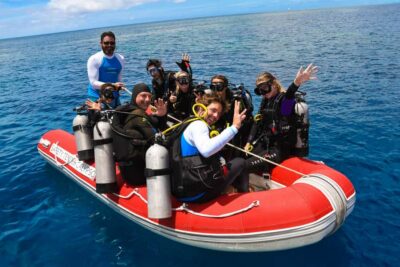
Browse the lists this dive appears in