
Reviewed · PADI COURSES & CERTIFICATION
Discover Scuba Diving with No Certification in St Thomas
The big appeal here is simple: you get to breathe underwater in the open ocean without signing up for a full certification course. Aqua Marine Dive Center keeps each instructor’s group to four students, and instructors such as Jamie, Ana, Spencer, Dave, and Steph focus closely on helping nervous beginners feel calm and capable. I especially like the patient teaching and the chance to see reef fish, coral, stingrays, turtles, and perhaps an octopus on your first ocean descent.
I also like that the afternoon does not end when you climb back aboard. You can snorkel at another spot, enjoy water, soft drinks, and snacks, or pay extra for a second scuba descent. The main consideration is the medical clearance rule: some answers on the required questionnaire call for a doctor’s signed approval, and without it, you may snorkel but cannot scuba.
Key points to know before you book
- Four students per instructor: You get more personal help than on a large boat excursion.
- First ocean descent included: The experience moves beyond a pool lesson and takes you to a reef site by boat.
- Snorkeling is part of the plan: If you prefer to stay near the surface, equipment and time in the water are included.
- A second scuba descent costs extra: Many participants find the first descent goes quickly once nerves settle.
- Medical paperwork matters: Prescription medication, recent surgery, asthma, certain heart conditions, diabetes, and several other answers may require written approval.
- Plan around air travel: You are advised to wait at least 18 hours after scuba before flying.
Your first underwater experience in St. Thomas
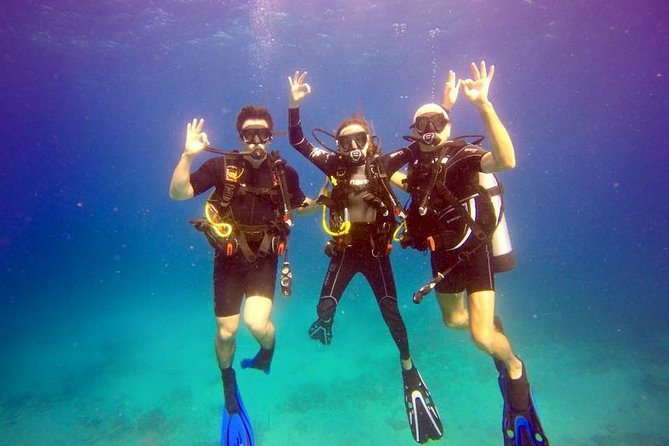
This is a good fit if you are curious about scuba but not ready to commit to a certification course. In about three and a half hours, you cover the basics, learn how the equipment works, and make a supervised open-ocean descent from a boat.
I would think of it as a carefully managed introduction, not a shortened certification class. You will learn enough theory and safety procedure to take part under direct supervision, but you will not leave certified to scuba on your own.
The format keeps things personal. One PADI-certified instructor works with no more than four students, a useful ratio when everyone is learning at a different pace. Some people need extra time to become comfortable breathing through a regulator. Others take to it quickly and want more time looking at the reef. A small group gives the instructor room to respond to both.
The experience is provided by Aqua Marine Dive Center, and the boat departs from Saga Haven Marina at 6117 Estate Frydenhoj. You arrange your own way to the marina, so check your route and allow enough time to arrive without rushing. The activity returns to the same meeting point.
More PADI Courses in the world
- Barcelona: PADI Discover Scuba Diving
★ 4.7 · 1,016 reviews - PADI Open Water Diver Course
★ 5.0 · 626 reviews - Tossa de Mar: PADI Discovery Scuba Diving in Costa Brava
★ 4.7 · 392 reviews
At Saga Haven Marina, the lesson begins on land
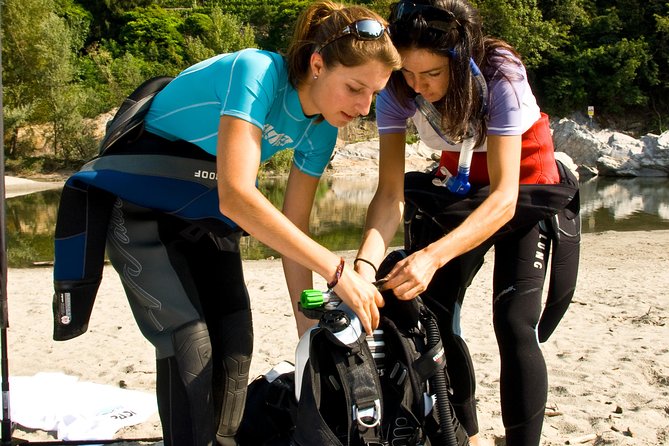
The first part is practical rather than flashy. You meet the instructor, complete the paperwork, and go through a short scuba lesson before heading out on the boat.
Expect an explanation of how to breathe with the equipment, how the gear fits and functions, and how to use basic hand signals underwater. The instructor also covers the theory needed for this supervised experience. This early briefing matters because the first challenge is often not the water itself. It is learning to trust the equipment and communicate without speaking.
You should be ready to answer the medical questionnaire honestly. This is not a form to skim. If you have had surgery within the past year, take most prescription medications, have diabetes, recurring sinus problems, asthma, severe allergies, trouble breathing, angina, or other heart concerns, you may need a signed letter from your doctor before the activity.
The same applies in certain cases if you are over 45 and smoke or have high blood pressure or high cholesterol. The paperwork does not automatically mean you cannot scuba. It means the operator needs medical approval from someone qualified to assess your condition.
If your answers require approval and you arrive without it, you can still snorkel, but you will not be allowed to scuba. This is the single most important prebooking detail, especially for anyone who takes regular medication or has a recent medical history.
The boat ride and equipment briefing
Once aboard, the instructor continues the lesson while the boat heads toward the water site. You get a closer look at the regulator, mask, tank, buoyancy equipment, and other gear before entering the sea.
That order is sensible. You first learn the basics on land, then see the equipment in context, and only afterward enter the water. The instructor also reviews hand signals, which are your main way to communicate below the surface.
You need to be able to swim and should have a moderate level of physical fitness. This is not an activity for someone who cannot manage time in the water, climb aboard with assistance, or follow basic instructions. Minimum age is 10, and children must be accompanied by an adult.
The boat setting adds a pleasant sense of occasion, but it can also make the trip feel more exposed than a calm pool lesson. One participant became overwhelmed and did not complete the scuba portion, while the crew helped that person and continued to offer a snorkeling option. That is a useful reminder: you can try, pause, or stop. You do not need to force yourself through the experience.
Your first open-ocean descent
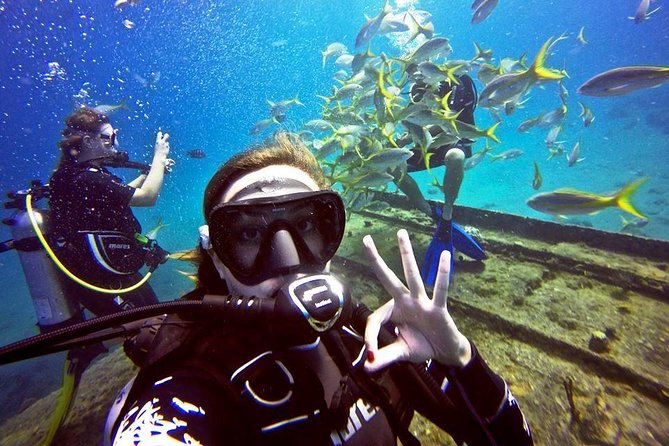
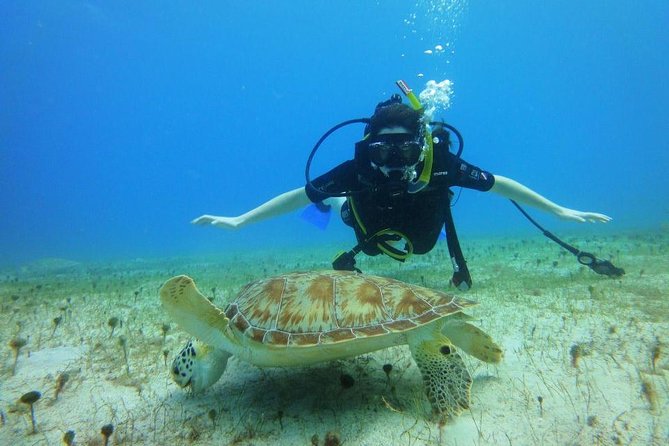
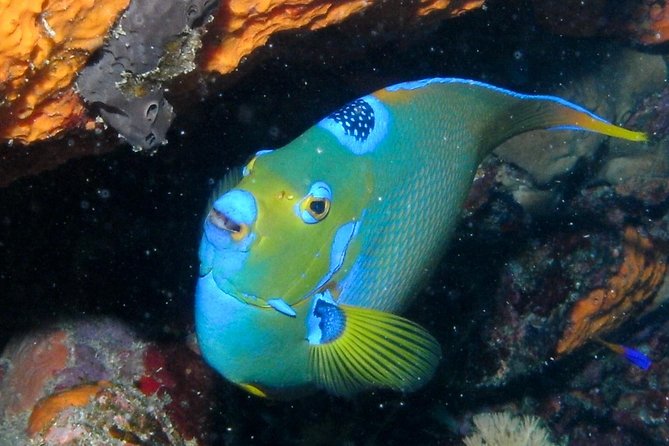
The main event is a supervised descent from the boat at a reef site around St. Thomas. The water may reveal tropical fish, coral, sea stars, stingrays, turtles, rays, nudibranchs, or an octopus. Wildlife is never guaranteed, but the descriptions of fish, coral, stingrays, turtles, and other marine life give you a good sense of what may appear.
Your instructor stays close and points out things you might miss while you are concentrating on breathing and buoyancy. For a first-timer, that personal attention is valuable. It lets you spend less time worrying about what to do with your hands and more time noticing the reef.
Expect the beginning to be the most demanding part. Several participants needed time to settle their breathing or manage nerves. Ana was praised for letting one beginner move at a comfortable pace, while Jamie helped another person work through the first moments underwater. Those are exactly the qualities I would want from an introductory instructor: calm direction, patience, and no pressure to perform.
Some first-time participants find they can release a hand and explore more freely once they settle in. Others prefer to remain close to the instructor for the entire descent. Both are reasonable ways to approach a first attempt.
The depth, exact reef location, and marine life can vary. The supplied information does not promise a specific site or animal encounter, so treat the fish and turtles as possible rewards, not guaranteed features. The safe instruction and supervised ocean experience are the core product.
More Discover Scuba Diving in the world
- Discover Scuba Diving
★ 5.0 · 1,676 reviews - Discover Diving in Curacao
★ 5.0 · 886 reviews - Mallorca: Discover Scuba Diving for Beginners
★ 4.7 · 805 reviews - Lanzarote Introductory Scuba Diving Experience
★ 5.0 · 766 reviews
Snorkeling gives the day a flexible second act
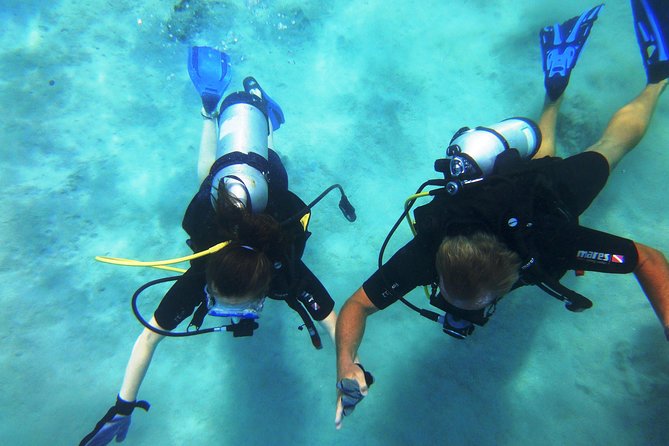
After the scuba portion, you can use the snorkeling equipment and visit a snorkeling spot. This is a strong part of the design because it gives you a way to keep enjoying the water even if scuba feels too intense.
Snorkeling also lets family members or friends choose different levels of participation. One person can try scuba while another stays near the surface. If a medical answer prevents you from scuba, the operator can still allow you to snorkel, provided the rest of the activity is suitable.
Some outings include a stop such as Christmas Cove, and the boat may visit reef areas associated with St. Thomas and nearby islands. The exact stop is not fixed in the information provided, so you should not book expecting a particular cove or landmark.
The snorkeling time is also useful after scuba because it feels less technical. You can float, watch the reef from above, and enjoy the water without managing a tank and regulator. Water, soft drinks, and snacks are provided after the scuba portion, a small but welcome touch after a physically active morning or afternoon.
Is the optional second descent worth paying for?
The standard $225 price includes the lesson, one open-ocean scuba descent, snorkeling equipment, the snorkeling portion, a guide, water, soft drinks, and snacks. Transportation to and from the marina is not included. A second scuba descent costs extra.
For a first-time experience, $225 is not a bargain-basement activity, but the price makes more sense when you consider the small group and the hands-on instruction. A maximum of four students per instructor is a better setup than a crowded boat where you compete for attention. You are paying for a personal introduction, equipment, boat time, and supervision, not just a quick swim with a tank.
The second descent may offer better value than it first appears. The first attempt includes learning to breathe, checking the mask, adjusting buoyancy, and managing nerves. By the second entry, you may spend less time thinking about the mechanics and more time looking around.
Several participants specifically wished they had chosen the second descent or recommended adding it. Still, I would treat it as an option rather than a requirement. If you are tired, seasick, anxious, or unsure about scuba, snorkeling may be the wiser choice. The extra cost is worthwhile mainly if you finish the first descent wanting more time below the surface.
Sea conditions, seasickness, and comfort
This is a boat activity, so weather matters. If poor weather forces cancellation, you are offered another date or a full refund. The activity also requires a minimum number of participants, and if that number is not met, you are offered another date or experience, or a full refund.
The published duration is about three hours and 30 minutes. That includes the meeting, paperwork, lesson, boat time, water activity, and return to the marina. Keep the rest of your day flexible rather than scheduling a tight connection afterward.
Seasickness is another practical concern. One participant became very seasick, and the crew assisted while the other person continued with the scuba portion. That suggests the staff takes the problem seriously, but it does not remove the basic risk of spending several hours on a boat. If you are prone to motion sickness, consider your usual precautions and ask the operator what is permitted before you arrive.
The activity is listed as private, meaning only your group participates. The instructor ratio still matters within that private format: no more than four scuba students per instructor.
Who should book this St. Thomas experience?
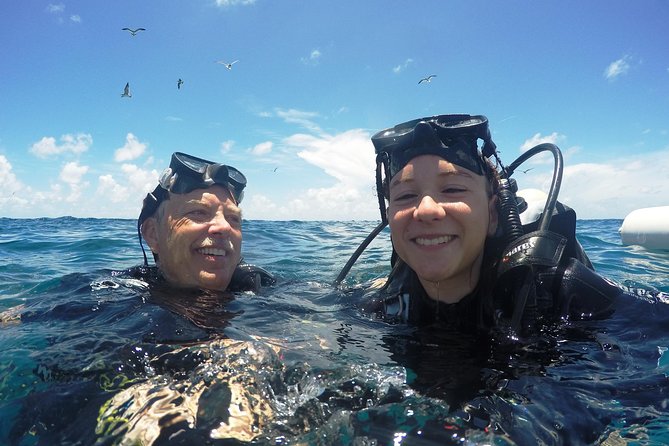
I would recommend it to adults and children age 10 or older who can swim, have moderate physical fitness, and want a first taste of scuba without spending several days on certification training.
It is especially useful for couples or families with different comfort levels. One person can try the scuba portion while another snorkels. A patient instructor can also help if you are nervous about breathing underwater or need more time before moving away from the boat.
I would be more cautious if you dislike boats, cannot swim, have a recent medical issue, or do not want to deal with a doctor’s approval. The activity is also a poor match if you need to fly soon afterward, since you are advised to wait at least 18 hours after scuba before boarding a plane.
The experience is not ideal for someone who expects a guaranteed turtle, a specific reef, or a long underwater session. Marine life and conditions vary. You are buying a supervised first attempt, not a promise of a particular animal encounter.
Practical details before you reserve
You receive confirmation at booking, and the activity uses a mobile ticket. Service animals are allowed, and the marina is near public transportation, but transportation to the attraction is not included.
Bring the information you need for the medical form and arrange a doctor’s signed approval ahead of time if any answer may require it. Do not wait until the morning of the activity. Without the required approval, the operator may restrict you to snorkeling.
Remember the flight rule. If you scuba on the final day of your St. Thomas stay, leave at least 18 hours before flying. This timing issue is easy to overlook when planning a cruise departure or airport transfer.
The cancellation policy is strict: the booking is non-refundable and cannot be changed for any reason. The weather and minimum-participant exceptions apply only when the operator cancels the experience.
Should you book it?
Book this if you want a personal, well-supervised first scuba experience and are happy with one ocean descent, optional snorkeling, and the possibility of paying extra for a second descent. The small instructor groups and repeated praise for calm, patient teaching are the strongest reasons to choose it.
Before paying, read the medical requirements carefully, confirm that you can swim, and check that your flight is more than 18 hours after the activity. If you are unsure about scuba, the snorkeling option gives you a softer landing. If you already know you want more underwater time, budget for the second descent from the start.
FAQ
Do I need scuba certification to join?
No. This is designed for non-certified participants who want to try scuba under the direct supervision of a PADI-certified instructor.
Where does the experience begin?
You meet at Aqua Marine Dive Center at Saga Haven Marina, 6117 Estate Frydenhoj, St. Thomas, US Virgin Islands.
How long does the activity last?
The experience lasts approximately three hours and 30 minutes, including the lesson, boat ride, water activities, and return to the marina.
How many students are assigned to each instructor?
Each instructor works with a maximum of four scuba students.
What age must participants be?
The minimum age is 10. Children must be accompanied by an adult.
Do I need to know how to swim?
Yes. All participants must be able to swim and should have a moderate level of physical fitness.
What happens after the first scuba descent?
You can snorkel using the provided equipment, enjoy water, soft drinks, and snacks, or pay extra for a second scuba descent.
Is the second scuba descent included in the price?
No. The listed $225 price includes one open-ocean scuba descent. A second scuba descent costs extra.
Will I need a doctor’s approval?
Possibly. Certain medical answers require written approval, including some cases involving recent surgery, prescription medication, diabetes, asthma, severe allergies, recurring sinus problems, heart conditions, and specific health factors for people over 45.
Can I fly immediately after scuba?
No. Participants are advised to allow at least 18 hours between scuba and flying.
Is transportation to the marina included?
No. Transportation to and from the attraction is not included. The activity ends back at the Saga Haven Marina meeting point.
What happens if poor weather cancels the activity?
If the operator cancels because of poor weather, you are offered a different date or a full refund. If the minimum number of participants is not met, you are offered a different date or experience, or a full refund.
Newest dives added in the world
- Discover SCUBA Diving in Beautiful Unawatuna Bay★ 5.0 · 30 reviews
- Phuket Scuba Diving Maiton Private Island Small Group or Snorkel★ 5.0 · 9 reviews
- PADI Scuba Diver Course★ 5.0 · 30 reviews
- Fun Dives For Certified Divers★ 5.0 · 30 reviews
- Tulamben Diving Tour Shipwreck USS Bali★ 5.0 · 13 reviews
- Tulamben Diving USS Liberty Shipwreck Scuba Dive★ 5.0 · 186 reviews
- Bali: Tulamben Bay and the USAT Liberty Wreck Dive★ 4.9 · 58 reviews
- From Pattaya: Snorkeling or Beginner Scuba Diving Tour★ 4.1 · 68 reviews
PADI Courses & Certification, compared.
Tossa de Mar: PADI Discovery Scuba Diving in Costa Brava
Read our review →
Full-Day Beginner Scuba Course with Private Tuition, Racha Yai
Read our review →
Heraklion: Beginner Scuba Diving Lesson with PADI Instructor
Read our review →
Try Dive – PADI Discover Scuba Diving in Tenerife
Read our review →
Browse the lists this dive appears in