Reviewed · PADI COURSES & CERTIFICATION
Become certified diver in 3 days – PADI Open Water Diver course on Koh Tao
Koh Tao turns learning to scuba into a compact three-day course, with classroom work in Mae Haad and four sea sessions around Nang Yuan Island. You finish with a PADI Open Water certificate, a log book, and the basic training needed to continue scuba trips around the world. The first underwater work takes place in shallow water, which gives you time to get used to the mask, air supply, and buddy procedures before the deeper sessions.
I like the small maximum group of 10, since instruction matters a great deal when you are learning a new skill. I also like that the price includes equipment, four open-water sessions, the certificate, and a log book. The main consideration is time: this is an intensive course, not a casual half-day introduction, and poor weather can force a change of date.
Key points to know before booking
- Three full days of training: Expect classroom work, quizzes, practical skills, four open-water sessions, and a final exam.
- Maximum depth reaches 18 meters: The first two sea sessions go to 12 meters, while the final two reach 18 meters.
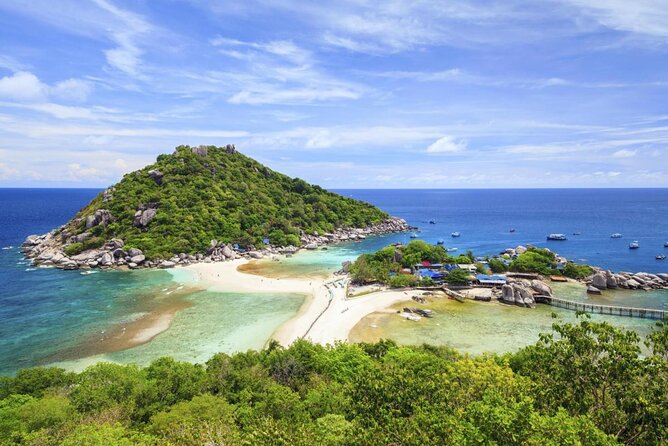
- Nang Yuan Island is the main practice setting: Shallow-water training and all scheduled sea sessions take place there.
- Equipment is provided: You use the center’s scuba equipment during the practical work.
- Your PADI certificate is included: You finish with an internationally recognized entry-level qualification.
- The center is close to Mae Haad pier: You can walk to Scuba Birds at 24 Mae Haad from the pier area.
What the three-day PADI course really involves
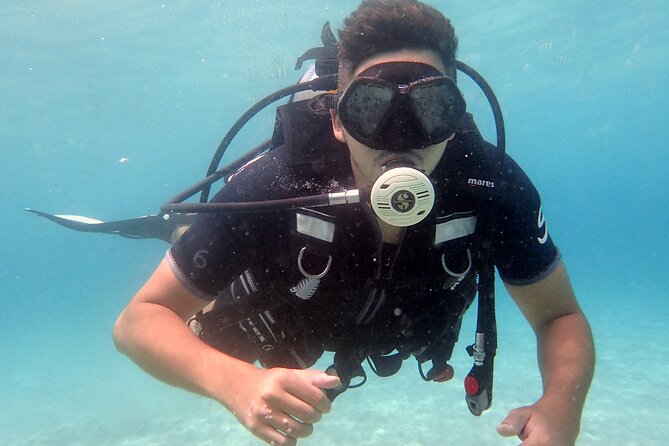
This is not a quick taste of scuba. It is a structured beginner course that asks you to study, take quizzes, learn equipment procedures, practice underwater skills, and complete a written exam.
That structure is useful. A first scuba experience can feel like a lot to absorb, especially when you are managing breathing, buoyancy, hand signals, and equipment at the same time. The course spreads those tasks over three days so you can build confidence in stages.
You start at Scuba Birds PADI 5 Star IDC Center in Mae Haad. The meeting point is easy to reach on foot from the pier, which keeps the first morning simple. You do not need to arrange a separate transfer to the classroom, and the end of each day returns you to the same meeting point.
The course includes the equipment needed for the sea sessions. That makes the price easier to assess, because you are not adding a separate equipment rental charge to the advertised $375.70 per person. It also means you can learn with the same basic setup throughout the course instead of trying to organize your own kit.
The group limit is 10 people. That is not a private lesson, but it is still a manageable size for a beginner class. Before booking, I would ask how many students will be assigned to each instructor on your dates. The stated maximum applies to the whole activity, and the amount of personal attention you receive can depend on the instructor arrangement.
More Dives for Certified Divers in Thailand
- Try Scuba Diving in Racha Yai/noi: 3 Dives for Non-Certified
★ 5.0 · 116 reviews - Fun Diving Packages (Certified Divers)
★ 5.0 · 93 reviews - Koh Samui 2-Dive Trip to Sail Rock for certified divers
★ 5.0 · 89 reviews
Day one: study first, then your first underwater skills
The first day begins with the PADI study material. You read five chapters of the Open Water Diver manual, with five matching parts of the training video available as support. After each section, you complete a knowledge review.
This is the least glamorous part of a course on a tropical island, but it carries real value. You learn the basic rules behind safe ascent rates, air management, equipment use, buddy work, and underwater communication. The exact course material is not simply background reading. It explains why you perform each practical skill in a certain way.
Set aside enough energy for this work. You may be tempted to treat the classroom as a formality before the sea portion, but the quizzes check whether you understand the material. The schedule lists about two hours at the center on the first day, followed by up to five hours at Nang Yuan Island.
The practical session begins in shallow water. This is a smart progression for someone who has never used scuba equipment. You learn how to assemble the equipment, carry out buddy procedures, and handle basic skills while you are close to the surface.
The shallow-water setting also gives you a chance to settle your breathing. Many first-timers feel nervous when they first breathe through a regulator or put their face fully underwater. The course is designed to let you repeat basic actions before going farther from shore or reaching greater depth.
One experience names Dominik Maier as an instructor and describes him as humorous while still firm when safety required it. If he is teaching your group, that combination could suit a nervous beginner well. Instructor assignments can change, so I would not book on the assumption that he will lead every course.
The first day may feel long because it combines mental work with practical training. Still, this is the day that sets up the rest of the course. You leave with the basic routines needed for the next morning, rather than being sent straight into a full sea session.
Day two: two open-water sessions to 12 meters
Day two continues with theory, knowledge reviews, and quizzes at the center. The listed classroom time is about two hours, followed by a five-hour period at Nang Yuan Island from 10 a.m. to 3 p.m.
You complete two open-water sessions, with a maximum depth of 12 meters. The point is not simply to see fish and coral. You repeat the skills introduced in shallow water and practice doing them in a more natural sea setting.
This is an important stage in the course. A skill that feels easy in shallow water can require more concentration once you are moving through open water. You are learning to monitor your air, stay with your buddy, respond to instructions, and keep control of your position in the water.
The 12-meter limit is also a sensible step between the shallow session and the final day’s 18-meter maximum. You gain experience without moving immediately to the deepest level required for the certificate.
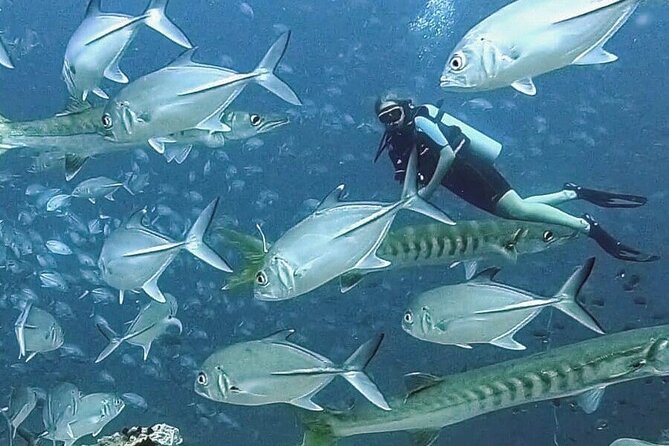
Nang Yuan Island adds an appealing setting to the training. The island is used as the practical base for the course, so the sea portion is not confined to a swimming pool. You can expect the scenery and marine life of the Gulf of Thailand to be part of the experience, although the exact visibility and wildlife can vary with weather and sea conditions.
Keep your expectations realistic. Training takes priority over sightseeing. Your instructor will need to watch your technique and safety, so you may spend more time repeating a skill than gazing around. That is a good trade for a first qualification, but it is worth knowing before you arrive.
Day three: the final exam and four completed sea sessions
The third morning starts at 8 a.m. with more theory and the final written exam. The classroom portion is scheduled for about one hour.
After that, you return to Nang Yuan Island from 9 a.m. to 2 p.m. for the final two open-water sessions. These reach a maximum depth of 18 meters, the standard depth limit listed for this entry-level course.
By this point, you have already completed shallow-water practice and two sessions to 12 meters. The final day is about bringing those skills together. You continue working on equipment handling, buddy procedures, and the required underwater tasks while managing a greater depth.
The course finishes with certification procedures. You receive the PADI Open Water Diver certificate and a log book for recording future scuba sessions. The log book is a small but useful item. It gives you a record of your training and creates a place to note later sessions as you build experience.
The certificate is the biggest practical benefit. It is not limited to Koh Tao, so you can use the qualification when arranging future scuba trips around the world. It does not replace experience, though. After three days, you have an entry-level qualification, not years of practice. I would treat the certificate as permission to keep learning with responsible supervision and suitable conditions.
More PADI Courses in Thailand
- Full-Day Beginner Scuba Course with Private Tuition, Racha Yai
★ 5.0 · 368 reviews - La Bombona Diving Koh Tao Open Water Course
★ 5.0 · 172 reviews - Padi open water diver course, become a diver in 3 days
★ 5.0 · 113 reviews - PADI Discover Scuba Diving for Beginners (Non Certified Divers)
★ 5.0 · 78 reviews
Why the four sea sessions matter
The course includes four open-water sessions, which is more useful than a single introductory outing. You have time to repeat techniques, identify the parts of scuba that feel awkward, and become more comfortable with your equipment.
The sessions also progress in a clear order:
- The first day focuses on shallow-water skills and equipment routines.
- The second day includes two sessions to a maximum of 12 meters.
- The third day includes two sessions to a maximum of 18 meters.
- Certification follows the completion of the required work and final exam.
That sequence gives you a real training arc. You are not simply placed in the sea and expected to cope. Each stage adds another layer of responsibility.
Still, four sessions across two days can be tiring. The schedule is full, and you will be learning while spending long periods around the water. If you want an easy island holiday with plenty of free afternoons, this course may take up more of your trip than you expect.
What the $375.70 price includes
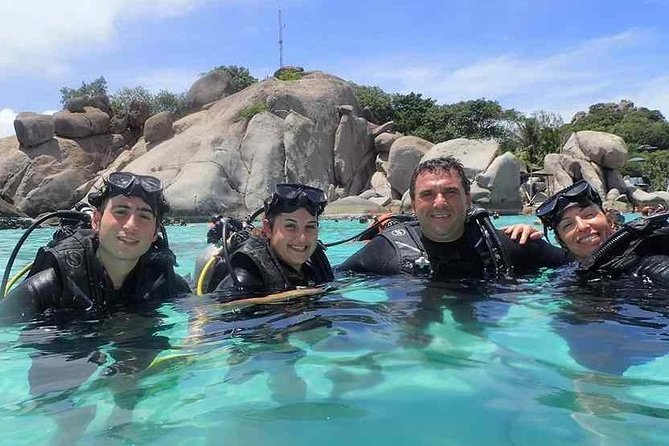
At $375.70 per person, the value depends on how much of the full course you need. Here, the price covers the training program, supplied scuba equipment, four open-water sessions, the PADI certificate, and a log book.
That is a fairer comparison than looking only at the number of hours in the water. You are paying for instruction, course materials, practical training, assessment, equipment use, and certification. A shorter introductory session may cost less, but it will not give you the same qualification.
The included equipment is especially helpful if you are new to scuba or traveling light. You do not need to bring a personal regulator, tank, or other scuba kit for the practical sessions. The information provided does not list personal items or clothing, so ask the center what you should bring before the first morning.
The price does not remove the need to plan carefully. You must commit three days to the course, and weather can affect the schedule. If poor conditions cancel the experience, you are offered another date or a full refund. That protection matters on Koh Tao, where sea conditions can influence practical sessions.
Who will get the most from this course
This course suits you if you want a recognized beginner certificate and are willing to study as well as practice. It is also a good fit if you are already planning to spend several days on Koh Tao and want an activity with a clear result at the end.
A nervous first-timer can benefit from the gradual format. You start in shallow water, repeat skills, and move to 12 and then 18 meters. The small group limit also gives the instructor a better chance to keep track of beginners than a very large class would.
It may not suit you if you want only a relaxed sightseeing trip. The course has fixed classroom sessions, early starts, quizzes, and an exam. You also need to be comfortable committing to all three days, since missing a session could affect your ability to complete the certificate.
The activity information says most people can participate, but it does not provide a detailed medical or fitness list. If you have a health concern that could affect scuba, contact the provider before booking rather than waiting until the first morning.
Practical details that can make the course easier
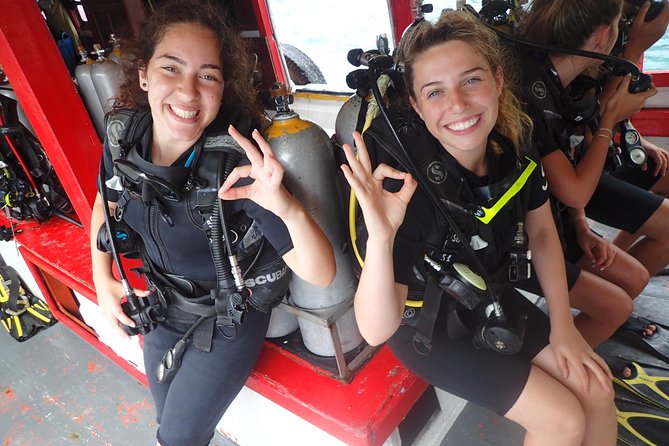
The center is at 24 Mae Haad, close to the pier and near public transportation. That location is convenient when you are carrying belongings or arriving on Koh Tao, and it reduces the need to arrange extra transport for the classroom work.
The stated start time is 9 a.m. The day three classroom session begins at 8 a.m., so do not assume every part of the course follows the general meeting time. Confirm the daily schedule with Scuba Birds after booking.
Confirmation is provided when you book, and the ticket is mobile. You can cancel for a full refund up to 24 hours before the local start time. Changes or cancellations inside that window are not accepted for a refund.
I would avoid placing this course directly beside a ferry departure or another fixed appointment. The sea sessions depend on conditions, and the course itself is spread across three days. Give yourself room in your Koh Tao plans.
Should you book the Koh Tao PADI course?
Book it if you want to leave Koh Tao with more than holiday photos. For the $375.70 price, you receive a full three-day beginner course, equipment use, four open-water sessions, a PADI certificate, and a log book. The gradual move from shallow water to 18 meters makes sense for a new scuba student.
Skip it if you only want a brief introduction or do not want to spend much of your island stay in class and training sessions. This is a serious commitment, but it is a practical one. If you are ready to study, follow safety instructions, and give the course three focused days, it offers a clear route into scuba around the world.
FAQ
How long is the PADI Open Water course?
The course lasts approximately three days. It combines classroom study, practical training, four open-water sessions, a written exam, and certification procedures.
Where does the course start?
You meet at Scuba Birds PADI Dive Center at 24 Mae Haad, Koh Tao. The center is within easy walking distance of the pier area.
Where does the practical training take place?
The shallow-water training and scheduled open-water sessions take place at Nang Yuan Island.
How many open-water sessions are included?
Four open-water sessions are included. Two take place on day two, and two take place on day three.
How deep do the sessions go?
The two sessions on day two have a maximum depth of 12 meters. The two sessions on day three have a maximum depth of 18 meters.
Is scuba equipment provided?
Yes. The course includes the use of scuba equipment for the open-water training sessions.
What happens if poor weather cancels the course?
You are offered a different date or a full refund if the experience is canceled because of poor weather.
More three-day trips in Thailand
- 3-Day PADI Open Water Diver Course, Koh Samui
★ 5.0 · 48 reviews - 3-Day PADI Open Water Diving Course in Dubai
★ 5.0 · 173 reviews - Hurghada: 3-Day PADI Open Water Diving Course
★ 4.6 · 78 reviews - 3-Day Freediving Level 1 Course
★ 5.0 · 54 reviews
Newest dives added in Thailand
- Phuket Scuba Diving Maiton Private Island Small Group or Snorkel★ 5.0 · 9 reviews
- From Pattaya: Snorkeling or Beginner Scuba Diving Tour★ 4.1 · 68 reviews
- Krabi: Freediving and Snorkeling at Yawasam and Talu Island★ 3.9 · 38 reviews
- Phuket: Racha Island Snorkeling or Scuba Diving Tour★ 4.3 · 70 reviews
- SSI | Padi Open Water Course in Phuket★ 5.0 · 66 reviews
- Freediving in Phuket – SSI – AIDA – Molchanovs – PADI★ 5.0 · 26 reviews
- Scuba Diving Kata Beach Night Dive for Certified Divers★ 4.5 · 14 reviews
- Koh Tao 2-Dive Day Trip from Koh Samui for certified divers★ 5.0 · 86 reviews
PADI Courses & Certification, compared.
Tossa de Mar: PADI Discovery Scuba Diving in Costa Brava
Read our review →
Full-Day Beginner Scuba Course with Private Tuition, Racha Yai
Read our review →
Heraklion: Beginner Scuba Diving Lesson with PADI Instructor
Read our review →
Discover Scuba Diving with No Certification in St Thomas
Read our review →
Try Dive – PADI Discover Scuba Diving in Tenerife
Read our review →