
Reviewed · SHARK DIVES & CAGE DIVING
Cape Town: Shark Science SCUBA Diving Experience
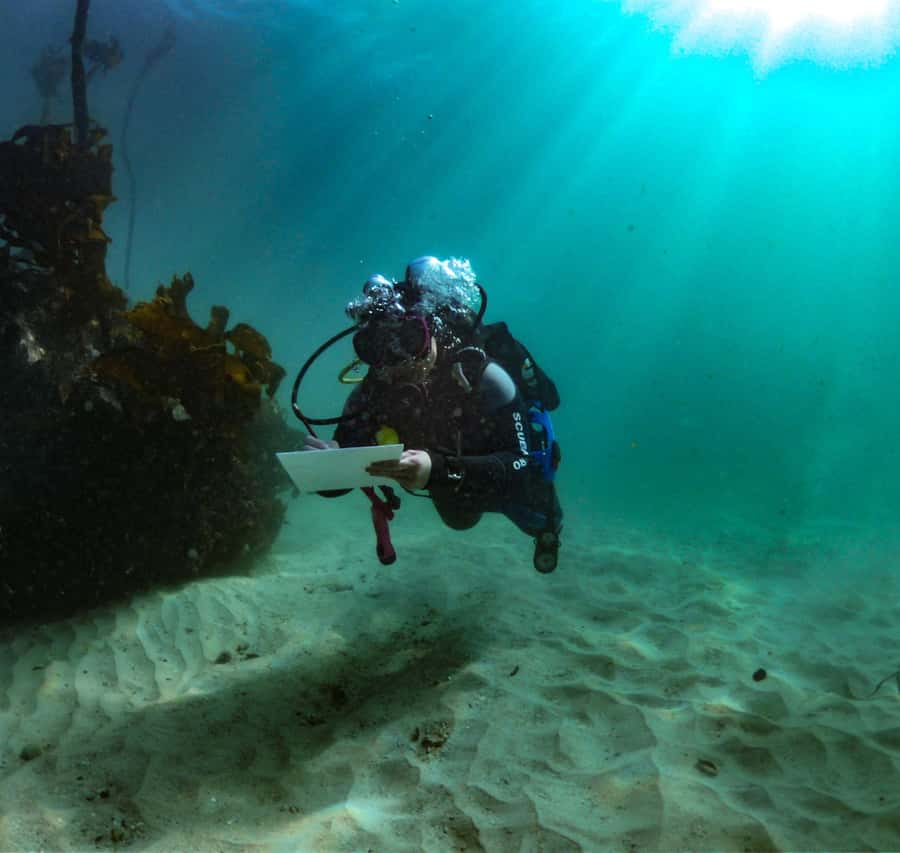
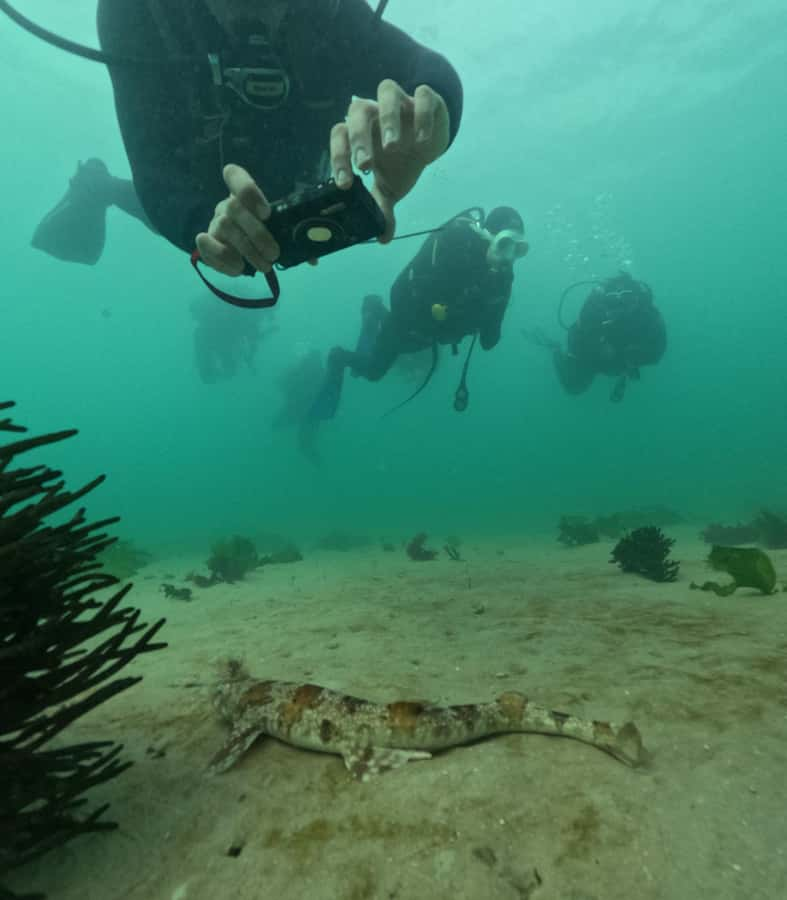
False Bay’s kelp forest is the real attraction here, with marine biologists guiding you through a working field study rather than a simple underwater sightseeing trip. You may search for puffadder sharks, pyjama sharks, rays, octopus, and sea bream while helping record useful information about the bay.
I like the small groups of up to 10 and the chance to submit shark photographs to Fin Spotter. I also like the thoughtful routine: a safety briefing, buddy check, heated outdoor shower, warm drink, and time to enter your findings. The main consideration is that you must already hold an open-water SCUBA qualification, and one recent participant had trouble receiving promised photos and follow-up.
- Kelp-forest setting: Spend most of your time around Simon’s Town in South Africa’s Great African Sea Forest.
- Real conservation work: Record shark photographs or fish abundance data for Cape RADD’s marine database.
- Possible shark sightings: Look for puffadder sharks, pyjama sharks, stingrays, octopus, and sea bream.
- Small-group format: The group is limited to 10, with the possibility of close instruction.
- Convenient timing: Meet around 9:30 a.m. and usually finish around 12:30 or 1 p.m.
- Qualified divers only: Equipment is included, but certification, transport, lunch, and personal swim items are not.
Simon’s Town’s Kelp Forest Is the Main Event
If you picture shark tourism as waiting beside a cage for a large predator, reset your expectations. This is a shore-entry SCUBA outing in False Bay, where the action is often smaller, stranger, and closer to the seafloor.
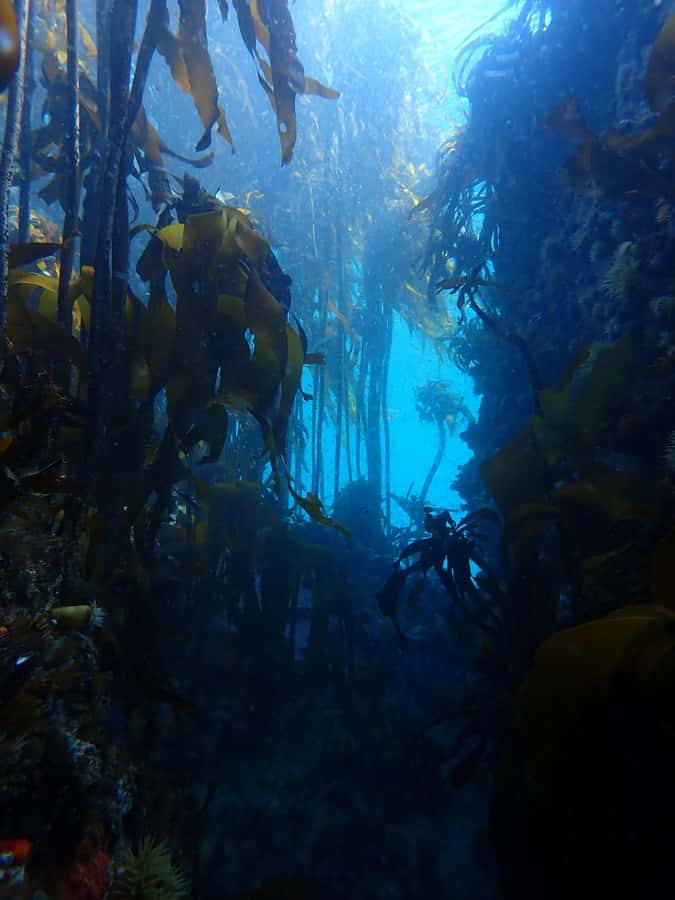
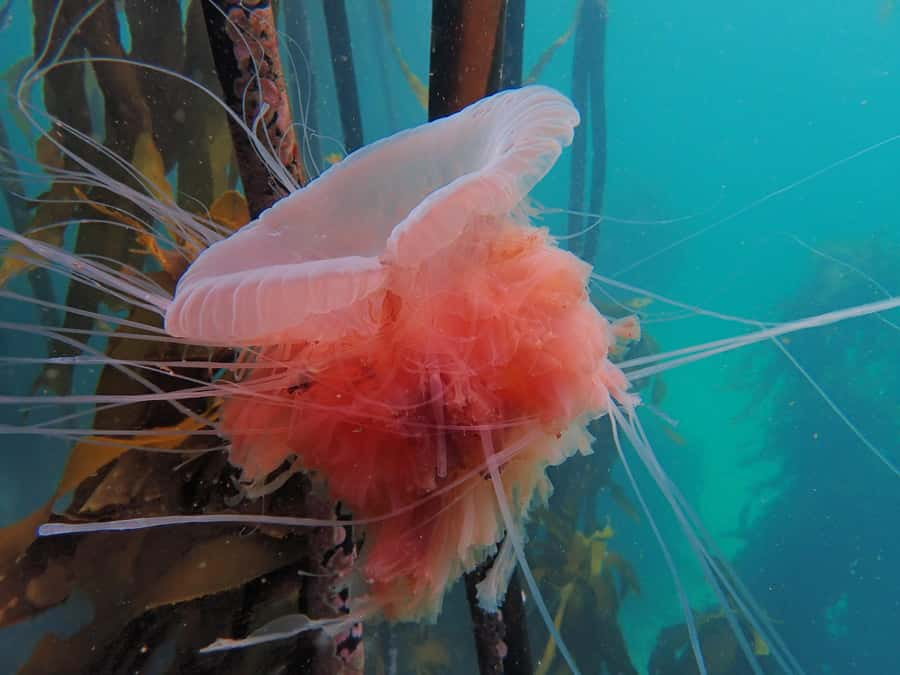
The setting is South Africa’s Great African Sea Forest, a cold-water kelp ecosystem near Simon’s Town. Tall sea bamboo kelp moves with the water, making the underwater world feel active even when the animals are hiding. Your guide helps you search through this habitat for puffadder sharks, pyjama sharks, rays, fish, and octopus.
These are not guaranteed sightings. That is part of the point. You are looking at a living ecosystem, not visiting an underwater aquarium with animals placed on schedule. Some people will find the search itself rewarding. If you need a guaranteed shark encounter, this is not the safest choice.
You may also have the chance to see penguins and sea otters at the selected site. The wording here matters: these are possibilities, not promises. Most of your time is spent in the kelp forest, so book this for the setting and the science first, with wildlife sightings as a welcome bonus.
A Morning Built Around Shark Science
Meet at the Cape RADD Ocean HUB in Simon’s Town, at 117 St George’s Street. The practical meeting point is in the parking lot of the False Bay Yacht Club, under the Seven Seas Club building. You arrange your own transport, so allow enough time to locate the building and arrive ready for the morning briefing.
The session begins at about 9:30 a.m. with tea or coffee and a short explanation of False Bay’s ecosystem. This introduction gives the animal sightings some context. You are not simply searching for a shark in open water. You are learning how kelp, fish, rays, sharks, and human observation fit into a larger conservation project.
The group then discusses the day’s objective. One possible task is shark identification. You photograph the patterns on a shark’s body and send the images to Fin Spotter, a project that uses those markings to estimate shark numbers and movements.
The other possible task is fish abundance work. You use an underwater data slate to record what you see and how many fish are present. That information can help researchers track changes in the marine environment over time.
The activity does not promise that every participant will complete both tasks. The work depends on what you encounter and on the day’s objective. Ask at the briefing which data project your group will focus on.
More Shark Dives in South Africa
- Shark Cage Diving and Viewing with transport from Cape Town
★ 4.5 · 576 reviews - Cape Town: Gansbaai Eco-Friendly Shark Cage Diving Cruise
★ 4.6 · 326 reviews - From Hermanus: Cruise with Shark Cage Dive and Lunch
★ 4.4 · 184 reviews
The Safety Briefing Matters More Than the Coffee
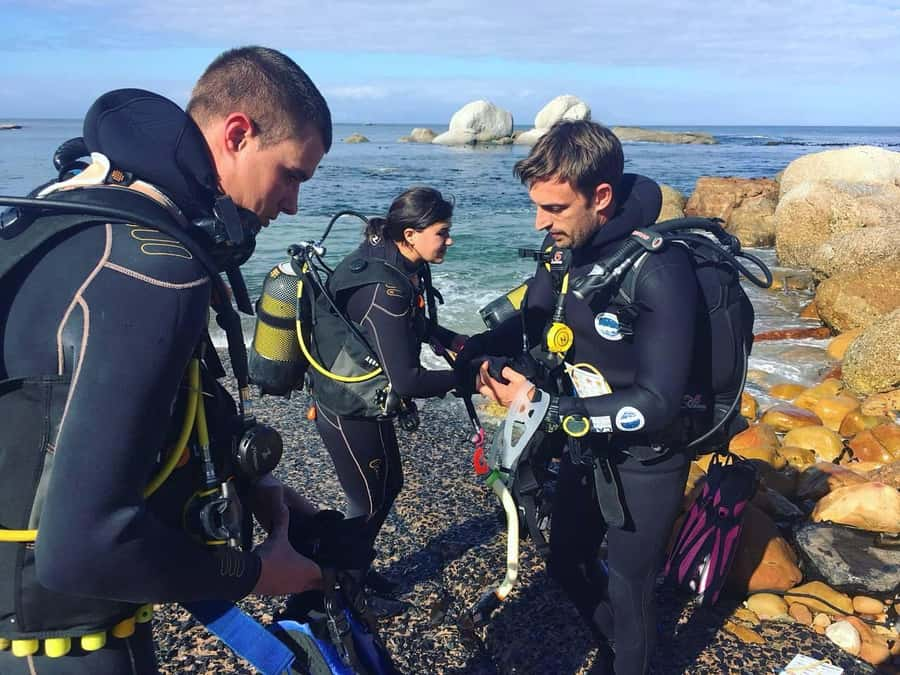
A safety briefing of about 20 minutes comes before the water work. This is a useful part of the morning, not filler. You need to understand the shore entry, the underwater task, the buddy system, and the rules about marine life.
A recent participant specifically appreciated the equipment buddy check led by guide Mark. That small step tells you what to look for in a good SCUBA session: gear is checked, questions are answered, and you are not rushed straight into the water.
You must be a qualified open-water SCUBA diver. The experience is not suitable for non-swimmers, children under 10, people with back or heart problems, wheelchair users, or anyone without certification. Diving equipment is included, but your qualification is not. Bring proof of certification if the provider asks for it, even though the supplied details do not specify a particular card or document.
The rules are simple and important: do not smoke, touch marine animals, or touch the plants. Kelp is not a prop, and the sharks are not there to be handled. Keeping your hands off the animals and sea bamboo helps protect the habitat you came to study.
What the Underwater Hour Feels Like
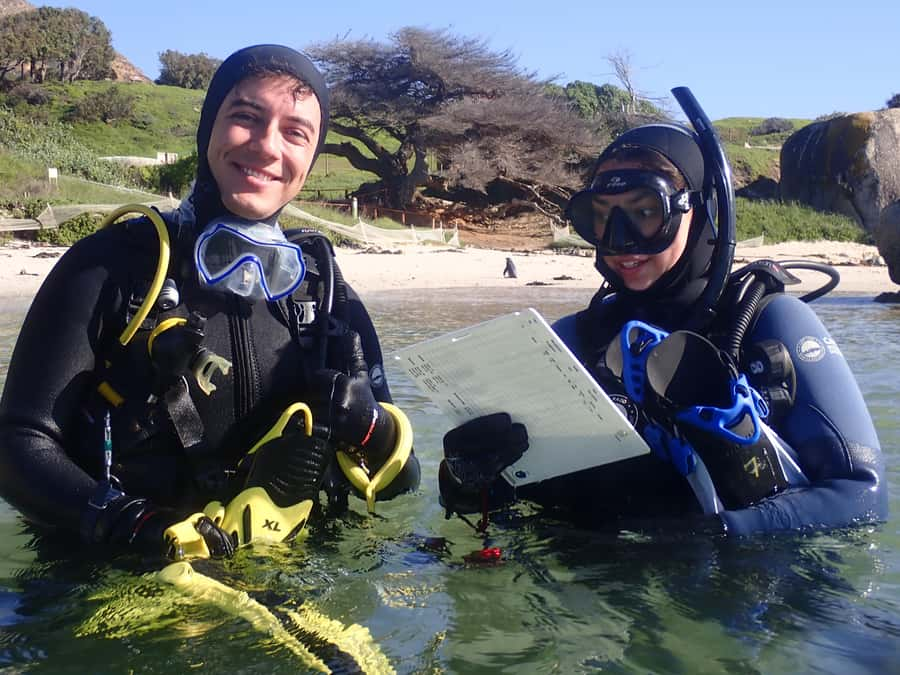
The supplied schedule describes about an hour of snorkeling at the Cape Peninsula, while the main activity description clearly presents a guided SCUBA session and requires an open-water qualification. Because those details do not perfectly match, confirm the exact underwater format with Cape RADD before booking.
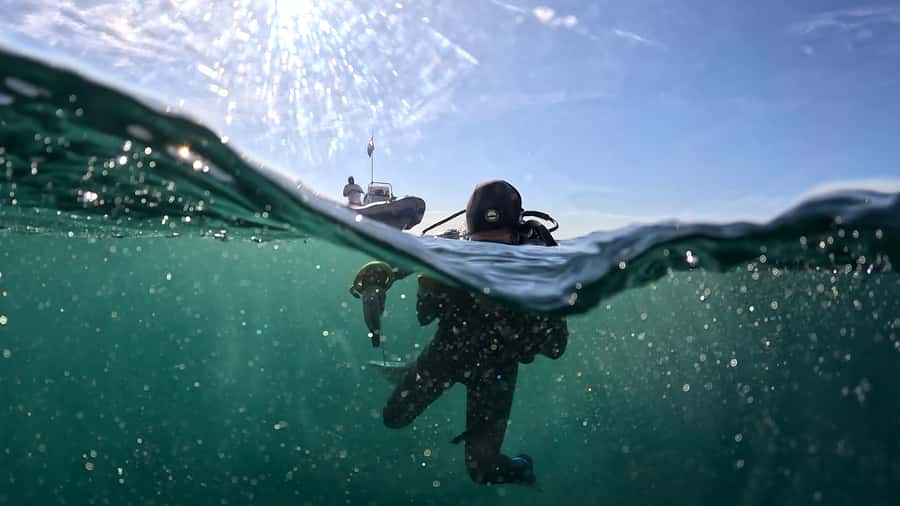
For a certified diver, the key experience is a guided shore entry into the kelp forest near Simon’s Town. You follow predetermined sites rather than choosing your own route. That structure helps the guides manage safety and gives the scientific work a clear focus.
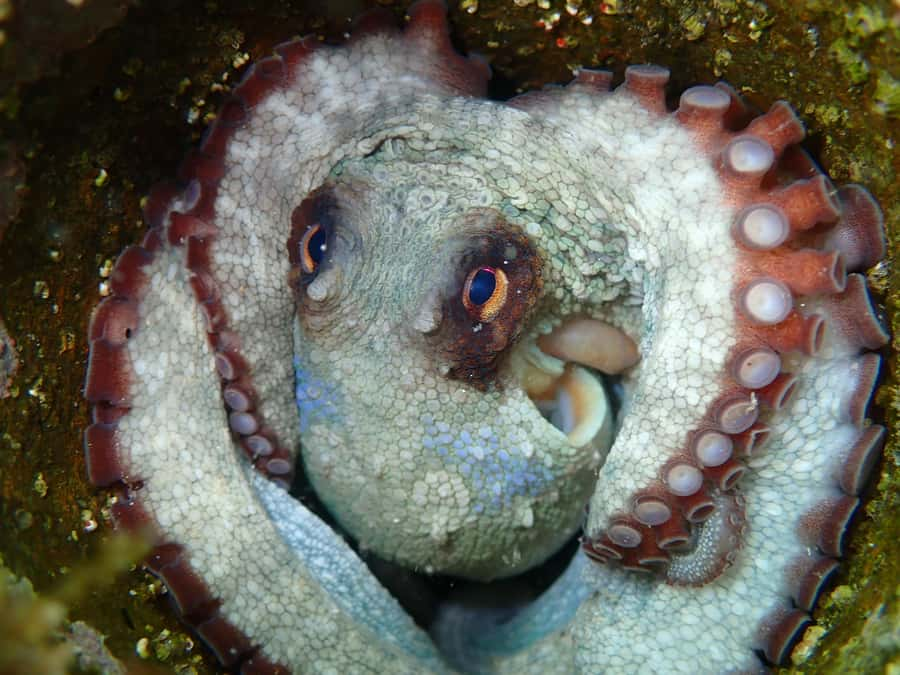
The water is a place for patient observation. You might scan between kelp stems for a shark’s outline, watch rays move along the bottom, or notice fish abundance around the rocks. An octopus may be difficult to spot until its shape or color gives it away. The guide’s role is to help you search carefully and record useful information, not simply point out the largest animal.
The kelp itself deserves attention. The sea bamboo sways in the water, and its movement gives the forest a sense of rhythm. You will not spend the whole session staring at sharks. That is good news for anyone who enjoys ecology, photography, and small details, but it may disappoint someone expecting constant large-animal action.
Your behavior affects the quality of the work. Avoid touching plants, keep clear of marine life, and follow the data instructions closely. If you photograph a shark, the pattern may matter more than a dramatic picture. If you record fish numbers, careful observation matters more than a quick list of species.
From Underwater Notes to Conservation Data
The conservation angle is more than a speech at the beginning. You are given a chance to contribute observations to Cape RADD’s database after returning to headquarters.
Photographing shark patterns is especially practical. Many sharks have distinctive markings, so repeated images can help researchers estimate population size and movement. Your photo will not turn you into a marine biologist in one morning, but it can become one small piece of a wider record.
Fish abundance data serves a different purpose. Instead of focusing on one identifiable animal, you record how many fish you see in a particular area. Over time, these counts may help show how the ecosystem changes.
I like this format because it gives your underwater time a job. You still get to enjoy the kelp and look for wildlife, but you also leave with a clearer idea of how marine research works. The work may feel modest in the moment. Its value comes from repeated observations and careful records.
Bring a phone or camera only if it is suitable for underwater use. The activity specifically includes the opportunity to photograph sharks, but it does not state that an underwater camera is supplied. Do not assume that the guide will provide photography equipment.
More Shark Dives in Cape Town
- CapeTown: Shark Cage Diving Experience with Scuba
★ 4.5 · 146 reviews - Shark Cage Diving Cape Town
★ 4.5 · 114 reviews - Cape Town: Shark Cage Dive
★ 4.7 · 46 reviews - Shark Cage Diving with transport from Cape Town
★ 5.0 · 22 reviews
A Warm Finish at Cape RADD Headquarters
After the water session, you return to Cape RADD headquarters. A heated outdoor shower lets you rinse off, followed by a warm beverage and time to talk through the morning.
This ending is useful in a practical way. Cold water, wet gear, and a shore entry can make the final part of an outdoor activity feel more tiring than expected. A hot rinse and drink give you time to warm up before heading off to lunch.
You also input the collected information into the database. That final step connects the underwater observations to the conservation project. You are not simply told that your data matters. You help enter it.
The full experience lasts about 3 to 3.5 hours, with a likely finish around 12:30 to 1 p.m. That makes it easy to pair with lunch afterward. Bring a snack and water anyway, especially if you need food after a morning of physical activity.
The provided information says a recent participant had one-on-one attention because nobody else was in the group. That is not something you should count on, but it shows how the maximum of 10 can sometimes become a much more personal session. Another participant praised guide Mark for careful equipment checks and for answering questions.
What $178 Buys You
At $178 per person, this is not a cheap way to spend a morning in Cape Town. The price makes more sense if you already value SCUBA, marine ecology, and guided conservation work.
You are paying for a marine biologist-led session, a science briefing, diving equipment, a planned site, data collection, and the chance to submit information to Fin Spotter. You also get the convenience of a small group and post-session facilities at Cape RADD.
The price is less attractive if you mainly want a guaranteed shark sighting or a long independent underwater session. Wildlife is not guaranteed, lunch is not included, and you must make your own way to Simon’s Town.
You also need to bring your own hat, swimwear, towel, sunscreen, water, and snacks. Those costs are small, but they matter when comparing this with a standard sightseeing trip. Transport is another consideration, since getting to the meeting point is your responsibility.
I would judge the value by asking one question: do you want to help with a marine science project while exploring the kelp forest? If yes, the cost can be reasonable for a specialized half-day activity. If your answer is simply that you want to see a shark, spend the money elsewhere.
Group Size, Guides, and Communication
The maximum group size is 10, and instruction is in English. A group this size is large enough to share the experience but small enough for the guide to keep an eye on everyone, assuming the group is full.
The guide names supplied for this experience include Mark, who was praised for a careful buddy check and patient answers. No full guide roster is provided, so you should not book expecting a particular person unless Cape RADD confirms who will lead your session.
Communication before the activity matters. You need to provide a valid email address or phone number, since meeting points and changes are sent through those details. Check your messages before leaving for Simon’s Town.
One recent participant had difficulty receiving promised photos and reported that follow-up messages went unanswered. I would treat this as a useful warning rather than a reason to dismiss the whole activity. If photos matter to you, ask before the session how they will be shared and when. Take your own photographs if you have suitable equipment.
That same participant also felt rushed out and did not receive a certificate. The supplied activity details do not promise a certificate, so do not book with that expectation. The advertised value is the marine science session and equipment, not a formal qualification or souvenir document.
Who Will Get the Most From This Experience
This suits a certified SCUBA diver who wants more than a standard recreational swim. You should enjoy looking closely, following instructions, and accepting that the best sighting may be a small shark, a hidden octopus, or a useful fish count rather than a dramatic encounter.
It is also a good fit if you care about marine conservation but do not want a classroom-only program. The morning combines a briefing, practical observation, photography or counting, and database work.
It is less suitable for a first-time diver, a non-swimmer, or anyone hoping for a relaxed beach activity with no physical demands. You need certification and must be comfortable with a shore entry. The experience is also unsuitable for the health and mobility restrictions listed by the provider.
Families should note the age limit. Children under 10 cannot take part, and the activity is not designed as a general family attraction. It is a focused marine program for qualified participants.
If you have limited time in Cape Town, the half-day schedule is convenient. You can finish by early afternoon and continue with other plans. Simon’s Town also gives you a chance to build a day around the wider Cape Peninsula, but this specific activity does not include transport or lunch.
Should You Book the Cape RADD Shark Science Session?
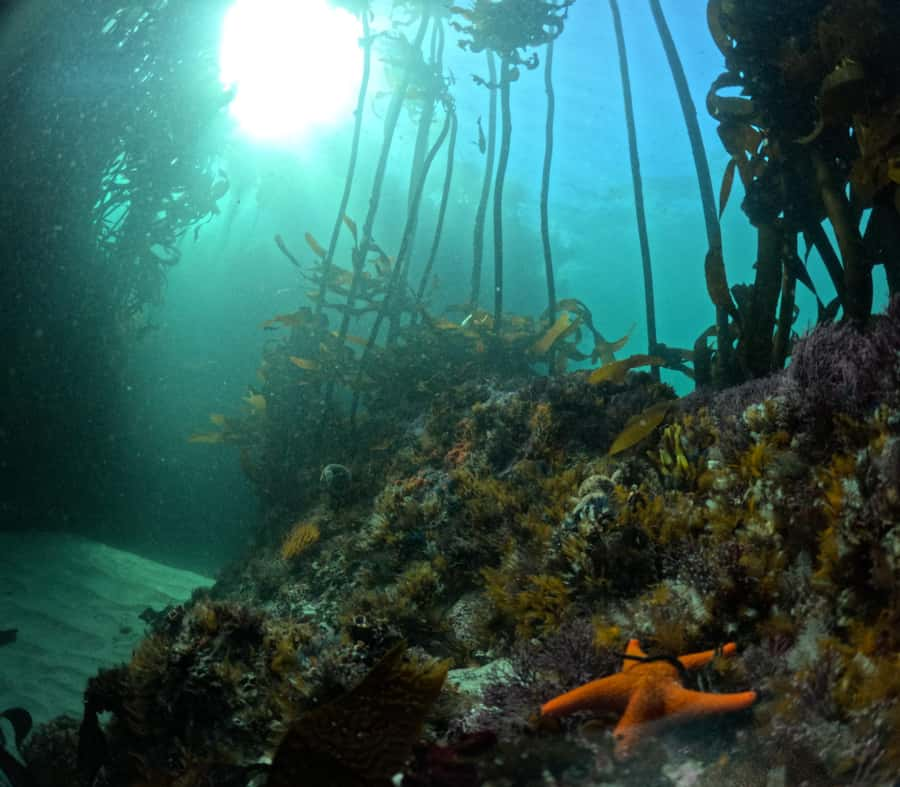
Book it if you are a qualified diver who wants a close look at South Africa’s kelp ecosystem and a real role in collecting marine data. The small groups, careful equipment checks, possible shark photography, and warm post-session routine all add value.
Skip it if you need guaranteed wildlife, included transport, a certificate, or reliable delivery of guide photographs. Confirm the SCUBA and snorkeling wording before paying, and ask how the data task and photos will be handled.
For the right person, this is a thoughtful, compact morning in False Bay. You may see sharks, rays, fish, octopus, penguins, or sea otters, but the strongest reason to go is the chance to understand the forest beneath the water and leave a useful record behind.
FAQ
Where does the Cape RADD experience meet?
Meet at 117 St George’s Street in Simon’s Town, in the parking lot of the False Bay Yacht Club under the Seven Seas Club building.
What time does the activity begin?
The meeting time is about 9:30 a.m. Starting times can vary, so check the confirmed details sent to your email address or phone number.
How long does the experience last?
The session lasts about 3 to 3.5 hours and usually finishes around 12:30 to 1 p.m.
Do I need a SCUBA qualification?
Yes. You must be a qualified open-water SCUBA diver. The activity is not suitable for non-swimmers or divers without certification.
Is SCUBA equipment included?
Yes. All diving gear is included. Your SCUBA certification is not included.
What animals might I see?
Possible sightings include puffadder sharks, pyjama sharks, stingrays, sea breams, octopus, penguins, and sea otters. Sightings are not guaranteed.
What conservation work can I do?
You may photograph shark patterns for submission to Fin Spotter or record fish abundance with an underwater data slate. The collected information is entered into a marine database.
Is transport included?
No. You need to arrange your own transport to the Simon’s Town meeting point.
What should I bring?
Bring a hat, swimwear, towel, snacks, sunscreen, and water.
Is the experience suitable for children?
Children under 10 cannot take part. The activity is also not suitable for people with back or heart problems, wheelchair users, non-swimmers, or divers without certification.
Newest dives added in Cape Town
- Shark Diving Full Day Guided Return Transfer to Gansbaai from Cape Town★ 4.5 · 11 reviews
- Shark Cage dive in Gansbaai see Bronze & Other, sometimes Great Whites★ 5.0 · 4 reviews
- Shark Cage Diving Tour from Cape Town★ 4.0 · 19 reviews
- Shark Cage Diving with transport from Cape Town★ 5.0 · 22 reviews
- Shark Cage Diving★ 4.5 · 7 reviews
- Shark Diving★ 5.0 · 2 reviews
- Beginner Scuba Diving Experience in Simonstown.★ 5.0 · 8 reviews
- Cape Town: Shark Cage Diving & Penguins Tour to Gansbaai with private transfers★ 4.0 · 7 reviews
Shark Dives & Cage Diving, compared.
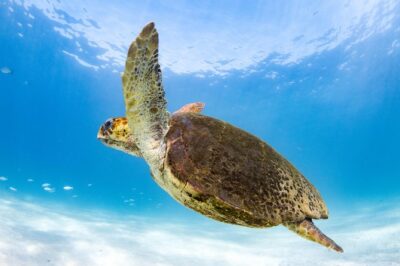
Swim with Whale Sharks in the Ningaloo Reef: 3 Island Shark Dive
Read our review →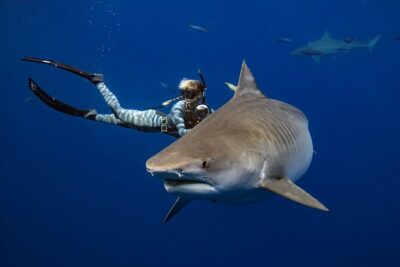
Safe and Educational Shark Dive from Haleiwa: Sharks Guaranteed
Read our review →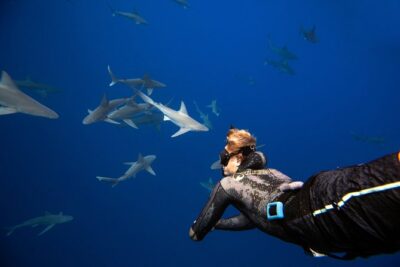
Dive with Sharks in Hawaii: Shark Tour from Haleiwa
Read our review →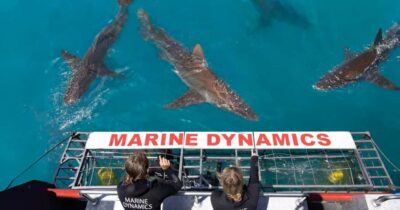
Gansbaai Eco-Friendly Shark Cage Diving Cruise
Read our review →
Half-Day White Shark Cage Diving from Gansbaai
Read our review →Browse the lists this dive appears in