
Reviewed · CENOTE & CAVERN DIVES
Cenotes diving Dos Ojos and The Bat Cave
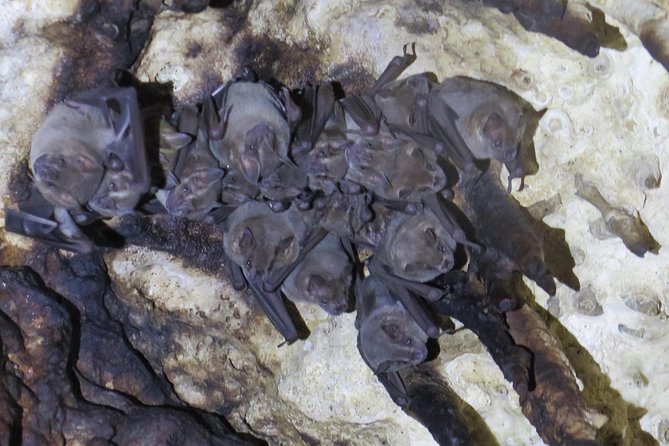
Dos Ojos gives you two very different underground worlds in one morning. The Barbie Line is open, bright, and filled with giant columns. The Bat Cave Line turns darker and more enclosed, with a short ascent toward an air-filled chamber where bats live. Clear water and striking rock formations make this a memorable first cenote outing.
I like the private group setup, since your own instructor can adjust the pace and explain the route without a crowded boat or large group. I also like the practical package: hotel pickup, two tanks, snacks, water, and time to rest between the two sessions.
The main catch is simple: this is for certified scuba participants aged 15 and up, not casual swimmers. You must show Open Water certification or an equivalent card, complete a health questionnaire, and avoid flying for 24 hours afterward. Non-divers can snorkel, but the main program is built around scuba.
Key points to know before booking
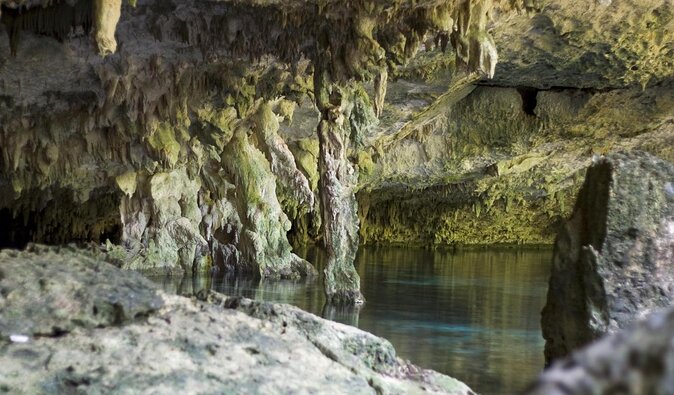
- Two cenote routes in one morning: See the bright Barbie Line and the darker Bat Cave Line, each with a very different feel.
- Private instruction: Only your group takes part, with a professional multilingual guide and instructor.
- Certification is required: You need Open Water certification from PADI or an equivalent agency for the certified underwater sessions.
- Snorkeling is available: Non-divers can join the outing and snorkel in the cenote.
- Pickup and supplies are included: Hotel transport in central Playa del Carmen and Playacar, two tanks, weights, a belt, bottled water, snacks, and entry fees are covered.
- Plan around your flight: You should not fly within 24 hours after the underwater sessions.
Why Dos Ojos feels like two separate worlds
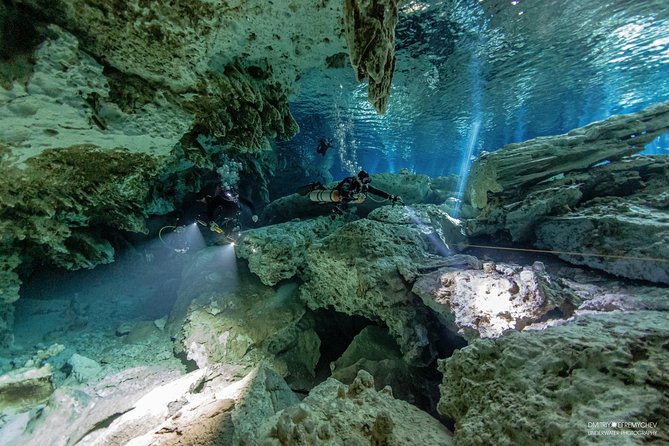
Dos Ojos means two eyes, a name tied to its two nearby caverns and their shared central area. The unusual part is not just the name. The two routes offer sharply different scenery, so the morning does not feel like repeating the same underwater visit.
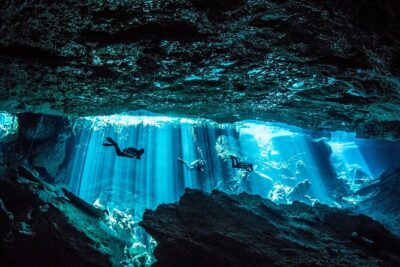
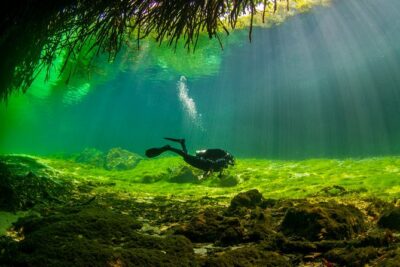
The first route, called the Barbie Line, is the more open and illuminated section. Light reaches through the water and across the cavern, making it easier to appreciate the scale of the rock. Huge stalactites and columns surround the route, while stalagmites rise from below.
This is the gentler introduction to the cenote. You have more visual space around you, and the natural formations are easier to see in the available light. If you are newly certified, that can make the first session feel less intimidating. You still need to follow your instructor and manage your equipment, but the surroundings are not as dark or confined.
The second route changes the mood. The Bat Cave Line has darker passages, lower light, tunnels, and rooms that feel much more like a traditional cave. The route leads toward an air-filled chamber, where you ascend to see bats and the formations above the water.
That contrast is the reason this outing is more interesting than a single short stop at a cenote. The first route gives you space, light, and dramatic columns. The second gives you shadow, narrow passages, and a stronger sense of being underground. Your guide’s briefing matters here, since the darker route requires you to pay attention to the route and the group.
More Cenote Dives in Playa del Carmen
- Scuba Diving in Cenote Dos Ojos from Playa del Carmen
★ 5.0 · 453 reviews - Scuba Diving in Cenote Kukulkan from Playa del Carmen
★ 5.0 · 370 reviews - Scuba Diving in Cenotes
★ 5.0 · 37 reviews
The morning schedule from pickup to the second session
The stated start time is 8:00 a.m., with pickup offered from hotels in central Playa del Carmen and Playacar. If your lodging is outside those areas, the listed meeting point is Plaza Palmeiras on Calle 11 Sur in the Ejidal area of Playa del Carmen.
The total outing lasts about five hours. That is long enough for two cenote sessions, gear preparation, explanations, snacks, and a break, but short enough to leave part of your afternoon free. You return to the meeting point at the end.
A private vehicle pickup is more than a small convenience here. Scuba equipment is awkward to carry, and a morning pickup lets you begin with the group already together. The private format also means the instructor can focus on your party instead of trying to balance several unrelated groups.
At the start, expect the team to confirm your certification and have you complete a health questionnaire. The paperwork is not a formality to rush through. Certain medical conditions, including asthma and heart conditions, may prevent participation, so you should consult a doctor before booking if you have a concern.
Your guide then covers the route and safety points before you enter the water. Previous sessions with Diversland Mexico have involved staff members named Patrick, Ana, Dima, and Elana, though the specific guide for your date is not guaranteed. The company’s team includes multilingual professionals, and private instruction is particularly useful if one member of your group needs a slower explanation or a refresher.
You receive two tanks, weights, and a belt as part of the price. Rental equipment costs an additional 15 USD per day, so check exactly what you already own and what you need before you arrive. Diving insurance is optional and is not included.
Between the two sessions, there is time to rest and eat the included snacks. That pause matters. A cenote outing can be physically tiring even when the water is calm, and a short break helps you reset before entering the darker route.
What makes the Barbie Line a good first stop
The Barbie Line is the brighter of the two routes. Its main appeal is the way natural light reveals the rock formations. Rather than seeing only a narrow beam from a torch, you can appreciate the larger shape of the cavern and the open water around it.
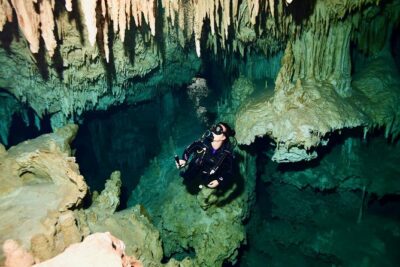
Stalactites hang from the ceiling, while stalagmites rise from the floor. Columns form where those structures meet or grow close together. These shapes developed over very long periods, and the underwater setting makes them feel especially unusual.
For a certified beginner, this route offers a useful combination of beauty and manageable surroundings. You are not simply swimming through a dark tunnel with no sense of scale. The open sections help you see where you are, and the clear water makes the formations easier to observe.
Do not mistake the brighter route for a casual swim. This remains a certified scuba activity. You need to be comfortable using your equipment and following instructions underwater. The guide’s briefing is part of the value, not an optional extra.
The route also works well for a mixed private group. A stronger participant can enjoy the formations, while a newer Open Water diver can ask for help without feeling rushed by strangers. Since only your group takes part, the pace can be more personal than on a large group outing.
The Bat Cave Line brings the real cave atmosphere
The Bat Cave Line is the more atmospheric part of the morning. Light drops away in sections, and the route includes tunnels and rooms. You feel closer to a natural cave than to an open swimming hole.
The route leads around an air-filled bat cave. At one point, you ascend to see the bats and the decorations in the chamber above the water. This gives the session a change of rhythm: you are not only observing rock from below, but also looking into the dry space where the bats live.
That darker setting is also the main consideration. If you dislike confined spaces or low light, ask the operator about the route before booking. The available information describes low-light areas, tunnels, and rooms, so you should expect a more enclosed feel than on the Barbie Line.
For everyone else, the contrast is the point. The first route shows how light reveals the cenote. The second shows how the same underground world changes when the light fades. A guide who explains the route clearly can make a major difference, especially for newer certified participants.
The company’s staff has included instructors such as Elana, who has worked with participants needing a refresher, and Dima, who has been described as both funny and well informed about the outings. Those names do not guarantee who will lead your booking, but they suggest the sort of personal instruction the operator can provide.
Another way to get in the water in Playa del Carmen:
- Discover Scuba Diving & Beach Club with Transportation In Riviera Maya
★ 5.0 · 239 reviews - Two reef discovery dives with professional instructor (no experience necessary)
★ 5.0 · 103 reviews - PADI Discover Scuba Diving Program in the Riviera Maya
★ 5.0 · 67 reviews - PADI Discover Scuba Diving in Playa del Carmen
★ 4.5 · 61 reviews
Why the clear water matters
Cenote water is known for excellent visibility, and Dos Ojos is presented as a major location for both scuba and snorkeling. Clear water makes the rock formations the star of the outing. You can spend less time trying to see through cloudy water and more time looking at the ceiling, walls, and submerged shapes.
Visibility also helps you stay aware of your surroundings. That is useful in a cave setting, though it does not remove the need for careful instruction. Your certification, health clearance, and ability to follow the guide still matter.
For photographers, the light and formations may be appealing, but the tour information does not promise camera equipment, photo service, or special photography time. Bring a camera only if it is permitted and you are confident managing it without distracting from the route and safety instructions.
Snorkeling gives non-certified participants a way to experience the cenote without joining the certified scuba sessions. It is a good option for a family or group with mixed interests. Still, the underwater program is the main focus, so a non-diver should confirm the exact snorkeling arrangements when booking.
How the private format changes the experience
This is a private activity, meaning only your group participates. That arrangement is especially useful when experience levels differ. You might have one person who has completed certification recently, another who has hundreds of logged sessions, and a non-diver who wants to snorkel.
The instructor can give direct explanations, pause for questions, and pay closer attention to comfort and technique. A private guide also helps with the transition between the bright and dark routes, where different participants may need different levels of reassurance.
The private format does not mean you can ignore the rules or create your own route. You still need valid certification, a completed health questionnaire, and the ability to follow the guide’s instructions. It simply gives your group more control over the pace within the planned outing.
The minimum booking is two people. That makes this a better fit for couples, families, and small friend groups than for a solo visitor looking for a quick spontaneous activity.
Is the 210 USD price good value?
At 210 USD per person, this is not a budget swim. The price makes more sense when you count what is included: hotel pickup in central Playa del Carmen and Playacar, professional multilingual instruction, entry fees and taxes, two tanks, weights and a belt, bottled water, snacks, and two different cenotes.
Equipment rental is extra at 15 USD per day, and optional diving insurance is also separate. If you need a full equipment package, allow for that added cost. Ask what the rental covers before payment so you do not assume items are included.
The strongest value is the combination of private instruction and two distinct routes. Booking two separate cenote visits could cost more once you add transport and entry fees, though no comparison price is provided here. You are paying for a guided, organized morning rather than simply access to water.
I would consider the price fair for a certified participant who values personal attention and wants to see both sides of Dos Ojos. It is less compelling if you only want a casual swim, need a full equipment package, or do not care about the cave formations.
Safety, certification, and timing rules
You must show Open Water Diver certification from PADI or an equivalent agency to take part in the certified scuba sessions. The minimum age is 15. There is no indication that a basic swimming ability alone qualifies someone for the underwater program.
Complete the health questionnaire honestly. Conditions such as asthma or heart problems may prevent participation, and the operator advises consulting a doctor if you have a relevant medical issue.
The no-flying rule is important. You should not fly within 24 hours after the underwater sessions. If you are leaving Mexico the next day, schedule this outing early enough in your trip to leave a full buffer before your flight.
You may cancel for a full refund up to 24 hours before the start time. Cancellations or changes made less than 24 hours ahead are not refunded or accepted, so do not wait until the last morning if your plans are uncertain.
Who should book this Dos Ojos outing?
I would choose this for a certified beginner who wants a guided introduction to cenotes, or for an experienced participant who prefers a private group. The two routes provide enough variety to keep the morning interesting, and the bright first route can help you get comfortable before the darker Bat Cave Line.
It also suits families and groups with mixed interests because snorkeling is offered for non-divers. Just remember that the minimum age for cenote scuba is 15, and the non-diver arrangements should be confirmed when you book.
I would skip it if you want a large social group, a late start, or a simple beach swim. I would also look elsewhere if you are not certified, have a medical concern that has not been cleared, or plan to fly the same day or the next day.
Should you book it?
Book this outing if Dos Ojos is high on your list, you hold the required certification, and you value a private instructor more than the lowest possible price. The bright Barbie Line and darker Bat Cave Line give you two genuinely different views of the cenote, while pickup, gear basics, snacks, and fees keep the morning organized.
Think twice if the extra equipment charge affects your budget or if enclosed, low-light passages sound uncomfortable. For the right participant, this is a focused and well-supported way to see Dos Ojos without giving up the personal attention that matters in an underground setting.
FAQ
What certification do I need for the cenote scuba sessions?
You need Open Water Diver certification from PADI or an equivalent certification agency. You must provide evidence of certification before taking part.
Can non-divers join the outing?
Yes. Snorkeling in the cenote is offered for people who do not take part in the certified scuba sessions.
How old must I be to take part in cenote scuba?
The minimum age for cenote scuba is 15 years.
What is included in the price?
The price includes hotel pickup in central Playa del Carmen and Playacar, a professional multilingual guide, two tanks, weights and a belt, bottled water, snacks, two cenote sessions, and all fees and taxes.
Is scuba equipment included?
The tour includes two tanks, weights, and a belt. Rental equipment costs an additional 15 USD per day. Optional diving insurance is also not included.
Can I fly after the tour?
You should not fly within 24 hours after the underwater sessions. Plan your schedule so you have the required time before your flight.
Newest dives added in Playa del Carmen
- Full-Day Playa del Carmen Reef Diving Activity★ 5.0 · 3 reviews
- Try dive in Cozumel island★ 5.0 · 4 reviews
- Cozumel Express 2-Tank Dives from Playa del Carmen/ Only for Certified Divers★ 5.0 · 2 reviews
- Try dive in beautiful Casa cenote for 2 people★ 5.0 · 6 reviews
- Scuba Diving for Beginners – Tulum Dive Machine★ 5.0 · 26 reviews
- Scuba Referral Dives & Beach Club with Transportation In Riviera Maya★ 5.0 · 33 reviews
- Private Scuba Diving in Cenote around Playa del Carmen★ 5.0 · 7 reviews
- Advanced Open Water Diver course PADI in Playa del Carmen★ 5.0 · 3 reviews
Cenote & Cavern Dives, compared.
2 cenote divings (including one deep diving) for advanced divers in Tulum
Read our review →
Amazing beginner dive in Tulum cenote (or refresher dive)
Read our review →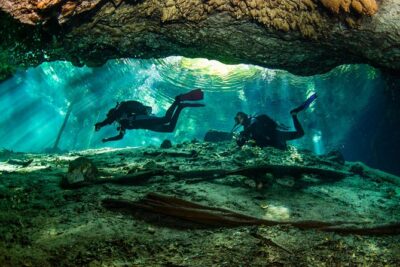
Go for 2 dives in cenote Dos ojos for certified divers
Read our review →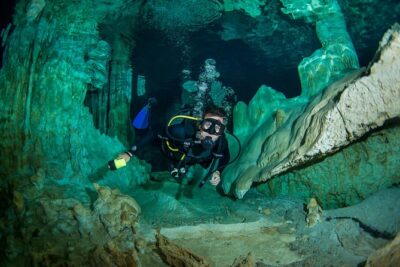
2 tanks Cenote Diving Adventure in Tulum for Certified Divers
Read our review →Browse the lists this dive appears in