
Reviewed · CENOTE & CAVERN DIVES
Cenotes diving
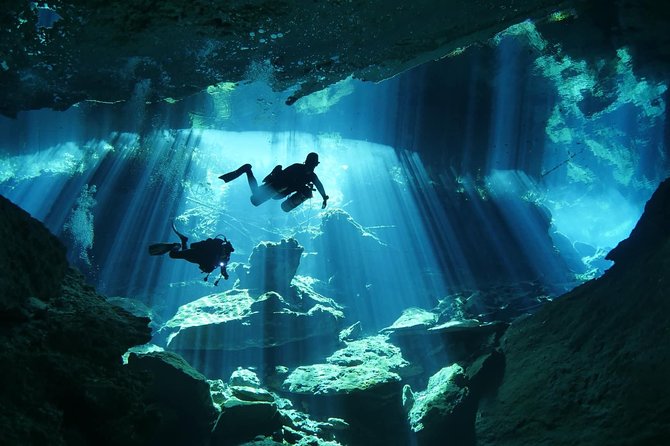
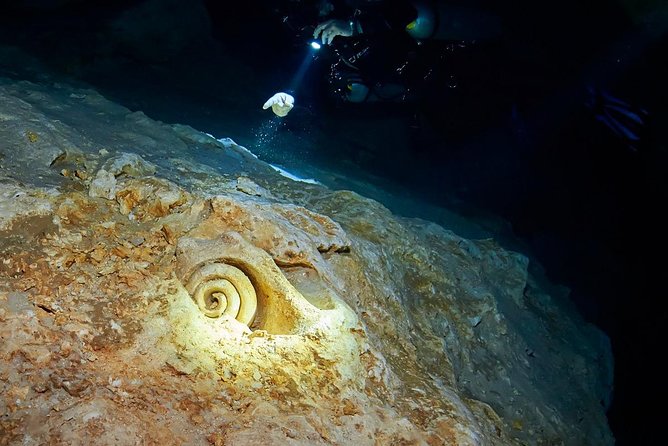
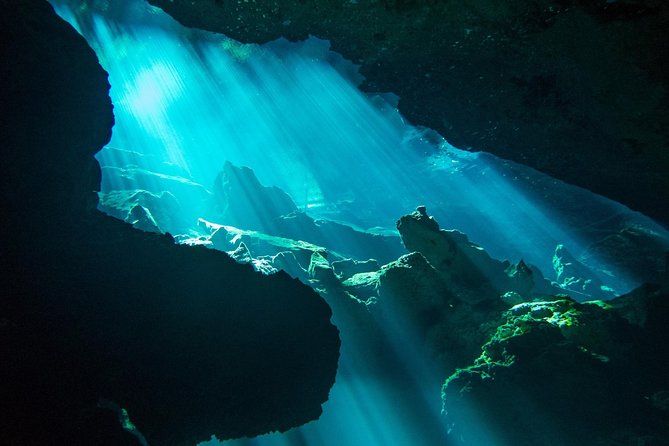
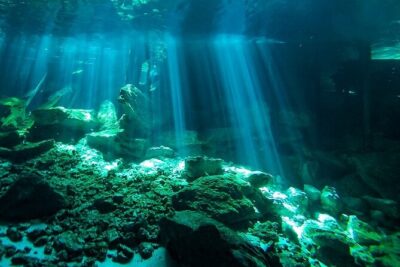
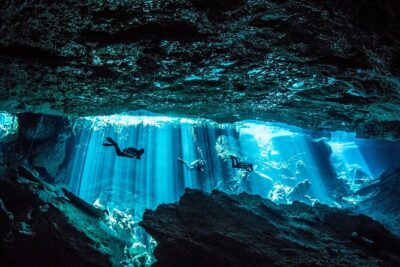
The real attraction here is the light. In the morning, sunbeams slip through openings in the limestone and form bright curtains beneath the jungle. You’ll also see fossils in the rock, huge chambers, stalactites, and the strange visual blur of a halocline, where fresh and salt water meet.
I like two things right away: hotel pickup from Playa del Carmen, Cancun, or the Riviera Maya, and the small private-group format. The equipment, tanks, weights, snacks, water, and two cenote descents are included, so the $260 price is easier to judge. The main consideration is simple: you need Open Water certification, and cenote conditions may feel more demanding than ordinary reef scuba.
The company has a strong reputation for calm instruction and careful organization. Diversland staff members named in past accounts include Sergey, Dmitri, Liz, Andy, Evgenia, Dima, and Anna. Your guide is not assigned by name in advance, but the multilingual team is a useful advantage if you are more comfortable receiving safety instructions in a language other than English.
Key points to know before booking
- Morning light makes the difference: Chac Mool, Kukulkan, Ponderosa, and Tajma Ha are selected for strong sun effects.
- Two cenotes, two different moods: Ponderosa is an open natural pool with fish and turtles, while Tajma Ha leads into large limestone rooms and an air-filled bat cave.
- This is for certified scuba visitors: You must show Open Water Diver certification or an equivalent credential.
- The package is well bundled: Transport, equipment, guide, entry fees, water, snacks, and two descents are included.
- A halocline can affect visibility: The changing water density may briefly blur your view and make buoyancy control feel less familiar.
- Plan around your flight: Scuba activity within 24 hours of flying is not recommended.
Why these cenotes are special
A cenote is a limestone sinkhole or cave filled with clear groundwater. Across the Yucatan Peninsula, these openings were important to the Maya, both as water sources and as sacred places. Here, the appeal is not colorful coral or ocean wildlife. It is the unusual combination of freshwater, jungle, stone, and light.
The water is described as crystal clear, but clarity does not mean the setting feels ordinary. Limestone walls may show fossils, moss, stalactites, and broad chambers shaped over long periods. At certain points, a sunbeam can cut through the water so sharply that it looks like a solid column.
You should also expect quieter, more enclosed surroundings than on a Caribbean reef outing. That is part of the charm, but it is also why your certification and comfort in the water matter. Your guide manages the route, yet you still need to stay attentive to buoyancy, depth, and the overhead rock formations.
More Cenote Dives in Playa del Carmen
- Scuba Diving in Cenote Dos Ojos from Playa del Carmen
★ 5.0 · 453 reviews - Scuba Diving in Cenote Kukulkan from Playa del Carmen
★ 5.0 · 370 reviews - Scuba Diving in Cenotes
★ 5.0 · 37 reviews
The 8:00 am start and hotel pickup
The listed start time is 8:00 am, with pickup available from hotels in Playa del Carmen, Cancun, and the Riviera Maya. The regular meeting point is Plaza Palmeiras on Calle 11 Sur in Playa del Carmen, and the activity returns there at the end.
Morning timing is important for more than convenience. The selected cenotes are known for their sunlight effects, so an early start gives you a better chance of seeing the bright shafts through the water. The exact appearance still depends on the weather. A sunny day is the best bet for dramatic light, while cloud cover may soften the effect.
Allow roughly five hours for the full outing. That includes transport, preparation, two underwater sessions, time between cenotes, and the return. If you are staying outside Playa del Carmen, pickup is a major benefit, but the total day may feel longer because of road time.
Diversland supplies bottled water and snacks. That sounds minor, but it matters after an early start and two sessions in the water. You will not need to build a separate plan around finding food before returning to your hotel.
Chac Mool and Kukulkan: a light-filled introduction
One possible pairing is Chac Mool and Kukulkan. These cenotes are presented as suitable first cenotes on the Yucatan Peninsula, especially for visitors who want strong light effects without beginning with a more specialized cave itinerary.
The name Chac Mool is linked with Maya culture, and the cenote is known for its open areas and dramatic natural light. Kukulkan offers a similar appeal, with sunlight entering through openings and illuminating the clear water below. Together, they provide a good introduction to the visual style of cenote scuba: pale rock, dark water, green jungle above, and bright beams appearing when the sun reaches the right angle.
Do not expect a conventional sightseeing route with a long list of stops. The focus is on moving slowly through underwater spaces and taking in the formations. Your guide’s job is especially important here. Light conditions can tempt people to look upward or drift away from the group, so controlled movement and attention to instructions remain essential.
Ponderosa: the Garden of Eden cenote
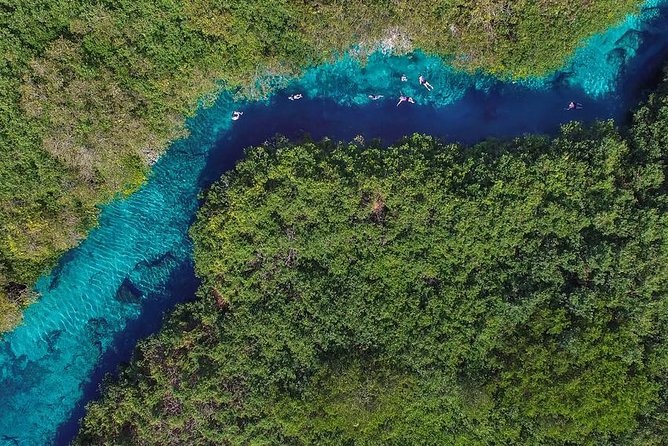
The second possible pairing is Ponderosa and Tajma Ha. Ponderosa is also called Jardin del Eden, or Garden of Eden, and it has a very different character from a fully enclosed cave.
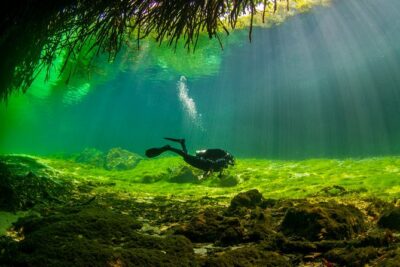
Ponderosa is described as a large natural swimming pool with clear freshwater, moss-covered rocks, and visible aquatic life. You might see fish, turtles, and freshwater eels among the rocks. The setting gives you a chance to appreciate the cenote as a living freshwater environment rather than only as a geological formation.
This is likely the more relaxed-looking part of the outing, with open water and jungle surroundings. Still, do not confuse an inviting swimming pool appearance with a casual swim stop. The activity is built around scuba, and you must meet the certification and health requirements.
The green moss and fish add variety to the day. After focusing on stone and light in one area, you may find the life in Ponderosa gives your eyes something else to follow. It is also a useful reminder that cenotes are not simply empty underground rooms. They support their own small ecosystems.
Another way to get in the water in Playa del Carmen:
- Discover Scuba Diving & Beach Club with Transportation In Riviera Maya
★ 5.0 · 239 reviews - Two reef discovery dives with professional instructor (no experience necessary)
★ 5.0 · 103 reviews - PADI Discover Scuba Diving Program in the Riviera Maya
★ 5.0 · 67 reviews - PADI Discover Scuba Diving in Playa del Carmen
★ 4.5 · 61 reviews
Tajma Ha: a palace of limestone and light
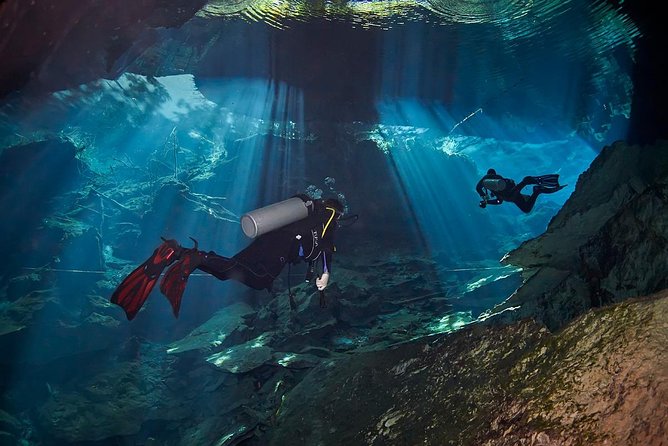
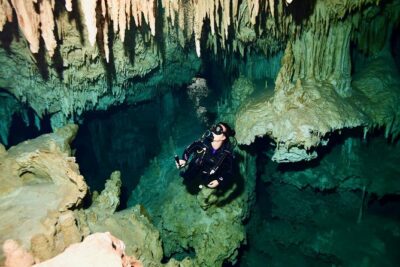
Tajma Ha, sometimes written Taj Majal, is the more theatrical of the two. It is a wide-open room beneath an air-filled bat cave, with light entering through holes in the ceiling. The name suits the setting: broad chambers and corridors create the impression of a natural palace.
You can expect stalactites, limestone formations, and large rooms rather than a narrow, featureless passage. The changing light may reveal one formation and leave another in shadow. On a sunny morning, this is where the contrast between darkness and brilliant natural light can be especially striking.
Tajma Ha also gives you a clearer sense of why cenote scuba requires care. Even in a spacious chamber, you are still beneath rock. Stay with the guide, follow the route, and avoid treating the open sections as permission to explore independently.
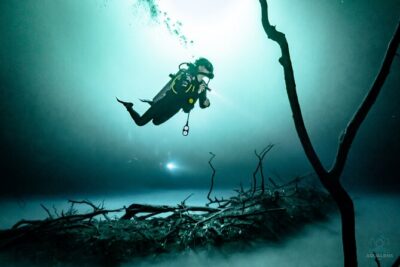
The halocline is another feature to anticipate. When fresh water meets denser salt water, the boundary can distort the view and make the scene appear to shimmer or blur. This may be fascinating, but it can also make buoyancy and orientation feel less automatic. If you have not encountered one before, listen closely during the briefing and let your guide set the pace.
What the two underwater sessions feel like
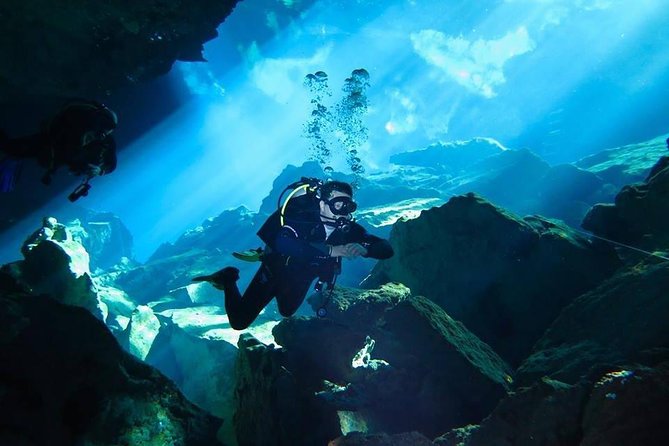
The package includes two sessions in two different cenotes. That matters because each site offers a different visual experience, rather than giving you a longer visit in one place.
You will use tanks, weights, belts, and the other required equipment supplied by the operator. A professional multilingual guide accompanies the group. The listed maximum is 15 people, although the booking is described as a private group, so clarify the exact group arrangement if personal attention is your main reason for booking.
The strongest benefit of guided cenote scuba is not simply finding the entrance. It is knowing where to look. Light beams, fossils, haloclines, and formations can be easy to miss when you are concentrating on your equipment. A good guide helps you manage the practical side while pointing out the features that make each cenote different.
The main challenge is that freshwater cave settings can feel less familiar than open ocean. One account describes a visitor needing help with neutral buoyancy after encountering layered water. That is a useful warning, not a reason to avoid the trip. If you stay calm, communicate early, and follow the guide, the unusual water conditions become part of the lesson.
What the $260 price includes
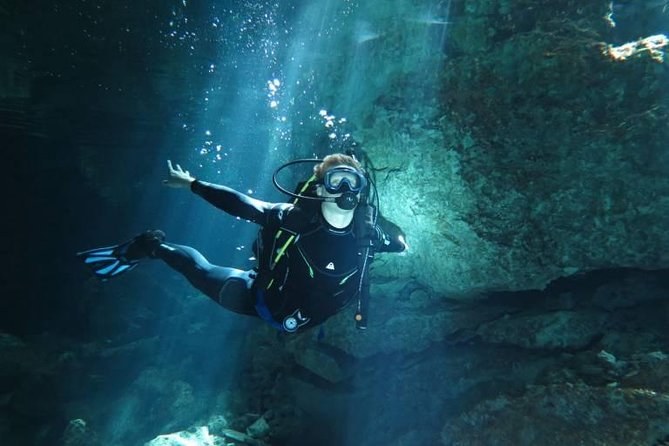
At $260 per person, this is not a budget swim in a cenote. It is priced as a guided scuba outing with transport and equipment. The included items are substantial:
- Hotel pickup and return
- Two cenote sessions
- Tanks, weights, belts, and necessary equipment
- Professional multilingual guide
- Cenote fees, taxes, and other listed charges
- Bottled water and snacks
- Private-group service
The value is strongest if you need equipment and transport. Renting gear separately, arranging a vehicle, paying entry charges, and finding a qualified guide would make a self-organized plan less simple. The package also removes some common small costs, since water and snacks are included.
Diving insurance is not included. It is listed as optional, but you should consider your own coverage before booking. The operator also requires a health questionnaire. Conditions such as asthma or heart problems may prevent participation, so consult a doctor if you have concerns.
Who should book this experience
This outing suits a certified Open Water scuba visitor who wants something more unusual than a standard reef trip. It is especially good for someone interested in geology, Maya culture, freshwater environments, and photography-friendly light effects.
It also works well if you are staying in Playa del Carmen and want a half-day activity with transport handled for you. The multilingual staff may help couples or mixed-language groups feel more at ease during safety briefings.
I would be more cautious about booking it if you are newly certified, uneasy in enclosed spaces, or uncomfortable with changing visibility. The cenotes described here include open chambers, but they are still underground environments. You should feel able to control your buoyancy and remain calm if the water briefly looks distorted.
The minimum age is 15. Most people can participate, but certification, the health questionnaire, and the 24-hour flight rule all apply. Do not schedule this activity on the final day before flying home.
Service, organization, and practical confidence
The strongest pattern in the company’s service is careful organization. Pickup punctuality, friendly staff, equipment quality, and clear planning are repeatedly emphasized in the supplied accounts. Several people also returned for multiple days of reef and cenote programs, suggesting that Diversland can arrange more than a single introductory outing.
Named staff members such as Sergey, Dmitri, Liz, Andy, Evgenia, Dima, and Anna are associated with a calm, personal approach. Liz is particularly noted for giving a nervous participant time to regain control instead of rushing the situation. That is exactly the sort of instruction you want underground, where confidence and communication matter as much as technical skill.
The maximum group size of 15 is not tiny, so do not assume a one-to-one guide unless that is confirmed. On the other hand, the experience is described as a private group, and the operator emphasizes personal care. Ask how many people will be in your specific departure if this detail affects your decision.
Free cancellation is available up to 24 hours before the start time. Changes or cancellations inside that window are not accepted for a refund, so leave room for weather, illness, or schedule changes.
Should you book the cenotes?
Book it if you already hold Open Water certification and want to see a side of the Yucatan that is quieter, stranger, and more geological than a normal beach day. The combination of hotel transport, two different cenotes, professional gear, and a multilingual guide gives the $260 fee reasonable value.
The best reason to choose this trip is the range of scenery: sunlight in Chac Mool or Kukulkan, fish and turtles at Ponderosa, and the great limestone rooms of Tajma Ha. Skip it if you are not certified, have a flight within 24 hours, or know that overhead rock and haloclines would make you anxious.
For the right scuba visitor, this is a focused half-day outing with memorable natural details and a practical level of support.
FAQ
Where does the cenote activity take place?
The activity takes place near Playa del Carmen, Mexico, at cenotes including Chac Mool, Kukulkan, Ponderosa, and Tajma Ha. The regular meeting point is Plaza Palmeiras, Calle 11 Sur, Ejidal, Playa del Carmen.
Is hotel pickup available?
Yes. Pickup and return are offered from hotels in Playa del Carmen, Cancun, and the Riviera Maya.
What time does the activity start?
The listed start time is 8:00 am.
How long does the experience last?
The activity lasts approximately five hours, including the two cenote sessions and transport arrangements.
How many cenotes will I visit?
You will complete two scuba sessions in two different cenotes. The possible pairings are Chac Mool and Kukulkan, or Ponderosa and Tajma Ha.
Do I need scuba certification?
Yes. You must provide evidence of Open Water Diver certification or an equivalent certification.
Is equipment included?
Yes. Necessary equipment, tanks, weights, and belts are included, along with water and snacks.
Can I fly immediately after the activity?
No. Scuba activity within 24 hours of flying is not recommended.
Newest dives added in Playa del Carmen
- Full-Day Playa del Carmen Reef Diving Activity★ 5.0 · 3 reviews
- Try dive in Cozumel island★ 5.0 · 4 reviews
- Try dive in beautiful Casa cenote for 2 people★ 5.0 · 6 reviews
- Cozumel Express 2-Tank Dives from Playa del Carmen/ Only for Certified Divers★ 5.0 · 2 reviews
- Scuba Diving for Beginners – Tulum Dive Machine★ 5.0 · 26 reviews
- Scuba Referral Dives & Beach Club with Transportation In Riviera Maya★ 5.0 · 33 reviews
- Private Scuba Diving in Cenote around Playa del Carmen★ 5.0 · 7 reviews
- Advanced Open Water Diver course PADI in Playa del Carmen★ 5.0 · 3 reviews
Cenote & Cavern Dives, compared.
2 cenote divings (including one deep diving) for advanced divers in Tulum
Read our review →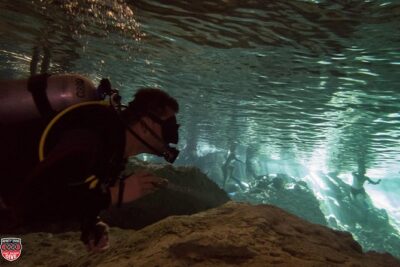
Amazing beginner dive in Tulum cenote (or refresher dive)
Read our review →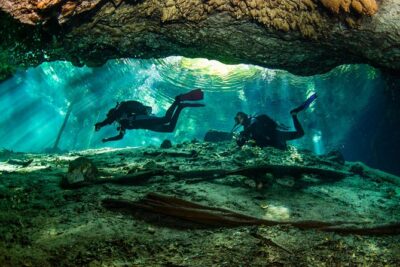
Go for 2 dives in cenote Dos ojos for certified divers
Read our review →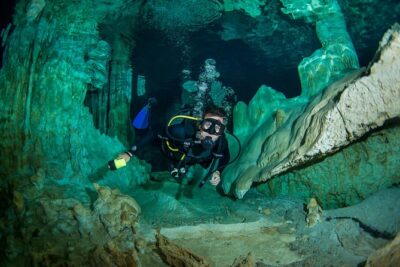
2 tanks Cenote Diving Adventure in Tulum for Certified Divers
Read our review →Browse the lists this dive appears in