
Reviewed · SCUBA DIVING
Diving in Authentic Marseille with a local
Marseille reveals itself best in layers, and this three-hour tour moves through many of them: the commercial force of La Canebière, the Greek roots of Port Antique, the lanes of Le Panier, and the modern waterfront around Mucem. I like the way it connects ancient ruins with ordinary city life rather than treating Marseille as a string of isolated sights.
I especially like the small group of no more than 10 people and the practical advice at the end. Guide Nass is praised for clear explanations, easy pacing, and useful restaurant suggestions near travelers’ hotels. The local tastings are another nice touch. The main consideration is that this is a walking route with a fair amount of ground to cover, and bottled water and private transport are not included.
Key points to know before booking
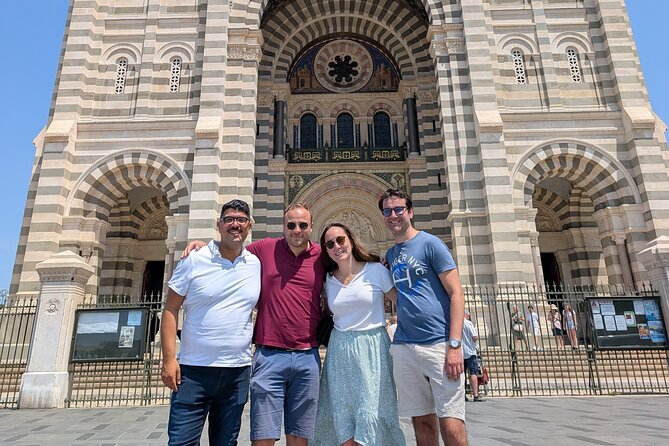
- Marseille in one compact route: See La Canebière, Port Antique, Le Panier, La Major Cathedral, Mucem, and the old harbor area in about three hours.
- A maximum of 10 people: The small group gives you a better chance to hear the guide and ask for personal advice.
- A strong local finish: The tour ends at Les Halles de la Major, where you can continue with food, drinks, and views of the port.
- A useful mix of history and city life: Ancient Greek remains sit alongside street art, working neighborhoods, museums, and modern architecture.
- Local tastings are included: Snacks help break up the walking, though the exact selection is not specified.
- Good planning value: The guide offers suggestions for restaurants, bars, and other things to do after the tour.
Starting at La Canebière and the Chamber of Commerce
The meeting point is at Bourse et Chambre de Commerce, 9 Place Général de Gaulle, at 10:00 in the morning. This is a central place to begin, near public transportation and close to one of Marseille’s best-known streets, La Canebière.
The first stop focuses on the imposing Chamber of Commerce building. Its story helps explain Marseille’s long connection to shipping, trade, and business. You will not spend long here, only about five minutes, but it gives the tour a useful opening question: how did this Mediterranean port grow into an international commercial city?
I appreciate this kind of beginning because it avoids rushing straight into postcard sights. You get a sense of Marseille as a working city before moving into its older quarters. The Chamber of Commerce is also an easy meeting point to find, which matters when you are starting a tour in an unfamiliar city.
More Scuba Diving in France
- Beyond Bouillabaisse: Diving into Marseille’s Multicultural Stew
★ 5.0 · 193 reviews - Calvi: Introduction to Diving Dive with an Instructor
★ 4.8 · 112 reviews - Scuba diving baptism
★ 5.0 · 37 reviews
Port Antique and the Greek beginning of Marseille
The next short stop reaches the remains of Port Antique, linked to the founding of Marseille by the Phocaeans around 600 BC. You can see parts of the ancient port, defensive walls, and a Roman road.
Five minutes is not enough for an archaeological lecture, but it is enough to put the city’s age into perspective. Marseille is often called the oldest city in France, and this stop gives that claim a physical setting. You are not simply hearing about an ancient foundation. You are looking at fragments of the place where that story began.
The stop is brief, so I would treat it as a historical orientation rather than a full museum visit. If ancient sites are your main interest, you may want additional time elsewhere in Marseille. On this tour, the value comes from linking Port Antique to the later streets and buildings you see during the rest of the morning.
The Hôtel de Cabre and a remarkable urban twist
The Hôtel de Cabre is described as Marseille’s oldest house, dating from 1535. It also carries one of the city’s best small stories: after the Second World War, the building was rotated 90 degrees.
That detail makes the stop memorable. You get a piece of architecture, a reminder of wartime damage and rebuilding, and an example of the odd practical decisions that shape old cities. Like Port Antique, this is a five-minute visit, so expect the guide to explain the key point rather than provide a long architectural study.
I find brief stops like this useful on a first visit. They keep the route moving and give you details you are likely to remember later. The drawback is that anyone wanting extended time for photographs or close inspection will need to return independently.
Le Panier, where Marseille feels most personal
Le Panier receives the longest stop, about 30 minutes, and that makes sense. This is the historic and artistic heart of the route, with colorful lanes, street art, and small squares.
Here the tour moves away from broad historical dates and into the feel of Marseille itself. You can expect narrow streets, changing views, and a neighborhood atmosphere that is harder to understand from a bus window or a standard city highlights route. The guide’s comments help connect the physical setting with the popular, everyday side of Marseille.
I like that the schedule gives Le Panier more time than the individual monuments. A neighborhood needs a little breathing room. Thirty minutes is still not enough to explore every lane, but it gives you a useful first look and helps you decide where to return later.
The route may also feel more demanding here. Old neighborhoods usually mean uneven streets, turns, and some walking at a steady pace. The tour description does not give an accessibility grade or specify the surface of every street, so anyone with mobility concerns should ask the provider before booking. Most people can participate, and service animals are allowed.
Another way to get in the water in France:
- Fréjus: Diving Experience in Port-Fréjus with an Instructor
★ 4.7 · 34 reviews - Calanques National Park Snorkel and Scuba Dive
★ 4.8 · 27 reviews - Private diving baptism in the Golf of Calvi
★ 5.0 · 19 reviews - Porto-Vecchio: beginner diving in the Cerbicale Islands in the reserve
★ 4.9 · 18 reviews
Centre de la Vieille Charité and the social side of the city
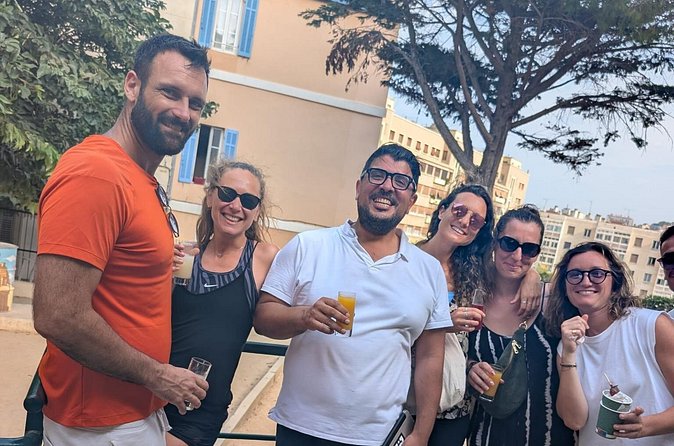
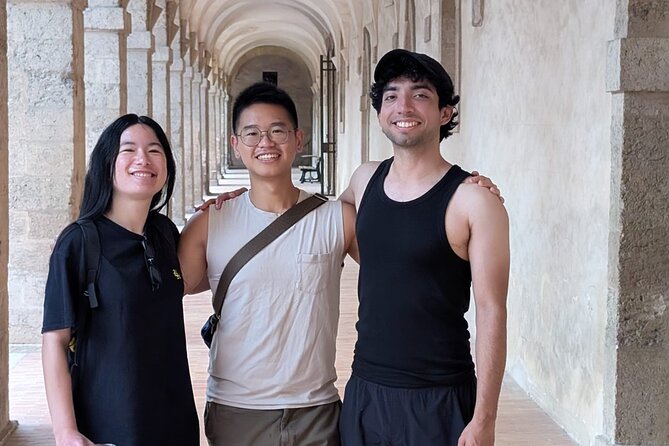
The Centre de la Vieille Charité brings a different kind of history. This former hospice is known for its baroque architecture and now functions as a cultural center. The guide explains its social role and how it relates to the renewal of the surrounding neighborhood.
This stop is only about five minutes, but it adds an important layer to the tour. Marseille is not just ancient ruins and attractive facades. Buildings also reveal how the city treated poverty, managed crowded districts, and later worked to improve them.
The architecture makes the stop worthwhile even if you are not planning to enter the cultural center. You will see how a former institution has been given a new public purpose. If you want to visit exhibitions inside, check the time available after the tour, since the scheduled stop is mainly for an outside explanation.
La Major Cathedral and fifteen minutes inside
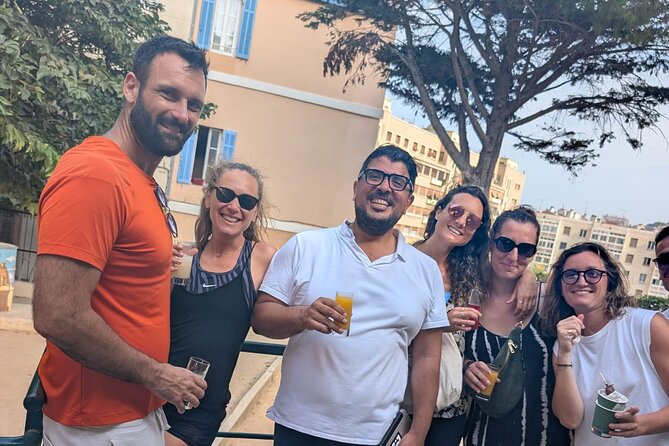
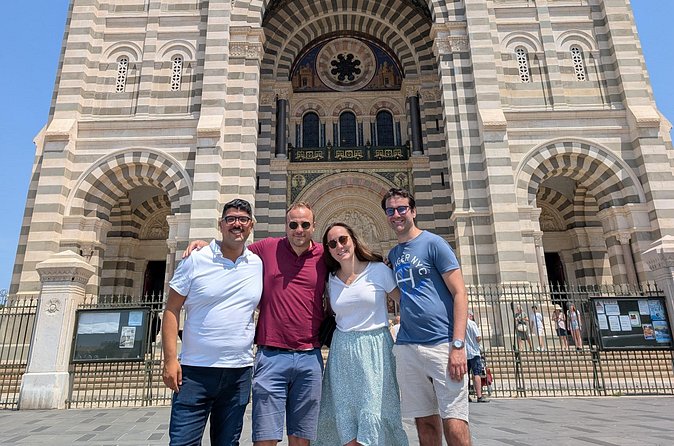
The Cathédrale de la Major is one of the tour’s most substantial stops. You get about 15 minutes to visit the interior independently and look at the mosaics, domes, and Romano-Byzantine design.
The cathedral’s location above the sea gives it a strong visual presence, but the interior is the real reason to pause. The combination of mosaics and large domes makes this a welcome change from the tight streets of Le Panier.
Fifteen minutes is enough for a focused look, not a slow architectural study. You will want to keep an eye on the meeting time so the group can continue to Mucem. Because the visit is free, this part adds real value to the $60.08 price without requiring another ticket.
Mucem, Fort Saint-Jean, and modern Marseille
At Mucem, the guide turns to the modern waterfront. You will hear about the museum’s distinctive concrete mesh architecture, Fort Saint-Jean, and the changes made to the area when Marseille became European Capital of Culture.
This is one of the most useful contrasts on the route. Earlier stops show Greek, Roman, medieval, and older civic Marseille. Mucem and the surrounding waterfront show a city trying to present itself in a modern cultural role.
The scheduled stop lasts about five minutes, so this is mainly an exterior introduction. If you want to enter the museum, plan a separate visit. The tour gives you the context to understand why the building matters, but it does not leave time for a full museum visit.
I like this approach because it prevents one attraction from taking over the morning. You see the building, understand its place in the city, and can choose later if it deserves more of your time.
Finishing at Les Halles de la Major
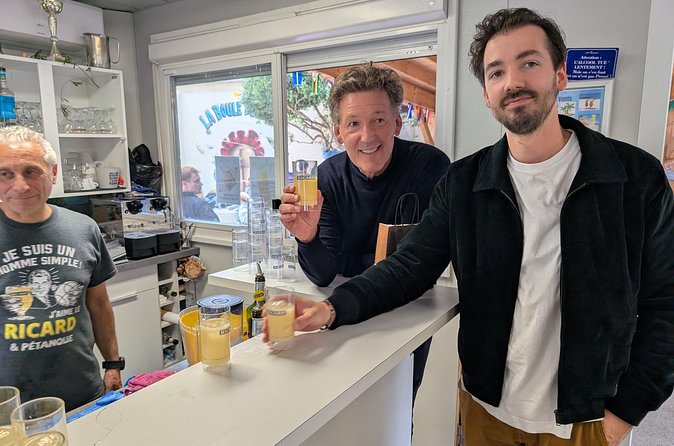
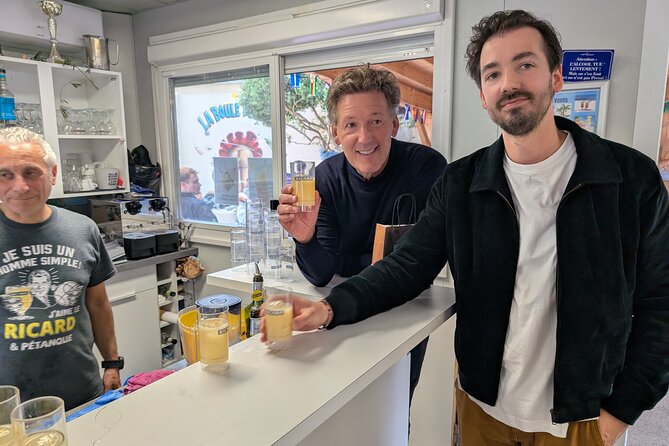
The final stop is Les Halles de la Major, a food hall at 12 Boulevard Jacques Saadé. You have about 20 minutes here, and the tour includes local snacks or tastings.
This is a smart ending. Food gives the morning a relaxed finish, and the setting lets you continue your day without returning to the starting point. You can stop for something more substantial, enjoy a drink, or use the port views as a planning break.
The guide also offers personal suggestions for restaurants, bars, and other attractions. This is where the tour becomes more useful than a standard list of facts. If you tell the guide what kind of food or evening you want, you can leave with ideas suited to your plans. The available information does not specify which tastings are served, so do not book this expecting a full meal.
What the three-hour timing really means
The listed stops add up to roughly 90 minutes, while the entire experience lasts about three hours. The difference is not wasted time. It covers walking between the sites, explanations along the way, pauses, and the movement from the old center toward the waterfront.
You should allow for a steady morning on foot. Private transportation is not included, and there is no bicycle use included in the tour. The provider offers an electric bike service separately, but that is not part of this experience.
Bring your own water. Bottled water is not included, and Marseille can feel warm during a sunny morning. Comfortable shoes are sensible, especially because the route includes historic streets and a long sequence of stops.
The group size matters here. With no more than 10 people, the guide can keep the group together without the feel of a large coach tour. You also have a better chance to ask where to eat, what to see next, or how to shape the rest of your day.
Is $60.08 a fair price?
At $60.08 per person, this is not the cheapest way to see central Marseille. You are paying for a local guide, a planned route, personal explanations, included local tastings, and advice tailored to your remaining time in the city.
The value improves if you are visiting Marseille for the first time or have only one day. In three hours, you cover major historical periods and several key districts without having to work out the route yourself. The end point is also useful because you finish near food and the port rather than simply circling back to the starting point.
The price is less attractive if you prefer to explore alone, already know Marseille well, or want long visits inside museums and monuments. Several stops last only five minutes, and the Mucem and Vieille Charité portions are introductions rather than full admissions.
The current rating is 5 out of 5 from 15 reviews, with every rating recommending the experience. The strongest praise centers on the guide’s explanations, the manageable pacing despite the distance, and the restaurant suggestions. That matches the tour’s main strength: it gives you a strong first orientation and useful local direction, not just a collection of photo stops.
Who will get the most from this tour?
I would choose this for a first morning in Marseille. It gives you a framework for the city, then leaves you at Les Halles de la Major with time to continue exploring.
It also suits you if you like history but do not want an all-day lecture. The route moves from ancient foundations to wartime rebuilding, neighborhood life, religious architecture, and modern cultural planning. That range keeps the morning varied.
Food-minded visitors should appreciate the local tastings and the final food hall stop, though the tastings should not be mistaken for lunch. The personal advice can also save time later, especially if you are unsure where to eat near your hotel.
I would think twice if you have limited walking ability, dislike group schedules, or want to spend most of your time inside museums. The tour is offered in English, and most people can participate, but the exact accessibility of each street and stop is not provided.
You receive booking confirmation at the time of purchase. Free cancellation is available up to 24 hours before the 10:00 start time. Poor weather or failure to reach the minimum number of participants can lead to a new date or a full refund.
Should you book this Marseille tour?
Book it if you want a compact, human-scale introduction to Marseille that mixes ancient sites, local streets, architecture, food, and practical advice. The strongest reason to choose it is not one single monument. It is the way the route links the city’s oldest foundations with the neighborhoods and waterfront you will use for the rest of your visit.
The small group, included tastings, and personal recommendations add useful value. Guide Nass’s clear explanations are a particular plus when he leads the experience.
Skip it if you want a slow museum day, private transport, or a fully private tour. For most first-time visitors with three hours to spare, though, this is a sensible way to get your bearings, learn the city’s story, and finish with a good plan for the afternoon.
FAQ
Where does the tour start?
It starts at Bourse et Chambre de Commerce, 9 Place Général de Gaulle, 13001 Marseille, France.
What time does the tour begin?
The start time is 10:00 am.
Where does the tour end?
The tour ends at Les Halles de la Major, 12 Boulevard Jacques Saadé, 13002 Marseille, France.
How long does the experience last?
The tour lasts approximately three hours.
How many people can join the tour?
The maximum group size is 10 travelers.
Is the tour offered in English?
Yes. The experience is offered in English.
Are food or drinks included?
Local snacks and tastings are included. Bottled water is not included.
Is transportation included?
Private transportation is not included. Bicycle use is also not included, although the provider offers an electric bike service separately.
Can I cancel for a full refund?
Yes. You can cancel at least 24 hours before the local start time for a full refund. Poor weather or failure to meet the minimum number of participants can also result in a new date or a full refund.
Newest dives added in France
- Half Day Snorkeling & Diving in Nice★ 5.0 · 4 reviews
- Full-Day Snorkeling and Guided Dive in the Calanques National Park from Marseille★ 5.0 · 7 reviews
- Diving in the Calanque Saint-Barthélemy★ 5.0 · 3 reviews
- Private diving baptism in the Golf of Calvi★ 5.0 · 19 reviews
- Private Guided Bike Tour of Cabourg and Dives in French★ 5.0 · 10 reviews
- Calanques National Park Snorkel and Scuba Dive★ 4.8 · 27 reviews
- Porto-Vecchio: beginner diving in the Cerbicale Islands in the reserve★ 4.9 · 18 reviews
- Paris: Aquarium de Paris, A Dive into the Deep Blue Wonder★ 5.0 · 2 reviews
Scuba Diving, compared.
Great Barrier Reef Snorkeling and Diving Cruise from Cairns
Read our review →
First-Time Scuba Diving in Honolulu + Free Videos
Read our review →

Diving Between Tectonic Plates – Meet on Location
Read our review →
Ocean Freedom Great Barrier Reef Luxury Snorkel and Dive Cruise
Read our review →
Beginner Scuba Diving with Turtles and Videos, San Juan
Read our review →
Your First Scuba Diving Experience in Turtle Area
Read our review →
Browse the lists this dive appears in