
Reviewed · SCUBA DIVING
Diving initiation
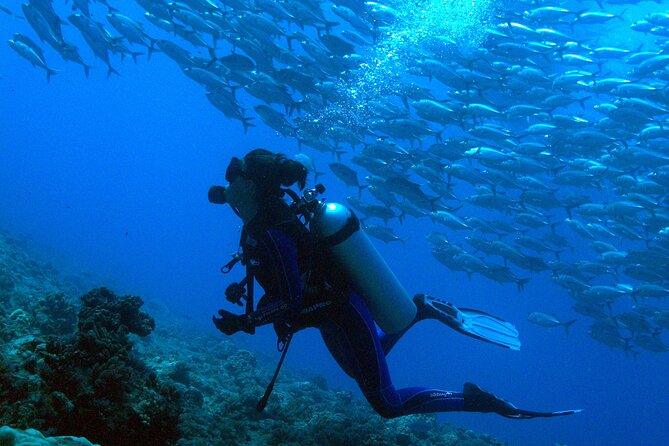
Tahiti lets you try scuba in a setting that feels made for first-timers: warm tropical water, colorful fish, coral reefs, and even submerged wrecks. I like the maximum group size of two, which gives your instructor room to focus on your breathing, comfort, and equipment.
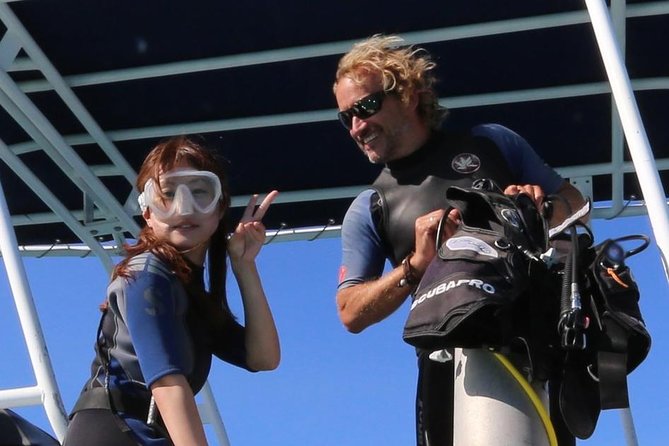
I also like that the lesson is more than a pool-style practice session. You get the chance to see a manmade reef made from a sunken wreck and plane, while instructors such as Nicolas and Naia help with transport and communication. The main caution is that the experience depends heavily on your instructor. One participant felt underprepared before entering the water, so speak up if you need a slower briefing.
Key points to know before booking
- A true first scuba lesson: No previous experience is required, and the activity is designed for complete beginners.
- Only two people per session: This small format allows for close attention from the instructor.
- Underwater sights beyond fish: You might see coral, reef fish, a sunken wreck, and a submerged plane.
- Suitable from age five: The activity is open to children five and older.
- Two hours at 10:30 am: The session begins at C97P+J5J in Puna’auia and returns to the same meeting point.
- Strong overall rating: The experience has a 4.8 rating from 25 ratings, with 96 percent recommending it.
Your first look beneath Tahiti’s water
This is an introduction to scuba, often called a baptism in French Polynesia. The goal is not to rush you toward certification. It is to show you how breathing underwater feels, how the equipment works, and how to move safely around fish and coral.
You meet at 10:30 am at C97P+J5J in Puna’auia. The activity lasts about two hours and finishes where it starts. That compact schedule works well if you have only part of a day free, though you should avoid placing a tight appointment immediately afterward.
The water setting is the real reason to choose this lesson in Tahiti. Instead of learning only in a plain training pool, you can practice in tropical water filled with fish and coral. The supplied information also describes views of wrecks and reefs, and one account specifically recalls a manmade reef made from a sunken wreck and plane.
That combination gives the lesson a sense of purpose. You are not simply repeating breathing drills. You are learning a new skill while having something interesting to watch around you.
More Scuba Diving in French Polynesia
- Aqua Safari Introductory Helmet Dive (Underwater Walk)
★ 5.0 · 428 reviews - 2 Dives in the morning for certified divers in Bora Bora
★ 5.0 · 263 reviews - Introductory Dive in Bora Bora (afternoon)
★ 5.0 · 138 reviews
What happens before you enter the water
A first scuba lesson should begin with a clear explanation of safety, breathing, and equipment. The instructors prepare you for the basic steps needed to remain calm and comfortable underwater.
The equipment is supplied for the session. One participant specifically praised the clean, high-quality equipment and said it was ready on arrival. That matters for a beginner, since unfamiliar or poorly fitted gear can make the first few minutes needlessly stressful.
You should use the briefing to ask direct questions. If you do not understand how to clear your mask, adjust your position, or signal that you need help, ask the instructor to go over it again. A separate account described feeling that the explanation before entering the water was too limited and that the equipment did not allow the person to sink properly. That is an important warning, not a reason to dismiss the activity.
Tell the instructor what you need before you enter. A good first lesson should feel controlled, not hurried. The session is limited to two participants, so you have a strong chance of getting individual help. Still, the small group only helps if you speak up about nerves, fit, or trouble with your breathing.
A two-person lesson makes a difference
The maximum group size is two people. For a first attempt, that is one of the most useful details here.
A larger class can leave you waiting while an instructor handles someone else’s mask, buoyancy, or nerves. With two participants, the instructor can keep a close eye on both people and respond quickly when something feels wrong. This is especially useful for children and adults who have never used scuba equipment.
The small format also suits couples, parents with older children, or two friends who want to learn together. You will not be part of a large crowd moving through the same exercise. The activity promises personalized attention, and the group limit gives that promise practical weight.
The experience is not described as a full certification course. Instead, it provides an introduction that can lead toward the first levels of scuba certification. If you enjoy the session, you will have a clearer idea of whether you want formal training later.
The moment you begin breathing underwater
For most beginners, the first breath through a regulator is the key moment. The sensation can seem odd at first, even when everything is working correctly. Your instructor’s job is to keep the process simple and help you settle into a steady rhythm.
You may begin by getting used to the equipment and the water before moving farther into the site. The exact order is not specified, so you should expect an introductory format rather than a fixed list of underwater exercises.
The lesson emphasizes safety and comfort. That is especially important for young participants, since the activity accepts children from age five. Age alone does not tell you how a child will respond to a mask, regulator, or unfamiliar surroundings. A child who is comfortable following instructions and asking for help will be better prepared than one who feels pressured to continue.
The instructors are expected to adjust their guidance to your pace. One participant described a friendly and professional instructor who explained everything carefully and made the first lesson feel comfortable. That is the standard you should expect and the reason to raise any concern immediately if the briefing feels too short.
Another way to get in the water in French Polynesia:
- Romantic dive in the lagoon of Bora Bora. Private instructor on a shared boat
★ 5.0 · 54 reviews - Diving day
★ 5.0 · 45 reviews - Romantic Dive for beginners in Bora Bora (2 people) with Video
★ 5.0 · 18 reviews - 1 Afternoon Dive for Certified Divers in Bora Bora
★ 5.0 · 18 reviews
Fish, coral, wrecks, and a submerged plane
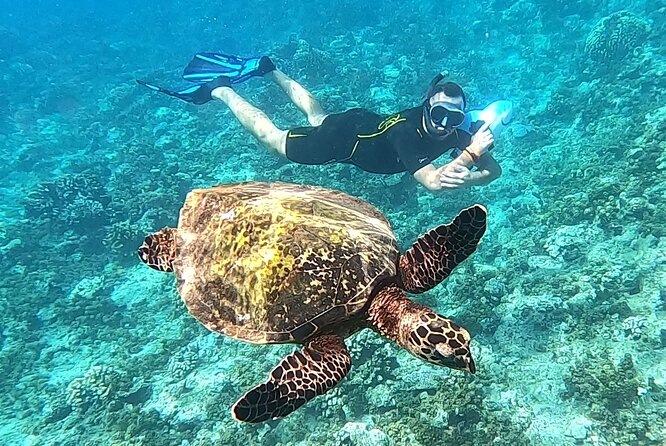
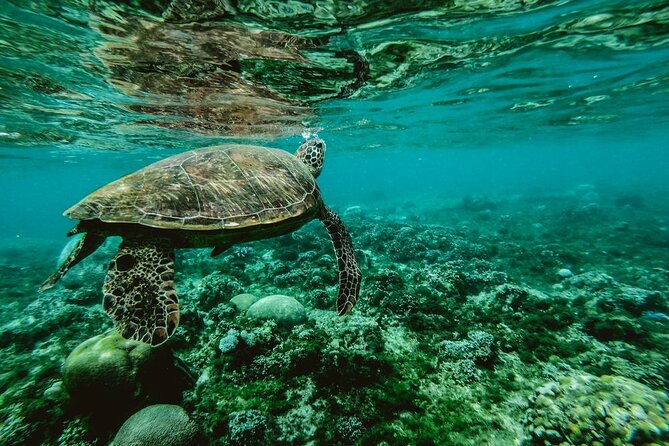
Once you are comfortable underwater, the setting becomes the reward. Tahiti’s tropical water offers close views of colorful fish and coral. The descriptions also include wrecks and reefs, giving the outing more variety than a simple swim over a sandy bottom.
A particularly unusual feature is the manmade reef created from a sunken wreck and plane. These structures attract fish and give you something distinctive to see during the lesson. You are not promised a particular species or a guaranteed encounter, so treat the marine life as part of the setting rather than a fixed show.
The sensation is often compared with weightlessness. You move slowly, use your breathing to help control your position, and watch fish pass nearby. That slow pace is useful for beginners. You have time to notice how the equipment works and how small movements affect your body.
Do not expect a long expedition. This is a two-hour introduction, not a full-day scuba outing. The value comes from the quality of the first experience, the instructor’s attention, and the chance to see a real reef site while learning.
How transport and communication can shape the day
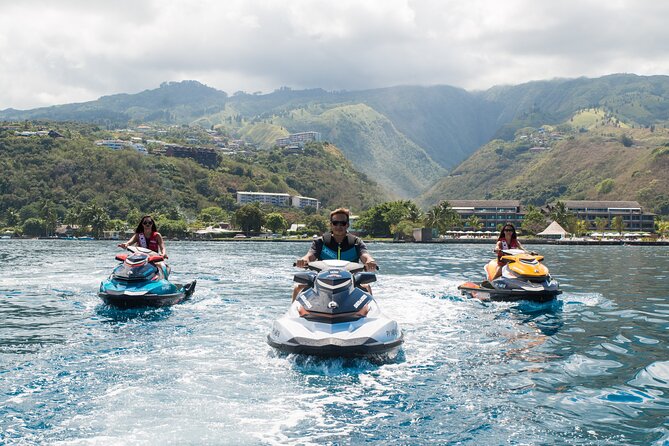
The meeting point is in Puna’auia, and the activity returns there at the end. The location is near public transportation, which gives you a practical option if you are not using a private vehicle.
Transport details may depend on your arrangement. One account describes free pickup and return to a hotel, while another describes updates from Naia and a pleasant ride with Nicolas from near the cruise ship pier to the marina. Since the basic meeting information lists Puna’auia, confirm the pickup details when booking rather than assuming hotel or cruise-port transport is included for every participant.
That communication is useful on an activity involving equipment and a fixed start time. Updates about transportation can prevent a lot of uncertainty, especially if you are staying outside Puna’auia or arriving from a cruise ship.
The mobile ticket is convenient, and confirmation is issued at booking. Keep the start time visible on your phone and allow enough time to reach the meeting point.
Is $162.08 a fair price?
At $162.08 per person, this is not a casual beach swim. You are paying for a two-hour guided scuba introduction, equipment, instruction, and a very small group. The price makes the most sense if you want to test scuba without committing to a multi-day certification course.
The two-person limit improves the value. Close supervision is more useful to a beginner than a lower price attached to a crowded class. The chance to see fish, coral, and the artificial reef also makes this more than a basic equipment demonstration.
Value depends on your goal. If you only want to look at marine life, snorkeling may cost less and require less preparation. If you have always wanted to try scuba but are unsure about certification, this lesson offers a sensible first step.
You should also consider the length. Two hours is enough for an introduction, but it is not enough to cover the full training required for certification. The activity may point you toward the first certification levels, but it does not replace formal coursework.
The strengths and the one concern to keep in mind
The strongest part of this experience is the personal attention. The high overall rating, 4.8 from 25 ratings, reflects that the lesson generally delivers a positive first encounter with scuba. The most praised details include clean equipment, good transport communication, friendly instruction, and the quality of the underwater site.
The staff names that appear in the experience details are useful to remember. Naia handled updates for one pickup, and Nicolas drove one participant from near the cruise ship pier to the marina. The instructors themselves may vary, so do not assume a particular person will lead every session.
The main concern is consistency in the pre-water explanation. One participant felt unprepared and had trouble with equipment that did not let them sink properly. That kind of problem can spoil the first few minutes, but it is also something you can address by stopping and asking for an adjustment.
I would not enter the water simply to avoid holding up the group. With only two people, there is room to pause. Your comfort and safety should come first.
Who will enjoy this Tahiti activity most?
This lesson suits an adult who has always wanted to try scuba but does not yet know if certification is worthwhile. It also fits families looking for a structured water activity for children age five and older, provided the child is ready to follow instructions and remain calm with scuba equipment.
It is a good match for couples and friends who value a quiet, personal lesson. The two-person limit means you can focus on learning instead of keeping up with a large group.
It may not suit someone who wants a long underwater trip or advanced instruction. The session is short and introductory. It is also not the best choice if you prefer to decide everything at your own pace without an instructor, since safety guidance is central to the activity.
Service animals are allowed, and most people can participate. The activity is near public transportation, and you can cancel for a full refund up to 24 hours before the start time. Cancellations or changes made less than 24 hours before the start are not accepted for a refund.
Should you book this two-hour lesson?
Book it if you want a carefully supervised first taste of scuba in a memorable setting. The two-person format, tropical marine life, and unusual wreck and plane reef give it more appeal than a basic lesson on land.
I would book it with one clear plan: ask questions before entering the water. Confirm how the equipment should feel, how to signal for help, and what to do if you cannot control your position. If the instructor gives you time to settle in, this can be an excellent way to find out if scuba belongs in your future travel plans.
Skip it if you want a full certification course or a long day at sea. For a first underwater experience in Tahiti, though, the price is reasonable, the setting is special, and the small group gives you a fair chance to learn at your own pace.
FAQ
Where does the scuba introduction start?
It starts at C97P+J5J in Puna’auia, French Polynesia.
What time does the activity begin?
The stated start time is 10:30 am.
How long does the activity last?
The lesson lasts approximately two hours.
Does the activity return to the starting point?
Yes. The activity ends back at the meeting point.
How many people can join the session?
The maximum group size is two participants.
Do I need previous scuba experience?
No. The lesson is designed for complete beginners.
What age can children participate?
Children from age five can participate.
What might I see underwater?
You may see colorful fish, coral reefs, wrecks, and a manmade reef made from a sunken wreck and plane.
Can I cancel for a full refund?
Yes. You can cancel at least 24 hours before the start time for a full refund. Changes or cancellations made less than 24 hours before the start are not accepted for a refund.
Newest dives added in French Polynesia
- Double Diving Adventure Exploration for Certified Divers★ 5.0 · 8 reviews
- Baptism diving in the turquoise waters of Tahiti★ 5.0 · 8 reviews
- Diving day★ 5.0 · 45 reviews
- Rangiroa 2-tank Certified Scuba Dive★ 5.0 · 5 reviews
- Baptism: introductory dive at Moorea Fun Dive★ 5.0 · 2 reviews
- Fakarava 2-tank Certified Scuba Dive★ 5.0 · 2 reviews
- Combo Diving and Snorkeling Half-Day Tour★ 5.0 · 13 reviews
- Private Tour: Aqua Safari Scuba Diving★ 5.0 · 7 reviews
Scuba Diving, compared.
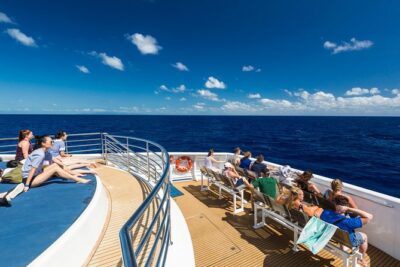
Great Barrier Reef Snorkeling and Diving Cruise from Cairns
Read our review →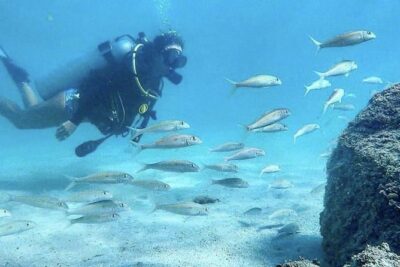
First-Time Scuba Diving in Honolulu + Free Videos
Read our review →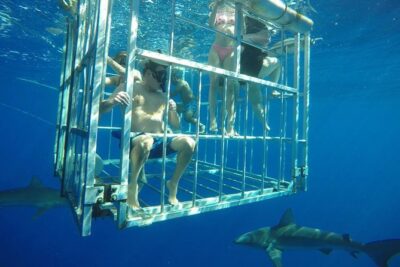
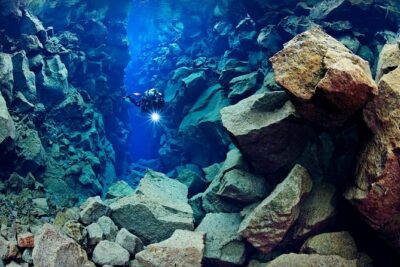
Diving Between Tectonic Plates – Meet on Location
Read our review →
Ocean Freedom Great Barrier Reef Luxury Snorkel and Dive Cruise
Read our review →
Beginner Scuba Diving with Turtles and Videos, San Juan
Read our review →
Your First Scuba Diving Experience in Turtle Area
Read our review →
Browse the lists this dive appears in