
Reviewed · PADI COURSES & CERTIFICATION
Kenting, Taiwan|PADI Basic Diving License Course|Taiwan Diving Open Water Course
Kenting is a practical place to earn your first scuba certificate: you spend one day learning skills in confined water, then two days putting them to work in the sea. English instruction can be arranged, and the advertised coach-to-student ratio is 1:3, which gives beginners room to learn without being rushed. Training depth reaches 18 meters.
I like the included Suunto ZOOP computer watches, since learning to read your own depth and time matters from the start. I also like the useful extras: equipment, insurance, lunch, a buoyancy bag, and underwater photos are included. The main consideration is the fixed three-day schedule. It is intensive, and poor weather can force a change of date.
Key points to know before booking
- Three full days in Kenting: Confined-water lessons come first, followed by four supervised sea sessions.
- English teaching available: Request an English-language course when booking.
- Small-group instruction: The stated coach-to-student ratio is 1:3, although the overall activity can accept up to 20 people.
- Useful equipment included: Scuba gear, Suunto ZOOP computers, a buoyancy bag, diving insurance, lunch, and an underwater camera are provided.
- Certification depth is 18 meters: The course prepares you for entry-level recreational scuba, not technical or advanced work.
- Meet in Hengchun: The Taiwan Dive Center is at No. 55-60 Daguang Road, Hengchun Township, Pingtung County.
Three days from first lesson to PADI certificate
This is the PADI Open Water Diver course, the standard starting point for recreational scuba. You do not need a foundation in scuba skills, but you do need to be at least 10 years old and in good health.
The schedule begins at 8:30 a.m., though the meeting information gives an 8 a.m. start. I would plan to arrive early, especially if you need to complete forms, provide an ID photo, or be fitted for equipment. Bring your own swimsuit and an ID photo. An electronic file is accepted, and no particular photo size is required.
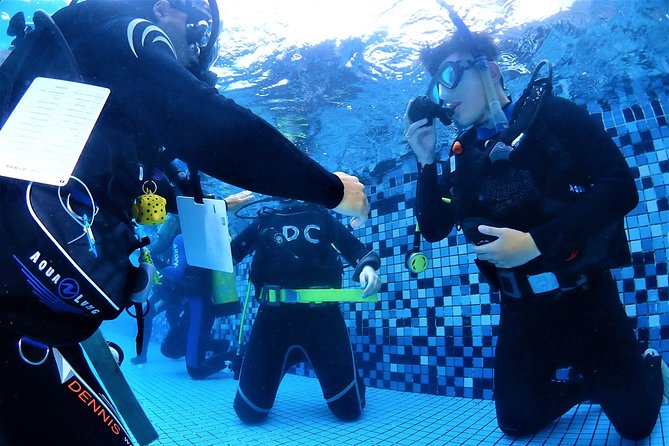
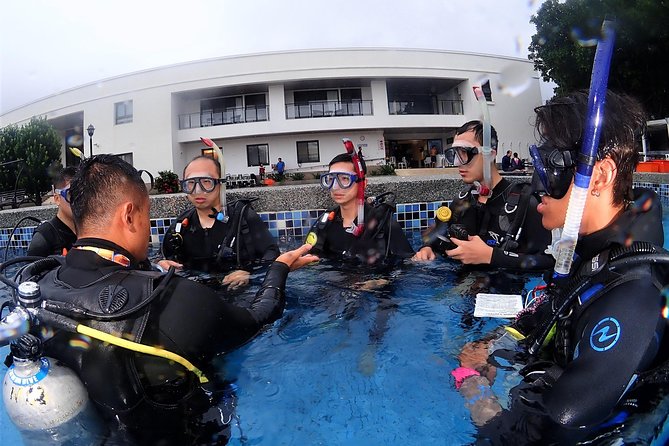
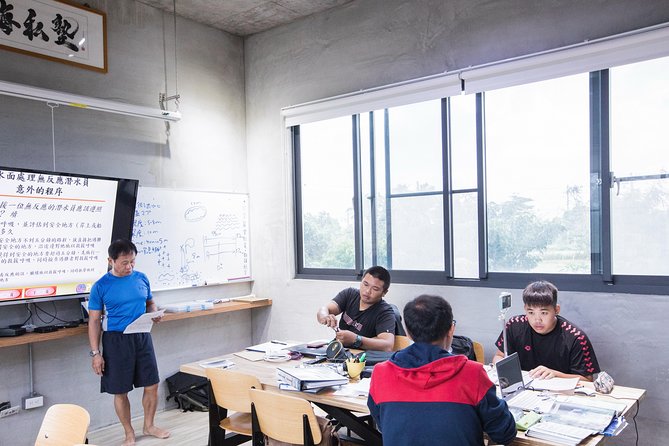
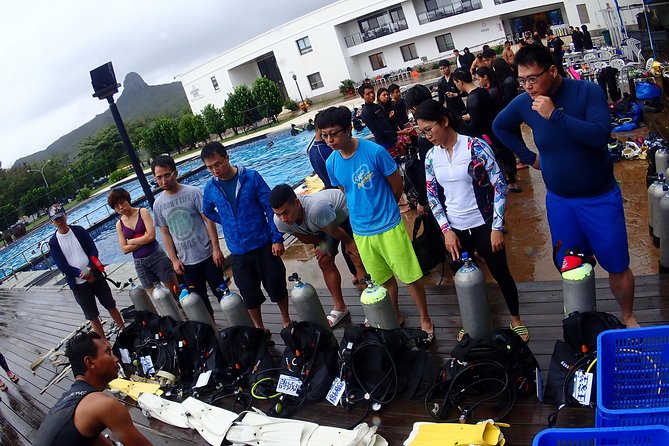
The first morning is about getting organized. You complete registration paperwork, receive your equipment, and learn how the gear fits together. From 10 a.m. until noon, the instructor leads confined-water training. After lunch, you return to the water from 1 p.m. to 5 p.m.
That first day can feel less glamorous than the sea sessions, but it is the most important part for a beginner. You learn the basic movements and procedures in a controlled setting before dealing with open-water conditions. The long afternoon gives the instructor time to explain a skill, watch you try it, and correct small problems before they become habits.
More PADI Courses in the world
- Barcelona: PADI Discover Scuba Diving
★ 4.7 · 1,016 reviews - PADI Open Water Diver Course
★ 5.0 · 626 reviews - Tossa de Mar: PADI Discovery Scuba Diving in Costa Brava
★ 4.7 · 392 reviews
Day two moves from practice water to the sea
The second day starts at 8:30 a.m. and includes one or two marine training sessions before lunch. This is the point where the course becomes more than equipment practice. You begin using the skills in a real underwater setting while the instructor watches your comfort, breathing, movement, and control.
The schedule allows up to three and a half hours for the morning sea work, including one or two sessions. That does not mean you will be underwater continuously. The actual plan depends on conditions and the pace of the group.
Lunch runs from noon until 1:30 p.m. Afterward, the course turns to skills discussion until 5 p.m. That classroom or deck time matters. Beginners often remember the excitement of their first sea session but forget the details that make future outings safer, such as monitoring depth, managing air, and responding calmly when something feels unfamiliar.
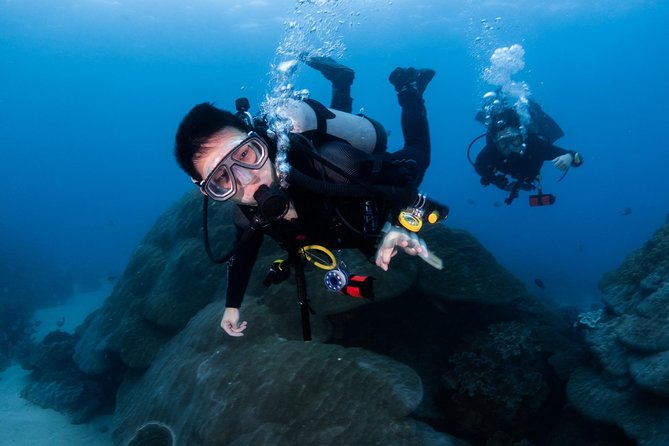
The course uses Suunto ZOOP computer watches throughout the training. This is a good feature for anyone who wants more than a one-time supervised outing. You learn with the same sort of information you will need later, including your depth and underwater time, rather than treating the instructor as your only source of information.
Day three completes four sea sessions
The final day begins again at 8:30 a.m. and includes the third and fourth marine sessions, scheduled before lunch. By this stage, the basic routines should feel more familiar, though you still need to concentrate. The instructor continues to watch your technique and comfort in the sea.
Lunch is scheduled from noon to 1:30 p.m. The afternoon includes another skills discussion from 1:30 p.m. to 4 p.m. Certification follows from 4 p.m. to 6 p.m., when the course issues the wall certificate and marks completion.
The timetable is a guide, not a promise. Weather and actual conditions can change the order or length of activities. That flexibility is necessary for an outdoor course, but it also means you should avoid scheduling an important flight or onward connection immediately after the final afternoon.
Why the 1:3 teaching ratio matters
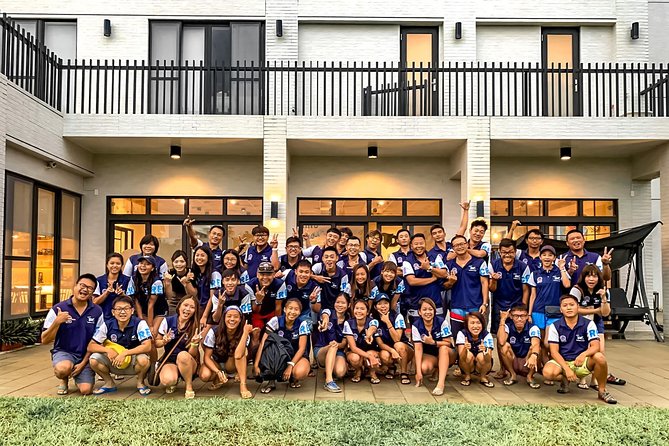
The advertised coach-to-student ratio is 1:3. For a first certification, that is one of the most useful details in the package. You are not simply following a large crowd through a set route. An instructor has a better chance of spotting a loose strap, poor buoyancy, hesitation, or a skill that needs another explanation.
The provider can accept up to 20 people overall, so you should confirm how your particular class will be organized. The 1:3 ratio suggests small teaching groups within the wider operation, but the maximum number indicates that the center may be handling several groups at once.
The instructors named in the supplied material include Alan, Octopus, Paul, Ryan, Caty, Japon, Vincent, Hank, PT, Rabbit, Fat, and Small Grade. Staff assignments can change, so do not book around one particular instructor. Still, the range of names and the repeated praise for patient instruction point to a center accustomed to working with first-timers and international clients.
English instruction can be arranged for the entire course. Make that request clearly when booking, rather than assuming an English-speaking instructor will be assigned automatically.
More Scuba Diving in the world
- Great Barrier Reef Snorkeling and Diving Cruise from Cairns
★ 4.5 · 3,714 reviews - First-Time Scuba Diving in Honolulu + Free Videos
★ 5.0 · 3,123 reviews - Oahu Shark Dive
★ 5.0 · 2,903 reviews - Silfra: Diving Between Tectonic Plates – Meet on Location
★ 5.0 · 2,139 reviews
Equipment, computers, and the buoyancy bag
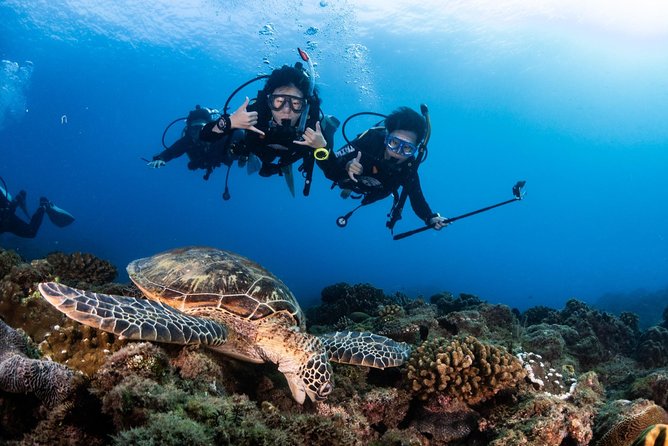
The price includes use of scuba equipment, so you do not need to arrive with your own mask, suit, tank, or related gear. The course also provides Suunto ZOOP computer watches. For a beginner, that takes some pressure off the purchase decision. You can learn what equipment you actually like before spending money on a personal set.
A buoyancy bag is included for Open Water 2. This is a practical piece of equipment that can make underwater travel and buoyancy work easier. The course is not simply a swim with tanks attached. You are introduced to the tools used in ordinary recreational scuba.
The instructor also carries an underwater camera during Open Water 4. That gives you a record of your first certification sessions, including the moment when the basic skills begin to feel natural. Treat the photos as a pleasant extra, not the reason to choose the course. The real value is the supervised practice and certification.
Lunch is provided during the training days. That matters more than it may sound. The timetable is long, and the combination of water work, equipment handling, and concentration can leave you tired. Having food arranged means you do not need to find a restaurant between sessions or risk cutting the afternoon short.
What your $83 pays for
At $83, the package offers strong value if you want a recognized entry-level qualification rather than a single introductory swim. You receive three days of instruction, equipment use, insurance, lunch, computer watches, buoyancy equipment, and underwater photography.
The price does not include accommodation. Some of the supplied comments refer to a clean hostel connected with the operation, breakfast, comfortable rooms, and shared facilities, but you should not assume a bed is part of this booking. Ask the center directly if you want to stay on site and confirm the extra cost.
You also need to account for getting to the meeting point in Hengchun. The summary identifies Kaohsiung as the location, but the actual starting address is Taiwan Dive Center, No. 55-60 Daguang Road, Hengchun Township, Pingtung County, Taiwan 946. Plan around the Hengchun address, not the broader Kaohsiung label.
The value is best for someone who already has three days available in the Kenting area. It is less attractive if you only want to try scuba for an hour or two, since a full certification course requires paperwork, practice, sea sessions, and discussion.
Kenting National Park and the setting for training
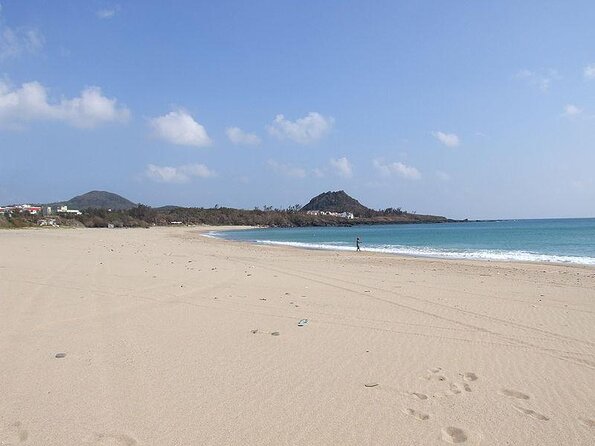
The stated stop is Kenting National Park, with the course operating from the Hengchun area. The appeal here is not a sightseeing circuit with a long list of stops. The destination is the water itself, and the schedule gives you repeated sessions instead of a quick look before moving on.
You should expect the exact sea conditions and training location to depend on weather and local conditions. That is normal for a water-based qualification. A calm, workable site allows the instructor to focus on skills, while changing conditions may require adjustments to the timetable.
The center’s facilities receive strong praise for cleanliness and comfort. Notes about a chill-out audio room, healthy food, and the chance to see stars at night relate to the associated accommodation rather than the $83 course itself. If you plan to stay there, those details may help, but confirm availability separately.
Health rules are not a formality
You must be at least 10 years old and in good health. The supplied health guidance specifically flags respiratory conditions involving the bronchi or chest, diabetes, epilepsy, recent illness or surgery within one month, and ear disease or ear surgery.
If any of these apply to you, seek approval from your doctor before taking the course. Do not rely on a quick online decision or assume that being comfortable in a swimming pool means you are medically cleared for scuba. Ear and respiratory issues deserve particular care because pressure changes are part of the activity.
You should also tell the instructor about any relevant condition before training begins. The course is designed for beginners, but beginner-friendly does not mean risk-free.
Weather can change the plan
The course requires good weather. If poor conditions cause cancellation, you are offered another date or a full refund. That protection is useful, but the general cancellation rule is strict: the booking is non-refundable and cannot be changed for personal reasons.
I would avoid booking this for the only three days of a tightly packed Taiwan itinerary. Give yourself some flexibility, especially if you need to travel to or from Hengchun. A weather delay is easier to manage when you have a spare day than when you have a flight waiting.
The daily schedule is also physically demanding. You may be in training from morning until late afternoon, with water work, equipment, meals, and classroom discussion all packed together. If you are hoping for a slow beach break, this is not that. If you want a focused route to certification, the structure makes sense.
Who will get the most from this course
This course suits you if you are a complete beginner, want a PADI Open Water qualification, and can commit three days to learning rather than simply sampling the activity. The 1:3 teaching ratio, English option, equipment package, and included meals make it approachable for international visitors.
It is also a good choice if you want to continue scuba after Kenting. The certification allows you to rent equipment and tanks or hire guides for recreational outings around the world. The course recommends regular practice and later advanced training, which is sensible. A certificate gives you permission and basic skills, not years of judgment.
Families should pay attention to the minimum age of 10 and the health requirements. Parents should also consider the long days and the need for a child to follow instructions carefully in an unfamiliar environment.
This is not the right pick if you dislike fixed schedules, have medical concerns that have not been cleared, or need a fully refundable booking. It is also not a sightseeing tour in the usual sense. Most of your time is spent learning, practicing, discussing skills, and completing supervised sea sessions.
Should you book the Kenting Open Water course?
I would book this if your goal is a real entry-level PADI qualification at a low price, and you can stay flexible about weather. The strongest reasons are practical: small-group teaching, English instruction on request, modern computer watches, included equipment and lunch, and four marine training sessions spread over two days.
Before paying, confirm the English arrangement, meeting time, equipment fit, instructor assignment, and accommodation if you need it. Bring a swimsuit and electronic ID photo, arrive early at the Hengchun address, and leave room in your schedule for a weather change.
For a first certification, this is a focused and well-equipped option. You will work hard for three days, but you leave with a useful qualification rather than a fleeting underwater introduction.
FAQ
Where does the course meet?
It starts at Taiwan Dive Center, No. 55-60 Daguang Road, Hengchun Township, Pingtung County, Taiwan 946. The activity ends back at the meeting point.
How long does the course take?
The course lasts approximately three days. The planned schedule runs from about 8:30 a.m. until late afternoon, with the final certification period scheduled from 4 p.m. to 6 p.m. on day three.
Is English instruction available?
Yes. English teaching can be arranged for the entire course. Request it when booking.
What is included in the price?
The package includes scuba equipment, diving insurance, lunch, use of Suunto ZOOP computer watches, a buoyancy bag for Open Water 2, and underwater photography during Open Water 4.
How old must I be to take the course?
You must be at least 10 years old and in good health.
What happens if bad weather cancels the course?
If poor weather causes cancellation, you will be offered another date or a full refund. Personal cancellations or amendment requests are otherwise non-refundable.
Newest dives added in the world
- From Pattaya: Snorkeling or Beginner Scuba Diving Tour★ 4.1 · 68 reviews
- From Punta Cana: ScubaDoo, Snorkel & Glass Bottom Boat Tour★ 3.9 · 73 reviews
- Punta Cana Party Cruise with Snorkeling, Hooka Diving and Parasailing★ 4.5 · 79 reviews
- Fun Dives For Certified Divers★ 5.0 · 44 reviews
- Discover SCUBA Diving in Beautiful Unawatuna Bay★ 5.0 · 30 reviews
- Phuket Scuba Diving Maiton Private Island Small Group or Snorkel★ 5.0 · 9 reviews
- PADI Scuba Diver Course★ 5.0 · 30 reviews
- Fun Dives For Certified Divers★ 5.0 · 30 reviews
PADI Courses & Certification, compared.
Tossa de Mar: PADI Discovery Scuba Diving in Costa Brava
Read our review →
Full-Day Beginner Scuba Course with Private Tuition, Racha Yai
Read our review →
Heraklion: Beginner Scuba Diving Lesson with PADI Instructor
Read our review →
Discover Scuba Diving with No Certification in St Thomas
Read our review →
Try Dive – PADI Discover Scuba Diving in Tenerife
Read our review →
Browse the lists this dive appears in