
Reviewed · SHORE DIVES
Open water scuba certifiication course with beach dives
Phuket is a fine place to learn scuba, but the real strength of this course is its small group size. With no more than four people and instruction from Charles, an experienced teacher who has worked in scuba since 2000, you get room to ask questions and repeat skills without feeling rushed. I like the pool session before the sea work, and I like that the course ends with a recognized certificate and log book, not just a one-time underwater outing.
The main caution is that this is a serious three-day course, not a casual holiday activity. You need reasonable fitness, comfort in the water, and a clean medical profile. The $503 price can be good value if you want a full qualification, but it is more than a short introductory session and the published plan calls for four beach training sessions, so confirm exactly what is included if you have been promised extra sea time.
Key points at a glance
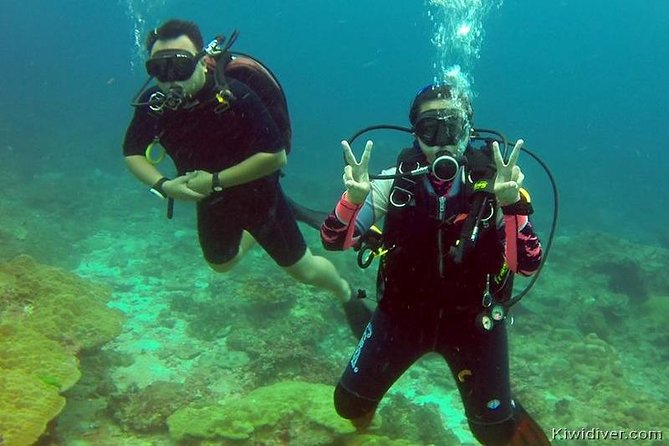
- Three days from study to certification: Complete the educational work before arrival, then use the course time for practical training.
- Pool work comes first: You learn equipment use and basic skills in a controlled setting before heading into open water.
- Charles leads the instruction: He has taught since 2000, has worked around Phuket and worldwide, and brings extensive real-world experience.
- Maximum of four students: The small format allows closer supervision and more time for questions.
- Four scheduled beach sessions: The official plan includes training sessions 1 and 2 on day two, followed by sessions 3 and 4 on day three.
- A qualification with long-term use: Successful students receive a log book and an open-water scuba certificate recognized around the world.
What the $503 course is really buying you
At $503, this is not simply a scenic Phuket outing with an air tank. You are paying for a structured qualification, instructor time, equipment fitting, pool instruction, open-water practice, and the paperwork needed to finish your certification.
That distinction matters. A short introductory scuba session may let you try breathing underwater, but it does not give you the same training or status. This course is aimed at people who want to continue scuba after Phuket, perhaps on future holidays or at home.
I consider the price reasonable for a properly supervised three-day course, especially with a maximum of four participants. A larger class could make the fee look cheaper while giving you less personal attention. Here, the value depends on how much instruction you need and whether you plan to use the certificate later.
There is one point to clarify before paying. The course schedule describes four beach training sessions. Some customers have had programs involving six sea sessions, but that should not be assumed as part of this exact booking. Ask Kiwidiver Dive Centre to confirm the number of sessions, the equipment included, and the precise certification arrangement.
More PADI Courses in Phuket
- Full-Day Beginner Scuba Course with Private Tuition, Racha Yai
★ 5.0 · 368 reviews - PADI Discover Scuba Diving for Beginners (Non Certified Divers)
★ 5.0 · 78 reviews - SSI | Padi Open Water Course in Phuket
★ 5.0 · 66 reviews
Before you arrive: complete the classroom work
The educational part is completed online before day one. This is useful because your time in Phuket can focus on practical skills rather than long classroom blocks.
You should arrive having worked through the material carefully, not simply clicked through it. Scuba has plenty of small rules that matter: how to use the equipment, how to manage problems, and how to respond when something does not feel right. Charles uses the first meeting to review paperwork and identify any topics that need more attention.
That first discussion is one of the better features of the course. You can tell the instructor where you feel uncertain before the equipment is on and the water is around you. It also gives you a chance to ask about the pace of the next two days.
The meeting begins at 9:00 a.m. at Kiwidiver Dive Centre, 20 Soi Lam Sai in Karon. The activity returns to this same meeting point at the end. Confirmation is sent within 48 hours of booking, subject to availability, so do not leave the reservation until the last minute if your Phuket schedule is tight.
Day one: paperwork, equipment, and pool practice
Day one is the foundation. You meet Charles, review the required forms, discuss the online training, and get fitted for scuba equipment. Proper fit is not a glamorous part of the course, but it makes a real difference once you are in the water.
This is also when you learn how the equipment feels and works before facing open-water conditions. You attend a pool training session and practise the required skills in a controlled place. If you are nervous, this is where the course should begin to feel manageable.
I like this order. Starting directly at a beach can pile several new sensations on top of one another: unfamiliar equipment, changing water conditions, and the need to remember new procedures. Pool work lets you concentrate on the skills first.
Charles has been praised for explaining not only what to do, but why it matters and how a skill applies in a real situation. That teaching style is particularly helpful for a beginner. Memorizing steps is one thing. Understanding the reason behind them makes it easier to respond calmly when conditions change.
You should still expect a full day of concentration. The online work may be completed in advance, but certification is not a box-ticking exercise. Listen closely, ask for a demonstration when needed, and speak up if a piece of equipment does not feel right.
Day two: the first two beach sessions
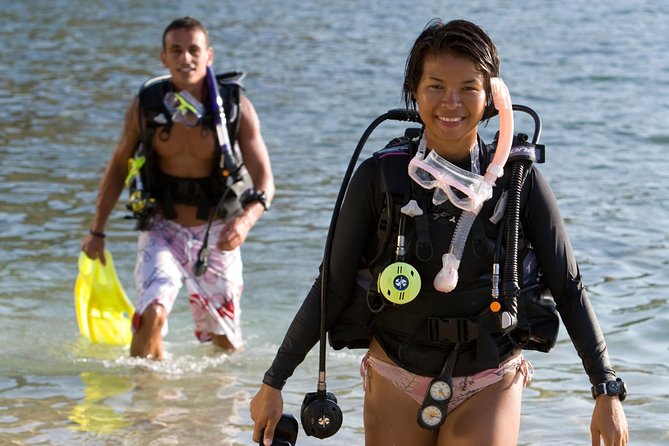
On day two, you meet at the beach for training sessions one and two. The move from pool to sea is a meaningful step, even for a strong swimmer. The surroundings are less controlled, and you must combine basic skills with awareness of your position, equipment, and instructor.
The exact beach conditions can depend on weather and local arrangements. The course requires good weather, so poor conditions may lead to a different date or a full refund. That policy is sensible: forcing beginners into unsuitable water is not a good bargain.
The first sea session is where the previous day’s practice begins to make sense. You work through the required skills with Charles supervising you. The second session gives you more time to repeat procedures and gain comfort.
Do not treat these sessions as sightseeing with a qualification attached. You may see marine life, and Phuket offers a tropical setting for the course, but your main job is to learn safe scuba habits. If you spend the whole time watching fish and lose track of an instruction, the fish can wait.
The small group limit is especially useful here. A maximum of four students gives Charles a better chance to watch each person closely. Beginners often need different amounts of time for the same skill, and a small class makes it easier to slow down without holding up a large crowd.
More PADI Courses in Thailand
- Freediving in Phuket – SSI – AIDA – Molchanovs – PADI
★ 5.0 · 26 reviews - From Phuket: 3-Day SSI/PADI Open Water Diver Certification
★ 5.0 · 24 reviews - Full-Day Koh Phi Phi Scuba Diving Course from Phuket
★ 4.5 · 19 reviews - PADI Discover Scuba 2 Times Diving Phuket
★ 5.0 · 3 reviews
Day three: complete the required skills
The final day includes training sessions three and four at the beach. By this point, you should be using the equipment with greater confidence and giving more attention to your surroundings.
These final sessions are not merely a victory lap. They are the point at which you show that the required skills can be performed in an open-water setting. Charles continues to guide you through the process, and you should expect him to correct small habits before they become larger problems.
One of the strongest reasons to choose this course is the sense of individual supervision. A personal three-day arrangement has been available for some students, and Charles has been described as calm, organized, and reassuring while working through the certification tasks. That does not remove the need for you to do the work, but it can make the learning curve less intimidating.
Once you successfully complete the course, you receive your log book and open-water scuba certification. The certificate is recognized worldwide as an industry standard for training and safety. The log book is useful because it records your experience for future scuba providers and helps you keep track of your next steps.
Charles and the value of experienced instruction
The instructor matters more here than on many ordinary excursions. Scuba is equipment-heavy, safety-focused, and unfamiliar to most beginners. Charles has worked as an instructor since 2000, has served in the UK military, and has experience in scuba locations around the world.
His Phuket experience also helps with local planning. He knows the area’s underwater sites and can offer advice beyond the basic course. That wider perspective is useful if you intend to continue with more advanced training later.
The best teaching detail is his habit of explaining the reason behind a procedure. For a first-time student, that can be the difference between following instructions mechanically and understanding how to handle a problem.
You should still judge the course on the teaching relationship you need. If you prefer a large social class with many people your own age, this small course may feel quiet. If you want direct attention and a clear structure, it is a stronger fit.
Family rules, fitness, and medical screening
The minimum age is 10. Anyone under 18 must be supervised by a parent, and the parent must join the scuba activity. A 12-year-old can participate with a parent, but this is not a drop-off program for children.
You need a moderate level of physical fitness and must be comfortable in the water. You do not need to be an elite athlete, but scuba equipment and water conditions require steady movement and calm control.
Every participant completes a health questionnaire before scuba activity begins. Conditions such as asthma or heart problems may prevent you from participating. If you have any medical condition at all, consult your doctor before booking rather than hoping the questionnaire will sort it out later.
Flying also needs planning. Scuba activity within 24 hours of a flight is not recommended. Build that buffer into your Phuket schedule, especially if you are heading home soon after the course. A rushed final session followed by a flight is poor planning.
What can you expect to see underwater?
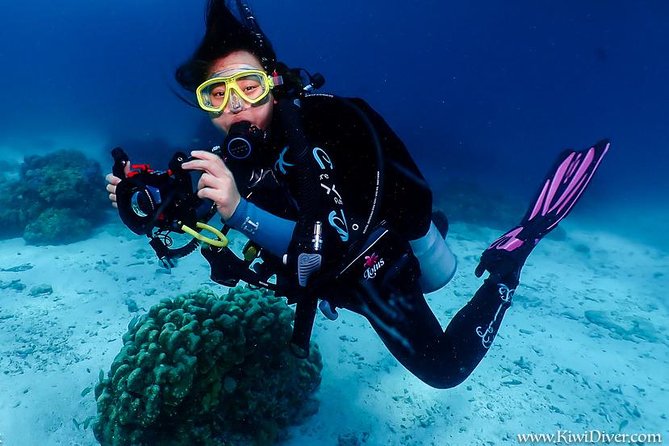
The course takes place in a tropical Phuket setting, with opportunities to see marine life in its natural environment. That is a pleasant bonus, but the exact animals and visibility are not guaranteed.
Weather affects the program, and underwater conditions can vary. You should book this for the training and certification first, then regard the marine life as an extra benefit. That mindset will help you enjoy the course without judging it by a single fish sighting.
The beach format also has a practical advantage. You enter the water from shore rather than relying on a boat schedule for the training sessions. That can make the learning process feel more direct and less complicated. On the other hand, beach entry may require more physical effort than stepping from a boat into the water, so your fitness and comfort in the water matter.
The supplied plan does not promise a particular beach, species list, visibility level, or equipment brand. I would not book this expecting a guaranteed turtle encounter or a specific underwater site. Ask the centre about likely conditions during your dates if marine life is your main goal.
Weather, timing, and cancellation terms
Good weather is required. If conditions force a cancellation, you are offered another date or a full refund. That gives you useful protection, but you still need spare time in your itinerary if you want to reschedule.
You can cancel for a full refund up to 24 hours before the local start time. Cancellations or changes made less than 24 hours before the activity are not refunded or accepted.
The course begins at 9:00 a.m. and lasts about three days. It is best to keep those days fairly open. Trying to fit major sightseeing, late nights, and a demanding certification course into the same schedule is likely to leave you tired.
The activity ends back at the meeting point. No hotel pickup is listed, so plan your own way to Kiwidiver Dive Centre in Karon.
Who will get the most from this course?
This is a good choice for you if:
- You want a recognized scuba qualification rather than a one-off introduction.
- You are comfortable in water and reasonably fit.
- You prefer a small class with close instructor attention.
- You can complete e-learning before arriving.
- You have enough time in Phuket for three scheduled training days.
- You may continue scuba on future trips.
It is less suitable if you want a relaxed half-day activity, dislike structured lessons, or have very limited time before a flight. It may also be a poor fit if you are uncertain about a medical condition and have not spoken with a doctor.
Families can consider it, but the supervision rule is firm. Children aged 10 and older may qualify, yet anyone under 18 must have a parent taking part. That makes this a shared family activity, not a children’s program.
Small-group value versus a cheaper course
The maximum group size of four is the clearest value point. You are less likely to disappear in the crowd, and Charles can pay attention to your breathing, equipment handling, and response to instructions.
A cheaper course may still provide the same basic qualification, but price alone does not tell you how much personal attention you receive. For a beginner, that attention can matter more than a few dollars saved.
The tradeoff is that this course may feel more serious and less social than a larger operation. You are buying focused instruction, not a party atmosphere. I see that as a sensible exchange for first-time scuba training.
Should you book the Kiwidiver course?
Book it if you want a proper open-water certificate, can commit three days, and value direct instruction. Charles’s long teaching experience, the pool preparation, and the four-person limit make this a sensible option for a beginner who wants to learn carefully.
Before paying, confirm the exact number of sea sessions included. The standard plan describes four beach training sessions, while some arrangements have included more. Also check your medical eligibility, leave at least 24 hours before flying, and keep a backup day available in case weather interrupts the schedule.
I would not choose this course simply because Phuket is scenic. I would choose it because the training is structured, the group is small, and the certificate has a use beyond this holiday. If that is what you want, the $503 fee can be worthwhile.
FAQ
How long does the open-water scuba course take?
The course takes approximately three days. E-learning is completed in advance, followed by paperwork, equipment fitting, pool training, and beach sessions.
Where does the course begin?
The meeting point is Kiwidiver Dive Centre, 20 Soi Lam Sai, Tambon Karon, Phuket 83100, Thailand. The scheduled start time is 9:00 a.m., and the activity ends back at the meeting point.
How many beach training sessions are included?
The planned schedule includes two beach sessions on day two and two final beach sessions on day three, for four sessions in total. Confirm the exact package details before booking if you have been told that additional sea sessions are included.
Is the certification recognized internationally?
Yes. The open-water scuba certification is described as a worldwide industry standard for scuba training and safety. Successful students also receive a log book.
Can children take part?
Participants must be at least 10 years old. Anyone under 18 must be supervised by a parent, and the parent must join the scuba activity.
Can I fly immediately after the course?
Scuba activity within 24 hours of flying is not recommended. Plan your course and flight schedule with at least that interval in mind.
More Shore Dives in Phuket
- Kata Beach Diving for Beginners Pool Training and 1 Beach Dive
★ 5.0 · 102 reviews - Phuket: PADI Discover Scuba Diving 1 beach dive
★ 5.0 · 2 reviews - South Maui Shore Dive
★ 5.0 · 147 reviews - Guided Shore Dive for Certified Divers with Scubaçao (2 tank)
★ 5.0 · 128 reviews
Newest dives added in Phuket
- Phuket: PADI Discover Scuba Diving 1 beach dive★ 5.0 · 2 reviews
- Try Scuba Diving★ 5.0 · 11 reviews
- Scuba Diving Daytrip to Racha Yai★ 4.5 · 43 reviews
- “Premium” Non Certified Beginner Scuba Diving in Racha Yai/Noi★ 5.0 · 10 reviews
- Racha Noi and Racha Yai Dive Trip from Phuket★ 4.5 · 5 reviews
- SCUBA Diving tour Racha and Coral islands full day tour★ 4.0 · 4 reviews
- Private diving on shared trip at Racha Noi and Racha Yai from Phuket incl. lunch★ 5.0 · 12 reviews
- Refresher scuba diving trip, 3 dives at Racha Noi and Racha Yai★ 5.0 · 8 reviews
Shore Dives, compared.
Guided Shore Dive for Certified Divers with Scubaçao (2 tank)
Read our review →
Introduction Shore Dive with Scubaçao (1 dive)
Read our review →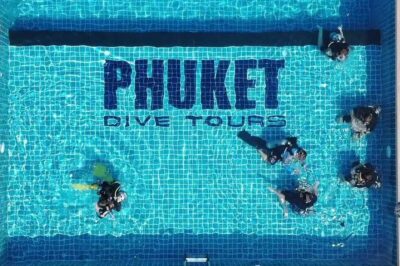
Kata Beach Diving for Beginners Pool Training and 1 Beach Dive
Read our review →
Racha Island and Coral Islands + Scuba Beach Dive
Read our review →
Small Group Guided Shore Dives in St. Andrews State Park, Florida
Read our review →
Guided Shore Dive for Certified Divers with Scubaçao (1 tank)
Read our review →Browse the lists this dive appears in