
Reviewed · PADI COURSES & CERTIFICATION
PADI Open Water Diver Course
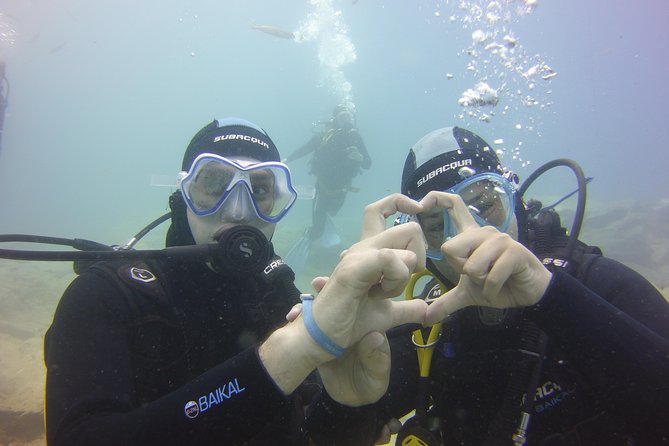
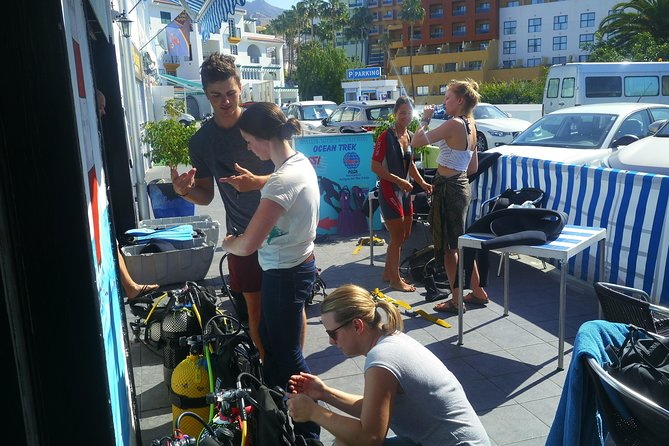
Tenerife’s volcanic coast gives this PADI Open Water Diver Course a proper sense of place. Over roughly three days, you learn the basics, practice underwater skills, and visit several sea sites where you might see octopus, rays, barracuda, moray eels, turtles, and cuttlefish. The course is run by Ocean Trek in Costa Adeje, with instructors including Juan, Gerhard, Manuel, Nelly, and Pauli.
I like the small-group teaching, which lets an instructor adjust the pace rather than push everyone through the same routine. I also like that the price includes full equipment, course books, logbook, PADI fees, bottled water, and pickup within the stated service area. The main consideration is the cost, $792.16 per person, plus the fact that lunch is not included and the schedule can fill much of each day.
Key points to know before booking
- Three-day certification course: Expect theory, skills practice, and at least four required open-water sessions.
- Small groups: Ocean Trek usually keeps instruction personal, with some sessions limited to four students.
- Tenerife’s volcanic seabed: The underwater setting is a central part of the experience, not just a classroom backdrop.
- Several instructors: Juan, Gerhard, Manuel, Nelly, Pauli, Gema, Ryan, Maria, and Sean are named as part of the teaching team.
- Useful inclusions: Equipment, course literature, logbook, PADI license fees, bottled water, and local hotel transfers are covered.
- Health and age limits: You must be at least 10, reasonably healthy, and moderately fit for the activity.
Learning scuba in Costa Adeje
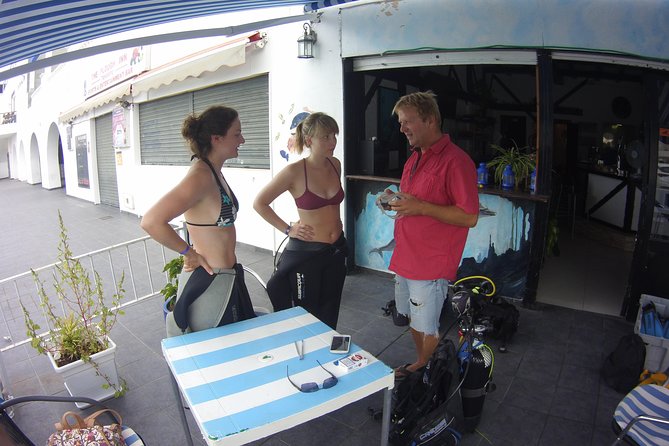
Ocean Trek operates from C. Valencia in Costa Adeje, a practical base for a Tenerife holiday. The course begins and ends at the club, unless you arrange pickup. Transport is offered within the stated local radius, although the information gives two limits: up to 20 kilometres in the included features and a maximum of 10 kilometres in the pickup details. I would confirm your hotel address before paying.
The first stage is theory. You learn how the equipment works, how pressure affects the body, how to stay safe underwater, and how to respond to common problems. The course can be started with PADI eLearning before arrival, which is useful if you want to keep holiday time free for the sea sessions.
Plan on roughly 8 to 12 hours of study if you use the online theory option. It is not difficult, but it is not something to leave until the last minute. The course includes a knowledge check, and additional questions may be completed at the centre to confirm that you understand the material yourself.
I like this arrangement because you can study in short sessions at home rather than sit indoors throughout your first day in Tenerife. If you prefer direct teaching, ask Ocean Trek how the theory will be handled during your booking. The advertised course is in English, while the instructor team also includes people who have taught in German.
More PADI Courses in Spain
- Try Dive – PADI Discover Scuba Diving in Tenerife
★ 5.0 · 214 reviews - PADI Open Water Diver Course (OWD) – 2.5 days
★ 5.0 · 98 reviews - PADI Discover Scuba Diving Course in Tenerife
★ 4.8 · 64 reviews
The first water session at Ocean Trek
Your practical training begins with equipment familiarisation and basic exercises. You learn how to assemble and use the gear, breathe through the regulator, control your position in the water, and manage the basic procedures needed for safe scuba use.
The first session may feel more like a supervised introduction than a sightseeing outing. That is a good thing. New students need time to get comfortable with the mask, fins, buoyancy equipment, tank, and regulator before thinking about fish or underwater scenery.
The training method described by one participant is simple and effective: the instructor explains a skill, demonstrates it, watches you imitate it, and then gives you time to practise. That matters. It is much better than hearing a quick explanation and being sent ahead before the movement feels natural.
You may start in relatively shallow water, where the instructor can concentrate on technique. The practical programme includes four required open-water sessions, generally spread across four half-days, although the full course is advertised as taking about three days. Some people complete five sessions in three days, depending on progress and scheduling.
Do not treat the first session as a test of courage. If something feels wrong, tell your instructor. The strongest feature of this course is the personal attention, and that only works if you speak up when your ears, breathing, or equipment need attention.
Skills practice before the sightseeing
The second and third sessions focus heavily on required skills. You may spend much of the first half of the day repeating procedures in shallow water before heading farther out. This is where the course earns its value.
You practise clearing a mask, controlling buoyancy, managing the regulator, and responding to basic equipment or breathing problems. The exact sequence depends on your instructor and your progress, but the purpose is clear: you should be able to handle the essentials before you are treated as an independently certified scuba user.
This part can feel less exciting than looking for turtles. It is also the part that protects you later. One participant specifically appreciated that all the skills were properly practised rather than rushed. That is important because certification is not simply a souvenir. After passing, you may rent equipment, have tanks filled, and take part in independent scuba activities around the world, subject to the rules of the operator and local conditions.
Your instructor may ask you to repeat a skill if it is not yet comfortable. That is not wasted time. A calm, careful teacher is worth more than a fast certificate.
Tenerife’s volcanic underwater world
Once the basic work is in place, the course takes you to different local sites. The appeal is not only the certification. Tenerife’s volcanic seabed gives you changing shapes and habitats from one location to the next.
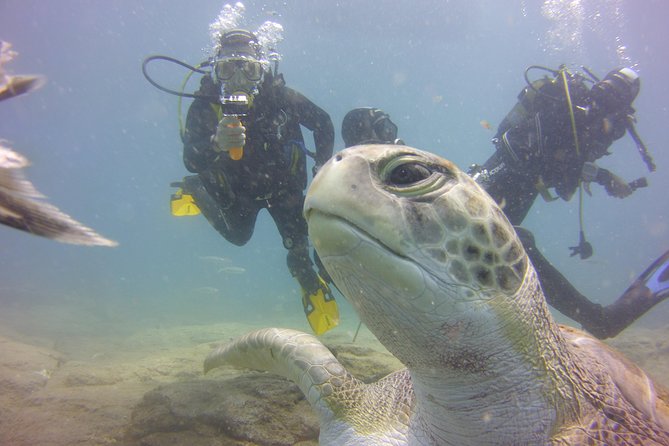
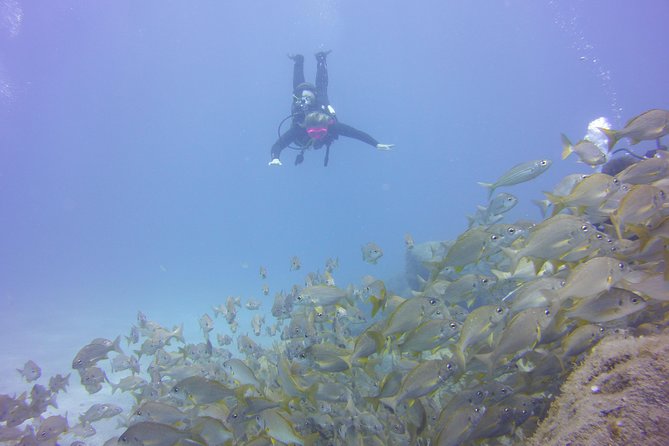
You may see cuttlefish, octopus, sea turtles, stingrays, barracuda, moray eels, and many smaller fish. Sightings are never guaranteed, so you should book this as a training course in a volcanic marine setting, not as a wildlife guarantee. Still, the range of animals described by past participants gives you a good idea of the possible rewards.
The reported depths during training have generally been around 5 to 10 metres. That is suitable for new students because you can concentrate on breathing, buoyancy, and communication without immediately dealing with great depth. It also means the programme is approachable for people who are new to scuba.
The fourth session may include a larger group than the earlier skills work, but beginners are still kept with their instructor. Ocean Trek’s normal approach is to keep groups small, with some sessions limited to four people. I would ask about the expected group size on your dates, since it can vary from one session to another.
More PADI Courses in Tenerife
- Basic Diver course for beginners with 1 dive in the Ocean
★ 5.0 · 41 reviews - PADI Scuba Diving Courses in Tenerife: All Specialities Until Divemaster
★ 5.0 · 39 reviews - PADI Open Water course in Playa de las Americas
★ 5.0 · 36 reviews - DISCOVER SCUBA DIVING – First step to your certification
★ 5.0 · 29 reviews
Why instructor quality matters here
The most important feature of any beginner scuba course is not the scenery. It is the instructor standing beside you when something feels unfamiliar.
Ocean Trek’s named instructors include Juan, Gerhard, Manuel, Nelly, Pauli, Gema, Ryan, Maria, and Sean. Several people have singled out the team’s calm and friendly teaching style. Juan is described as patient with complete beginners, Gerhard as attentive and encouraging, and Manuel as careful with practical instruction.
That personal approach is especially useful if you learn at a different speed from the rest of your group. You may understand the theory quickly but need more time with buoyancy. Or you may feel fine in shallow water but become tense when the surroundings change. A good instructor can adjust the pace without making you feel embarrassed.
Equipment is supplied, and it has been described as technically sound. If an item needs attention, the team can provide a solution quickly. You should still tell the staff at once if a mask leaks, a strap feels wrong, or any piece of gear does not fit comfortably.
Practical tips for comfort and safety
Pressure equalisation deserves special attention. Start early and often as you descend, before your ears become painful. If you feel strong pressure, rise slightly and try again rather than forcing the manoeuvre.
Take your time. There is no prize for descending quickly, and forcing equalisation can leave your ears sore for later sessions. If you have a cold, ear problem, or any health concern, discuss it with the operator before beginning.
Your legs may work harder than expected, especially if you are not used to fins. Avoid exhausting your calf muscles, since cramping can make a simple session unpleasant. The course requires a reasonable state of health and moderate physical fitness, so this is not a passive boat excursion.
Bring dry clothes, a small extra towel, and practical footwear for after the session. A changing poncho can be useful. The transfer vehicle and changing areas may pick up salt, and the ground around a site can be hot or dirty. Lunch is not included, so plan food and snacks around the schedule rather than assuming you will be back at your hotel by noon.
Pickup, timing, and the daily rhythm
Hotel pickup is available by request in the local service area. One practical detail is that the morning session may not finish until after 2 p.m. once transport, preparation, equipment handling, and the water work are included.
That makes the course easier if you keep your calendar open. I would not pair a training day with a tightly timed afternoon excursion. You may be ready to eat and rest after the session, even if the underwater portion itself does not seem long.
The activity returns to the meeting point at the end. Bottled water is provided, while lunch is your responsibility. If your hotel is outside the pickup zone, confirm the meeting plan before booking.
This is a private activity for your own group, but the teaching group may still vary by session. The small-scale setup is a strong choice for beginners who do not want to feel like a number in a large class.
Is $792.16 a fair price?
At $792.16 per person, this is not a cheap add-on to a beach holiday. It is a full professional certification course. The price includes the PADI license fees, course literature, logbook, complete scuba equipment, bottled water, and local pickup and return where available.
You are also paying for several days of instruction, supervised practical sessions, and access to an instructor who can slow down when you need more practice. If you would otherwise have to rent equipment, pay certification fees separately, and arrange transport, the package becomes easier to justify.
The value is strongest if you genuinely want an internationally recognised entry-level qualification. Once certified, you can rent equipment and have tanks filled for future scuba activities around the world. If you only want to try scuba once, a shorter introductory session may be better suited to your budget.
The course is advertised in English. Ask about the language of instruction if that is important to you, since the team has also taught students in German. Prices can change, so treat $792.16 as the current figure supplied for this experience, not a permanent rate.
Who should book this course?
I would recommend it to an adult or older child who wants real training rather than a quick underwater photo opportunity. The minimum age is 10, but children still need to be comfortable in the water, able to follow instructions, and in a reasonable state of health.
It also suits people who value patient instruction. You do not need to arrive with scuba experience. The course is designed to take you from theory and first equipment use through supervised open-water practice.
It may not suit you if your schedule is tight, your ears are prone to pressure problems, or you only want a single casual activity. The course needs several sessions, study time, and enough energy to repeat skills carefully.
Should you book Ocean Trek?
Book it if you want a proper PADI qualification in Tenerife and you like the idea of learning in a small group. The combination of local volcanic sites, full equipment, included certification fees, and personal instruction gives the course a clear purpose beyond sightseeing.
Before booking, confirm three points: the pickup radius for your hotel, the teaching language, and the exact daily schedule. Bring dry clothing, plan your own lunch, and leave room in your itinerary for sessions that may run into the afternoon.
I would choose this course for a serious beginner who values calm instruction and careful skills practice. I would skip it only if you want a short try-out, cannot spare three days, or find the current price too high for a certification you do not expect to use.
FAQ
How long does the PADI Open Water Diver Course take?
The course lasts approximately three days. It includes theory, practical training, and at least four required open-water sessions.
What is the minimum age?
The minimum age is 10 years old.
Is hotel pickup available?
Yes. Pickup and return are available by request within the stated service area. The information gives both 20 kilometres and 10 kilometres as limits, so confirm the exact coverage for your hotel.
What is included in the price?
The price includes full scuba equipment, course literature, a logbook, PADI license fees, bottled water, and eligible pickup and drop-off.
Is lunch included?
No. You need to arrange your own lunch and any other food during the course.
Where does the activity begin and end?
The meeting point is Ocean Trek, C. Valencia, 38660 Costa Adeje, Santa Cruz de Tenerife, Spain. The activity ends back at the meeting point unless transport arrangements take you elsewhere.
Can I cancel for a full refund?
You can cancel at least 24 hours before the local start time for a full refund. Cancellations or changes made less than 24 hours before the start are not refunded. If poor weather causes the operator to cancel, you can choose another date or receive a full refund.
Newest dives added in Tenerife
- Scuba Diving in Turtle and Ray Area★ 5.0 · 7 reviews
- Scuba Experience in Tenerife with Guide★ 5.0 · 30 reviews
- Try Scuba Diving Puerto Colon★ 5.0 · 2 reviews
- Try Dive in Abades Bay with a private instructor★ 4.0 · 4 reviews
- First Dive Experience in Tenerife★ 4.5 · 69 reviews
- Scuba Adventure – 2 Guided Dives from Our Boat in Tenerife★ 5.0 · 12 reviews
- Tenerife Under The Sea – dive into 1-1 personalised experience★ 5.0 · 15 reviews
- Scuba Diving for Certified Divers in Costa Adeje★ 5.0 · 69 reviews
PADI Courses & Certification, compared.
Tossa de Mar: PADI Discovery Scuba Diving in Costa Brava
Read our review →
Full-Day Beginner Scuba Course with Private Tuition, Racha Yai
Read our review →
Heraklion: Beginner Scuba Diving Lesson with PADI Instructor
Read our review →
Discover Scuba Diving with No Certification in St Thomas
Read our review →
Try Dive – PADI Discover Scuba Diving in Tenerife
Read our review →
Browse the lists this dive appears in