
Reviewed · PADI COURSES & CERTIFICATION
PADI Open Water Diver Course in the Riviera Maya
The best part of this PADI Open Water course is that your training quickly moves beyond a swimming pool. After studying the basics and practicing skills, you head by boat to coral reefs near southern Cozumel, where you learn to manage yourself underwater in real conditions. That makes the certification feel like a proper Caribbean adventure, not just a classroom exercise.
I like the small maximum group of four and the calm, reassuring teaching style associated with instructors such as Boris, Esteban, Erica, Karim, and Iago. I also like that the package includes five pool sessions, four boat outings, full equipment, the digital manual, and certification fees. The main catch is cost: the $602 price is not fully all-inclusive, since park fees, food, drinks, and some pickup charges are extra.
Key points at a glance
- Four real reef outings: Your four open-water training sessions take place by boat, including access to reefs near southern Cozumel.
- Five pool sessions: You build core skills before handling the added demands of the sea.
- Small groups: The stated maximum is four participants, useful when you need close attention.
- Certification included: The digital manual and certification fees are part of the listed price.
- Pickup costs extra: Playa del Carmen and much of the Riviera Maya can be covered for $25 per person per day, with a minimum of two people.
- Plan around flights: You should not scuba within 48 hours of flying, and a medical questionnaire is required.
What the three to four days really involve
This is a full beginner course, not a quick introductory swim with an air tank. You work through five self-study chapters in a digital manual, attend five pool sessions, and complete four guided open-water boat outings. The course is designed to qualify you to scuba independently after you have met the required skills.
I like this structure because it gives you repeated practice. One short pool lesson can make equipment feel less strange, but five sessions allow you to work through the basics at a more sensible pace. The tradeoff is time. You need to protect three or four days of your holiday rather than squeezing the course into a single spare afternoon.
The teaching may be handled by a multilingual guide, and the staff named in past course accounts include Boris Brinker, Esteban, Erica, Karim, Iago, Marlon, Sol, and Coté, also known as Maria-Jose. Your assigned instructor can vary, so ask at booking if you have a language preference or want to request a particular instructor. The important point is the instructor’s manner. Beginners often need calm, clear correction more than flashy stories about underwater sites.
More PADI Courses in Mexico
- PADI Discover Scuba Diving Program in the Riviera Maya
★ 5.0 · 67 reviews - PADI Discover Scuba Diving in Playa del Carmen
★ 4.5 · 61 reviews - Discover Scuba Diving Course in Playa del Carmen with Two Coral Reef Dives
★ 5.0 · 18 reviews
Day one: study, equipment, and pool skills
The first stage begins at 8:00 a.m. at the Pro Dive International meeting point at Allegro Playacar, in Playa del Carmen. You work through the course material and begin learning how the regulator, tank, mask, fins, buoyancy device, and other equipment fit together.
The digital manual is useful before the first pool session. Read the assigned chapter before you arrive, and write down anything that seems unclear. You will get more from the instructor if you already understand the basic terms and can spend the session practicing instead of trying to absorb every idea for the first time.
The pool sessions are where you learn the habits that make scuba safe and manageable. The supplied information does not list each individual skill, so you should expect instruction centered on basic equipment use, underwater control, and the procedures required for certification rather than a sightseeing session.
This is also the point to be honest about nerves. One young participant began with enough fear to feel uneasy even snorkeling, then gained confidence through the course. That is a useful reminder that you do not need to arrive as a natural athlete. You do need to listen, stay patient, and tell your instructor when something feels wrong.
Day two and beyond: four boat outings near Cozumel
The open-water portion uses boat trips rather than shore training. That means you do not simply practice in a sheltered area and call it finished. You take the skills into the sea, with changing visibility, current, depth, and the practical rhythm of boarding a boat and preparing your gear.
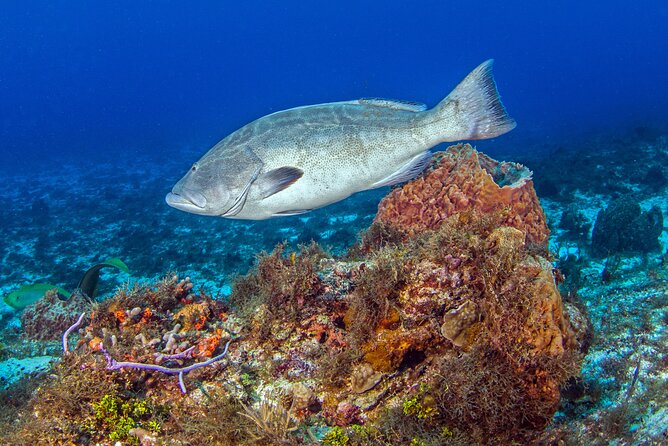
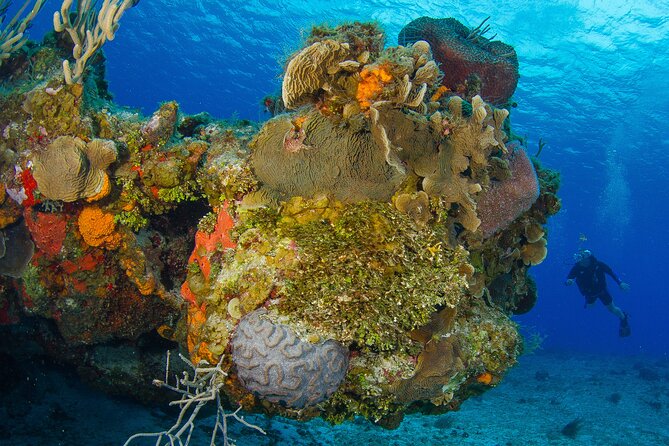
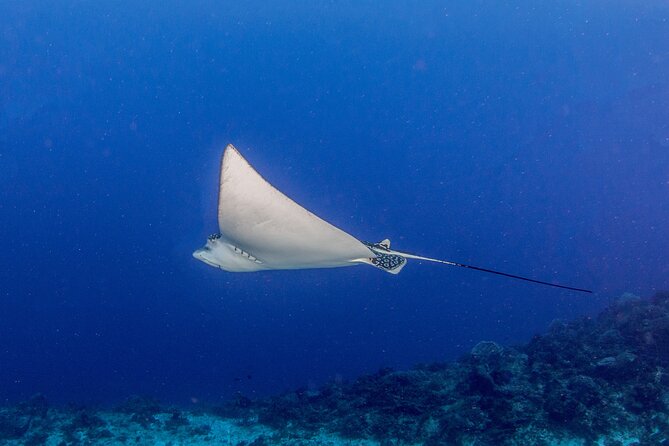
The major underwater setting is the marine park off southern Cozumel, known for coral-covered reef sites and clear water. The course description presents these trips as a chance to see the Riviera Maya underwater while you train. You may encounter large fish, stingrays, and, if fortune is on your side, something as memorable as a bull shark. A bull shark was seen during one reported course, but wildlife sightings are never guaranteed and should not be the reason you book a certification course.
Four boat outings give you valuable repetition. The first can feel busy because you are managing equipment and new skills at once. By the later sessions, you should have more attention available for your surroundings. That progression is one of the strongest reasons to choose this course over a shorter tryout.
Still, remember that this is training first. You will not have unlimited time to stare at every coral formation. Your instructor needs to check your skills and keep the group together. The reward is that your sightseeing has a purpose: every session helps prepare you for future scuba trips after certification.
Why a four-person limit matters
A stated maximum of four participants is a real advantage for first-time scuba students. You can ask questions without competing with a busload of beginners, and an instructor has a better chance of noticing if you are struggling with buoyancy, comfort, or equipment.
Small groups also help with confidence. One past student described an instructor as calm and reassuring, especially underwater. That quality matters more than a loud personality. A steady instructor can help you solve a problem without making it feel like a crisis.
The small group does not remove every pressure. You still need moderate physical fitness, and the course requires several days of early starts and repeated sessions. If you are tired, anxious, or uncomfortable in the water, say so promptly. A certification course should stretch your skills, not push you to hide a problem.
Another way to get in the water in Playa del Carmen:
- Scuba Diving in Cenote Dos Ojos from Playa del Carmen
★ 5.0 · 453 reviews - Scuba Diving in Cenote Kukulkan from Playa del Carmen
★ 5.0 · 370 reviews - Discover Scuba Diving & Beach Club with Transportation In Riviera Maya
★ 5.0 · 239 reviews - Two reef discovery dives with professional instructor (no experience necessary)
★ 5.0 · 103 reviews
The $602 price and the extra charges
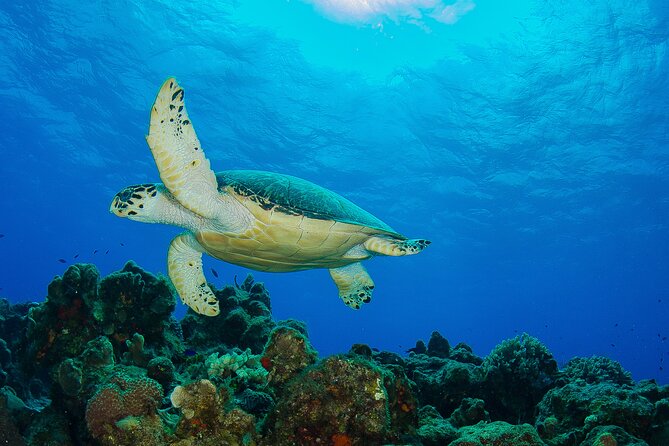
At $602 per person, the course is not a budget add-on. But the price covers the expensive core pieces: professional instruction, full scuba equipment, five pool sessions, four guided open-water boat outings, the digital manual, and certification fees.
That package can be good value if you genuinely want certification. You are paying for several days of structured training and real reef access, not just tank rental and a single guided swim. It is especially appealing if you planned to seek certification elsewhere, since the course combines instruction and Caribbean underwater time.
You should still budget beyond the headline price. Food and drinks are not included. Marine park charges are listed at $8 per person per day, subject to change, and an additional $8 admission fee is also shown for the course. Because the supplied pricing details list both charges, confirm the exact total before booking.
Pickup is another variable. Transfers from hotels between Dorado Maroma and Dreams Tulum are offered at $25 per person per day, with a minimum of two people. Tulum-area pickup is not available, and Cancun arrangements require direct contact. If you are staying at Allegro Playacar, the listed meeting point may be simpler, but confirm the exact pickup plan and any fee before your first morning.
Choosing the right base and meeting point
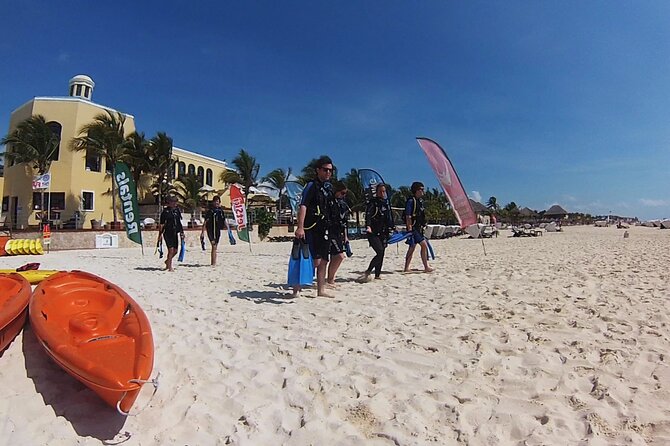
The listed start and end point is Allegro Playacar, on Paseo Xaman in Playacar, Playa del Carmen. The activity begins at 8:00 a.m. and returns to the meeting point at the end.
If you are staying elsewhere in Playa del Carmen or along the Riviera Maya, ask about pickup instead of assuming it is free. The stated pickup zone covers many hotels, but exceptions apply. You do not want a dawn taxi surprise on the first training day.
The course is also described as being near public transportation. That may help if you are not using a hotel transfer, though you should confirm the practical route and arrival time with the operator. For a course that starts early, arriving relaxed is worth more than saving a small amount on transport.
Medical rules, age, and flight planning
The minimum age is 10. That makes the course possible for families, and some past instruction involved children aged 11, 12, and 16. Age alone does not tell you whether a child is ready. Your child must be comfortable following instructions, handling repeated practice, and speaking up when something feels uncomfortable.
You also need moderate physical fitness. The course requires pool work, boat boarding, carrying or wearing scuba equipment, and repeated sessions over several days. The information provided does not specify swimming benchmarks, so ask Pro Dive International about current requirements if you have concerns.
Every participant completes a health questionnaire before scuba. Conditions such as asthma and heart problems may prevent participation, and the operator directs you to its medical policy. If you have any medical history that could matter, consult your doctor before paying for the course. Do not wait until the first morning and hope the paperwork will sort itself out.
Flight timing deserves careful planning. Scuba within 48 hours of flying is not recommended. If you have a flight home shortly after the course, leave enough time between your final underwater session and departure. This is one reason the course fits best in the middle of a Riviera Maya stay, not at the very end.
What makes the instruction reassuring
The strongest pattern in the available course accounts is the staff’s patient, friendly approach. Boris Brinker is singled out for a calm manner, while Esteban is praised for combining instruction with interesting local underwater outings. Erica is remembered for building confidence from pool work through ocean training, and Karim helped nervous beginners move forward.
Those names do not guarantee your exact instructor, but they show what to ask for. Tell the center if you are nervous, new to swimming with equipment, or hoping to study in a certain language. A multilingual guide may be available, and one past student found instruction in German helpful.
The staff also includes people with different roles. Sol is described as running the operation, while Santi is associated with equipment expertise. That matters because good training depends on more than the person in the water. Properly fitted equipment and clear answers before launch can make the day much easier.
Who will get the most from this course
This course suits you if you want a recognized beginner certification and can give the process three or four full days. It is a strong choice for a couple, parent and child, or small group of friends who want to learn together without joining a large class.
It also suits a nervous beginner who values patient teaching. The pool work gives you time to settle in, while the four boat outings let you build skill through repetition. The small group is particularly useful if you expect to need extra explanation.
It is less suitable if you have only one free day, dislike early starts, or mainly want a casual look at reef life. A shorter introductory scuba outing would demand less time and commitment, though it would not give you the same certification.
Booking details worth checking first
Confirmation is provided at booking, and free cancellation is available up to 24 hours before the local start time. Cancellations or changes inside that window are not accepted for a refund.
Before committing, confirm four things: your hotel pickup cost, the current marine park and admission fees, the assigned meeting point, and whether your health history needs medical clearance. Also ask how the three to four days will be arranged, since the course summary describes it as a four-day program while the duration is listed as approximately three days.
Should you book the Riviera Maya PADI course?
Book it if certification is your real goal and you can spare several days in Playa del Carmen. The combination of five pool sessions, four boat outings, professional equipment, and a four-person maximum gives you a serious foundation, with reef time near Cozumel built into the learning process.
Skip it if you want a quick vacation activity or if extra transport and park charges push the total beyond your comfort zone. For the right person, though, this is more than a checkmark on a holiday schedule. You leave with a new skill, a certification, and the chance to experience Caribbean reefs with far more confidence.
FAQ
How long does the PADI Open Water course take?
The course lasts approximately three days, while the detailed description gives a three to four-day schedule. It includes five self-study chapters, five pool sessions, and four open-water boat outings.
What is included in the $602 price?
The price includes a professional guide, full scuba equipment, five pool sessions, four guided open-water boat outings, the digital manual, and certification fees.
Is hotel pickup included?
Pickup is offered for an extra charge in Playa del Carmen and much of the Riviera Maya. Hotels between Dorado Maroma and Dreams Tulum are listed at $25 per person per day, with a minimum of two people. Tulum-area pickup is unavailable, and Cancun pickup requires contacting the operator.
Where does the course start?
The listed meeting point is Allegro Playacar, Desarrollo, Paseo Xaman, Playacar, Playa del Carmen. The start time is 8:00 a.m., and the activity returns to the meeting point.
Is there a minimum age?
Yes. The minimum age is 10 years.
Can I fly immediately after the course?
Scuba within 48 hours of flying is not recommended. Plan your final underwater session with that restriction in mind.
More PADI Courses in Playa del Carmen
- Barcelona: PADI Discover Scuba Diving
★ 4.7 · 1,016 reviews - PADI Open Water Diver Course
★ 5.0 · 626 reviews - Tossa de Mar: PADI Discovery Scuba Diving in Costa Brava
★ 4.7 · 392 reviews - Full-Day Beginner Scuba Course with Private Tuition, Racha Yai
★ 5.0 · 368 reviews
Newest dives added in Playa del Carmen
- Cancun: MUSA Diving for certified divers morning dive trip★ 4.9 · 7 reviews
- Cenotes 2-Tank Dive in Playa del Carmen/for certified divers only★ 4.0 · 13 reviews
- Cozumel Dive Package – Certified Divers from the Riviera Maya (4 dives)★ 4.5 · 51 reviews
- 2-Tank Morning or Afternoon Dives in Playa del Carmen certified Divers Only★ 4.5 · 33 reviews
- Discover Scuba Diving Course in Playa del Carmen with Two Coral Reef Dives★ 5.0 · 18 reviews
- PADI Discover Scuba Diving Program in the Riviera Maya★ 5.0 · 67 reviews
- PADI Discover Scuba Diving in Playa del Carmen★ 4.5 · 61 reviews
- Dive into Tulum: Tour 3 Cenotes, from Riviera Maya★ 4.5 · 15 reviews
PADI Courses & Certification, compared.
Tossa de Mar: PADI Discovery Scuba Diving in Costa Brava
Read our review →
Full-Day Beginner Scuba Course with Private Tuition, Racha Yai
Read our review →
Heraklion: Beginner Scuba Diving Lesson with PADI Instructor
Read our review →
Discover Scuba Diving with No Certification in St Thomas
Read our review →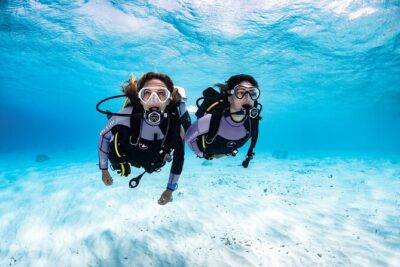
Try Dive – PADI Discover Scuba Diving in Tenerife
Read our review →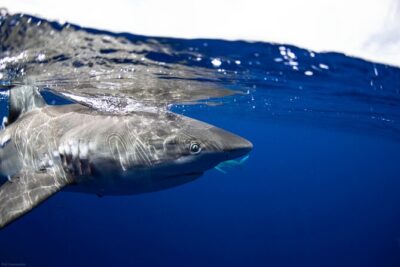
Browse the lists this dive appears in