
Reviewed · PADI COURSES & CERTIFICATION
Quicksilver Dive 4 Day PADI Learn to Dive Course
Port Douglas is one of the best places to learn to scuba, and this four-day course gets you from first skills to certified diver on the Great Barrier Reef. The first two days use a heated training pool and classroom at 19 Warner Street. The next two take you to the Agincourt Ribbon Reefs for six open-water sessions.
I like the small maximum group of eight, which gives instructors room to slow down when a skill feels awkward. I also like that the package includes gear, meals, logbook, reef tax, transport from Port Douglas, and the certification itself. The main consideration is time: you need reasonable fitness, must swim 200 metres and tread water for 10 minutes, and should not fly for 24 hours after your final session.
Key points
- Two-stage training: Learn theory and basic skills at the Port Douglas centre before heading offshore.
- Six reef sessions: Four required sessions lead to certification, followed by two for extra practice and enjoyment.
- Small groups: No more than eight people take part, with instructors including India, Adam, Emma, Haylie, and others.
- Agincourt Ribbon Reefs: Your final training takes place on the outer Great Barrier Reef rather than in a confined pool.
- Useful inclusions: Equipment, logbook, meals, reef tax, prescription masks, and Port Douglas hotel transfers are covered.
- Plan around flying: The last scheduled session finishes by about 2:30 pm, but you should wait 24 hours before flying.
Learning at 19 Warner Street before reaching the reef
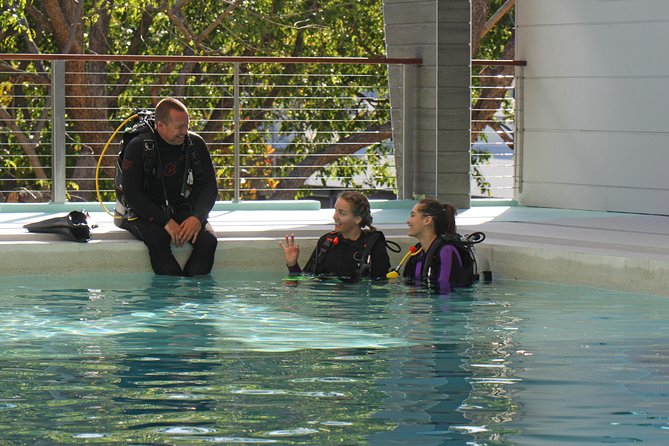
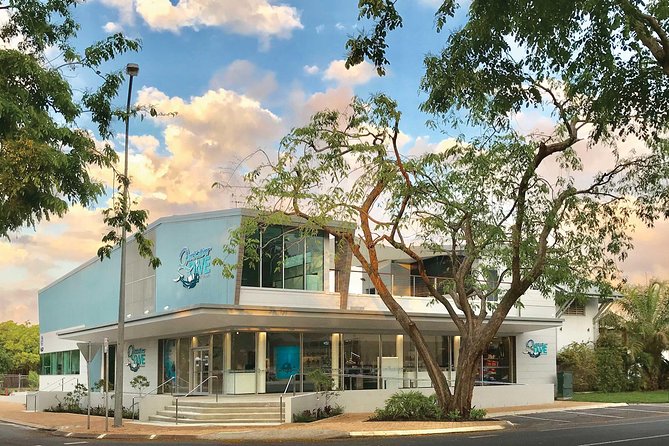
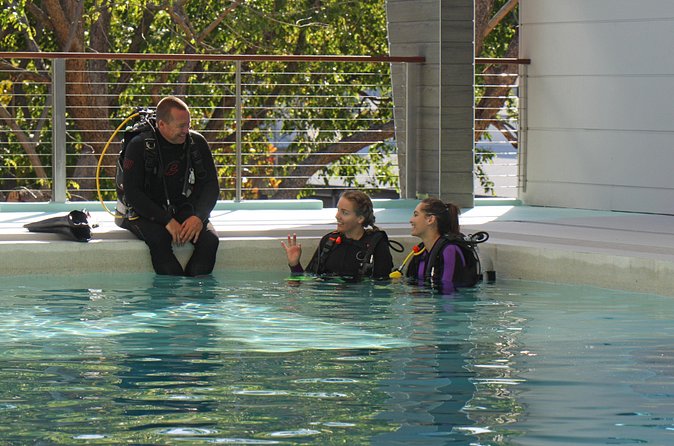
This course begins at the Quicksilver Dive Training Centre on Warner Street in Port Douglas. You start at 8:30 am, spending the first two days on theory, equipment, and practical skills in the heated training pool.
That order makes good sense. You get a controlled place to learn how the equipment works and practise basic responses before heading into open water. If you feel nervous, the pool gives you time to get comfortable without currents, waves, or the distraction of reef scenery.
The small-group limit matters here. With no more than eight people, an instructor can watch your technique and give individual help. That is especially useful when you are learning skills such as clearing a mask, managing your breathing, or responding to a problem underwater. The course is not simply a sightseeing trip with a certificate attached. You must show that you can perform the required skills safely.
You will need to complete the course paperwork and a Student Diver Medical Declaration before training begins. Some conditions, including asthma, heart conditions, or diabetes, may require medical clearance. If the self-assessment raises a concern, arrange the required certificate before the course starts. Any medical examination must be completed within 90 days of your first course day.
Some people complete PADI e-learning before arriving and then spend fewer days on site. That explains why the hands-on format is sometimes described as a three-day course. The package described here uses two training-centre days followed by two reef days, so check the exact schedule given at booking.
More PADI Courses in Australia
- Cairns: 4-Day PADI Open Water Course
★ 4.8 · 44 reviews - Gold Coast: 3-Day PADI Open Water Course
★ 4.8 · 28 reviews - 4-Day PADI Open Water Dive Course – Learn to Dive on the Great Barrier Reef
★ 5.0 · 27 reviews
Six open-water sessions across two Agincourt days
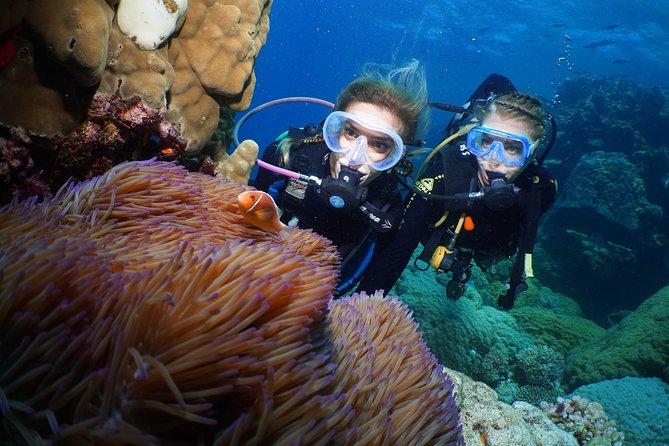
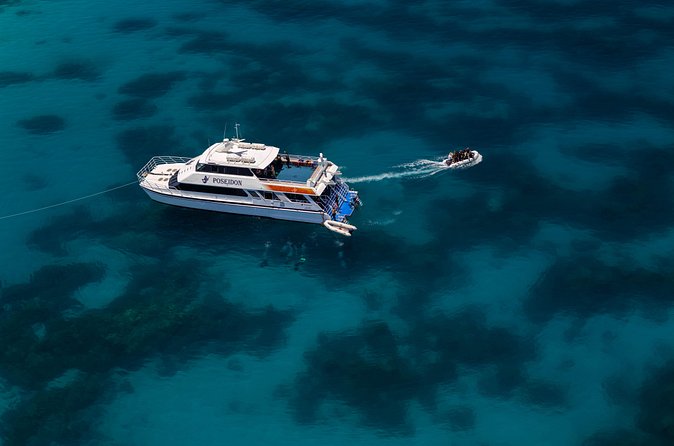
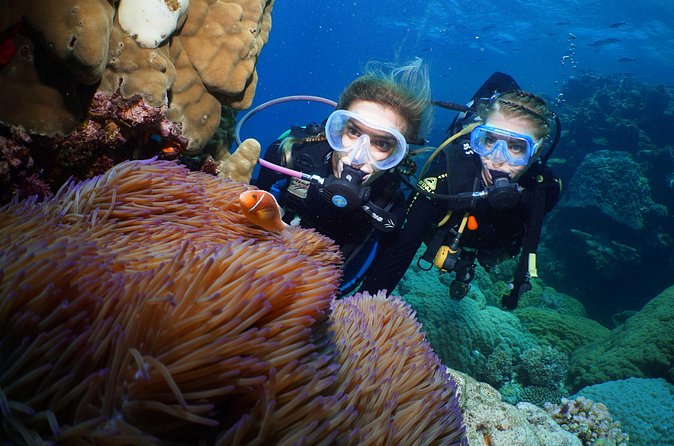
Days three and four are spent on trips to the Agincourt Ribbon Reefs, part of the outer Great Barrier Reef. These are the days when your pool practice becomes real underwater work in a natural setting.
Four open-water sessions are required for the PADI Gold Open Water Certification. The remaining two are recreational sessions, giving you extra time to practise and see more of the reef after the required skills are complete.
That structure is useful for a first-time diver. You are not expected to master everything in a single attempt. The first sessions help you adjust to the sea, your equipment, and the rhythm of working underwater. Later sessions give you a chance to enjoy the reef with less attention on checklists.
The Agincourt Ribbon Reefs are the main attraction, but this is still a training course. You should expect instruction and skill work to shape the day. The reef setting adds a special reward, yet your instructor’s first concern is your safety and ability to complete the course standard.
The supplied equipment is included, as are prescription masks if you need one. That saves you from buying or packing specialist gear before you know what suits you. A logbook is also provided, so you can record your certified sessions and keep building your experience later.
Why the instructors make a difference
The strongest part of this course is the personal attention from the teaching team. India is praised for helping new divers feel safe, confident, and relaxed aboard the Supersonic. Adam has taught teenagers and adults, while Emma is noted for checking that everyone felt comfortable during each session. Haylie is also singled out for a calm, gradual teaching style.
Those details matter more than a glossy boat photograph. A first underwater course can feel demanding, particularly when you are trying new equipment and managing your breathing at the same time. A patient instructor can turn a stressful moment into a useful lesson.
The staff also help with the practical side before you enter the water. The Port Douglas office handles registration, forms, and medical questions. That early support is valuable because a medical issue discovered at the last minute can disrupt your plans.
The course suits people who want guidance rather than a quick introduction. You will be expected to take part, listen carefully, and complete the required skills. The reward is a recognised PADI Open Water qualification, not just a one-off supervised swim.
What a day at the outer reef includes
The two reef days include return trips to the outer reef, lunch, and morning and afternoon tea. The environmental management charge, often called the reef tax, is already covered in the package price.
Those inclusions make the cost easier to judge. A course price is not only paying for instruction. It also covers equipment, pool access, reef transport, food, certification, and the required environmental charge. If you compare this with a cheaper course, check what has been left out. Transfers, meals, gear hire, and certification fees can change the final amount.
Hotel pickup and return are included from Port Douglas accommodation. Pickup from Cairns and the Northern Beaches costs extra, so add that to your budget if you are staying outside Port Douglas. The stated meeting point is 19 Warner Street, and the activity ends back there.
Souvenir photographs are not included. You can purchase them separately on the reef days if you want a visual record, but they are not part of the course price.
The listing shows a price of $0 per person, which should not be treated as proof that the course is free. Confirm the current payable amount and any accommodation transfer surcharge before booking. A four-day PADI course with equipment, meals, reef trips, and certification normally needs a clear price check.
Another way to get in the water in Australia:
- Great Barrier Reef Snorkeling and Diving Cruise from Cairns
★ 4.5 · 3,714 reviews - Ocean Freedom Great Barrier Reef Luxury Snorkel and Dive Cruise
★ 5.0 · 1,895 reviews - Cairns: Premium Snorkelling and Diving Reef Day Trip
★ 4.7 · 1,528 reviews - Cairns: Outer and Coral Cay Snorkel and Dive Cruise
★ 4.8 · 1,467 reviews
The physical requirements are real but clear
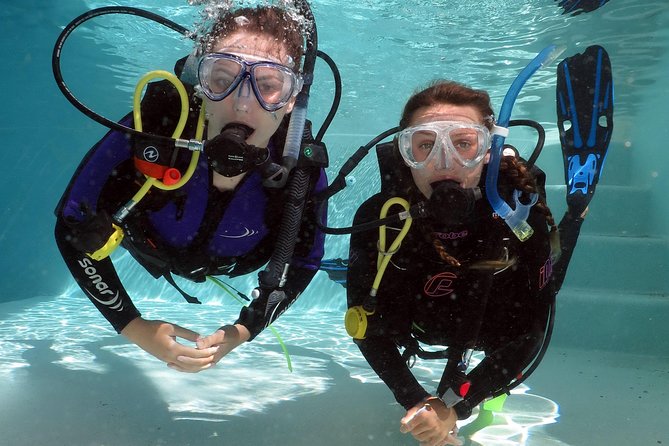
You need moderate physical fitness for this course. The stated water test requires a 200-metre swim, or 300 metres using a mask, fins, and snorkel, plus 10 minutes of treading water or floating.
You do not need to be a competitive swimmer, but you should take these requirements seriously. If you are unsure, practise before arriving rather than finding out on the first morning. Comfort in the water helps you focus on technique and safety.
The minimum age is 10. Younger participants should be comfortable following instructions and managing the physical demands of the course. Families may appreciate the chance to learn together, but an adult should consider each child’s confidence and stamina rather than relying only on the minimum age.
Flying needs careful planning. You should not fly for 24 hours after underwater activity. The final scheduled open-water session finishes by about 2:30 pm, but a late-afternoon or evening flight would still not fit the recommended waiting period. Keep the following day free of air travel.
Who will get the most from this course
This is a strong match for a first-time diver who wants a full qualification rather than a trial session. It also works well for couples, parents with older children, and friends who want to learn together in a small group.
The course has a useful balance of structure and reward. You spend enough time learning the basics properly, then take those skills to one of Australia’s best-known reef areas. The two extra recreational sessions are a welcome touch because they give you time to enjoy the underwater setting after the required work is done.
It may not suit someone with only one spare day in Port Douglas. You also need flexibility for the two reef trips, and weather or operational changes are always a practical concern for any offshore activity, though no specific alternate schedule is provided here.
If you already hold an open-water qualification, this is unnecessary. You would be paying for beginner instruction and certification you do not need. Look instead for a trip designed for certified divers, if available.
Small details that improve the experience
A few practical choices can make these four days easier.
- Arrive ready for an early start. The course begins at 8:30 am.
- Bring the medical information your instructor may need, especially if you have a condition that could affect underwater activity.
- Allow time for the required water test and pool work. Do not schedule unrelated activities that leave you tired.
- Use the included logbook from the first session. It gives you a record of your training and certification work.
- Ask about the Port Douglas pickup when you book. The included transfer applies to Port Douglas accommodation only.
- Keep your post-course calendar open for 24 hours after the final session. This is especially important if you plan to fly from Cairns.
- If you need vision correction, request a prescription mask rather than assuming your usual glasses will work.
The course runs every Tuesday and can begin on request. That gives you some flexibility, but you should still check dates early. It is booked an average of 26 days ahead, so a last-minute place may not be available during busy periods.
What the feedback tells me about the experience
The most consistent praise is for the instructors. Adam, India, Emma, Haylie, Gordon, Chris, and Jade are all named in positive accounts of the course or reef operation. The repeated theme is not showmanship. It is calm instruction, friendly help, safety checks, and the ability to make beginners feel at ease.
That is exactly what I want from a certification course. Reef scenery is a bonus, but an instructor who notices that you are anxious or unsure is far more important. The gradual format also helps. You are not thrown straight into the ocean without pool practice.
Families receive especially strong attention. The course has been used by parents and teenagers learning together, with the instructors praised for treating younger participants carefully and respectfully. Adults in their fifties have also completed the course, which suggests that age alone is not the barrier. Fitness, medical clearance, and comfort in the water matter more.
The praise should not make you forget that certification requires work. You will need to study, listen, practise, and meet the course standard. A friendly instructor can support you, but cannot remove the physical and mental demands.
Should you book the Quicksilver four-day course?
I would choose this course if you want a proper PADI qualification and plan to spend several days in Port Douglas. The heated pool, small group, named instructors, included equipment, and two days on the Agincourt Ribbon Reefs create a sensible path from beginner to certified diver.
The value is strongest when you use the inclusions. Port Douglas transfers, meals, reef tax, equipment, logbook, and certification reduce the extra costs that can catch first-time divers off guard. The two additional recreational sessions also make the course feel less like a test and more like a chance to enjoy the reef.
I would pause if your schedule is tight, your flight leaves soon after the course, or you are unsure about the swimming test. Confirm the current price, course dates, medical requirements, and transfer arrangements before paying.
For a first qualification on the Great Barrier Reef, this is a practical choice with a reassuring training structure. Book it if you want patient teaching and enough time to build confidence, not simply the fastest possible introduction to underwater activity.
FAQ
Where does the course begin?
The course begins at the Quicksilver Dive Training Centre, 19 Warner Street, Port Douglas, Queensland 4877. The stated start time is 8:30 am, and the activity ends back at the meeting point.
How many days does the course take?
The course takes approximately four days. The first two days are at the Port Douglas training centre, and the third and fourth days are trips to the Agincourt Ribbon Reefs.
How many open-water sessions are included?
Six open-water sessions are included. Four are mandatory for certification, and two are recreational sessions.
Is equipment included?
Yes. All dive equipment is included, along with a dive logbook. Prescription masks are available if required.
Are meals included?
Yes. Lunch, morning tea, and afternoon tea are included each day.
Is hotel pickup available?
Return coach transfers are included from Port Douglas accommodation. Transfers from Cairns and the Northern Beaches cost extra.
What swimming ability is required?
You must swim 200 metres, or 300 metres with a mask, fins, and snorkel, and tread water or float for 10 minutes.
Can I fly after completing the course?
You should not fly for 24 hours after diving. The final scheduled open-water session finishes by about 2:30 pm, so plan your onward flight accordingly.
What is the cancellation policy?
You can cancel for a full refund up to 24 hours before the experience start time. Cancellations or changes made less than 24 hours before the start are not accepted for a refund.
More four-day trips in Australia
- 4 Day Certified PADI Open Water Scuba Diver in Dubai
★ 5.0 · 37 reviews
Newest dives added in Australia
- Cairns: 4-Day PADI Open Water Course★ 4.8 · 44 reviews
- Cairns: Pro Dive Great Barrier Reef 3 Day/2 Night Dive Trip★ 4.5 · 12 reviews
- Gold Coast: 3-Day PADI Open Water Course★ 4.8 · 28 reviews
- 4-Day PADI Open Water Dive Course – Learn to Dive on the Great Barrier Reef★ 5.0 · 27 reviews
- Swim with Humpback Whales – Ningaloo Reef – 3 Islands Whale Shark Dive★ 5.0 · 120 reviews
- Great Barrier Reef with Cultural Guides-Dreamtime Dive & Snorkel★ 5.0 · 156 reviews
- Ocean Spirit Sail to Michaelmas Cay Snorkel or Dive, from Cairns★ 4.5 · 170 reviews
- Cairns: Best Value All-inclusive Reef Trip With Scuba Dive★ 4.4 · 307 reviews
PADI Courses & Certification, compared.
Tossa de Mar: PADI Discovery Scuba Diving in Costa Brava
Read our review →
Full-Day Beginner Scuba Course with Private Tuition, Racha Yai
Read our review →
Heraklion: Beginner Scuba Diving Lesson with PADI Instructor
Read our review →
Discover Scuba Diving with No Certification in St Thomas
Read our review →
Try Dive – PADI Discover Scuba Diving in Tenerife
Read our review →
Browse the lists this dive appears in