
Reviewed · WRECK DIVING
Sunshine Coast: Scuba Dive the Ex-HMAS Brisbane Ship Wreck
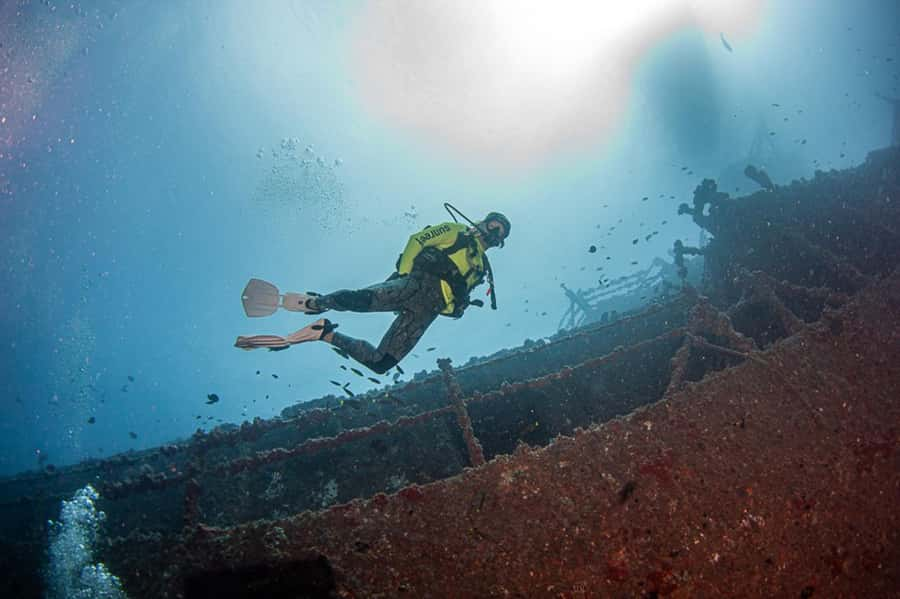
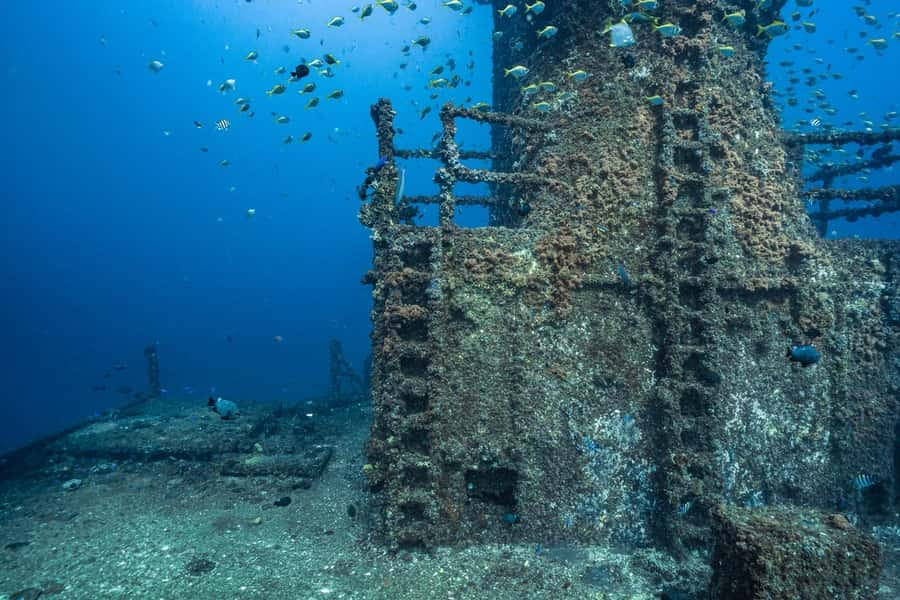
The Ex-HMAS Brisbane is not a small wreck you circle once and leave behind. This upright guided missile destroyer gives you room to explore its decks, funnels, hull, engine room, and control room, with 15 meters of water over the forward decks and 18 meters at the stern. I like the short run from Mooloolaba and the use of two midship moorings, which lets you make two unhurried descents instead of rushing around one line.
I also like the mix of ship history and reef life. Turtles, eagle rays, giant Queensland grouper, soft corals, nudibranchs, squid, and an octopus now share the vessel. The main caution is temperature: water can fall to 17°C in winter, and even at 22°C, a 5mm wetsuit with open-heel fins may leave you cold or uncomfortable.
Key points
- A full-size destroyer in 15 to 18 meters of water: The ship sits upright, so you can appreciate its shape rather than picking through a collapsed wreck.
- Two midship moorings: Sunreef’s setup allows two relaxed descents with time to visit the outer decks and selected internal areas.
- Marine life has claimed the ship: Look for turtles, eagle rays, giant grouper, kingfish, soft corals, nudibranchs, and an octopus in a pyrotechnic tube.
- Only 2.9 nautical miles offshore: The boat ride takes about 30 minutes each way, leaving most of the five-hour outing for the wreck.
- Equipment is extra: Bring your certification card and logbook, then budget separately for hired gear, a camera, or a torch.
- Cold-water planning matters: Conditions range from 17°C to 27°C, and recent equipment feedback makes gloves, a hood, and suitable fins worth asking about.
Why the Ex-HMAS Brisbane feels different from a small wreck
The former HMAS Brisbane was a guided missile destroyer before it became a protected artificial reef off the Sunshine Coast. It now rests bolt upright, which gives you a rare chance to read the shape of a large naval ship underwater instead of exploring a broken pile of metal.
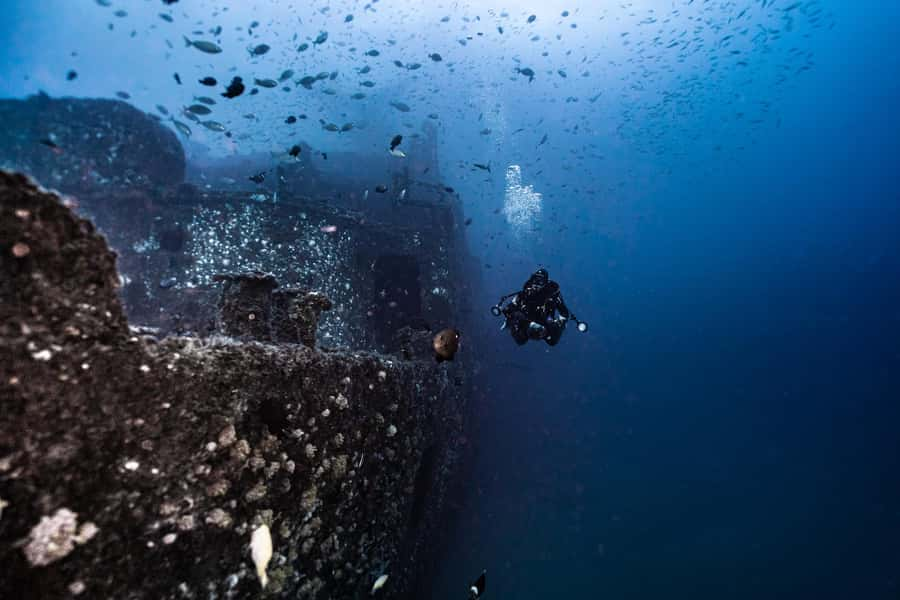
You can start with the scale alone. From outside, the bow, decks, funnels, superstructure, and stern make the ship feel more like a submerged building than a conventional wreck. You do not need to enter the ship to have a worthwhile outing. A slow circuit around the exterior reveals the vessel’s size and the fish and coral that have settled across it.
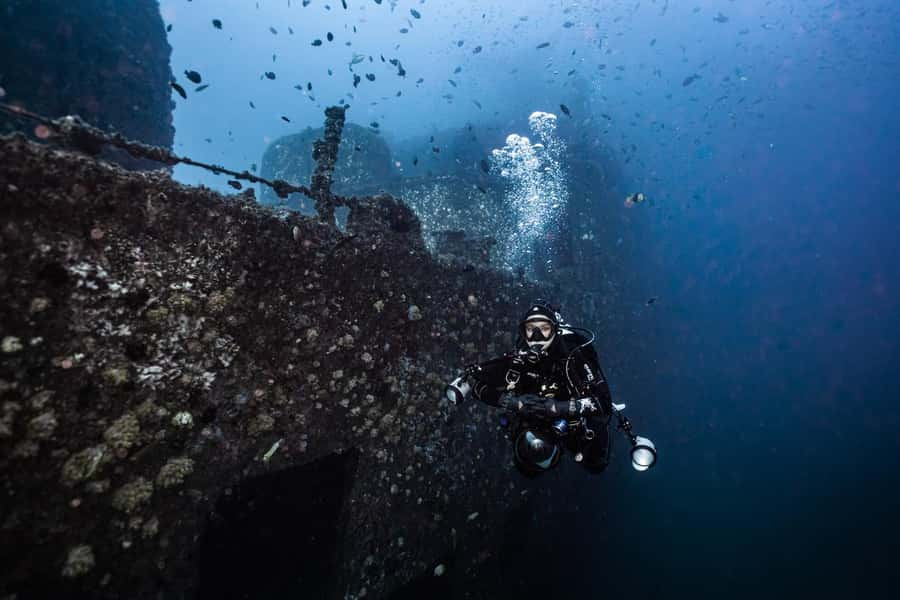
For certified divers who want more, parts of the hull, engine room, and control room are available to visit. The control room still contains its kill switches, an unusual detail that gives the wreck a strong connection to its working life. Internal access requires the proper experience, equipment, and a torch, so ask the crew what is suitable for your certification and conditions on the day.
The site is suitable for divers from Open Water level through Divemaster and instructor, but that does not mean every interior route is right for every diver. An Open Water diver can appreciate the outside of the ship, while more experienced divers may want to plan carefully for penetration areas.
More Wreck Diving in Australia
- Scuba Dive the S.S. Yongala Wreck on the Great Barrier Reef.
★ 4.0 · 35 reviews - Ex- HMAS Swan Wreck Double Boat Dive
★ 5.0 · 20 reviews - Townsville or Magnetic Island: Yongala Wreck Dive Day Trip
★ 3.3 · 7 reviews
The 30-minute run from Sunreef Mooloolaba
Your morning or afternoon begins at Sunreef Mooloolaba with a safety briefing of about 15 minutes. Bring your certification card or digital card, your dive log, swimwear, towel, and biodegradable sunscreen. You also need to sign a diver statement before entering the water.
The boat ride to the wreck takes about 30 minutes. Since the ship lies only 2.9 nautical miles offshore, this is not an all-day voyage spent bouncing toward a distant site. That short crossing leaves more time for the part you came to do, while still giving you a useful transition from the busy coast to open water.
The return trip takes another 30 minutes. Light snacks are included, and the crew provides marine park permits and qualified PADI instructors or Divemasters to guide the trip. One note from the experience is worth taking seriously: cold-water comfort can make or break the day. A post-water hot drink or soup may be available, but you should not rely on refreshments to solve poor thermal protection.
Two descents and about three hours at the wreck
The schedule allows about three hours for scuba activity at the Sunshine Coast site. Sunreef uses two midship moorings, a practical arrangement that helps divide the wreck into manageable sections and reduces the need to cover too much ground from one anchor point.
Your first descent may be the moment the ship’s true size becomes clear. The forward decks are about 15 meters down, while the stern reaches around 18 meters. Those depths are accessible to certified divers, but your air supply, bottom time, comfort, and training still matter.
A second descent gives you a better chance to visit areas missed on the first pass. You might spend one section outside along the decks and superstructure, then use the next descent to look toward the hull or a selected internal area. The precise route will depend on the guide, conditions, certification levels, and safety limits.
Visibility averages about 15 meters, with 20 meters or more possible. That is enough to see a large part of the ship at once, especially when the water is clear. Minimal swell is another advantage. A calm site helps you keep your position, inspect details, and take photographs without fighting constant movement.
Still, visibility is not a promise. It changes with weather, current, light, and local conditions. The trip runs all year, but the experience will feel different in winter than in summer. Water temperatures range from 17°C in winter to 27°C in summer, a broad spread that calls for seasonal planning.
The ship’s outer decks are worth your first look
I would begin outside, even if you hope to visit the engine room. The outer structure gives you the clearest sense of the Ex-HMAS Brisbane as a ship, and the clean silhouette is one of the site’s strongest features.
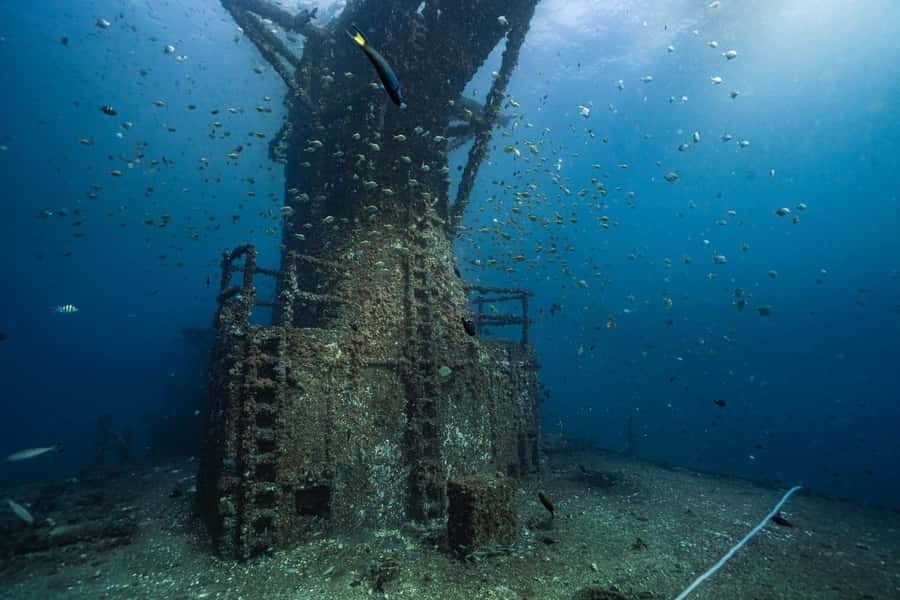
The wreck sits upright rather than on its side. That makes orientation easier, especially for newer certified divers, and it lets you follow decks, railings, funnels, and large sections of the superstructure. You can inspect the ship’s form while watching the reef community use it as shelter.
The exterior also gives photographers more room. An underwater camera can capture the bow or stern with fish moving through the frame, but camera hire costs extra. If you bring or rent one, keep your attention on buoyancy and your guide rather than chasing a perfect shot.
Soft corals cover parts of the wreck, and hard corals are becoming established as well. The metal structure now works as a platform for marine growth, creating a clear contrast between military engineering and a living reef.
More Scuba Diving in Australia
- Great Barrier Reef Snorkeling and Diving Cruise from Cairns
★ 4.5 · 3,714 reviews - Ocean Freedom Great Barrier Reef Luxury Snorkel and Dive Cruise
★ 5.0 · 1,895 reviews - Cairns: Premium Snorkelling and Diving Reef Day Trip
★ 4.7 · 1,528 reviews - Cairns: Outer and Coral Cay Snorkel and Dive Cruise
★ 4.8 · 1,467 reviews
Marine life around the funnels, bow, and deck
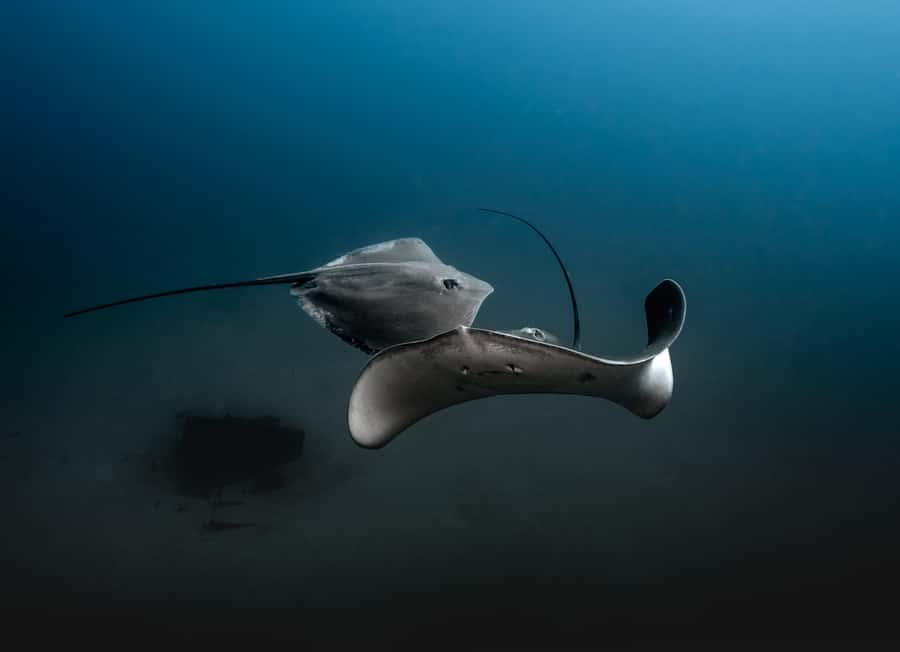
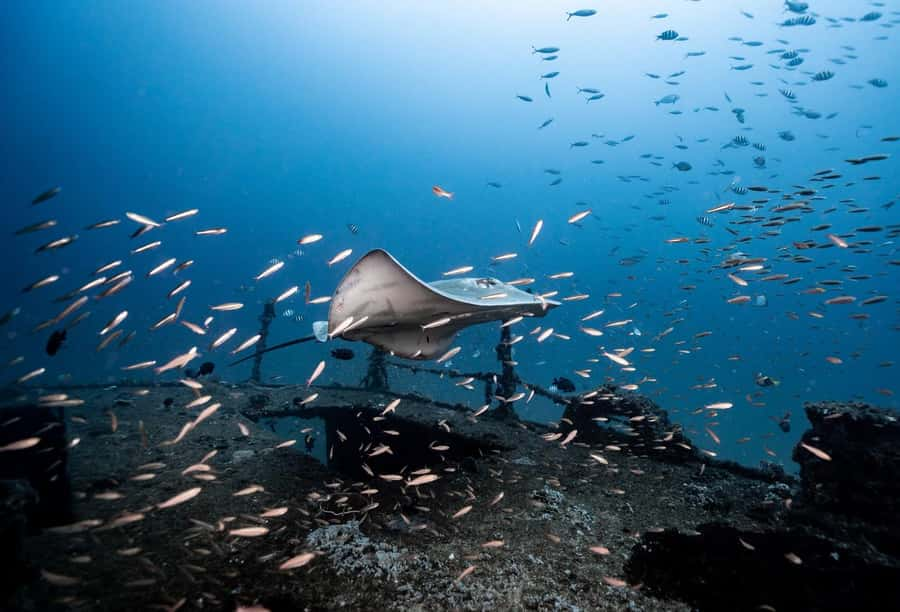
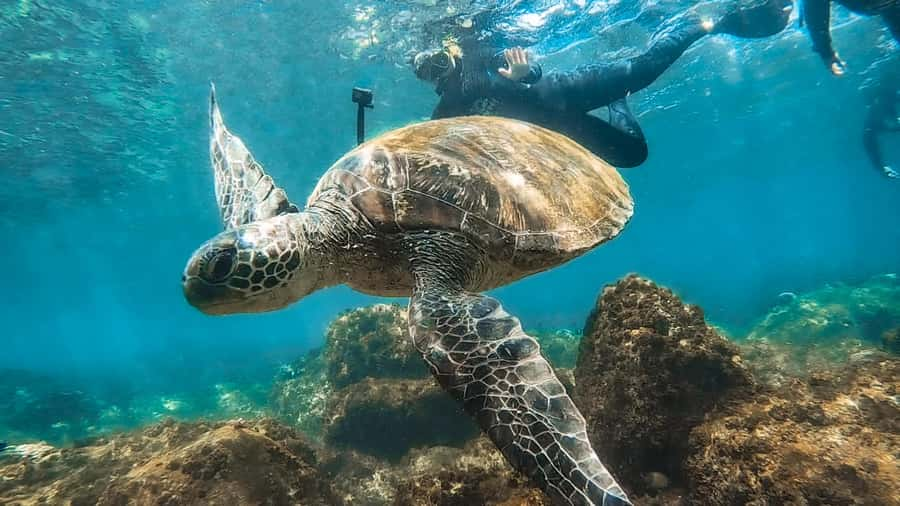
The wreck’s animal life is not limited to small reef fish. Large bull rays and eagle rays may pass across the site, and eagle rays are known to move between the two funnels. A turtle has taken up residence on the aft funnel, so check carefully around that area rather than treating it as just another piece of ship structure.
Up to 10 giant Queensland grouper have been seen near the bow at one time. Greasy cod and shovel-nose rays are also possible sightings. A school of juvenile red emperor and snapper uses the area, while yellow-tailed kingfish move around the bait fish near the vessel.
Smaller creatures reward a slower pace. You might find lionfish, blennies, nudibranchs, sea hares, squid, and an octopus living in a pyrotechnic tube on the deck. These animals are easy to miss if you spend the whole outing focused on the ship’s biggest features.
The best approach is to divide your attention. Look outward for rays and grouper, then turn back toward the metal for small reef life. A guide can help point out animals that blend into the structure, but you still need to move carefully and avoid touching the wreck or corals.
Entering the engine room and control room
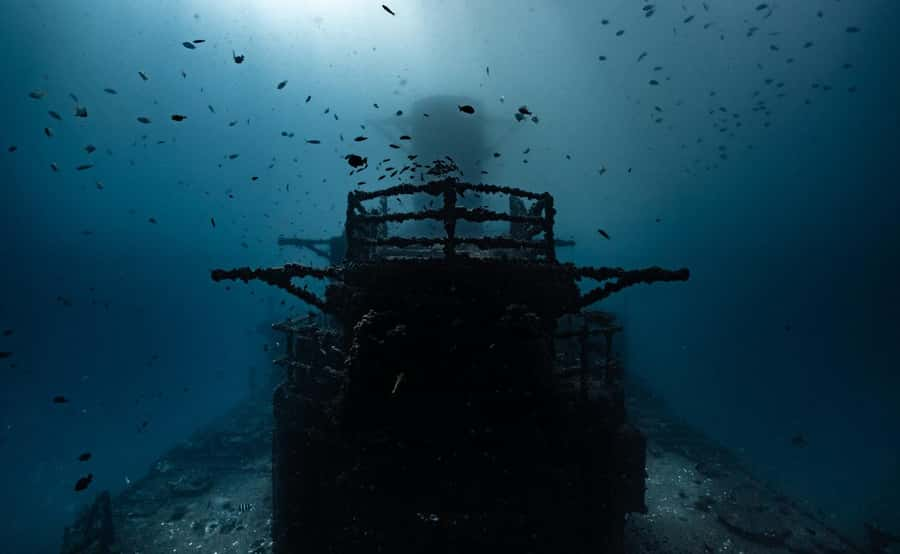
The interior areas add a sense of discovery, but they also require more care than an exterior circuit. The engine room and control room are not simply rooms to walk through. You need to monitor your air, buoyancy, visibility, equipment, and route at all times.
A torch is required for penetration areas and can be hired for an extra charge. Do not assume a phone light or natural daylight will be enough. Even with good visibility outside, internal spaces can become dark and disorienting quickly.
Your certification level does not automatically make every penetration appropriate. Ask the PADI instructor or Divemaster to explain which sections are included for your group. If you are an Open Water diver or have limited wreck experience, the exterior may be the smarter choice and still provides plenty to see.
The control room is particularly interesting because its kill switches remain intact. That small detail helps you imagine how the vessel operated before it became an artificial reef. It also offers a better sense of place than a generic swim-through with no clear link to the ship’s working past.
Cold water and equipment deserve careful planning
The clearest practical warning is temperature. One recent October outing was described as extremely cold even with a 5mm wetsuit, while another account from water at 22°C reported severe discomfort with a 5mm suit and open-heel fins.
Your needs will depend on the season and your own tolerance, but this is not the place to treat thermal protection as an afterthought. Ask Sunreef what exposure gear is available before departure. A hood, gloves, thicker suit, suitable boots, and better-fitting fins may make a major difference.
All scuba equipment can be provided for an extra fee on the day. The listed trip price of $133 does not include the regulator, BCD, tanks, wetsuit, fins, mask, or other required gear. Camera hire also costs extra, as does a torch if you plan to enter the wreck.
Fit matters as much as warmth. Poorly fitting open-heel fins caused blisters and skin injuries in one account, so check your foot pockets before leaving the dock. If you hire gear, allow time to report discomfort and change equipment rather than accepting pain for the entire outing.
There is also a small inconsistency in onboard expectations. Light snacks are included, and hot soup helped one cold diver warm up, while another account noted chips and coffee but no water. Bring your own drinking water if you want to be certain you have it.
Is $133 good value for this Sunshine Coast wreck trip?
At $133 per person, the price covers the return boat trip, marine park permits, light snacks, and guidance from a qualified PADI instructor or Divemaster. For a major wreck only 2.9 nautical miles offshore, that is a reasonable base price.
The value depends heavily on what you already own. If you have your own complete kit, certification, and camera, the advertised price is closer to your final cost. If you need a full equipment package, a camera, and a torch, the bill rises. Ask for the current hire rates before booking so the real total does not surprise you.
The short boat ride and two-mooring plan also help the value. You are not paying for a long transfer with only a brief look at the site. Much of the five-hour outing is reserved for the wreck itself, though actual bottom time remains controlled by air supply, depth, conditions, and your guide.
Free cancellation is available up to three days before the trip for a full refund. That gives you some protection when your plans change, but it does not remove the need to check conditions and equipment requirements before the day.
Who should book this wreck experience?
This trip suits a certified diver who wants a substantial wreck rather than a shallow reef tour. It is especially appealing if you enjoy combining a large historic vessel with marine life and would like the option of visiting internal spaces.
It also works for newer certified divers who are comfortable in open water and prefer an upright wreck with clear depth information. You can stay outside and still see the ship properly. More experienced divers will have extra interest in the engine room, control room, and penetration possibilities.
I would be cautious if you are very sensitive to cold, have not been scuba diving within the past two years, or do not want to pay extra for equipment. All participants need current certification, or at least Open Water certification with recent scuba experience within the last two years.
Pregnant women and uncertified divers cannot participate. The instruction is in English, and you need to bring proof of certification on the day.
Should you book the Ex-HMAS Brisbane?
Book it if a large upright destroyer, clear water, and varied marine life sound better than a simple reef swim. The short trip from Mooloolaba, two relaxed descents, and the chance to see turtles, rays, grouper, corals, and an octopus give this outing real substance.
Before paying, confirm equipment hire, thermal protection, fin fit, camera costs, and torch requirements. If you own suitable gear and plan for the cold, $133 is a fair entry price for a full half-day at one of Queensland’s most distinctive wreck sites.
FAQ
How long does the Ex-HMAS Brisbane trip take?
The experience lasts about five hours. This includes a 15-minute safety briefing, about 30 minutes by boat each way, and roughly three hours for scuba activity at the wreck.
How far offshore is the Ex-HMAS Brisbane?
The wreck is located 2.9 nautical miles offshore from Mooloolaba.
What certification do I need?
You need a current scuba certification, or at least Open Water certification with scuba experience within the past two years. Bring your physical or digital certification card and dive log.
Is scuba equipment included in the $133 price?
No. Equipment is not included, but it can be hired for an additional charge on the day. Camera hire and torch hire also cost extra.
How cold is the water?
Water temperatures range from about 17°C in winter to 27°C in summer. Visibility averages around 15 meters, with 20 meters or more possible. Ask about suitable exposure protection before the trip.
Can I cancel for a refund?
You can cancel up to three days in advance for a full refund.
Newest dives added in Australia
- Scuba Dive the S.S. Yongala Wreck on the Great Barrier Reef.★ 4.0 · 35 reviews
- Half-Day Private Discover Dive at Australia’s Iconic Beach★ 5.0 · 4 reviews
- Scuba Dive With Grey Nurse Sharks in Bushrangers Bay★ 5.0 · 7 reviews
- Wave Break Island Scuba Diving on the Gold Coast★ 4.5 · 81 reviews
- Great Keppel Island PADI Discover Scuba Dive with Keppel Dive★ 5.0 · 25 reviews
- Poseidon Outer Great Barrier Reef Snorkeling and Diving Cruise from Port Douglas★ 4.5 · 101 reviews
- Premium Guided Dive Trip – Outer Great Barrier Reef★ 5.0 · 63 reviews
- Try Scuba Diving at Cook Island – Guided Ocean Dive with Turtles★ 4.5 · 6 reviews
Wreck Diving, compared.
Wreck and Bridge Span Dive for Certified Divers
Read our review →
Bali Diving for Beginners: Tulamben Liberty Wreck
Read our review →
Certified Diver: 2-Tank Deep Wreck and Shallow Reef Dive Off Oahu
Read our review →
Waikiki 2 Tank World Class Wreck SCUBA Diving – Certified Only
Read our review →
Private First-Time Dive on Aruba’s Reef and Wreck Site
Read our review →Tulamben Diving USS Liberty Shipwreck Scuba Dive
Read our review →
Bali Diving Day Trip-Manta Point/Tulamben Shipwreck-Fun Dive
Read our review →Browse the lists this dive appears in