
Reviewed · DISCOVER SCUBA DIVING
Introductory Beach Scuba Dive
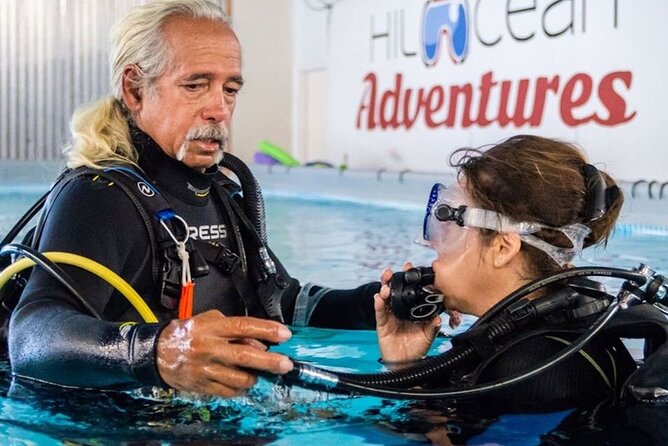
Hilo’s beginner scuba program takes a sensible approach: you learn on dry land, practice in a heated indoor pool, and only then head to the Pacific. That progression is the experience’s biggest strength. You get time to become familiar with breathing through the regulator and handling the equipment before facing open water.
I like the small maximum group of four, which should allow instructors to keep a close eye on each person. I also like the patient coaching described by participants, especially the care Mark and Akara gave to nervous beginners. The main catch is that this requires real physical ability, and the ocean portion is not guaranteed until you pass the classroom and confined-water sessions.
Key points to know before booking
- Three-stage learning plan: Classroom instruction, heated indoor pool practice, then a 30- to 50-minute ocean session.
- Small group size: The activity accepts a maximum of four people.
- Close instructor support: PADI-certified staff supervise the program, with Mark and Akara named among the instructors.
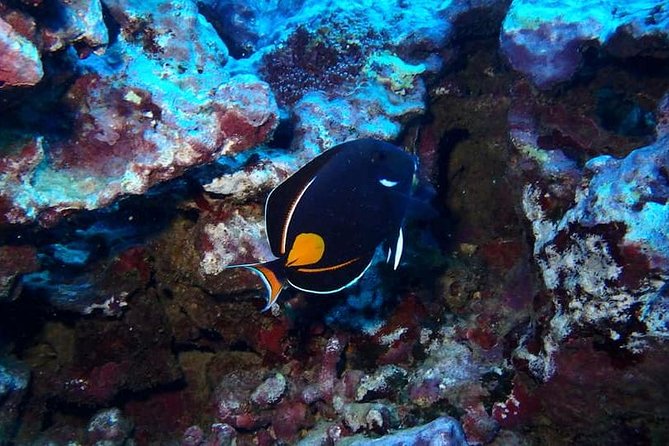
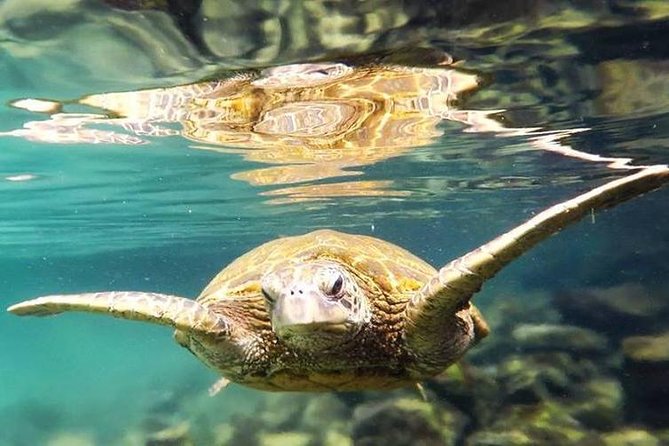
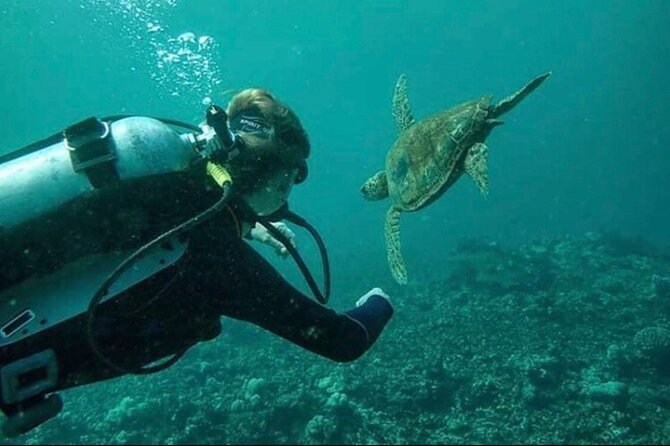
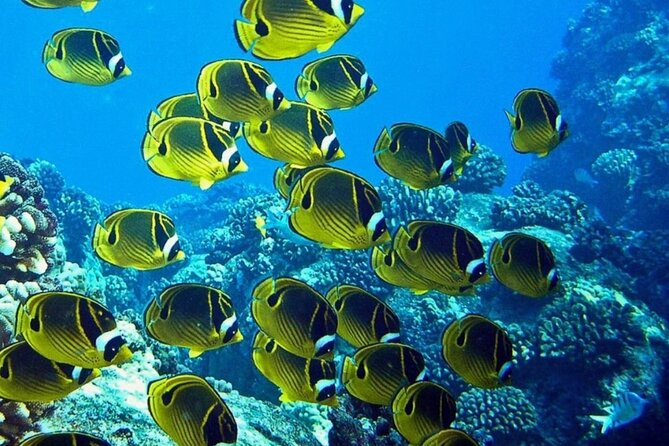
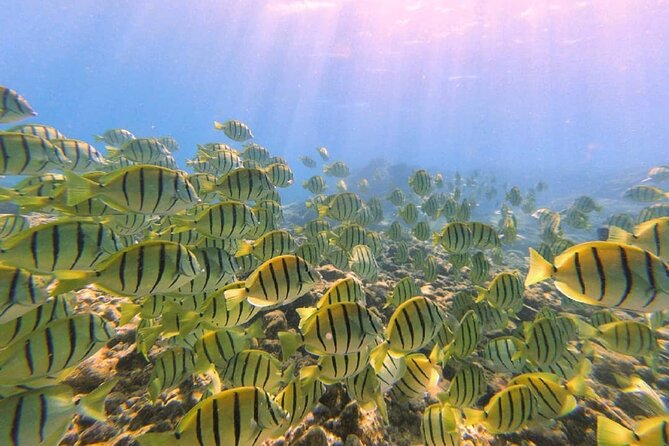
- Hilo reef setting: You may see tropical fish, coral, and Hawaiian green sea turtles near the coast.
- Strict safety rules: You must swim unassisted, carry 50 pounds of equipment, understand detailed English instructions, and complete a medical questionnaire 72 hours before the outing.
Why the pool session matters before Hilo Bay
Many first-time scuba programs move quickly from a briefing to the sea. This one gives you a proper practice period first, which makes a big difference if you feel uneasy about breathing underwater.
The morning begins at Hilo Ocean Adventures, 1717 Kamehameha Avenue, with a classroom session. The supplied details describe this as about 30 to 45 minutes, so plan for a short but focused lesson rather than a long academic course. You learn underwater breathing methods, basic equipment use, and emergency safety procedures.
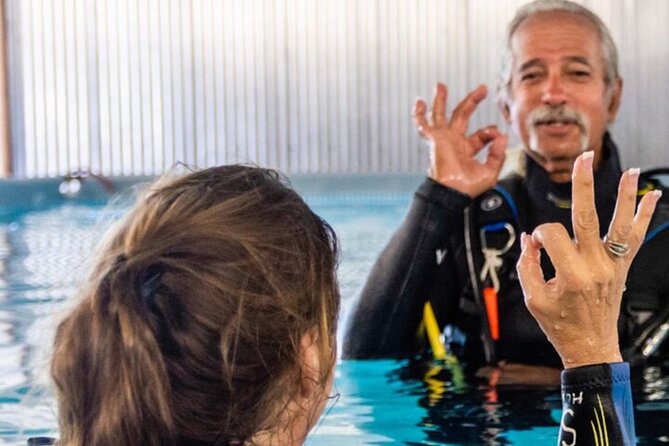
That dry-land time is not filler. It gives you a chance to understand the hand signals and instructions before you have a mask on your face and a regulator in your mouth. You can also ask questions while standing on solid ground, where communication is easy.
Next comes about 45 minutes in a heated indoor pool. This is where you put the basic skills into practice. The warm water is especially useful for a first session because cold, wind, and waves are removed from the equation. You can concentrate on breathing, movement, and comfort.
The pool is also the program’s safety checkpoint. You must successfully complete both the classroom and confined-water portions before moving on to the ocean. That means the sea session is not automatic. If you cannot perform the required skills, the instructors will not send you out simply because it is part of the schedule.
I see this as a fair rule, though it is important to understand the booking risk. The supplied terms say refunds are not offered if you cannot complete the activity in full or submit the medical paperwork late. Be honest about your comfort and fitness before reserving.
More Discover Scuba Diving in the USA
- DISCOVER Scuba Diving Experience in Honolulu
★ 5.0 · 202 reviews - Kauai’s Ultimate Discover Scuba Dive – OCEAN EXPERIENCE (1 Tank Dive)
★ 5.0 · 186 reviews - Discover Scuba Diving Class from Lahaina
★ 5.0 · 185 reviews
From the shop to the open water
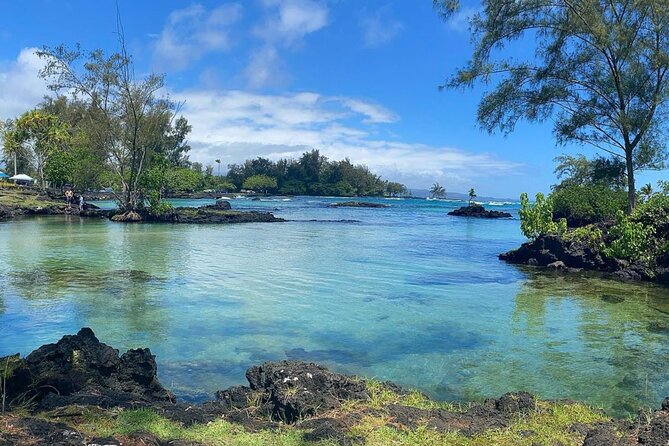
After the pool work, you are transported from the check-in location to a nearby Hilo snorkeling and scuba area. The exact site is not named, but the outing takes place near the reefs along the Big Island’s coast, close to Hilo Bay.
The ocean portion lasts about 30 to 50 minutes. That is enough time for a first look at reef life without making the session unnecessarily long for a beginner. You might see tropical fish, coral, and Hawaiian green sea turtles. The area is part of Hawaii’s broader reef environment, which accounts for a large share of the reef ecosystems in the United States.
You should keep your expectations realistic. This is an introductory outing, not a full certification course or a long boat-based expedition. Conditions, visibility, and the exact marine life are not promised. The appeal is having a guided first encounter with the Pacific after you have practiced the basics in a controlled setting.
One useful point from the available feedback is that the ocean entry is from shore rather than by boat. One participant preferred starting from a boat, so this format may not suit you if you want a boat ride or a dramatic offshore drop. On the other hand, a shore start removes the extra motion and travel time of a boat, which can make the first ocean session less complicated.
Patient coaching for nervous beginners
The strongest praise centers on instructor support. Mark and his team are described as giving ample coaching, while Akara is specifically noted for checking comfort throughout the activity.
That matters most if you are a new swimmer in scuba equipment or simply anxious about the water. One participant’s wife was not a swimmer and was usually afraid of the water, yet the pool practice helped her become comfortable before entering the sea. The point is not that the program removes every challenge. It gives you time and supervision to face those challenges in stages.
Still, this is not a gentle floating lesson for someone who cannot swim. You must swim unassisted in the open ocean. You also need enough strength to carry 50 pounds of equipment on your back without help. The program lists strong physical fitness as a requirement, and you should take that seriously.
The language requirement is also practical. You must converse in English and understand detailed instructions in English. That is important for safety, especially when instructors are explaining equipment problems or emergency procedures.
The group limit of four should help keep instruction personal. It does not guarantee that every minute will be one-on-one, but it is much more reassuring than joining a large first-time class. If you are booking with friends or family, confirm the current availability because the maximum is small.
What you actually receive for the cost
No price is provided in the available details, so I cannot judge the exact dollar amount. I can tell you what the package includes and what those inclusions mean.
The fee covers a fully guided introductory scuba program, the equipment, local juice and snacks, and transportation from the check-in point to the ocean site. You do not need a scuba certification for this activity.
The included equipment is a meaningful saving for a first-time participant. Buying or renting a full set independently would add cost and force you to make technical choices before you know what suits you. Here, the instructors handle the equipment side as part of a supervised lesson.
The snacks and juice are modest extras, not a meal. Have a suitable breakfast before arriving, particularly since the morning includes classroom work, pool practice, gear handling, and an ocean session.
Pay close attention to transportation language. The meeting point is Hilo Ocean Adventures, and the activity ends back there. The detailed inclusion list says transportation runs from the check-in location to the site, while hotel and port pickup and drop-off are listed as not included. Some general tour information refers to transport connected with Hilo hotels or the cruise port, but the specific meeting instructions are the safer basis for planning. Arrange your own way to 1717 Kamehameha Avenue unless the operator confirms pickup directly.
For cruise passengers, this is especially important. Build in enough time to reach the shop before the 9:00 a.m. start, and do not assume the port transfer is included. The program is also scheduled as roughly four hours, so allow extra time around it rather than booking a tight activity immediately afterward.
Another way to get in the water in the USA:
- First-Time Scuba Diving in Honolulu + Free Videos
★ 5.0 · 3,123 reviews - Oahu Shark Dive
★ 5.0 · 2,903 reviews - Oahu: Shark Cage Dive on the North Shore
★ 4.8 · 1,485 reviews - Shark Cage Diving on Oahu’s North Shore
★ 5.0 · 1,391 reviews
The health rules are part of the experience
Scuba has medical and timing restrictions that casual snorkel outings do not. You must complete and submit the required PADI or NAUI medical questionnaire at least 72 hours before the activity.
The listed exclusions include pregnancy, heart conditions, and neck or back problems. If any of these apply, speak with a medical professional and the operator before paying. Do not wait until the morning of the outing.
You also cannot travel to altitudes of 2,500 feet or higher within 18 hours after the session. This rule can affect a Big Island itinerary. If you are planning a high-elevation visit after Hilo, place this activity carefully in your schedule. It is not simply a matter of finishing at the shop and heading anywhere else on the island.
The weather policy is straightforward. If poor conditions force cancellation, you receive the choice of another date or a full refund. If you cancel, you need to do so at least 24 hours before the 9:00 a.m. start for a full refund. Cancellations or changes inside that window are not refunded or accepted.
Who will get the most from this Hilo outing
This program suits you if you want a first scuba experience without committing to a certification course. It is particularly useful if you value a heated pool and careful instruction before entering the sea.
You will probably appreciate it if you are:
- At least 15 years old
- Comfortable swimming without assistance in open ocean
- Physically able to carry 50 pounds of gear
- Able to understand detailed safety directions in English
- Interested in reef life but not looking for a boat-based trip
- Able to set aside about four hours, starting at 9:00 a.m.
Minors under 18 must be accompanied by an adult. The activity is not suitable for pregnant people or those with the listed heart, neck, or back conditions.
This is not the right choice if you want a relaxed snorkel from the beach, cannot swim independently, dislike carrying equipment, or need hotel and cruise-port transportation included. It is also a poor fit if your schedule requires a guaranteed ocean session, since the instructors can stop the program after the classroom or pool stage for safety reasons.
How this compares with a standard snorkel stop
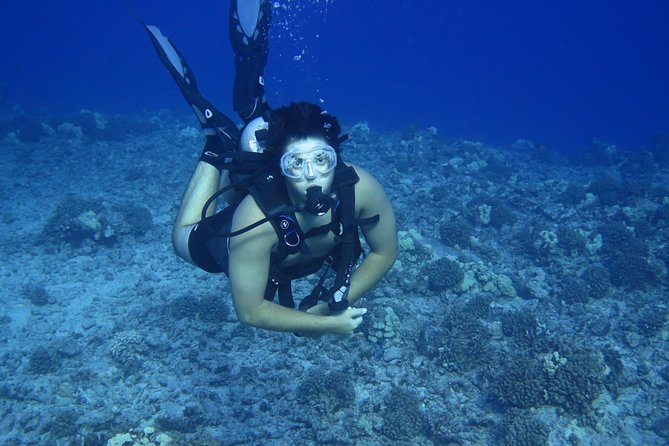
A snorkel outing usually lets you enter the water quickly with less equipment and fewer formal requirements. This program asks more of you, but it gives you a different view of the reef and teaches skills that can support future scuba experiences.
You should not book it simply because you want to see turtles. Marine life is never guaranteed, and the session includes required instruction before the ocean portion. Book it because you want the learning process as much as the scenery.
The pool is the key difference. For a confident swimmer who wants immediate water time, the classroom and confined-water practice may feel slow. For a nervous beginner, those same steps may be the reason the ocean portion feels manageable.
A practical morning plan
Arrive at Hilo Ocean Adventures before the 9:00 a.m. start with your medical paperwork already submitted. Wear comfortable clothing for a morning that moves between classroom, pool, transport, and open water.
Listen closely during the theory portion, even if you have watched scuba videos before. The instructors will cover the procedures you need for this specific session, including breathing and emergency responses.
Use the heated pool to speak up early. If your mask, regulator, or breathing rhythm feels wrong, tell the instructor there rather than waiting for the sea. The available feedback points to comfort checks as one of the program’s best features, so make use of that support.
After the ocean session, you return to the meeting point. Since the program supplies snacks and local juice rather than a full meal, plan your next meal separately. Also remember the 18-hour altitude restriction before arranging the rest of your Big Island day.
Should you book this Hilo scuba experience?
Book it if you want a structured first scuba session, value patient supervision, and can meet the swimming, strength, medical, and language requirements. The heated pool, small group limit, and staged instruction give beginners a sensible path from theory to the Pacific.
Skip it if you want a boat departure, cannot swim independently, need included port pickup, or have a tightly packed itinerary that includes high elevations soon afterward. The ocean session is the reward for completing the earlier stages, not a guarantee made at the start.
For the right person, this is a solid way to try scuba in Hilo without taking a certification course. Just arrive prepared, treat the health rules seriously, and confirm transportation before booking.
FAQ
Where does the activity begin?
It begins at Hilo Ocean Adventures, 1717 Kamehameha Avenue, Hilo, Hawaii 96720.
What time does the activity start?
The scheduled start time is 9:00 a.m.
How long does the experience last?
The full activity takes about four hours. The classroom portion takes about 30 to 45 minutes, pool practice about 45 minutes, and the ocean session about 30 to 50 minutes.
Do I need scuba certification?
No. This is a fully guided introductory scuba activity, and no certification is required.
Is equipment included?
Yes. Scuba equipment is included in the activity.
Is transportation included?
Transportation from the check-in location to the ocean site is included. Hotel and port pickup and drop-off are listed as not included. The activity ends back at the meeting point.
How old must I be?
The activity is suitable for ages 15 and up. Anyone under 18 must be accompanied by an adult.
What swimming and fitness abilities are required?
You must swim unassisted in the open ocean and carry 50 pounds of equipment on your back without assistance. The activity also requires a strong level of physical fitness.
When must I submit the medical questionnaire?
You must complete and submit the required PADI or NAUI medical questionnaire 72 hours before the activity.
Can I cancel for a full refund?
Yes, if you cancel at least 24 hours before the local start time. Cancellations or changes made less than 24 hours before the start are not refunded or accepted. If poor weather causes the operator to cancel, you are offered another date or a full refund.
Newest dives added in the USA
- Private Scuba Diving Expert-Led Excursion Training with Tour★ 4.5 · 9 reviews
- Santa Fe Deep Dive History Walking Tour★ 4.5 · 14 reviews
- Scuba Certification★ 5.0 · 77 reviews
- No Experience Required to Discover Scuba in Florida★ 5.0 · 51 reviews
- Small Group Guided Shore Dives in St. Andrews State Park, Florida★ 5.0 · 52 reviews
- 2 Tank Private SCUBA Party Diving Charter from Waikiki Hawaii★ 4.5 · 34 reviews
- Discover Scuba Diving in Hawaii – Non certified divers!★ 5.0 · 3 reviews
- Two Tank Wreck and Drift Dive in Oahu★ 4.5 · 7 reviews
Discover Scuba Diving, compared.
2 Days Discover Scuba Diving in Nusa Lembongan – Scuba Initiation
Read our review →
From Sharm: Ras Muhammed & White Island By Boat & intro Dive
Read our review →Browse the lists this dive appears in