
Reviewed · DISCOVER SCUBA DIVING
Crete Introductory Scuba Diving Experience
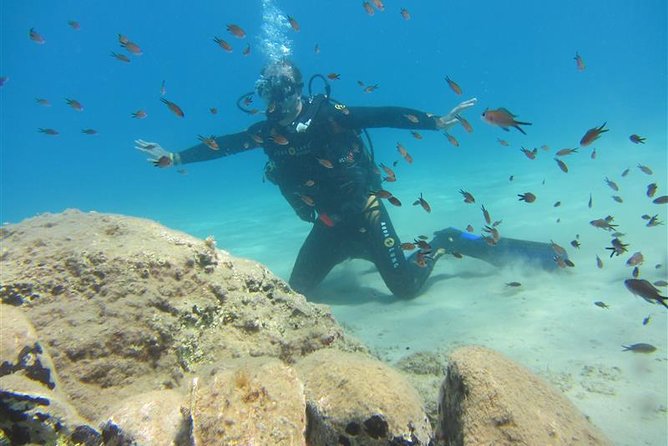
Crete’s introductory scuba experience takes you from classroom basics to a supervised Mediterranean descent in one morning. You first learn how the equipment works, practice in a pool or shallow water, then head out to 3 to 6 meters with an instructor beside you at all times. No previous scuba experience is needed.
I like the patient instruction and the chance to stop after the confined-water session if you are not ready for open water. I also like that equipment is supplied and that instructors such as Stan, Sebastian, Pedros, and Artur have been praised for calm, clear coaching. The main drawback is that the beginner site may offer only a few fish, and the exact return schedule can be unclear.
Key points to know before booking
- Three-part training: Theory, confined-water practice, and a guided open-water session form the full course.
- Shallow first descent: The open-water portion reaches only 3 to 6 meters, a sensible range for first-timers.
- Direct instructor supervision: A qualified instructor remains with you throughout the practical training.
- Several Crete locations: You can be assigned to an area near Heraklion, Chania, Rethymno, or Georgioupolis.
- Good swimming is essential: You need good swimming ability, excellent health, and moderate physical fitness.
- Plan the rest of your day carefully: The water session may finish around noon, while transport arrangements can extend later in some cases.
What this Crete scuba experience really offers
This is a first taste of scuba, not a certification course. You are not being trained to plan independent underwater trips. Instead, you learn the basic skills needed for one controlled session, with an instructor taking responsibility for your safety and pace.
That makes the experience a good fit if you have always wondered what it feels like to breathe underwater but do not want to commit to a full qualification. It also works well for a couple or family group seeking something different from a beach day.
The course is available for people aged 10 to 60. Children must have an adult with them. The age range is only one part of the decision, though. Good swimming ability and excellent health are required, and the activity calls for a moderate level of fitness.
The course is offered in English. The group can include up to 20 people, although the actual practical group may be much smaller. One pair had just one instructor for the two of them, which made the instruction feel especially personal.
More Discover Scuba Diving in Greece
- Try Scuba in Crete – Free Certification & Photos (Beginners)
★ 5.0 · 51 reviews - Plakias: Try Scuba Diving first time – Private, from 8 yrs.
★ 5.0 · 21 reviews - Chania | Try Scuba Diving | Introduction Dive
★ 5.0 · 6 reviews
The 9:00 am start and meeting arrangements
The scheduled start is 9:00 am. Departure points are connected with hotels in the Chersonissos area, the Chania area, and the Rethymno and Georgioupolis areas.
Pickup is offered in the arrangements, but hotel transportation is not listed among the included features. That difference matters. Confirm exactly where you should meet and whether pickup and return transport apply to your hotel before you pay.
The transport itself may be brief in some cases. One account described a drive of about half an hour each way, with pickup and return to the hotel. Still, do not assume the day ends as soon as the water session does. One schedule finished the morning activity around noon, with a return trip not planned until roughly 3:30 pm.
I would ask three simple questions before setting your plans:
- What time will I reach the training site?
- What time will the water session finish?
- When will I be returned to my hotel or departure point?
Those answers help you decide if you can fit in a second activity that day. The listed duration is about four hours, but actual transport and waiting time may make the outing longer.
Part one: learning the basics before entering the water
The theory class comes first. You learn the basic principles of scuba, how to use the equipment, and what to expect once you are underwater.
This part is not filler. For a newcomer, the first challenge is usually not seeing fish. It is getting comfortable with the breathing system, mask, fins, and the strange feeling of moving while relying on equipment. A clear briefing gives you a better chance of enjoying the practical session.
The instructor remains central from the start. Stan, described as a PADI professional, was praised for clear and confident instruction. Artur was noted for building confidence and teaching good basic skills. These details matter because a calm instructor can make the difference between an exciting first attempt and an uncomfortable one.
You should expect the lesson to cover the essential skills rather than advanced techniques. The goal is to prepare you for a short, shallow, supervised outing. If you want formal certification, you will need a longer course elsewhere.
Part two: confined-water practice at the pool or shore
After the theory lesson, you practice in confined water. This may be a pool or a shallow sea area, depending on the arrangements for your location.
This is where you discover how your body reacts to scuba. You can work on breathing, moving with the equipment, and following the instructor’s directions before attempting the open-water portion. The shallow setting gives you a safer place to pause and regain confidence.
The instructors appear to take this stage seriously. Sebastian was particularly patient with two people who did not feel comfortable continuing after the pool session. They chose not to go into the sea, and that decision was respected. Sebastian encouraged them without forcing the issue and suggested practicing with snorkeling before trying again.
That is a real strength of the experience. You are not locked into the final stage simply because you paid for it. If you decide the open-water session is not right for you, you can stop after the confined-water training. Ask about refund terms for an incomplete personal choice, since the supplied policy only explains general cancellation and weather arrangements.
You should also be honest with yourself here. Nervousness is normal, but serious discomfort with breathing through the equipment should not be brushed aside. The confined-water stage gives you a useful checkpoint.
More Discover Scuba Diving in Crete
- Discover Scuba Diving
★ 5.0 · 1,676 reviews - Barcelona: PADI Discover Scuba Diving
★ 4.7 · 1,016 reviews - Discover Diving in Curacao
★ 5.0 · 886 reviews - Mallorca: Discover Scuba Diving for Beginners
★ 4.7 · 805 reviews
Part three: a 3 to 6 meter Mediterranean descent
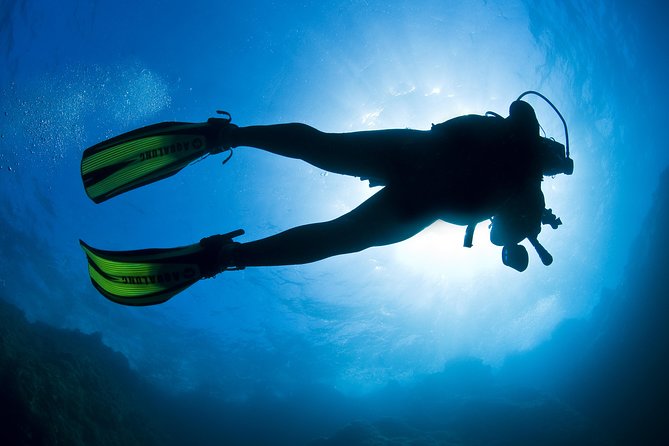
Those who feel ready continue to the open-water session. The descent reaches 3 to 6 meters, which keeps the experience shallow and appropriate for beginners.
You remain directly supervised by a qualified instructor. This is not a situation where you are sent off with a map and told to follow a route. The instructor manages the pace and stays with the students during the practical portion.
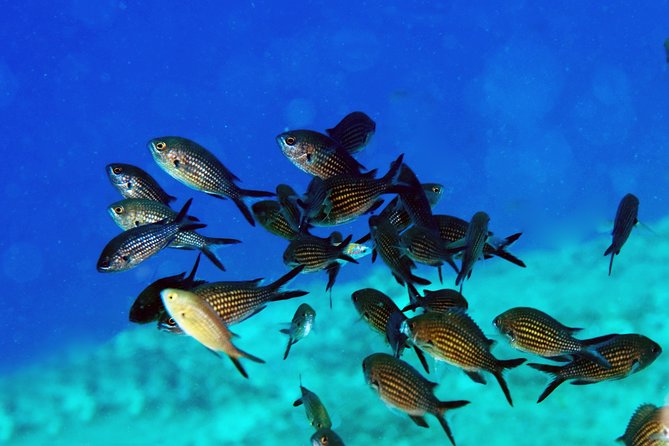
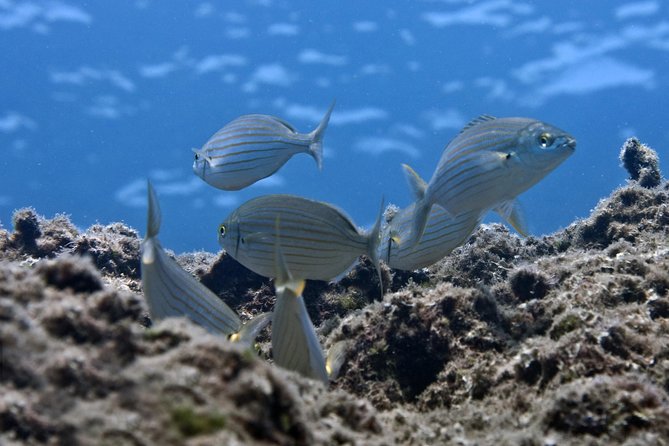
The setting is the Mediterranean around Crete. You may see colorful fish and other sea life, but expectations should be realistic. One beginner site offered a pleasant look at fish but was not described as especially dramatic. Another session produced a few types of fish and one small octopus, while windy weather forced a change of location.
That weather-related change is worth understanding. Conditions can affect the chosen site, visibility, and amount of marine life. The company may move the session to another location to keep the activity running rather than cancel it. This is good for getting into the water, but the replacement site may not be as interesting as the one originally planned.
If you have explored tropical reefs in the Caribbean, Crete may feel modest by comparison. The attraction here is the experience of breathing underwater in the Mediterranean, not a promise of a huge reef filled with exotic animals.
What the underwater setting is like for beginners
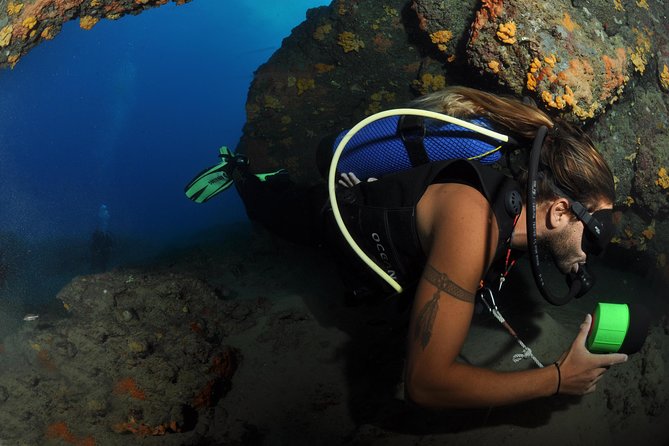
The beginner format usually means a beach-based or otherwise accessible site, rather than a demanding boat trip to a remote reef. That keeps the logistics simpler and helps new participants concentrate on the basics.
You might find clear water and small fish close to shore. You might also find limited marine life, especially if wind changes the location. Visibility and sea conditions are not guaranteed, and the activity requires suitable weather.
This is best approached as a personal milestone. You are learning how to manage yourself underwater, not chasing a long list of species. The moment of breathing below the surface, controlling your movement, and following an instructor can be memorable even when the sea life is sparse.
The short depth also makes this a sensible introduction for people who want to test their interest before booking a certified course. If the session leaves you wanting more, you will have a clearer idea of what formal training might involve.
The instructors are the main reason to book
The strongest part of this activity is the one-on-one feel created by good instruction. Artur helped build confidence. Stan was described as clear and confident. Sebastian was patient with hesitant beginners. Pedros was praised for professional, helpful guidance and long experience.
You may not receive one of these exact instructors, but the names give you a useful sense of the teaching style to expect. The practical lesson should feel controlled, patient, and focused on the beginner rather than rushed through for the sake of the schedule.
Direct supervision is required throughout the course. That does not remove the need for you to listen carefully and follow instructions. It does mean you have an experienced person beside you when you are handling unfamiliar equipment and adjusting to the water.
For a first attempt, I would value this more than a spectacular site. A perfect location cannot rescue poor instruction. A patient instructor can make an ordinary site worthwhile.
What the $96.13 price includes
At $96.13 per person, the price covers the core parts of a first-time scuba session:
- Diving equipment
- Theory instruction
- Pool or confined-water practice
- A guided open-water session
- Certified instructor supervision
That is fair value if you want a compact introduction and do not already own equipment. Buying or renting the gear separately, finding an instructor, and arranging access to a suitable site would be less convenient.
The price is less compelling if your main goal is abundant marine life. The beginner site may show only a few fish, and the trip can be affected by wind. In that case, you are paying primarily for instruction and the chance to try scuba, not for a full wildlife-focused excursion.
There is also no promise of certification. Think of the fee as paying for a supervised introduction. If you want a recognized qualification, budget for a longer program.
Who will enjoy this most
I would recommend this experience to:
- First-timers who want a gentle introduction to scuba
- Confident swimmers looking for a different half-day activity
- Couples who want to try the activity together
- Families with children aged 10 or older, provided an adult accompanies them
- People staying near Chersonissos, Chania, Rethymno, or Georgioupolis
- Visitors who value patient instruction more than a spectacular reef
I would think twice if you are not a good swimmer, have serious health concerns, or dislike being in confined equipment. The course requires good health and moderate fitness, and the sea portion cannot be treated like casual snorkeling.
It may also disappoint experienced certified scuba participants. The maximum depth is only 3 to 6 meters, and the lesson is designed for beginners. You will likely want a more advanced local operation if you already have substantial scuba experience.
Timing, group size, and practical planning
The maximum group size is 20, but the quality of the session may depend on how many people are actually in your practical group. A small group gives you more direct time with the instructor and can make the first session less intimidating.
The stated duration is about four hours. Plan with some flexibility because transport, weather, and site changes can affect the day. If you have a dinner reservation, ferry connection, or afternoon tour, leave extra space.
The activity is mobile-ticket friendly, and confirmation is provided when you book. Free cancellation is available if you cancel at least 24 hours before the local start time. Changes or cancellations inside that window are not accepted for a refund.
Poor weather is handled differently. If conditions force the company to cancel, you should be offered another date or a full refund. Wind may also lead to a different water site instead of cancellation.
Should you book this Crete scuba experience?
Book it if you want a carefully supervised first try, you swim well, and you are happy to treat the sea life as a bonus rather than the main event. The theory lesson, confined-water practice, shallow descent, supplied equipment, and patient instructors create a sensible introduction.
Skip it if you want a long underwater route, rich marine life, or a certification course. Also skip it if your schedule cannot absorb a possible delay after the morning session.
For most suitable beginners, the value is in finding out how scuba feels in the Mediterranean without committing to a full qualification. Confirm the pickup point, return time, and assigned location before booking, then arrive ready to listen, practice, and decide for yourself if the open-water stage feels right.
FAQ
Is previous scuba experience required?
No. The course is designed for beginners and includes theory, confined-water practice, and a supervised open-water session.
How deep does the open-water session go?
The open-water portion reaches approximately 3 to 6 meters.
What age range is allowed?
The course is for people between 10 and 60 years old. Children must be accompanied by an adult.
What physical requirements apply?
You need good swimming ability, excellent health, and a moderate level of physical fitness.
Where can the experience take place?
The activity is offered in areas near Heraklion, Chania, Rethymno, and Georgioupolis. The exact site can change with weather and sea conditions.
What happens if bad weather cancels the session?
You will be offered a different date or a full refund if poor weather causes the experience to be canceled.
Newest dives added in Crete
- Experience Scuba Diving in Heraklion Crete★ 5.0 · 80 reviews
- Crete: Scuba Diving for Certified Divers in Chania★ 5.0 · 12 reviews
- Research diving with a Marine Biologist in Crete★ 5.0 · 5 reviews
- Chania Scuba Diving 2 Shore Dives(Receive Certification)★ 5.0 · 11 reviews
- Crete-Chania: Snorkeling & Scuba Dive for Beginners by Boat★ 5.0 · 77 reviews
- Scuba Diving for Beginners with a PADI Instructor near Heraklion★ 4.5 · 8 reviews
- Chania Scuba Diving for Beginners★ 5.0 · 5 reviews
- Heraklion: Scuba Diving Experience for Beginners★ 4.5 · 21 reviews
Discover Scuba Diving, compared.
2 Days Discover Scuba Diving in Nusa Lembongan – Scuba Initiation
Read our review →
From Sharm: Ras Muhammed & White Island By Boat & intro Dive
Read our review →Browse the lists this dive appears in