
Reviewed · SCUBA DIVING FOR BEGINNERS
Chania: Scuba Diving for Beginners
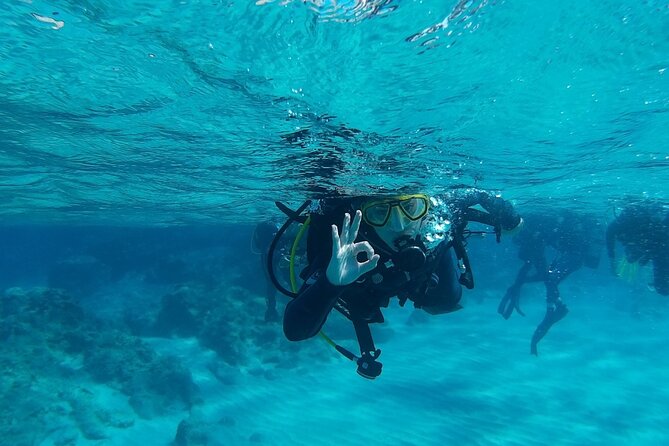
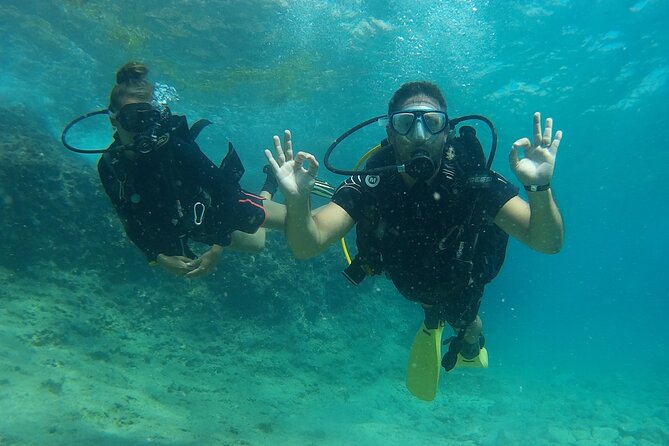
The best part of this Chania experience is that you get a real taste of scuba without committing to a full certification course. After about 30 minutes of basic instruction, you enter the sea from shore and spend up to 45 minutes underwater, reaching a maximum depth of roughly 8 meters. One instructor for every two people makes this a reassuring choice for first-timers.
I like the calm, beginner-friendly setup and the chance to see local sea life such as barracuda, lionfish, eels, and sea urchins. I also like that equipment, hotel transport, insurance, and underwater photos are included. The main consideration is timing: you cannot take part within 12 hours of a flight, and some health conditions may rule out the activity.
Key points at a glance
- A genuine first scuba session: Learn basic equipment use and underwater skills before making a supervised shore entry.
- A small instructor ratio: One PADI instructor works with two participants, allowing close attention and patient support.
- A modest maximum depth: You descend to around 8 meters, a manageable level for people who are curious but nervous.
- Sea life and underwater media: You might see barracuda, lionfish, eels, fish, and sea urchins, with photos and short videos sent free by email.
- Transport within the Chania region: Hotel pickup and return are included where possible, with a central Chania meeting point available if needed.
- Flexible session times: Choose a morning or afternoon departure, but leave a 12-hour gap before flying.
A gentle introduction to scuba near Chania
This is not a sightseeing cruise with a quick swim thrown in. It is an introductory scuba program designed to answer one basic question: Do you enjoy breathing underwater?
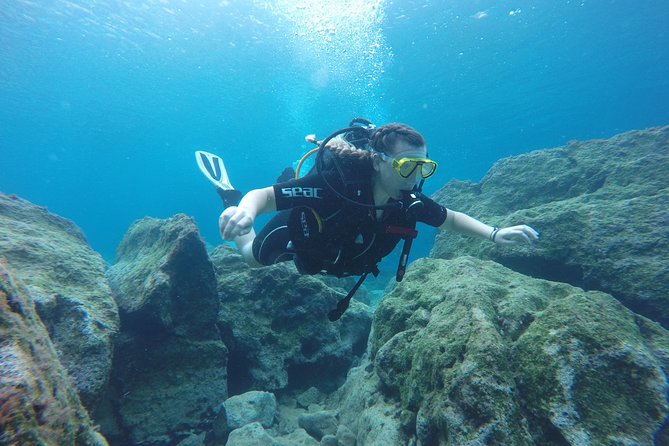
Your session lasts about three hours. The first part covers the equipment and essential skills. Then you make a shore entry with your instructor and spend up to 45 minutes below the surface, at a maximum depth of about 8 meters. You remain under direct supervision throughout.
That format matters. A full certification course takes several days and includes more classroom work, skills practice, and formal tests. This experience gives you the first taste without asking you to make that larger commitment. It is a useful choice if you are curious, slightly nervous, or traveling with someone who already wants to try scuba.
The underwater setting is also approachable. Because the session begins from shore and stays relatively shallow, you avoid the extra step of boarding a boat and dropping into open water. That will not suit someone seeking a long reef excursion or a remote offshore site, but it is a sensible arrangement for a first attempt.
More Scuba Diving for Beginners in Greece
- Santorini: Scuba Diving Experience in Caldera for Beginners
★ 4.9 · 597 reviews - Heraklion: Scuba Diving Experience for Beginners _Beach
★ 4.7 · 549 reviews - Heraklion: Beginner Scuba Diving Lesson with PADI Instructor
★ 4.9 · 355 reviews
The 30-minute lesson: equipment before excitement
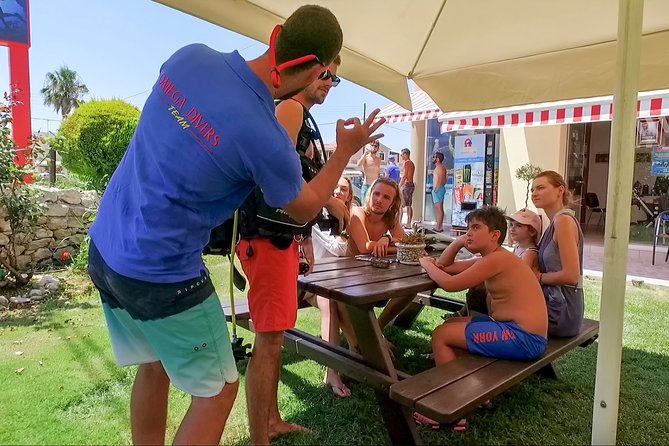
Expect a short theory lesson of about 30 minutes before entering the sea. You learn what the main pieces of equipment do and practice the basic skills needed for a safe session.
The center provides the full kit: mask, valve snorkel, fins, wetsuit or shorty, regulator, buoyancy control device, tank, weights, and weight belt. That is convenient for visitors who do not own any equipment, and it also means you do not need to spend time comparing rental options in Chania.
The instructor’s job here is not just to explain buttons and straps. You need to know how to breathe through the regulator, manage your buoyancy, and respond calmly underwater. The program is designed around that first sense of comfort.
Several participants have praised the patient approach, especially when someone felt frightened at the start. That is important. Nervousness is normal when you first put your face underwater with a tank on your back. The small ratio of one instructor to two participants gives the professional room to slow down, repeat instructions, and keep a close eye on both people.
You should still pay attention during this part. The lesson is short because the program is introductory, not because the safety details are unimportant.
From the shore to 8 meters below
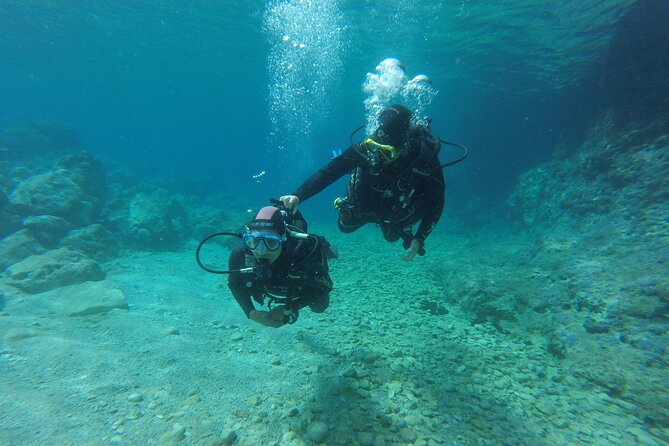
After the lesson and equipment fitting, you make the transition into the water. The exact underwater route can depend on conditions, but the basic structure is clear: shore-based entry, direct instructor supervision, and a maximum depth of around 8 meters.
For many first-timers, this is the moment when the experience either clicks or feels like too much. The shallow profile helps. You are not being taken to a dramatic depth, and the instructors can stay close as you adjust to the sensation of breathing underwater.
The underwater portion can last up to 45 minutes. Some accounts describe around 30 minutes at the full depth, so your actual time below the surface may vary with comfort, conditions, and air use. That is normal for an introductory session. The goal is not to remain underwater for a certain number of minutes at all costs. The goal is to learn how your body and equipment feel in the sea.
You may see fish, barracuda, lionfish, eels, and sea urchins. One particularly appealing part of the experience is the chance to notice small sea life rather than simply swim past it. An instructor can point out animals you might miss on your own, including creatures tucked into rocks or moving along the seabed.
Do not expect a large aquarium-style spectacle every time. Marine life and visibility change with weather and sea conditions. The attraction is the experience of being weightless in the water and learning to observe the seabed at close range.
What makes the instructor setup valuable
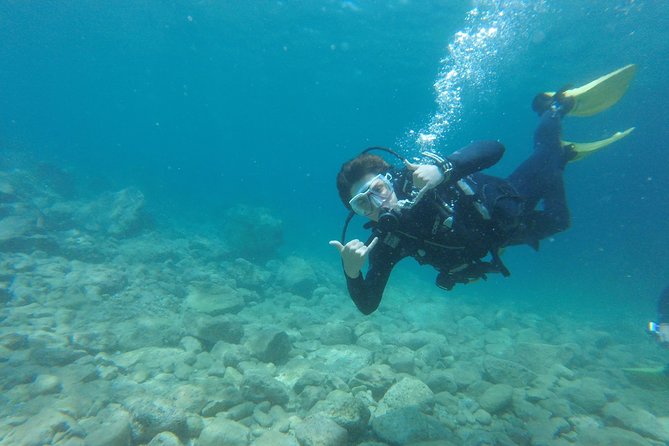
The stated ratio is one instructor for every two participants, with a maximum group size of eight people. Those numbers are more useful than a vague promise of personal attention.
If you are calm and pick up the skills quickly, your instructor can help you refine buoyancy and point out marine life. If you are tense, the instructor can stay close and provide more frequent reassurance. That flexibility is especially useful for couples or friends who have different comfort levels.
Names associated with the instruction include Jérôme, Rodrigo, and Lison. The available feedback gives particular credit to Jérôme and Rodrigo for helping a family, while Lison is praised for professionalism and kindness. Staff can also be multilingual, which may help if English is not your first language, though English is the stated language offered for the experience.
You should not confuse a friendly atmosphere with a lack of structure. The program includes liability insurance and professional PADI instruction, but you still need to complete the health questionnaire and follow the safety directions carefully.
Another way to get in the water in Greece:
- (Full day)Scuba Diving in Rhodes
★ 5.0 · 466 reviews - Rhodes: Diving Adventure for Beginners and Experts
★ 4.6 · 237 reviews - Try a DIVE, discover scuba diving in Mykonos
★ 5.0 · 216 reviews - Heraklion: Scuba Diving Experience for First-Timers
★ 4.8 · 203 reviews
Underwater photos and short videos
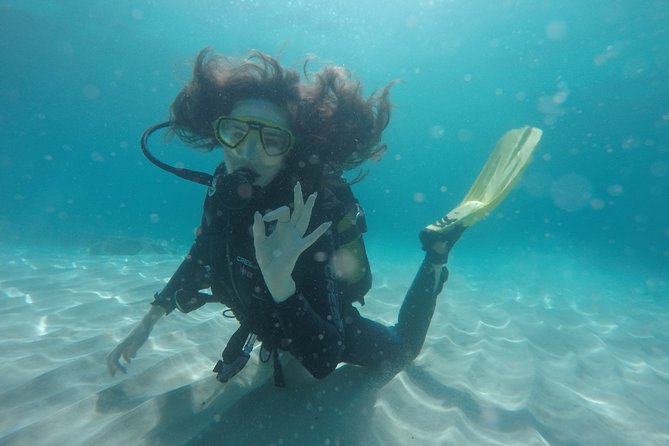
The team uses an underwater camera during the session and sends photos and short videos to your email free of charge after the activity. This is a useful extra because it lets you remember the experience without carrying a camera or worrying about a waterproof phone case.
The images also give first-timers something tangible from a short session. You may not have many chances to photograph yourself underwater, especially if this is your first time handling scuba equipment.
Delivery is described as being right after the session, with one account noting that the photos arrived in less than 24 hours. Keep your email details accurate when booking or checking in.
The media should be treated as a pleasant bonus, not the main reason to book. Underwater photography depends on visibility, light, movement, and where the group goes. The real value is the time spent learning and observing the sea.
Is the $145 price fair?
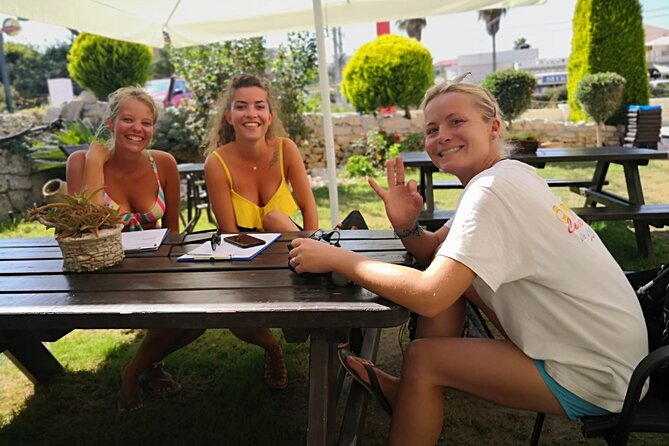
At about $145.12 per person, this is not the cheapest way to spend three hours in Crete. It is also more than a simple snorkeling outing. The price includes full equipment, a professional PADI instructor, the theory lesson, the underwater session, hotel pickup and return within the Chania region, liability insurance, and photos and short videos.
Those inclusions make the price easier to justify. You are not paying only for access to the water. You are paying for instruction, equipment, supervision, transport, and an organized introduction to a sport that requires proper safety practice.
The value is strongest if you are genuinely curious about scuba. A beginner who wants to decide about a future PADI Open Water course gets a useful first impression. The value is weaker if you only want a relaxed swim or a long day at the beach. In that case, a basic snorkel outing may be a better match.
The experience is also well suited to couples and small groups. One person can be experienced while the other is brand new, and the instructor can help both at a manageable pace.
Pickup, meeting points, and timing
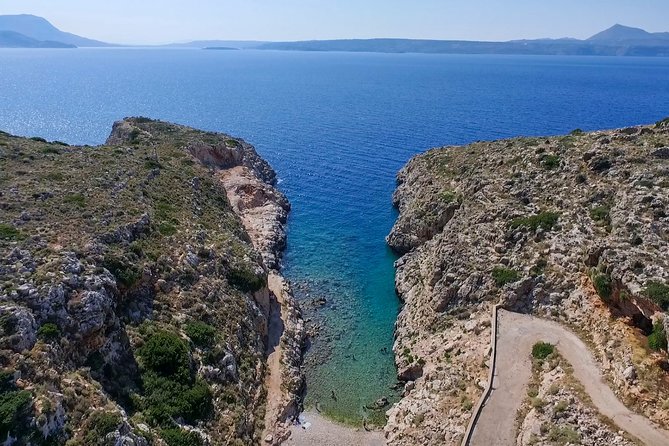
Hotel pickup and return are offered within the Chania region. If pickup at your accommodation is not possible, you receive the next available pickup point. In Chania city center, the stated meeting point is outside Alpha Bank at Chalidon 106.
The activity begins at Almyrida, postal code 730 08, and ends back at the meeting point. Confirm the exact transport arrangement when you book, particularly if you are staying outside the central Chania area.
You can choose a morning or afternoon session. The choice is useful for fitting scuba around sightseeing, but do not schedule it too close to a flight. The operator does not allow scuba within 12 hours of flying. If you plan to leave Crete by air, place this activity early enough in your itinerary to keep that safety gap.
Food and drinks are not included. For a three-hour activity, that is easy to manage, but you should plan your own meal or snack around the pickup time.
Health, weather, and who should book
Every participant completes a health questionnaire before entering the water. Conditions such as asthma and heart problems may prevent participation, so speak with a doctor if you are unsure about your fitness for scuba.
Children must be accompanied by an adult. The available information does not give a minimum age, so families should confirm age requirements before booking rather than assume that every child can take part.
The activity requires suitable weather. If poor conditions force a cancellation, you are offered another date or a full refund. That policy is practical for a sea-based activity, where wind and water conditions affect both comfort and safety.
This program suits you best if you:
- Have never tried scuba and want a low-commitment introduction
- Feel curious but slightly anxious about breathing underwater
- Prefer a shore entry to a boat-based outing
- Want direct help from a professional instructor
- Are staying in or near Chania and value included transport
- Would like underwater photos without bringing your own camera
It is less suitable if you want formal certification, a long offshore excursion, or a deep-water experience. It is also a poor fit if your schedule leaves less than 12 hours before a flight.
How the experience compares with a certification course
A beginner session like this is a first step, not a license. You learn basic equipment use and take part in one supervised underwater session, but you do not complete the academic and practical requirements for a PADI certification.
That distinction is worth keeping clear. If you enjoy the session, you may decide to continue with an Open Water course. Several people have described leaving with that exact interest. If you find the equipment uncomfortable or the underwater setting stressful, you have learned that without paying for a full training program.
The short format also keeps the day manageable. You are not committing several days of your holiday to lessons. On the other hand, the limited time means you should not expect advanced skills or extensive exploration.
Cancellation and practical booking advice
You can cancel up to 24 hours before the start time for a full refund. Changes made less than 24 hours before the activity are not accepted, and late cancellations are not refunded. Cut-off times follow local time in Crete.
I would book once you know your travel plans, but I would avoid placing the session on the last possible day before a flight. Give yourself room for a weather change, especially if this is one of the main activities you want to do in Chania.
The activity is usually booked about 13 days ahead, so popular morning or afternoon slots may not remain open at the last minute. Confirmation is provided at booking, and the experience is available by mobile ticket.
Should you book this Chania scuba experience?
I would recommend it if you want to try scuba in a controlled, beginner-focused setting rather than jump straight into a full course. The shallow shore entry, close instructor ratio, full equipment, transport, and free underwater media create a strong package for the price.
The most important reason to choose it is the teaching style. Beginners who feel frightened need patience more than spectacle, and this setup allows the instructor to stay close. The chance to spot barracuda, lionfish, eels, and sea urchins adds interest without making the session feel like a race.
Skip it if you only want a casual swim, have a tight flight schedule, or need a certified course. For everyone else, this is a practical way to find out if scuba belongs in your future holiday plans.
FAQ
How long does the Chania scuba experience last?
The full activity lasts about three hours. This includes a theory lesson of about 30 minutes and an underwater session of up to 45 minutes.
How deep will I go?
The maximum depth is around 8 meters. The exact time and depth can vary according to comfort, conditions, and air use.
Is the experience suitable for complete beginners?
Yes. It is the PADI Discover Scuba Diving program, designed for people who want to learn what it feels like to breathe underwater without taking a full certification course.
Is hotel pickup included?
Pickup and return are included for hotels within the Chania region. If pickup at your hotel is not possible, you are given the next available pickup point. The Chania city center meeting point is outside Alpha Bank at Chalidon 106.
What equipment is provided?
The program provides a mask, valve snorkel, fins, wetsuit or shorty, regulator, buoyancy control device, tank, weights, and weight belt.
Can I take part if I am flying later that day?
No. Scuba is not allowed within 12 hours of flying. Plan the activity with that gap in mind.
What happens if the weather is poor?
The activity may be canceled in unsuitable weather. You are then offered a different date or a full refund.
Newest dives added in Greece
- Athens: Private Discover Scuba Diving for Beginners★ 4.9 · 25 reviews
- Plakias: Try Scuba Diving first time – Private, from 8 yrs.★ 5.0 · 21 reviews
- Private Scuba Diving Experience in Mandraki★ 5.0 · 21 reviews
- Chania:Try Scuba Diving 2shore dives(Receive Certification)★ 4.8 · 24 reviews
- Padi Discover Scuba Diving★ 5.0 · 30 reviews
- Try Scuba in Crete – Free Certification & Photos (Beginners)★ 5.0 · 51 reviews
- Oia: 2 Guided Scuba Dives off Santorini for Certified Divers★ 4.8 · 33 reviews
- Adventure Dives for Certified Divers in Nea Makri, Athens★ 5.0 · 22 reviews
Scuba Diving for Beginners, compared.
First-Time Scuba Diving in Honolulu + Free Videos
Read our review →
Beginner Scuba Diving with Turtles and Videos, San Juan
Read our review →
Intro Diving 2 Stops For Beginners with Pick-up and Lunch – Hurghada
Read our review →
Intro Diving Beginner and Discover Red Sea Underwater
Read our review →
Beginner’s Dive at a Spot with Turtle Sightings
Read our review →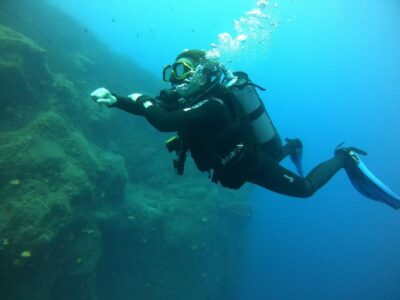
Scuba Diving Experience in Caldera for Beginners
Read our review →Browse the lists this dive appears in