
Reviewed · PADI COURSES & CERTIFICATION
PADI Rescue Diver Course in Gran Canaria
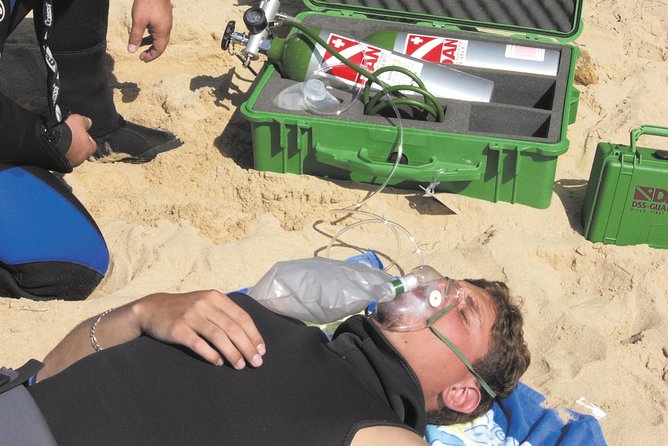
Learning how to help another person underwater is the most useful reason to take this two-day PADI Rescue Diver Course in Gran Canaria. You’ll work through self-rescue skills, assistance for unresponsive divers, and emergency procedures in the water and on the surface, then test those skills in two planned rescue scenarios at Amadores Beach.
I like the small maximum group of six, which should give you more direct time with your instructor. I also like that the $397.58 price includes PADI materials, certification fees, insurance, and selected hotel pickup. That makes the cost easier to judge than a course with several extra charges.
The main consideration is physical and medical readiness. You need Open Water certification, moderate fitness, and a completed health questionnaire. Certain conditions, including asthma and heart problems, may prevent you from taking part, so speak with your doctor before booking if you have any concerns.
Key points to know before booking
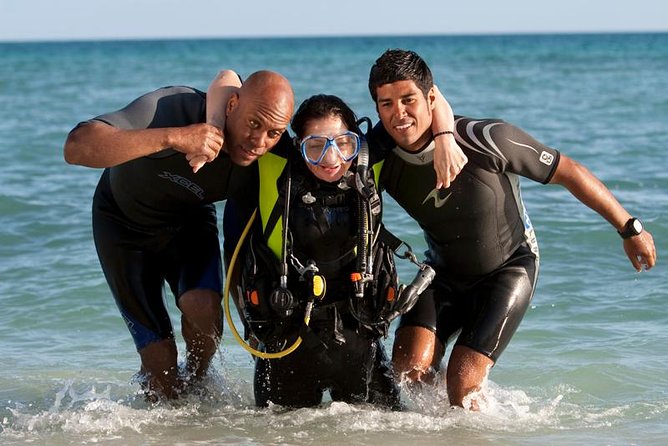
- Two training days: Day one covers rescue skills in Amadores Bay or the onsite pool, while day two focuses on two scenarios at Amadores Beach.
- Open Water certification required: You must show proof of your existing certification.
- Small group size: The course accepts a maximum of six participants.
- PADI costs included: Required learning materials, certification fees, insurance, and a professional guide are included.
- Chris and Kate are part of the team: Chris has taught the Rescue course, while Kate is associated with customer arrangements and course support.
- Plan around your flight: Flying within 48 hours after underwater training is not recommended.
Why rescue training matters after Open Water
The Open Water course teaches you to manage yourself underwater. The Rescue course adds the next layer: how to notice trouble, respond in a controlled way, and assist another person without creating a second emergency.
That change in focus matters. Many people finish their first certification feeling comfortable with basic equipment and normal conditions, but helping an unresponsive person requires a different kind of calm. This course gives you structured practice before you face a real problem.
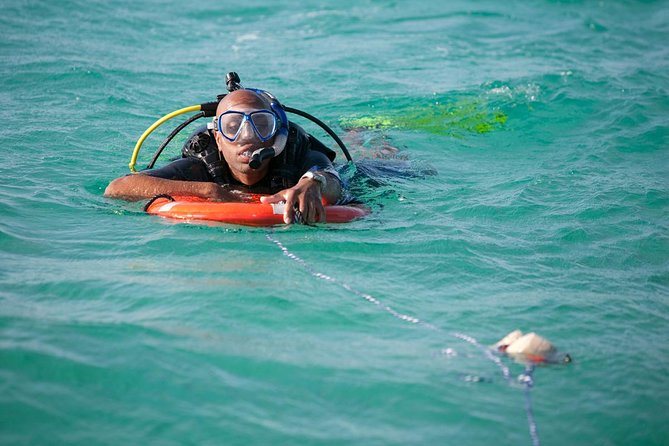
You’ll work on self-rescue first, then learn how to deal with an unresponsive or unconscious diver both underwater and at the surface. The aim is not simply to memorize a procedure. You’ll rehearse how to react when the situation is less tidy than a normal training session.
This is also a confidence course. You are not expected to arrive as an expert. You are expected to hold an Open Water certificate, meet the health requirements, and have enough fitness for practical water work. The instruction is designed to move you from basic awareness to practical response.
More PADI Courses in Spain
- Gran Canaria:Live an Adventure and Learn to Dive with Expert
★ 4.7 · 109 reviews - PADI Open Water Course in Gran Canaria
★ 5.0 · 79 reviews - 2 Dive Package for PADI Qualified Divers in Gran Canaria
★ 5.0 · 64 reviews
Day one: skills at Amadores Bay or the onsite pool
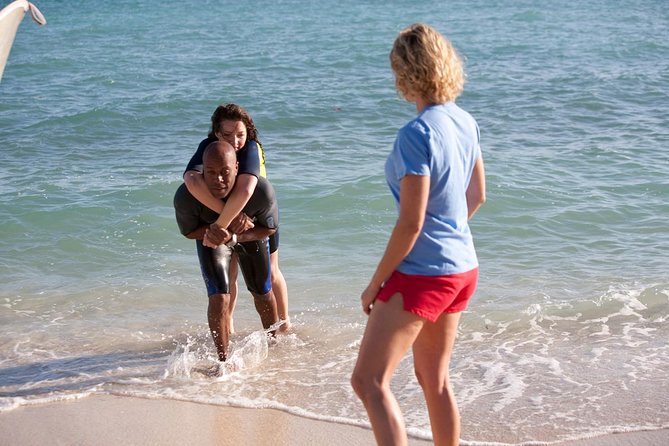
The first day begins with theory and practical instruction. The water work takes place either in the local bay at Amadores or in the onsite pool, depending on the arrangements for the session.
The pool option has a clear benefit. It gives you a controlled setting for learning the movements and procedures. If you are nervous about handling a difficult rescue task, a pool can make the first attempts feel less demanding. You can concentrate on the instruction rather than on changing sea conditions.
Training in Amadores Bay offers a more open-water setting. That can make the practice feel closer to the conditions you will encounter on ordinary scuba outings. The exact location is not something to assume in advance, so confirm the plan with Blue Water Diving before your course begins.
The first day covers self-rescue techniques and assistance for people who are unresponsive or unconscious. You will work on situations both underwater and on the surface. The course description does not list every individual exercise, so you should think of this day as a guided skills session rather than a sightseeing outing.
Expect the day to require attention and effort. Rescue training involves more than listening to an instructor. You need to understand the procedure, perform it in the water, and accept corrections. The small group limit helps here because you should have a better chance to ask questions and repeat a skill when needed.
Day two: two rescue scenarios at Amadores Beach
On the second day, the group heads to Amadores Beach for two rescue scenarios. This is where the separate skills from day one are brought together.
A scenario is useful because emergencies rarely arrive as a neat list of steps. You may need to assess what is happening, decide how to help, and manage your own safety at the same time. Practicing in a planned setting lets you make mistakes safely and learn from them.
Amadores Beach also gives the course an outdoor setting on Gran Canaria’s west coast. The beach location makes the final day feel more like a practical field session than a classroom exercise. Still, this is not a relaxed beach activity. You should expect to stay focused on the rescue tasks rather than spend the day swimming for pleasure.
The course teaches you to deal with unresponsive people both underwater and at the surface, but the supplied details do not specify exactly how each of the two scenarios is arranged. Ask the instructor what to expect when you arrive. That small conversation can help you understand the assessment standards and reduce unnecessary nerves.
The instructors and teaching style
Blue Water Diving’s team includes Chris and Kate. Chris is specifically associated with Rescue Diver instruction, and the course feedback describes his teaching as clear, professional, friendly, and supportive. Kate is associated with arranging course details and customer communication.
That combination matters on a certification course. Good instruction is not only about technical accuracy. You also need clear scheduling, sensible answers to questions, and a team that takes safety seriously. The center has received repeated praise for its professional approach, friendly atmosphere, and clear communication.
I would still ask who will teach your specific course before booking. The provided information does not guarantee a particular instructor for every date. If you have already trained with Chris or want to request him, mention that when arranging the course, but treat it as a request rather than a promise.
The maximum of six participants is one of the strongest practical features. Rescue skills are hands-on, and a very large class can leave you waiting while other people practice. A six-person limit should give the instructor a reasonable chance to watch each person and correct problems.
More PADI Courses in Gran Canaria
- Open Water Diver Scuba Diving Course in Puerto de Mogan
★ 5.0 · 27 reviews - PADI Advanced Diving Course in Gran Canaria
★ 5.0 · 25 reviews - 2 Day PADI Scuba Diver Course in Puerto Rico, Gran Canaria
★ 5.0 · 7 reviews - Las Palmas: 2-Day Padi Scuba Diving Course
★ 5.0 · 4 reviews
What the $397.58 price really covers
At $397.58 per person, this is not a low-cost beach activity. It is a professional certification course spread over two days. The value depends on whether you want the qualification and the safety training, not on how many hours you spend looking at the coast.
The price includes:
- A professional guide
- Required PADI materials
- Certification fees
- Insurance
- Hotel pickup and drop-off from selected hotels
Those inclusions make the price more attractive. Learning materials and certification fees can otherwise appear as extra charges after you have already paid for the course. Insurance is also included, which is important for a practical water-based activity.
Food and drinks are not included. Plan for those costs yourself, although the exact meal arrangements are not provided. It is sensible to ask Blue Water Diving what breaks are planned and what you should bring for the day.
The hotel transfer is useful, but do not assume every hotel qualifies. Pickup and drop-off are available from selected hotels only. The published meeting point is Euronet ATM Manixa, C. Doreste y Molina, 18, 35130 Puerto Rico, Las Palmas, Spain. The activity ends back at that meeting point.
Timing, transport, and group logistics
The listed start time is 9:00 am. Since the course runs for about two days, protect both mornings and avoid scheduling another major activity directly afterward. Rescue training requires concentration, and rushing from one appointment to another would make the days harder than they need to be.
You may be able to use the hotel transfer, depending on where you are staying. The meeting point is also near public transportation, giving you another option if your hotel is not included in the pickup area.
The mobile ticket is convenient for your holiday planning. Keep the booking details available on your phone, and confirm the meeting instructions before the first morning. A quick check can settle the pickup question and tell you if the first session will use Amadores Bay or the pool.
The group limit is six. That is small enough to support personal instruction but large enough that you may not have the instructor to yourself. If you prefer one-to-one coaching, ask about private arrangements, though no private option is specified here.
Medical rules and the 48-hour flight warning
You must complete a health questionnaire before taking part. Some medical conditions may prevent you from participating, including asthma and heart conditions. If you have a relevant condition, consult your doctor before booking rather than waiting until the morning of the course.
You also need a moderate level of physical fitness. Rescue work can be more demanding than a standard recreational session because you are learning to assist another person as well as manage yourself.
Pay close attention to the flight rule. Flying within 48 hours after underwater training is not recommended. If you are finishing your holiday with this course, leave enough time before your flight. This is one of the most important planning details, and it may affect where you place the course in your itinerary.
You must provide evidence of your Open Water certification. Bring proof with you, and check what form Blue Water Diving accepts if your certificate is digital or stored in an online account.
What the strongest course feedback tells me
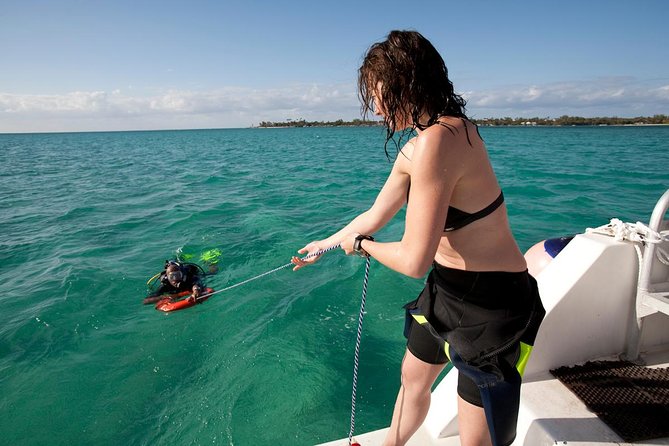
The most consistent praise centers on professional instruction and personal support. Chris is singled out for explaining the required material in a friendly, professional way. The wider team is praised for being easy to communicate with and for handling arrangements clearly.
The center also receives positive attention from people who return for additional qualifications. That suggests Blue Water Diving is set up to support more than a single introductory session. It may suit you if you are building a longer path in scuba training rather than simply trying one activity on holiday.
Another strong point is the sense of continuity. Some people have trained with the team in other parts of Spain and returned to the Gran Canaria center for further courses. You should not treat that as a guarantee of your own experience, but it does point to a training operation with an established relationship with repeat customers.
The tone is friendly without losing the safety focus. That balance is exactly what I want in rescue instruction. You need an instructor who will correct you clearly, but you also need to feel comfortable asking questions when a procedure is not clear.
Who should take this course?
This course is best for you if you already hold a PADI Open Water certification and want to become more capable in an emergency. It is also a good fit if you plan to continue toward further scuba qualifications or simply want stronger skills before joining more demanding sessions.
The course may suit you especially well if you value:
- A small group rather than a large training class
- Practical sessions in both controlled and beach settings
- A qualification with materials and fees included
- Hotel transport from an eligible location
- Friendly instruction from an established local team
It is not the right choice if you want a casual two-day activity with little physical effort. Rescue training asks you to learn procedures, practice them, and complete scenarios. You also need to plan around the medical rules and the 48-hour flight recommendation.
It may also be a poor fit if you have not yet completed Open Water certification. This is not an introductory course, and proof of certification is required.
Booking, cancellation, and useful planning tips
You receive confirmation at the time of booking. The course offers free cancellation if you cancel at least 24 hours before the local start time. Cancellations or changes made within 24 hours are not accepted for a refund.
Before booking, I would confirm four things:
- Whether your hotel is included in the pickup area
- Which instructor is scheduled
- Whether day one will use the pool or Amadores Bay
- How the 9:00 am meeting arrangements will work
I would also place the course early enough in your holiday to respect the 48-hour flight warning. Bring proof of certification, answer the health questionnaire carefully, and allow time for food and drinks since they are not included.
Should you book the Gran Canaria Rescue Diver Course?
Book it if you want serious, practical training rather than a sightseeing session. The $397.58 price is reasonable for a two-day PADI course when materials, certification fees, insurance, and selected hotel transfers are included. The small group limit and strong emphasis on clear instruction add further value.
I would be cautious only if your schedule leaves no room before your flight, your hotel is outside the transfer area, or you have a medical condition that needs professional clearance. For an Open Water-certified diver who wants better emergency skills and a recognized qualification, this course gives you a focused way to train on Gran Canaria’s west coast.
FAQ
Who can take the PADI Rescue Diver Course?
You must already hold a PADI Open Water certification and provide evidence of your certification. You also need to meet the health requirements and have a moderate level of physical fitness.
How long does the course last?
The course lasts approximately two days. The listed start time is 9:00 am.
Where does the training take place?
Day one takes place either in the local bay at Amadores or in the onsite pool. Day two takes place at Amadores Beach, where you complete two rescue scenarios.
What is included in the price?
The price includes a professional guide, required PADI materials, certification fees, insurance, and hotel pickup and drop-off from selected hotels.
Are food and drinks included?
No. Food and drinks are not included in the course price.
Can I fly soon after the course?
Flying within 48 hours of underwater training is not recommended. Plan your course with this time restriction in mind.
Newest dives added in Gran Canaria
- PADI Advanced Diving Course in Gran Canaria★ 5.0 · 25 reviews
- 6 Diving Sites Scuba Diving Package in Gran Canaria★ 5.0 · 6 reviews
- Open Water Diver Scuba Diving Course in Puerto de Mogan★ 5.0 · 27 reviews
- PADI Open Water Course in Gran Canaria★ 5.0 · 79 reviews
- Discover Scuba Diving in Puerto de Mogan★ 4.5 · 87 reviews
- Discover Scuba diving in Gran Canaria with Hotel Pick-up★ 5.0 · 69 reviews
- Scuba Diving Experience at Arguineguin and Puerto Rico★ 5.0 · 9 reviews
- 2 Dive Package for Qualified Divers in Gran Canaria★ 5.0 · 81 reviews
PADI Courses & Certification, compared.
Tossa de Mar: PADI Discovery Scuba Diving in Costa Brava
Read our review →
Full-Day Beginner Scuba Course with Private Tuition, Racha Yai
Read our review →
Heraklion: Beginner Scuba Diving Lesson with PADI Instructor
Read our review →
Discover Scuba Diving with No Certification in St Thomas
Read our review →
Try Dive – PADI Discover Scuba Diving in Tenerife
Read our review →
Browse the lists this dive appears in