Reviewed · CENOTE & CAVERN DIVES
Cenote Diving – 2 Tank Dive Trip for Certified Divers
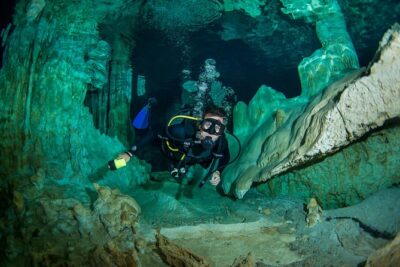
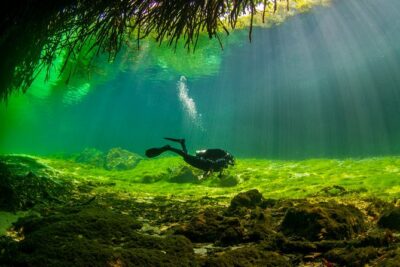
The most striking part of this trip is the setting: you leave Playa del Carmen for a cenote, then follow a permanent line through clear, freshwater caverns where sunlight and rock create an entirely different underwater world. Your guide is a Full Cave Diver and Open Water Scuba Instructor, so the briefing covers more than basic hand signals and entry procedures.
I like the small maximum group of eight, which should make the pace easier to manage, and I like that the day includes tanks, weights, a light, transportation, drinks, snacks, and a sandwich. The main catch is cost planning: the cenote entrance fee and full scuba kit rental are separate, and some privately owned cenotes charge extra to use a camera.
Key points to know before booking
- Two 45-minute cavern sessions: You follow permanent lines at a maximum depth of 50 feet, or 15 meters.
- Chac Mool or Dos Ojos: The selected cenote depends on the day, with entrance fees of 300 MXN or 600 MXN.
- Certification is required: You need at least Open Water certification from a recognized agency and recent scuba experience.
- A useful surface break: Expect about 45 minutes between sessions, with water, soft drinks, snacks, and a sandwich.
- Practical equipment support: Tanks, weights, and a dive light are included, while a full kit costs an additional 25 USD.
- Camera rules vary: Some cenotes prohibit cameras, while others charge roughly 20 to 60 USD depending on the equipment.
Why cenote scuba is different from a normal reef outing
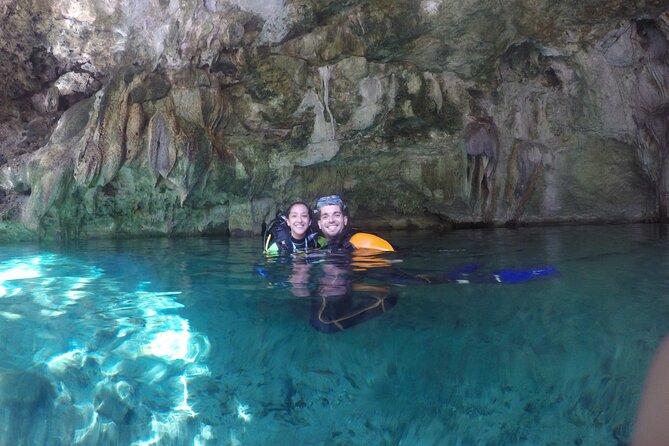
A cenote is a freshwater sinkhole connected to an underground system. In this experience, you are not heading into a fully enclosed cave expedition. You remain on a marked cavern route, following permanent lines and staying within the stated maximum depth of 50 feet.
That distinction matters. You need scuba certification and recent experience, but this is not presented as a technical cave course. The guide handles the route and explains the environment before you enter, allowing you to focus on buoyancy, the line, and the unusual rock formations around you.
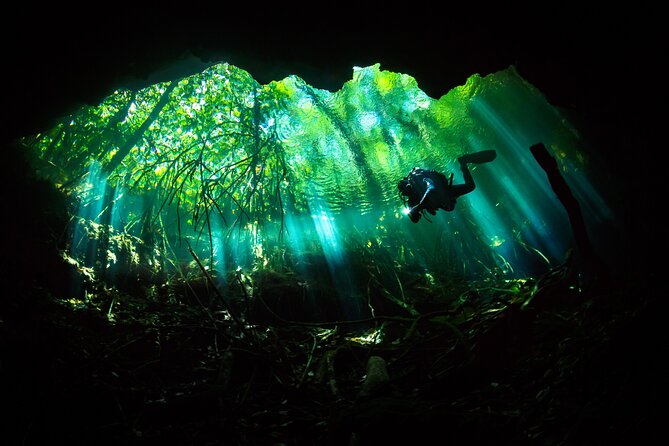
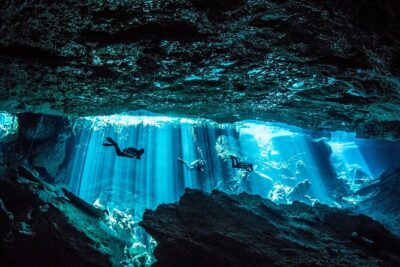
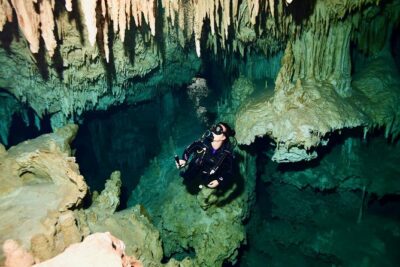
The visual appeal is also different from a typical Caribbean reef trip. Instead of open water and broad sea views, you can expect narrow passages, freshwater, changing light, and the feeling of moving through a natural underground room. The supplied description compares the experience to another world, and that is a fair way to understand its appeal without pretending it is a standard reef outing.
I would choose this trip for atmosphere rather than wildlife. The main attraction is the cavern setting itself. If your priority is colorful coral and abundant marine life, a coastal boat trip may suit you better. If you want a strong change of scene from Playa del Carmen’s beaches, the cenotes offer something far more unusual.
More Cenote Dives in Playa del Carmen
- Scuba Diving in Cenote Dos Ojos from Playa del Carmen
★ 5.0 · 453 reviews - Scuba Diving in Cenote Kukulkan from Playa del Carmen
★ 5.0 · 370 reviews - Scuba Diving in Cenotes
★ 5.0 · 37 reviews
The 8:00 a.m. meeting in Playa del Carmen
Your day begins at Scuba Mobile Dive Center on Calle 4 Norte in central Playa del Carmen. The scheduled start is 8:00 a.m., so give yourself enough time to arrive ready for paperwork and equipment fitting.
At the center, you complete the required forms and sort out the scuba gear you need. Tanks and weights are included. A full rental set costs 25 USD and includes a BCD, regulator, dive computer, wetsuit, mask, and fins.
That fee is reasonable if you are traveling without equipment, but read the inclusions carefully. It is not part of the advertised base cost, and neither is the cenote admission. If you own some gear but not all of it, ask ahead what you need to bring and what you need to rent. The supplied information confirms the full-set price, but it does not give separate rates for individual pieces.
The center is near public transportation, which helps if you are staying elsewhere in Playa del Carmen. Round-trip transport from the center to the cenote is included, so you do not need to arrange a separate taxi or rental car for the site visit.
The 45-minute ride to the cenote
After fitting and paperwork, you board the truck for roughly 45 minutes. The specific cenote is selected for the day, with Chac Mool and Dos Ojos given as examples.
This variable is worth understanding before you book. You are choosing a guided cenote experience, not guaranteeing one named site. Chac Mool costs 300 MXN for entry, while Dos Ojos costs 600 MXN. Both fees are paid separately and in cash, so bring Mexican pesos rather than relying on a card.
The price difference is substantial. At the listed rates, Dos Ojos costs twice as much as Chac Mool, and the choice of site can affect your total budget. The trip price covers the guided sessions and transport, but you should add the admission fee, equipment rental if needed, and any camera charge.
The truck ride also gives the morning a clear rhythm. You are not spending the whole day at the cenote. The plan is a half-day outing with an early start, two underwater sessions, a surface interval, and a return to Playa del Carmen at about 3:30 p.m.
The briefing with a cave-trained instructor
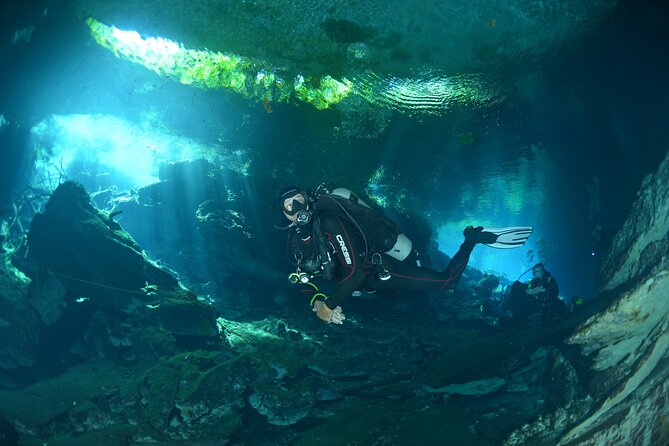
Once you arrive, the guide gives a detailed briefing about the cenote environment and the procedures for the session. The guide is described as both a Full Cave Diver and an Open Water Scuba Instructor, a useful combination for this setting.
Pay close attention here. Cavern routes can feel very different from open water, even when the depth is modest. The permanent line is the key reference point, and your guide explains how the route works before you enter.
Your recent scuba experience matters as well. You must show proof of at least Open Water certification from a recognized agency and must have been underwater within the past 12 months. The tour also calls for a moderate level of physical fitness.
That rule is not simply paperwork. Cenote outings involve transport, gear handling, getting in and out of the water, and managing equipment in a setting that may feel more confined than a normal shore or boat session. If your last scuba trip was more than a year ago, this is not the right outing to treat casually.
More Dives for Certified Divers in Mexico
- Cozumel Dive Package – Certified Divers from the Riviera Maya (4 dives)
★ 4.5 · 51 reviews - 2-Tank Morning or Afternoon Dives in Playa del Carmen certified Divers Only
★ 4.5 · 33 reviews - Cenotes 2-Tank Dive in Playa del Carmen/for certified divers only
★ 4.0 · 13 reviews - 1 day of diving in Cenotes price for 2 certified divers
★ 5.0 · 7 reviews
Two 45-minute underwater sessions
Each session lasts about 45 minutes, with a maximum depth of 50 feet, or 15 meters. You follow permanent lines through the cavern rather than navigating independently.
The two-session format gives you enough time to appreciate the site without turning the day into an exhausting marathon. The first session lets you get used to the freshwater environment, the line, and the changing cavern light. After the break, the second session gives you another chance to settle into the surroundings.
The maximum depth is moderate for a certified Open Water scuba participant, but depth is only one part of the experience. You should be comfortable managing your buoyancy and equipment, listening to the guide, and staying with the planned route.
The permanent lines provide structure and help keep the group together. That makes the experience more approachable than an unsupported exploration, but you still need to follow instructions carefully. This is not an activity where you wander off to take photographs or inspect every side passage.
The group limit of eight is another practical advantage. A smaller party means fewer people to track and should give the guide more room to manage the pace. It also makes the briefing and entry process less crowded than a large-group outing.
What makes Chac Mool and Dos Ojos appealing
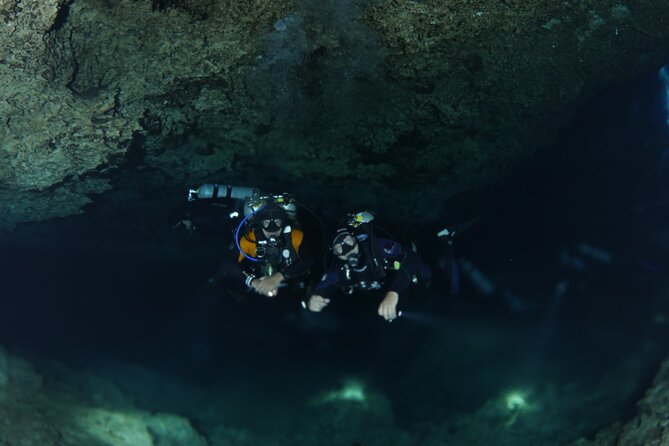
Chac Mool and Dos Ojos are named as possible sites, but the final choice depends on the day. Since you are not promised one specific cenote, think of them as examples of the type of environment you will visit.
Chac Mool has the lower listed entrance fee at 300 MXN. That makes it the easier option on your budget if it is selected. Dos Ojos costs 600 MXN, so you should be prepared for the higher admission charge if that is the chosen location.
The information provided does not specify which site has the longest route, the clearest light effects, or the best camera policy on a particular day. I would not book this trip expecting a guaranteed visual feature. Book it for the chance to experience a guided cenote cavern, then treat the specific site as part of the day’s conditions.
Both locations fit the basic plan: two sessions, permanent lines, a 50-foot maximum, and a guide-led approach. The difference for you may come down to the atmosphere on the day, the entry price, and whether photography is permitted.
The 45-minute surface break
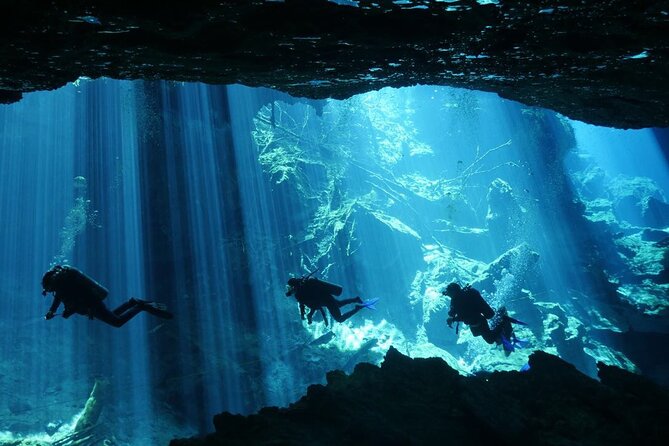
After the first session, you spend around 45 minutes out of the water. Water and soft drinks are included, along with snacks and a sandwich.
This break is short enough to keep the day moving but long enough to rest, eat, and prepare for the second session. It also adds real value because you do not need to pack a full lunch or search for food at the cenote.
Keep your expectations practical. The included food is described as a snack and sandwich, not a full restaurant meal. If you have special dietary needs, the supplied details do not confirm options, so ask the operator before booking.
The surface interval is also a good moment to reassess how you feel. If you are tired, cold, or uncomfortable after the first session, tell the guide before entering again. The schedule includes the second session, but your safety and comfort should guide your decisions.
Equipment, lights, and camera restrictions
A dive light is included, which is important in a cavern environment. You do not have to arrange a separate light rental, and that removes one small but useful complication from the morning.
Tanks and weights are included too. The full kit is optional at an extra 25 USD, covering the BCD, regulator, computer, wetsuit, mask, and fins. If you are bringing personal equipment, check what you still need before arriving so there are no surprises at the center.
Photography is less predictable. Cenotes are privately owned, and some do not permit camera use at all. Other sites charge a camera fee ranging from 20 to 60 USD, depending on the camera.
That means you should not assume your underwater camera will be allowed simply because you own one. Ask about the selected cenote and current camera fee before the session. If photography is your main reason for booking, the uncertain policy is a serious consideration.
I would also avoid letting the camera distract you from line awareness and group position. The cavern setting is the point of the trip, but the route and instructions come first.
The return to Playa del Carmen
After the second session, you board the truck and return to the dive center. Arrival is expected around 3:30 p.m., making the full outing about seven hours.
The timing works well if you want a substantial morning activity without sacrificing the entire evening. You should still keep the rest of your day flexible because the listed return time is approximate. The cenote choice, site procedures, and road conditions can affect the schedule.
The activity ends back at the original meeting point on Calle 4 Norte. Round-trip transport to the site is included, but the information does not state that hotel pickup is available. Plan to reach the dive center yourself.
What the price really includes
The strongest value comes from the number of practical services bundled into the trip. You receive two guided sessions, tanks, weights, transport, a light, water, soft drinks, snacks, and a sandwich.
The extra costs are easy to identify:
- Full equipment rental: 25 USD
- Chac Mool entrance: 300 MXN, cash only
- Dos Ojos entrance: 600 MXN, cash only
- Camera use: about 20 to 60 USD where permitted
For a certified scuba participant who already owns equipment, the added cost may be modest apart from the cenote fee. For someone renting a full kit and using a camera, the final amount can rise quickly.
Bring cash in Mexican pesos for admission. The information specifically says the cenote charges are cash only, and it does not promise that camera fees can be paid by card. A small amount of planning here prevents an awkward moment at the entrance.
Who should book this experience
I would recommend this outing to a certified Open Water participant who has been underwater within the past year and wants to see a very different setting from the open Caribbean.
It suits you especially well if you:
- Enjoy guided underwater routes rather than independent exploration
- Like geological scenery and unusual natural spaces
- Want a small group with a maximum of eight people
- Need transport from Playa del Carmen
- Prefer a trip that includes food, drinks, tanks, weights, and a light
- Can manage a moderate level of physical activity
I would think twice if you have not been scuba active recently, dislike confined environments, or need a guaranteed named site. I would also reconsider if you mainly want marine wildlife or a photography-focused outing, since cameras may be forbidden or subject to an extra fee.
The experience has a current rating of 5 from six published ratings, including praise for the cavern scenery and the sense of entering another world. That matches the central appeal of the trip: the setting is the star, and the guide-led structure lets you experience it without planning the route yourself.
Booking, cancellation, and practical details
Confirmation is provided when you book. Free cancellation is available if you cancel at least 24 hours before the local start time. Changes or cancellations inside that window are not accepted for a refund.
The activity depends on good weather and a minimum group size. If poor weather or an insufficient number of participants causes cancellation, you are offered another date or experience, or a full refund.
The operator is Scuba Mobile Dive Center. The activity is offered in English, uses a mobile ticket, begins at 8:00 a.m., and finishes at the same central meeting point.
Should you book this cenote trip?
Book it if you are a recently active Open Water participant who wants a small-group freshwater cavern experience near Playa del Carmen. The permanent lines, Full Cave Diver and instructor guide, included light, and straightforward two-session schedule make it a practical introduction to cenote caverns.
Before paying, budget for the separate cash entrance fee and possible equipment rental. Ask which cenote is planned, confirm the camera rules, and be honest about your recent scuba experience.
If you want the most distinctive underwater scenery rather than a reef full of fish, this is a strong choice. If you need a guaranteed site, a full meal, hotel pickup, or unrestricted camera use, the trip may not fit your priorities.
FAQ
What time does the cenote trip begin?
The activity begins at 8:00 a.m. at Scuba Mobile Dive Center on Calle 4 Norte in central Playa del Carmen.
How long does the experience last?
The full outing lasts about seven hours. You are expected to return to the dive center at approximately 3:30 p.m.
Which cenote will I visit?
The cenote is selected for the day. Chac Mool and Dos Ojos are examples of possible sites, but one specific cenote is not guaranteed.
How deep are the underwater sessions?
The maximum depth is 50 feet, or 15 meters. Each of the two sessions lasts about 45 minutes.
What certification do I need?
You must hold at least Open Water Diver certification from a recognized agency and show proof of certification. You must also have been scuba diving within the previous 12 months.
Is scuba equipment included?
Tanks, weights, and a dive light are included. A full equipment set costs an additional 25 USD and includes a BCD, regulator, dive computer, wetsuit, mask, and fins.
Do I need to pay a cenote entrance fee?
Yes. The entrance fee is separate and must be paid in cash. Chac Mool is listed at 300 MXN, while Dos Ojos is listed at 600 MXN.
More Two-Tank Boat Dives in Mexico
- 2 Tank Dive in Cozumel
★ 4.5 · 31 reviews - Cozumel Express 2-Tank Dives from Playa del Carmen/ Only for Certified Divers
★ 5.0 · 2 reviews - Two Tanks Scuba Diving for Beginners in Cancun
★ 5.0 · 233 reviews - 2 Tank Dive – Certified Divers (Santa Maria Bay & Chileno Bay)
★ 5.0 · 162 reviews
More Dives for Certified Divers in Playa del Carmen
- Playa del Carmen: Guided Reef Diving for Certified Divers
★ 4.6 · 7 reviews - Cancun: MUSA Diving for certified divers morning dive trip
★ 4.9 · 7 reviews - 3 days diving in cenotes for certified divers
★ 5.0 · 3 reviews - Scuba Dive in Playa del Carmen – 2 Dives (Certified divers)
★ 3.3 · 3 reviews
Newest dives added in Playa del Carmen
- Full-Day Playa del Carmen Reef Diving Activity★ 5.0 · 3 reviews
- Try dive in Cozumel island★ 5.0 · 4 reviews
- Cozumel Express 2-Tank Dives from Playa del Carmen/ Only for Certified Divers★ 5.0 · 2 reviews
- Try dive in beautiful Casa cenote for 2 people★ 5.0 · 6 reviews
- Scuba Diving for Beginners – Tulum Dive Machine★ 5.0 · 26 reviews
- Scuba Referral Dives & Beach Club with Transportation In Riviera Maya★ 5.0 · 33 reviews
- Private Scuba Diving in Cenote around Playa del Carmen★ 5.0 · 7 reviews
- Advanced Open Water Diver course PADI in Playa del Carmen★ 5.0 · 3 reviews
Cenote & Cavern Dives, compared.
2 cenote divings (including one deep diving) for advanced divers in Tulum
Read our review →
Amazing beginner dive in Tulum cenote (or refresher dive)
Read our review →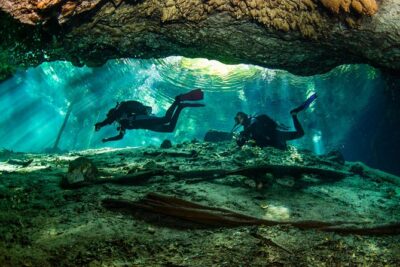
Go for 2 dives in cenote Dos ojos for certified divers
Read our review →