
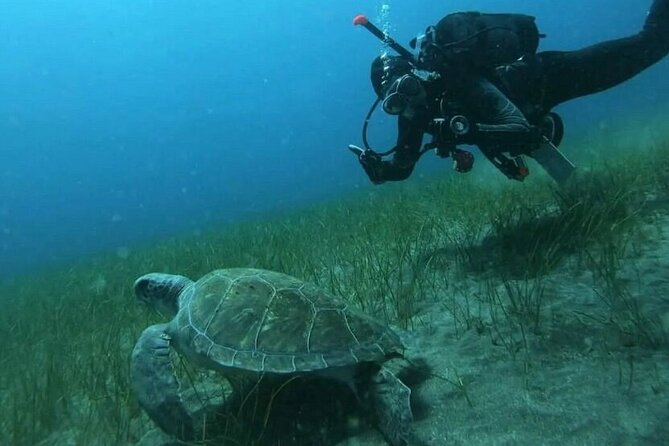
Reviewed · DIVING WITH TURTLES
Scuba Diving in Turtle and Ray Area
Abades Bay gives this small-group scuba experience a clear advantage: you are not being herded underwater in a large crowd. After about 30 minutes of instruction and a safety briefing, you enter the water with an instructor and no more than one other person. The bay is known for rays, turtles, angel sharks, and plenty of reef fish.
I like the personal attention and the chance to see wildlife in a calm, sheltered setting. I also like that the program welcomes first-timers while still offering a useful introduction for people who already have some experience. The main catch is the strict cancellation policy, plus the rule that you cannot fly for 12 hours after the session.
Key points at a glance
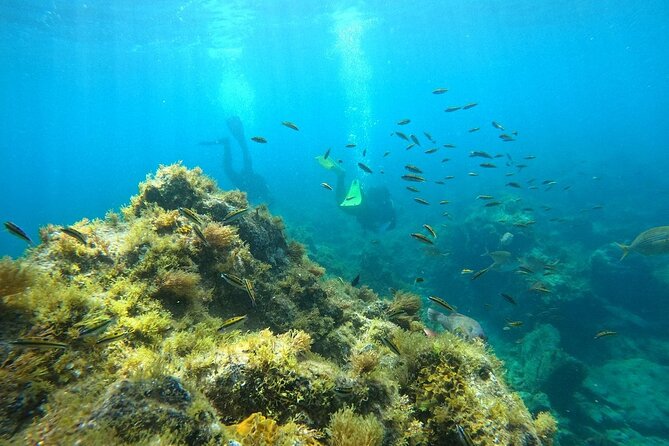
- Two people maximum: You enter the water with an instructor and no more than one other participant.
- Wildlife-rich Abades Bay: Look for sting rays, butterfly rays, turtles, angel sharks, trumpet fish, squid, snails, and colorful reef fish.
- A clear first-timer plan: About 30 minutes covers basic scuba skills, safety exercises, and what to expect.
- Patient instruction: Levi, Csaba, and Levente are among the academy’s named instructors, with a teaching style suited to beginners and returning divers.
- About two and a half hours: The total time includes preparation, briefing, equipment fitting, water exercises, and exploration.
- Plan around your flight: You must wait at least 12 hours after the session before flying.
Why Abades Bay is a smart place to start
Abades is on Tenerife’s southeastern coast, and this outing centers on the bay rather than a long boat trip to a distant site. That matters if you are new to scuba. You spend less time worrying about transport and more time learning how to breathe, move, and stay calm underwater.
The attraction is the wildlife. The bay is home to sting rays and butterfly rays, along with turtles, angel sharks, and reef fish in many colors. Reports also describe encounters with trumpet fish, squid, snails, and other small sea creatures. Wildlife is never guaranteed, but the range of sightings gives this site real appeal.
I especially like the possibility of seeing an angel shark. These unusual bottom-dwelling sharks can be difficult to spot, so a sighting is a lucky bonus rather than something you should count on. The same goes for turtles. You may see one, but the right way to book is to value the whole underwater setting, not one promised animal.
The bay also suits people who want a gentle introduction. The academy works with beginners, and the safety exercises come before the wildlife search. That order is important. You learn the basic habits first, then get a chance to enjoy the fish and rays without rushing.
More Diving with Turtles in Spain
- Tenerife: Your First Scuba Diving Experience in Turtle Area
★ 4.7 · 1,679 reviews - Tenerife: Beginner’s Dive at a Spot with Turtle Sightings
★ 4.7 · 627 reviews - Tenerife First Time Scuba Dive – Turtle Habitat, Small Groups
★ 4.5 · 456 reviews
The first 30 minutes: learning before entering the water
The outing begins with an explanation of scuba basics and a briefing on what will happen. Allow roughly 30 minutes for this part. You should expect instruction on using the equipment, breathing underwater, and handling the basic exercises needed to stay safe.
This is not a full certification course. It is a short introductory session, so you will not leave with a scuba qualification. Instead, the goal is to help you understand the equipment and feel ready for a supervised underwater outing.
For a first attempt, this preparation is valuable. New scuba participants often need time to get used to breathing through a regulator and moving while wearing equipment. The instructors are reported to be patient and reassuring, which can make a major difference if you feel nervous at the start.
You should listen closely here, even if you have snorkeled before. Scuba has its own rhythm, and the briefing explains what to expect once you are in the water. The instructors also need to know how comfortable you feel, so speak up if you need a point repeated.
Equipment fitting and the small-group advantage
After the briefing, you are fitted with scuba gear and prepare to enter the water. The exact equipment list is not specified, so you should ask the academy if you have particular needs or concerns about fit.
The group size is the strongest practical feature. The maximum is two participants with one instructor. That is a very different setup from a large introductory class, where an instructor may have to divide attention among many people.
With just one other person, you can expect a more personal pace. If you need another explanation or a moment to settle your breathing, the session does not have to move at the speed of a large group. This is also useful for families and couples, although the available information only confirms that most participants can take part and that children aged 11 and 14 have completed a first underwater session.
The small group does not remove every challenge. You still need to be comfortable following instructions, wearing the equipment, and completing the required exercises. But it gives you a better chance to receive direct help when something feels unfamiliar.
Safety exercises before the wildlife search
You do not simply put on the equipment and head off to look for turtles. First, you complete several exercises to show that you can manage the basics safely. The details of each exercise are not provided, but this stage is clearly part of the session.
That is good practice. It gives you a chance to adjust to the equipment before moving around the bay. If you are relaxed and comfortable, you can pay more attention to the animals and reef life later.
The academy’s instructors have been praised for being patient, friendly, and careful with first-timers. Levi, Csaba, and Levente are names associated with the team. Other staff members connected with the academy include Kelsey, Chris, and Jack, though the information does not assign each person to this specific short outing.
You should still keep your expectations sensible. A two-and-a-half-hour program cannot provide the depth of training offered by a full certification course. It is best seen as a supervised first taste or a short return to scuba, not as a substitute for formal training.
More Diving with Turtles in Tenerife
- Try Scuba Diving in a turtle area (boat)
★ 5.0 · 93 reviews - Discover Scuba Diving Experience in Turtle Habitat
★ 5.0 · 20 reviews - Diving course for beginners in turtle area Tenerife
★ 5.0 · 7 reviews - Try diving for the first time in turtle area
★ 5.0 · 5 reviews
Exploring the bay with rays and reef fish
Once the exercises are complete, the session turns toward the bay’s marine life. The listed animals include sting rays, butterfly rays, turtles, angel sharks, and colorful reef fish. Other sightings associated with the site include trumpet fish, squid, and snails.
Rays are a major reason to choose this outing. They are graceful and memorable to watch, especially when they move over the seabed. Butterfly rays add another possible encounter, while the fish provide the constant color and motion that make even a short underwater visit worthwhile.
The reef is described as a beautiful underwater area with many types of fish. You might see a broad mix of small creatures rather than one single headline animal. That is a good fit for people who enjoy looking closely and noticing details.
The wildlife can never be guaranteed. Sea conditions, visibility, animal movement, and luck all play a part. The promise here is access to a bay known for marine life, not a private aquarium with scheduled appearances.
If you are hoping for a turtle or angel shark, treat it as a bonus. A turtle has been seen during a session, and a small angel shark has also appeared. Those sightings add excitement, but the safest booking decision is to enjoy the instruction and the bay even if the most unusual animals stay out of sight.
How the academy suits beginners and experienced participants
This program is aimed at people who have little or no scuba experience, but it is not limited to complete beginners. The academy works with different ability levels, and the small groups allow the instructor to adjust the pace.
For a first-timer, the appeal is obvious. You get a briefing, equipment, supervised exercises, and a chance to explore a marine area without committing to a long course. The staff’s calm approach is especially useful for anyone who is curious but unsure about breathing underwater.
Families may also find it appealing. The available information records a successful first experience for children aged 11 and 14, with close supervision and plenty of fish. You should confirm age requirements and suitability when booking, since the general information only confirms that most people can participate.
Experienced scuba users may enjoy the wildlife and easy access to the bay, but should not expect a demanding technical session. This is a short outing with basic instruction, not a deep, advanced, or specialized program. If you already have substantial experience, ask the academy what part of the session can be tailored to your level.
The instructors’ range of work also suggests a serious training background. The academy has been associated with deeper training, rescue scenarios, night sessions, and professional development. That does not make this introductory outing an advanced course, but it may reassure you that the team understands more than the basics.
Is $106.94 fair value?
At $106.94 per person, this is not the cheapest casual activity on Tenerife. The price becomes easier to justify when you consider what is included in the format: instruction, equipment, supervised water time, and a maximum group size of two participants.
The small-group arrangement is the key value. You are paying for attention as much as for time in the bay. A lower-priced outing with a large group might be fine for confident swimmers, but a nervous first-timer may gain more from an instructor who can focus closely on just one or two people.
The experience lasts about two hours and 30 minutes. That total includes the briefing, preparation, exercises, and time exploring the bay. It is not two and a half hours underwater, so set your expectations correctly.
I would see this as good value for a first scuba experience, especially if seeing marine life is important to you. It is less compelling if you already hold strong scuba skills and want a long or challenging underwater session. In that case, compare the program with the academy’s other options before booking.
Transport, meeting point, and timing
The meeting point is C. 16 de Mayo, B8, 38588 Abades, Santa Cruz de Tenerife, Spain. The activity finishes at the same location, which keeps the day simple.
Pickup is offered in a green minivan with license plate 1327 MWS. If you use the pickup option, confirm the meeting details before setting out and look for that vehicle. The supplied information does not give a full pickup route or collection schedule, so do not assume every Tenerife hotel is covered.
The listed operating period is September 30 through November 30, 2026, from 9:00 a.m. to 5:00 p.m., Monday through Sunday. Check the exact date and time during booking, especially if your holiday falls outside that period.
The activity is offered in English and comes with a mobile ticket. Confirmation is sent when you book. Bring enough time to arrive without rushing, since the first part of the session involves preparation and instruction.
The flight rule and the cancellation risk
You cannot fly for 12 hours after the session. This is one of the most important details to plan around. Do not book the outing on the same day as a flight unless the timing leaves a full 12-hour gap after you finish.
For example, a morning session may work before a flight the following day, but you should allow extra time rather than cutting it close. If your departure schedule is uncertain, choose an earlier activity date.
The booking is non-refundable and cannot be changed for any reason. If you cancel or request an amendment, you do not receive your payment back. The exception is poor weather: if the academy cancels for that reason, you are offered another date or a full refund.
That policy makes travel planning important. Check your flight, health, and schedule before paying. Service animals are allowed, and most people can participate, but anyone with a specific medical or mobility concern should confirm suitability directly before booking.
Who should book this Abades scuba session?
I would recommend it to a first-timer who wants a personal introduction rather than a crowded group activity. The short briefing, supervised exercises, and maximum of two participants create a reassuring structure.
It also suits a family with older children who are ready to follow instructions, couples who want to share a new activity, and returning scuba users who want a simple wildlife outing. The marine life is varied enough to keep the session interesting even if the headline animals do not appear.
I would be more cautious if you want a certification, a long underwater session, or an advanced technical challenge. This is an introductory outing, not a full training program.
Should you book it?
Book this session if you value close instruction, easy access to a wildlife-filled bay, and the chance to see rays, turtles, angel sharks, and reef fish. The best reasons to choose it are the tiny group size and the academy’s patient approach with beginners.
Skip it if the no-change cancellation policy is too restrictive, your flight schedule leaves less than 12 hours afterward, or you want a serious advanced program. For everyone else, $106.94 is a reasonable price for a carefully supervised first encounter with Tenerife’s underwater world.
FAQ
Where does the scuba session begin?
It begins at C. 16 de Mayo, B8, 38588 Abades, Santa Cruz de Tenerife, Spain.
Where does the activity end?
The activity ends back at the meeting point in Abades.
Is pickup available?
Yes. Pickup is offered in a green minivan with license plate 1327 MWS.
How long does the activity last?
The activity lasts approximately two hours and 30 minutes.
How large is the group?
The activity has a maximum of two participants, with each pair entering the water with an instructor.
Is the session suitable for beginners?
Yes. The program includes about 30 minutes of basic scuba instruction and a briefing before you enter the water. Most people can participate.
What animals might I see?
Possible sightings include sting rays, butterfly rays, turtles, angel sharks, and colorful reef fish. Squid, snails, and trumpet fish have also been seen in the area.
Can I fly after the session?
You must wait 12 hours after the session before flying.
What happens if bad weather cancels the activity?
You are offered a different date or a full refund if the activity is canceled because of poor weather.
Newest dives added in Tenerife
- Scuba Experience in Tenerife with Guide★ 5.0 · 30 reviews
- Try Scuba Diving Puerto Colon★ 5.0 · 2 reviews
- Scuba Adventure – 2 Guided Dives from Our Boat in Tenerife★ 5.0 · 12 reviews
- Try Dive in Abades Bay with a private instructor★ 4.0 · 4 reviews
- First Dive Experience in Tenerife★ 4.5 · 69 reviews
- Tenerife Under The Sea – dive into 1-1 personalised experience★ 5.0 · 15 reviews
- Scuba Diving for Certified Divers in Costa Adeje★ 5.0 · 69 reviews
- Scuba Night Dive on Tenerife★ 5.0 · 6 reviews
Diving with Turtles, compared.
Beginner Scuba Diving with Turtles and Videos, San Juan
Read our review →
Your First Scuba Diving Experience in Turtle Area
Read our review →
Beginner’s Dive at a Spot with Turtle Sightings
Read our review →
Tenerife First Time Scuba Dive – Turtle Habitat, Small Groups
Read our review →
Incredibly Fun Coral Reef Giant Sea Turtles 4hour Boat Scuba Tour
Read our review →
Small-Group Shark and Turtle Dive for Certified Divers
Read our review →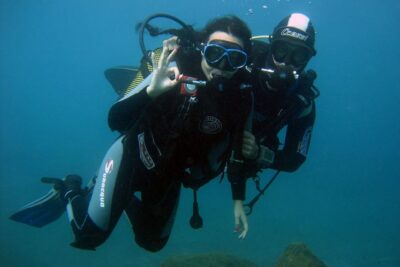
Turtle & Shark Scuba Dive in Lahaina: Certified
Read our review →Browse the lists this dive appears in