
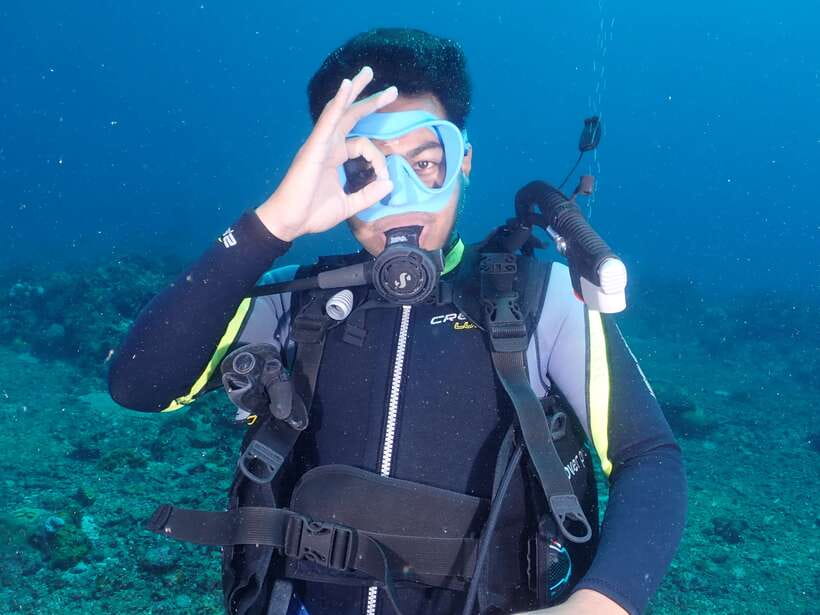
Reviewed · DISCOVER SCUBA DIVING
Boracay: Introduction to Scuba Diving Experience
Boracay’s best introduction to scuba takes you beyond the beach for a guided look at coral, fish, and the calm sensation of breathing underwater. You begin with a safety lesson and shallow-water practice, then head by boat to a beginner-friendly site with a guide beside you throughout.
I especially like the small guide groups, usually one instructor for two to four people, and the patient approach praised by guests who worked with instructors such as Butch, Roy, Romeo, and Joliou. I also like that underwater photos and videos come with the price, so you can focus on learning instead of handling a camera.
The main consideration is that the actual underwater portion is fairly short, usually 30 to 40 minutes, and the boat entry may involve stepping or a backward entry. One recent guest found the boat worn and the photo quality uneven, so this is best viewed as a first taste, not a full certification course.
Key points at a glance
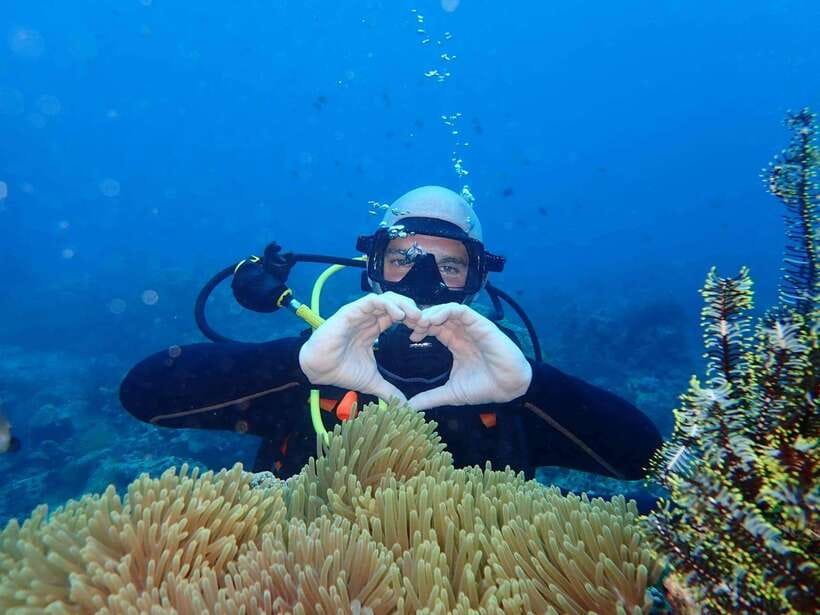
- Beginner depth: Most first-timers descend to about 6 meters, with an advertised maximum of 12 meters.
- Small groups: One guide generally works with two to four participants, with occasional private instruction when numbers are low.
- Useful practice first: You learn regulator breathing, pressure equalization, mask clearing, and basic hand signals before heading offshore.
- Underwater keepsakes included: Photos and videos are provided digitally, along with a completion certificate.
- Two start times: Choose a 9:00 AM or 1:00 PM departure, with roughly three hours from meeting point to return.
- Important flight rule: Leave at least 12 to 24 hours between your last underwater session and a flight.
A gentle first step below Boracay’s surface
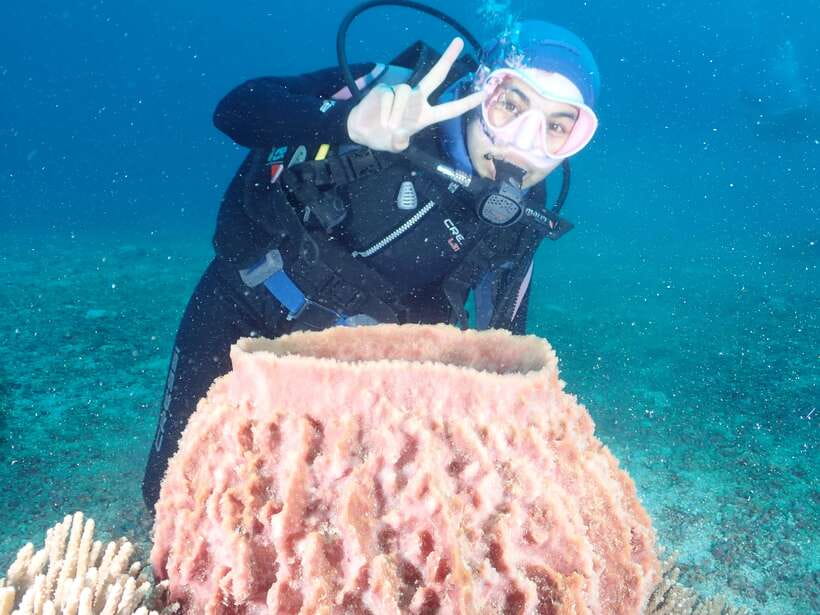
This is built for people who have never used scuba equipment and do not hold a certification. You are not expected to arrive knowing how to control your breathing, clear a mask, or communicate underwater. The instructors teach those skills before asking you to leave the beach.
That matters because the first few minutes underwater can feel strange. Your face is covered, your breathing sounds different, and the regulator changes how you take in air. The best part of this experience is the gradual pace: explanation first, practice next, open water after that.
I would choose this activity if you want to try scuba without committing to a multi-day certification course. It gives you a real boat trip and open-water session, not just a pool demonstration, while keeping the depth and duration suited to beginners.
The overall rating is 4.8 from 104 reviews, and the most consistent praise is aimed at the instructors. People who arrived nervous were often reassured by patient staff who checked on them before and during the descent. That personal attention is more important here than fancy equipment or a long boat ride.
More Discover Scuba Diving in the Philippines
- WaterColors – Discover Scuba Diving in Boracay
★ 5.0 · 127 reviews - El Nido: Discover Scuba Diving with Manta Rays in Sibaltan
★ 4.7 · 24 reviews - Discover Scuba Diving in Boracay
★ 4.9 · 22 reviews
Meeting at Station 1, then getting ready
Your meeting point is in front of Tiger Sugar Cafe at Astoria Station 1 Beach Front. Look for the Boracay Adventures guide holding GetYourGuide signage. Hotel pickup and return are not included, so leave enough time to reach Station 1 on your own.
The schedule offers a 9:00 AM or 1:00 PM start. The stated activity length is about three hours, though the exact pace can vary with group size, preparation, and conditions. I would avoid booking anything tightly timed immediately afterward.
The first stage is a briefing led by a certified PADI Instructor or Divemaster. You learn how to breathe through the regulator, equalize the pressure in your ears, understand the equipment, and use hand signals. The safety talk is not filler. It gives you a set of simple actions to rely on when the water feels unfamiliar.
The instructors also explain how to stay close and follow directions. One guest specifically appreciated the repeated reminder to follow the guide and the regular checks underwater. That kind of simple, direct instruction is exactly what a first-time participant needs.
Equipment and shallow-water practice
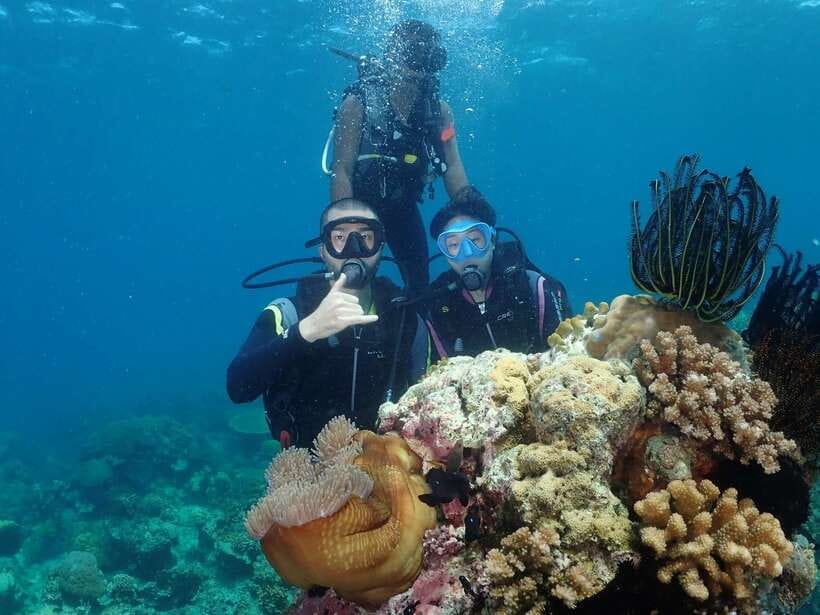
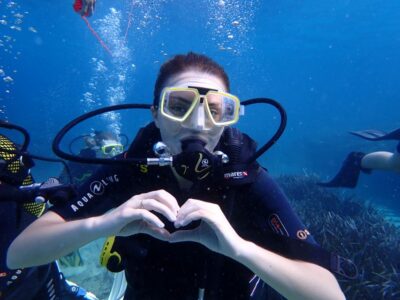
The supplied equipment includes a mask, snorkel, fins, wetsuit, regulator, tank, weights, and a buoyancy control device, or BCD. The BCD is the inflatable vest that holds the tank and helps control your position in the water.
Staff fit the equipment and help you put it on. This is a good moment to speak up if the mask leaks, the fins feel loose, or the vest pinches. You are better off making adjustments on shore than trying to solve a small problem later.
Before the boat trip, you practice in shallow water near the beach. The listed skills include breathing through the regulator, clearing water from the mask, and recovering the regulator if it comes away from your mouth. You also practice equalizing pressure as you descend.
This part may feel slow if you are already comfortable in the sea, but it is the most useful part for a nervous beginner. One participant found equalizing difficult and needed encouragement from the instructor. That is a reminder not to force your ears. Tell your guide if pressure will not clear, and let the descent stop or pause.
The training is also where you learn how to stay calm. You can surface or signal for help if something feels wrong. Your guide is there to support you, not to test how much discomfort you can tolerate.
The boat ride to the open-water site
After the shore practice, you board a local boat and travel to a beginner-friendly site. The ride adds a pleasant change of view, with Boracay’s white coastline seen from the water rather than from the sand.
The boat transfer is included in the $50 price, along with all gear, instruction, the shore session, one open-water outing, digital media, and the certificate. That makes the package reasonably priced for someone who wants a complete first experience without renting each piece separately.
Still, this is where expectations should stay realistic. One guest felt the boat was slightly worn and wished older family members had been offered the steps instead of a backward entry. Ask for help if you are uncomfortable entering that way, especially if you have back trouble or limited mobility.
The experience is not designed for a long scenic cruise. The ride is simply the link between your preparation and the reef. Its value is that you reach a proper open-water site rather than practicing only beside the beach.
Another way to get in the water in the Philippines:
- Boracay: Helmet Diving Experience with Photos and Videos
★ 4.7 · 155 reviews - Cebu: Beach Scuba Diving Experience
★ 4.9 · 130 reviews - Boracay: Island Hopping with Crystal Kayak & Helmet Diving
★ 4.6 · 34 reviews - DiveGurus -Scuba Diving in Boracay
★ 5.0 · 25 reviews
Thirty to forty minutes among coral and fish
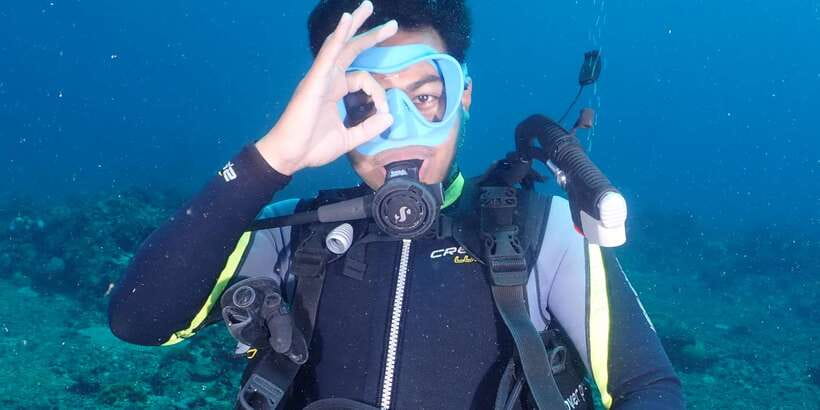
The guided underwater session usually lasts 30 to 40 minutes. The standard beginner depth is about 6 meters, or 20 feet. The package lists a maximum of 12 meters, or 40 feet, and some participants reported reaching around 9 to 12 meters, but you should not expect that depth automatically.
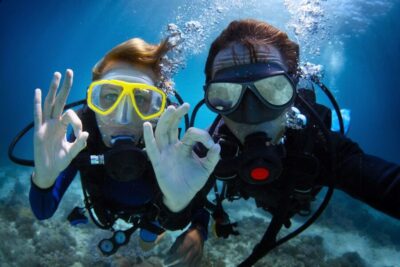
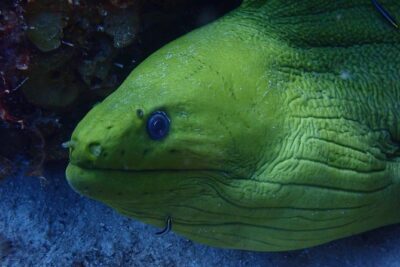
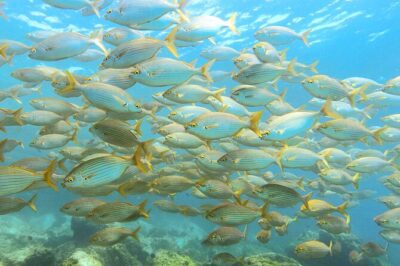
Your guide controls the pace and stays close. You will hover above coral formations, watch fish move through the reef, and learn how buoyancy changes your position. Possible sightings include parrotfish, clownfish, colorful reef fish, and perhaps a turtle. The exact marine life depends on conditions and the selected site.
The sense of weightlessness is the real attraction. You are no longer swimming at the surface and looking down through a mask. You can move along the ocean floor with the guide, seeing the reef from within its world.
I would keep your first session simple. Focus on breathing slowly, clearing your ears, and staying near your instructor. Trying to identify every fish or pose for every photograph can distract you from the experience.
That said, the media service is a useful bonus. A separate photographer may be present, and one solo participant received one-to-one guidance while another staff member took photos. Other participants liked the underwater pictures and short videos enough to describe them as a major part of the value.
The results may vary. Two otherwise positive accounts found the photographs weak or the videos too short. Think of the media as a pleasant record, not a professional underwater portrait session. If a guide asks you to pause briefly for a picture, follow the direction, then return your attention to breathing and position.
Why the instructors matter so much
This activity succeeds or fails on instruction. A calm instructor can turn an anxious first attempt into a good memory, while rushed guidance can make the same equipment feel intimidating.
The strongest pattern here is the staff’s patience. Butch was praised for easing nerves and explaining the basics clearly. Roy helped participants feel safe through the shallow-water work and the open-water session. Romeo, Joliou, Kai, Bong, and other named instructors were also singled out for calm support and clear teaching.
Group size helps. The usual ratio is one guide for two to four participants. When a booking has only one person, the arrangement may become private or nearly private, sometimes with another staff member handling the camera. That gives you more room to stop, ask questions, and repeat a skill.
The language options are English, Chinese, and Korean. If you need instructions repeated, ask before leaving the beach. Underwater communication is limited to hand signals, so it is worth making sure you understand the basic signals for stop, trouble, okay, and returning upward.
What the $50 price really covers
At $50 per person, this is not merely a short swim with a tank. The cost includes the theory lesson, safety preparation, equipment, shallow-water practice, boat transfers, one guided open-water session, a digital certificate, and photos or videos.
That is good value for a first attempt, especially if you would otherwise need to pay separately for a boat, equipment, and an instructor. The small groups also make the price more attractive than a large class where you receive little personal attention.
The certificate is a participation record, not a scuba license. It does not replace a full PADI certification course, and you should not present it as permission to scuba independently. Several participants finished wanting to pursue formal certification later, which is the right way to view this experience: a supervised introduction that helps you decide if further training appeals to you.
The price does not include food, drinks, hotel transportation, or a certification course. Plan to eat separately and arrange your own route to Station 1.
Who should book this experience
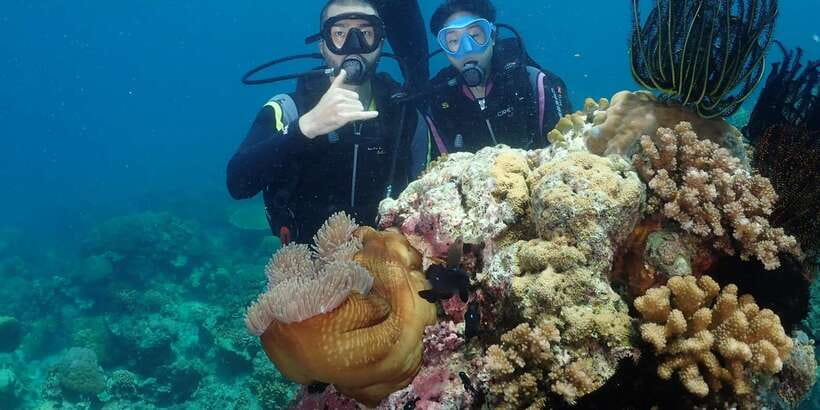
I recommend it for adults and children aged 10 or older who want a guided first encounter with scuba. It suits people who are curious but unsure about committing to a full course, couples who want to try something together, and solo participants who value close instruction.
It can also work for a nervous non-confident swimmer, provided you are medically fit and willing to follow the instructor’s directions. The guides have helped hesitant participants progress from shallow-water practice to the open sea, but that does not mean you should hide fears or health concerns.
You should not book if you are pregnant, have back problems, altitude sickness, or a pre-existing medical condition listed as unsuitable. The activity also lists hearing-impaired people as unsuitable, likely because underwater communication depends heavily on visual signals and clear response to the instructor.
If you are uncertain about your health, seek medical advice before booking. The supplied information does not offer a medical screening process, so you need to take responsibility for checking that scuba is appropriate for you.
Timing your flight and your day
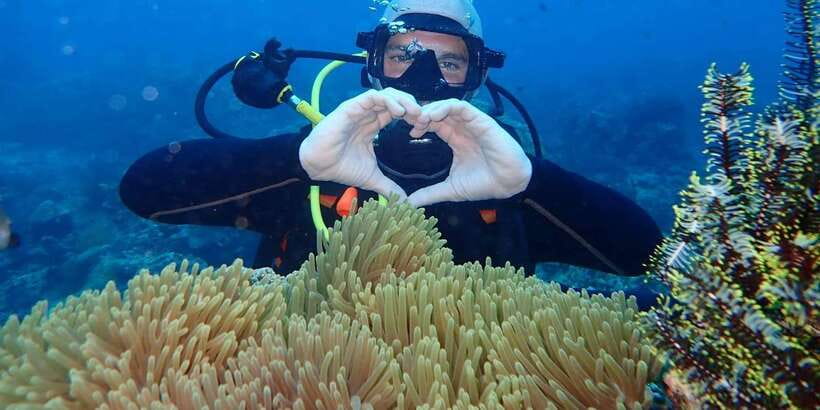
The most important planning rule is the no-fly period after scuba. You cannot take part if a flight is scheduled within 12 to 24 hours after your last session. This is a safety requirement related to pressure changes and decompression sickness.
Do not place this activity on the last possible morning before an afternoon flight. Give yourself the full recommended interval. The same caution applies if you plan to travel to a higher-altitude location soon afterward.
The 9:00 AM start leaves more of the day open, while the 1:00 PM option may suit a slower morning. Since the activity can take around three hours, allow extra time beyond that for changing, returning equipment, and reaching your next appointment.
Free cancellation is available up to 24 hours before the activity for a full refund, and you can reserve now and pay later. Those terms help if your island schedule is still changing, but they do not remove the need to plan around weather, health, and flight restrictions.
Should you book it?
Book this if you want a properly supervised first scuba experience with real open-water time, a boat transfer, close instructor support, and photos included. The strongest reason to choose it is the staff-to-participant ratio and the careful progression from briefing to shallow practice to the reef.
Do not book it expecting a long underwater expedition, guaranteed turtle sightings, perfect photos, or a professional qualification. The session is short, the boat entry may not suit everyone, and media quality can be mixed.
For a first taste at $50, I think the package offers solid value. If you are nervous, tell the guide early, take the shallow-water practice seriously, and remember that stopping or ascending is always better than pushing through discomfort. If you finish eager for more, Boracay has given you a useful first step toward formal certification.
FAQ
How long does the Boracay scuba experience last?
The activity takes approximately three hours in total. The underwater session itself usually lasts about 30 to 40 minutes.
What depth will a beginner reach?
Beginners typically reach about 6 meters, or 20 feet. The activity lists a maximum of 12 meters, or 40 feet, but the actual depth depends on your comfort, training, and conditions.
Do I need scuba certification?
No. This experience is designed for beginners with no previous certification.
What equipment is included?
The package includes a mask, snorkel, fins, wetsuit, regulator, tank, weights, and buoyancy control device, along with the related scuba equipment rental.
Are photos and videos included?
Yes. Complimentary digital photos and or videos of the underwater session are included, along with a digital certificate of completion.
Where do I meet the guide?
Meet at Astoria Station 1 Beach Front, in front of Tiger Sugar Cafe. Look for the Boracay Adventures guide holding GetYourGuide signage.
Can I fly soon after the activity?
You should not take part if you have a flight scheduled within 12 to 24 hours after the activity. This rule is intended to reduce the risk of decompression sickness.
Newest dives added in the Philippines
- DiveGurus – Open Water Diver Course SSI/PADI★ 5.0 · 13 reviews
- Scuba Diving in Boracay: SSI Basic Diver for Beginners★ 5.0 · 20 reviews
- Open Water Course (PADI)★ 5.0 · 12 reviews
- Scuba Diver Course (PADI)★ 5.0 · 18 reviews
- Boracay Helmet Diving★ 4.5 · 17 reviews
- DiveGurus -Scuba Diving in Boracay★ 5.0 · 25 reviews
- Discover Scuba Diving in Boracay★ 4.9 · 22 reviews
- El Nido: Discover Scuba Diving with Manta Rays in Sibaltan★ 4.7 · 24 reviews
Discover Scuba Diving, compared.
2 Days Discover Scuba Diving in Nusa Lembongan – Scuba Initiation
Read our review →
From Sharm: Ras Muhammed & White Island By Boat & intro Dive
Read our review →Browse the lists this dive appears in