
Reviewed · SCUBA DIVING
Deep Dive into the World of Daruma Dolls
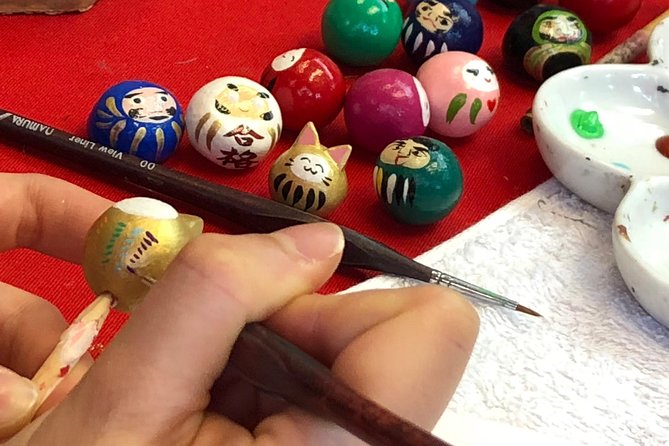
A round Daruma doll becomes far more meaningful when you make it yourself. At Daru-chan No Ouchi near Jindaiji Temple, you choose fabric, write a personal wish, paint the face, and build a small Japanese good-luck charm with your own hands. The finished doll is both souvenir and keepsake.
I like the small group of four and the patient, friendly instruction from Keiko-san. I also like the cultural setting: this is not a generic craft class, but a look at Chofu-style Daruma traditions with Japanese tea and Daruma senbei along the way.
The main drawback is the location. From central Tokyo, the trip can take about an hour by train and bus, and the experience is non-refundable. You will want to be sure your schedule is firm before booking.
Key points to know before you go
- A personal wish becomes part of the Daruma: You write your wish directly on the doll before decorating it.
- Choose from many Japanese fabrics: Traditional and modern patterns are available, so fabric selection is part of the creative work.
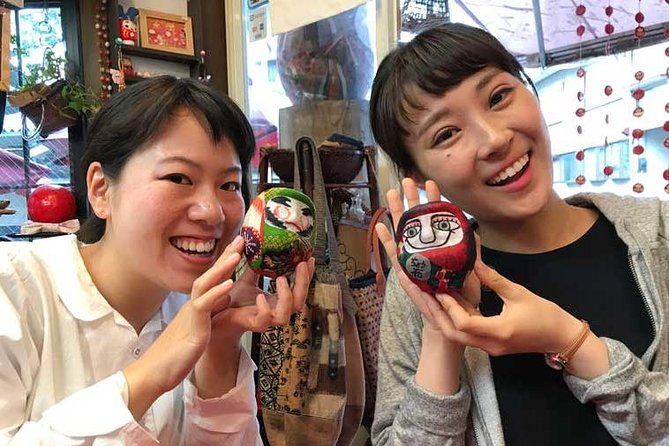
- Keiko-san teaches in a very small group: The maximum is four people, giving you room to ask questions and work at a comfortable pace.
- The workshop lasts about 90 minutes: Most of that time goes into cutting and pasting fabric onto the Daruma.
- Tea and Daruma senbei are included: While the glue dries, you can enjoy refreshments and Daruma-themed games.
- The class begins and ends near Jindaiji Temple: You do not need to arrange separate transport between the meeting point and the workshop.
Making a Daruma near Jindaiji Temple
This experience takes place at Daru-chan No Ouchi, a Daruma shop near the entrance of Jindaiji Temple in Chofu. The address is 5-chōme-5-1 Jindaiji Motomachi, Chofu, Tokyo 182-0017.
You meet the instructor at the shop, and the activity ends in the same place. That simple setup matters. You do not spend your short workshop time moving between several locations, and you can pair the class with a visit to Jindaiji Temple if your schedule allows.
I also like the sense of place here. Daruma dolls are not just colorful objects for a craft table. They are associated with good luck, determination, and wishes. The traditional blank-eyed Daruma is often connected with setting a goal, though this activity focuses on making a personalized fabric-covered version.
You will spend about an hour and a half at the shop. That is long enough to make something substantial without turning the activity into a full-day commitment. The group limit of four is especially useful for a hands-on class. You are likely to get more direct help than you would in a large workshop, and there is enough space for each person to spread out materials.
More Scuba Diving in Japan
Choosing one fabric from many patterns
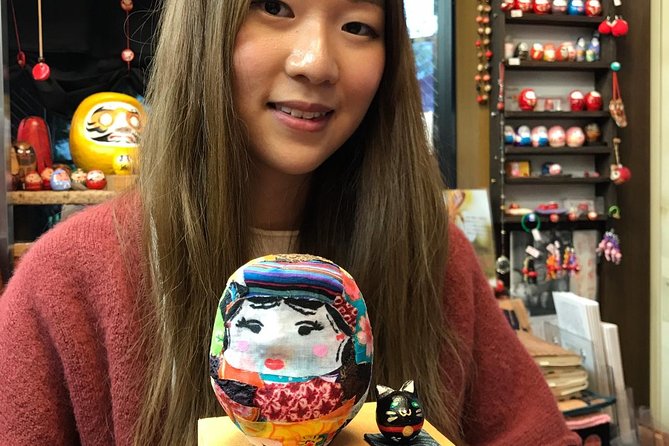
The first creative step is choosing your fabric. It sounds easy until you see the range of options. The class includes both traditional and modern Japanese fabrics, with different colors, prints, and patterns.
This is one of the strongest parts of the activity because your choice sets the look of the finished Daruma. A bold pattern may make a cheerful, eye-catching doll. A quieter design may feel more refined. You do not need to match someone else’s style, and there is no single correct answer.
I would not rush this step. Look at how the pattern might work on a rounded body, not just how it appears as a flat piece of cloth. Some prints may look very different once cut into smaller sections. A design with small details could give you more flexibility than a large repeating image.
The fabric choice also gives the souvenir a stronger connection to Japan than a standard shop-bought charm. You are not simply selecting a finished product from a shelf. You are deciding how the object should look and helping shape it from the beginning.
Writing your wish and painting the face
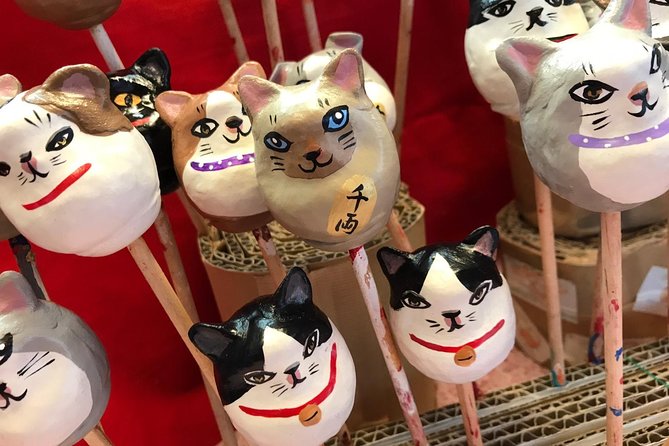
Once you have chosen your fabric, you write your wish on the body of the Daruma. This is a short but important moment in the process. The wish makes the doll personal, and it gives you a reason to keep it somewhere visible after returning home.
You also paint the Daruma’s face on the fabric. The doll’s sharp expression is traditionally viewed as a way to repel bad luck, so the face is not just decoration. It gives the finished figure its character and purpose.
Keiko-san guides you through this stage and explains the cultural meaning behind the craft. One useful feature of this class is that the cultural lesson is tied to something you are doing with your hands. You are more likely to remember the meaning of the Daruma when you have written your own wish and painted the face yourself.
The activity is suitable for most people, but younger children need an adult with them if they are under 13. The work is creative rather than physically demanding, so the main requirement is patience and an interest in making something by hand.
Cutting and pasting takes about 30 minutes
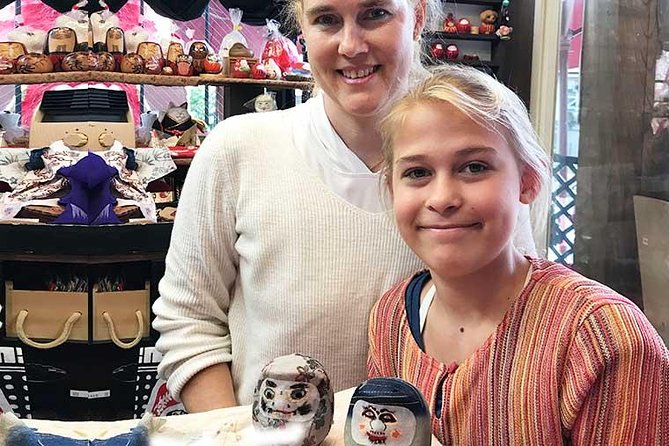
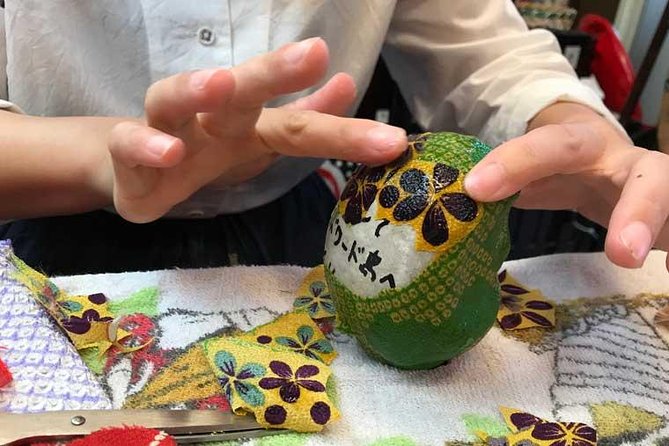
The longest section is cutting the fabric into pieces and attaching them to the Daruma’s body. You may cut different-sized pieces depending on the print and pattern. This is where the finished design begins to take shape.
The process sounds simple, but it rewards care. Small pieces may help you follow the curve of the doll. Larger pieces may show off more of a fabric’s pattern. You can let the design develop as you work rather than trying to plan every section in advance.
I like that the class leaves room for individual choices. The aim is not to produce a row of identical dolls. Your Daruma can look neat and carefully arranged, or playful and full of contrasting patterns. The activity gives you a handmade souvenir with visible evidence of your own decisions.
That freedom can also make the class feel less predictable. If you want a perfectly uniform craft result, this may not be the right activity. The appeal is in creating something personal, not in leaving with an object that looks factory-made.
Keiko-san’s patience is useful here. One person who took the class with a spouse described working through communication with the help of Google Translate, while still finding the instruction patient and enjoyable. That detail suggests you do not need perfect shared language to take part, though a translation app may be helpful if you have detailed questions.
Another way to get in the water in Japan:
- Okinawa:Naha:Kerama Island Experience 1Dive and Snorkeling
★ 4.4 · 99 reviews - EDOCCO Tea House–A Quick Dive into Japanese Traditional Culture
★ 5.0 · 34 reviews - Blue Cave Introductory Dive–Private Guide, Boat Tour&Free Photos
★ 5.0 · 34 reviews - Okinawa: Scuba Diving Tour with Wagyu Lunch and English guide
★ 5.0 · 32 reviews
Tea, games, and Daruma senbei while the glue dries
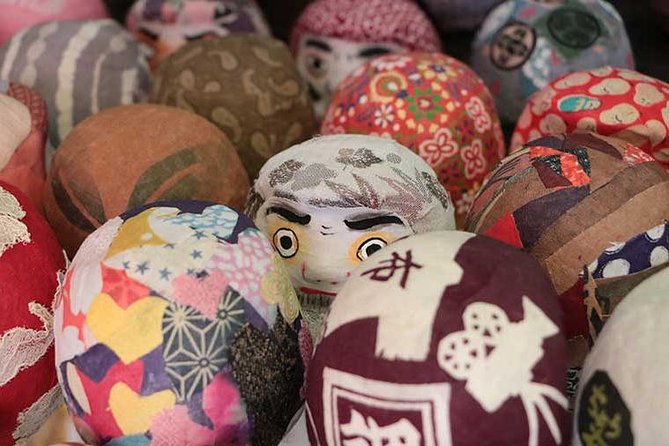
After the fabric is attached, the glue needs time to dry. Rather than ending the class at that point, the session includes Japanese tea, Daruma senbei, photographs, and Daruma-themed games.
This pause gives the workshop a relaxed rhythm. You are not pushed out as soon as the main craft work is done, and you have a chance to look at the other designs in the group. Tea, coffee, or other refreshments are provided, and Japanese rice crackers shaped or decorated in a Daruma theme add a small food-related touch to the experience.
The games also keep the waiting period from feeling like dead time. They reinforce the theme without turning the class into a lecture. If you are visiting with friends, this is likely to be one of the more social parts of the activity.
The refreshments are included in the price, along with the instructor, materials, and tax. That makes the cost easier to judge because you do not need to add a separate materials charge or pay extra for the tea. The published price is $0.00, so check the current booking page carefully before confirming, especially since availability must be confirmed within 48 hours. The important point is that the listed inclusions cover the core workshop needs.
What the finished Daruma means at home
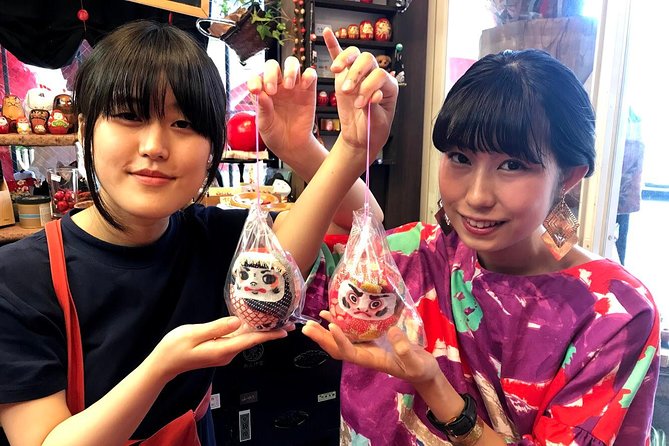
At the end, you take your Daruma with you. The idea is to place it somewhere near you, where its sharp glance can help repel bad luck and remind you of your wish.
This gives the souvenir a life beyond the class. A mass-produced charm can be attractive, but a doll you decorated yourself carries a memory of the afternoon in Chofu. It can sit on a desk, shelf, or another nearby spot where you will see it often.
The doll also works well as a gift, though the wish makes it especially personal. You may prefer to keep it for yourself if you have written something private or meaningful on the body. If you are making the doll with a partner or friend, you can create matching pieces or choose completely different styles.
I would take a few photographs during the session, especially before the glue dries. The class includes time for pictures, and the fabric selection and work-in-progress stages are part of the story. The completed doll is the main souvenir, but the process is what makes it memorable.
How much time and planning do you need?
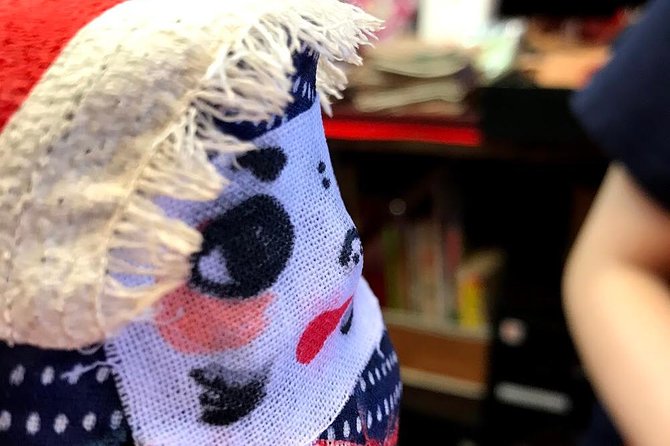
The activity lasts about 90 minutes. The listed schedule breaks down roughly like this:
- Meeting the instructor and getting settled: 10 minutes
- Choosing fabric: 5 minutes
- Writing your wish and painting the face: 10 minutes
- Cutting and attaching fabric: 30 minutes
- Waiting for glue to dry, playing games, taking pictures, and enjoying refreshments: 15 minutes
These times add up to about 70 minutes, leaving some flexibility for explanations, transitions, and finishing touches. Do not plan a train departure immediately after the scheduled end. Handmade projects often take a little longer when you are deciding between fabrics or adjusting pieces.
The shop is near Jindaiji Temple, so you can make the craft class part of a wider Chofu outing. The activity itself does not include transportation, a temple tour, or a guided neighborhood walk. You meet at the shop and return to that same meeting point when the session ends.
From central Tokyo, allow about an hour by train and bus based on the experience details. That travel time is the clearest tradeoff. If your Tokyo schedule is packed with central sights, the journey may feel like a lot for a 90-minute class. If you want a quieter, local-feeling activity away from the main sightseeing routes, the trip may be worth it.
Who will enjoy this craft class most?
I would recommend it most strongly to people who like hands-on activities and want a souvenir with a personal story. You do not need advanced craft skills. The class provides the materials and instructor, and the work is broken into manageable steps.
It also suits couples and small groups of friends. The maximum of four people keeps the class intimate, while the choice of fabric lets each person make a different-looking doll. The design stage can become part of the fun, especially when everyone compares patterns and finished faces.
Families can consider it too, but children under 13 must be accompanied by an adult. Younger children may need help with cutting, pasting, and staying patient while the glue dries. The class is best for children who enjoy careful creative work rather than fast-paced entertainment.
You should also enjoy cultural crafts. The class is not built around sightseeing or a long historical talk. Its cultural value comes through the Daruma’s meaning, the local style, the fabrics, and the act of making the object yourself.
Important practical points before booking
The activity is mobile-ticket friendly, which is useful if you prefer to keep the confirmation on your phone. Confirmation is sent within 48 hours of booking, subject to availability, so do not assume the reservation is final until you receive it.
The experience is non-refundable and cannot be changed for any reason. That is the biggest booking restriction. Check your Tokyo plans, transport time, and meeting point before paying.
Most people can participate, and no special fitness level is stated. The class takes place at the shop, starts and ends there, and includes the necessary craft materials. Children under 13 need an adult companion.
Because the group is limited to four, availability may be tighter than for a large class. A small group is a real advantage for instruction, but it also means you should book once your plans are settled.
Should you book the Daruma workshop?
Book this experience if you want a quiet, creative hour and a half, enjoy making souvenirs, and are willing to travel beyond central Tokyo. The combination of fabric choice, personal wishes, patient instruction from Keiko-san, tea, snacks, and a small group gives the class more substance than a quick gift-shop purchase.
Think twice if you have only a short stay, dislike crafts, or need a flexible reservation. The trip from central Tokyo can take about an hour by train and bus, and the strict cancellation policy leaves little room for a change of plans.
For the right visitor, this is a meaningful way to connect with Japanese culture through an object you make yourself. You leave with a Daruma that is not only colorful, but tied to a wish, a place near Jindaiji Temple, and the choices you made during the class.
FAQ
Where does the Daruma workshop take place?
The workshop begins and ends at Daru-chan No Ouchi, near the entrance of Jindaiji Temple at 5-chōme-5-1 Jindaiji Motomachi, Chofu, Tokyo 182-0017, Japan.
How long does the activity last?
The experience lasts approximately 1 hour and 30 minutes.
How many people can join the workshop?
The activity has a maximum of four participants.
What is included in the price?
The instructor, material fee, Japanese tea, and tax are included. Coffee or other refreshments may also be provided, along with Daruma senbei during the glue-drying period.
Can children participate?
Yes. Children under 13 must be accompanied by an adult. Most people can participate.
Can I cancel or change my booking?
No. The experience is non-refundable and cannot be changed for any reason. Confirmation is provided within 48 hours of booking, subject to availability.
Newest dives added in Japan
- Tokyo Ikebukuro Morning Tour Dive into Japanese Culture★ 5.0 · 5 reviews
- EDOCCO Tea House–A Quick Dive into Japanese Traditional Culture★ 5.0 · 34 reviews
- Tokyo Ikebukuro Evening Tour Dive into Japanese culture★ 5.0 · 15 reviews
- Boat entry diving at the Blue Cave in Onna Village, Okinawa!★ 5.0 · 4 reviews
- Deep Dive: Osaka Food Markets from Local to Luxurious!★ 5.0 · 31 reviews
- Blue Cave Introductory Dive–Private Guide, Boat Tour&Free Photos★ 5.0 · 34 reviews
- Naha: Full-Day Introductory diving & Snorkeling in the Kerama Islands, Okinawa★ 4.5 · 28 reviews
- Okinawa:Kerama Islands experience Diving/Snorkeling/WhaleWatching★ 4.5 · 16 reviews
Scuba Diving, compared.

Great Barrier Reef Snorkeling and Diving Cruise from Cairns
Read our review →
First-Time Scuba Diving in Honolulu + Free Videos
Read our review →

Diving Between Tectonic Plates – Meet on Location
Read our review →
Ocean Freedom Great Barrier Reef Luxury Snorkel and Dive Cruise
Read our review →
Beginner Scuba Diving with Turtles and Videos, San Juan
Read our review →
Your First Scuba Diving Experience in Turtle Area
Read our review →
Browse the lists this dive appears in