
Reviewed · PADI COURSES & CERTIFICATION
Great Keppel Island: PADI Discover SCUBA Diving
The best part of this Great Keppel Island activity is simple: you get to find out what breathing underwater feels like without signing up for a full certification course. A PADI Professional guides you through the equipment, safety rules, and basic skills before you head into the water.
I like the small group limit of eight, which gives beginners a better chance to receive calm, personal help. I also like the shallow-water practice, since you can get comfortable with the equipment before exploring the World Heritage listed Great Barrier Reef.
The main catch is that the $130 price does not include your return ferry, food, or drinks. You’ll also need reasonable physical health and must complete a medical form, so this is not a casual choice for everyone.
Key points at a glance
- Two-hour introduction: A compact first step for anyone curious about scuba but not ready for certification.
- Direct PADI supervision: You learn and practise under the guidance of a PADI Professional.
- Shallow-water preparation: Basic skills come before the open-water portion, helping you settle into the gear.
- Great Keppel setting: The session takes place beside the Southern Great Barrier Reef.
- Small groups: A maximum of eight participants keeps the lesson more manageable.
- Ferry planning matters: The Keppel Konnections ferry is separate, with the 7:30am service recommended and a 4pm return from the island.
Getting started at Great Keppel Island
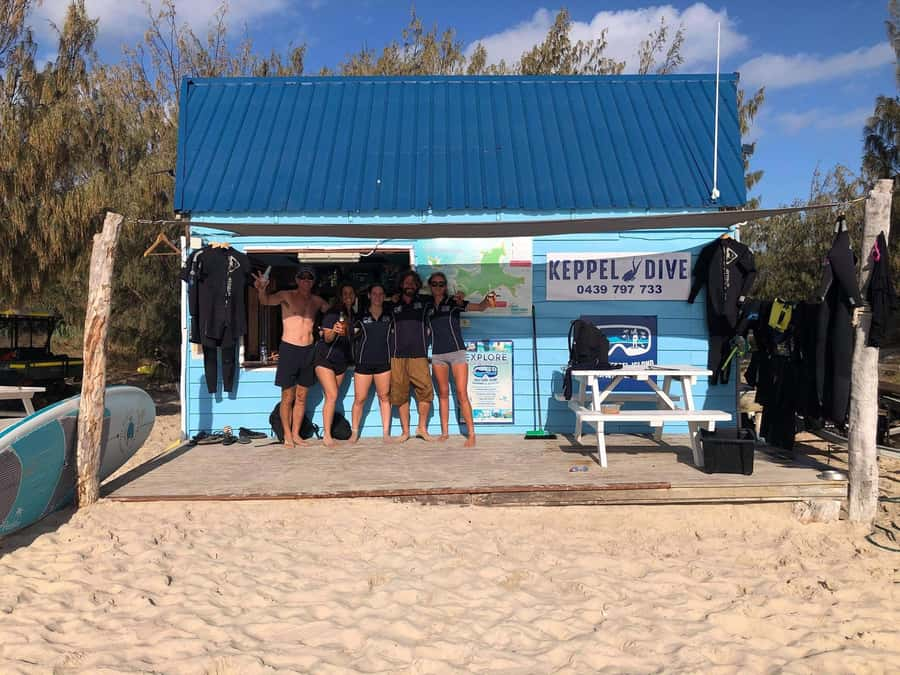
Your meeting point is the little blue dive shack on the corner of Fisherman’s and Putney Beach. That detail matters because Great Keppel Island is reached by ferry, not by simply driving up to the operator’s door. Plan the crossing first, then allow time to reach the shack and get ready.
Keppel Konnections runs a 7:30am ferry each day, and this is the recommended service for introductory participants. It gives you plenty of time to get acquainted with the island before your two-hour session. The return ferry leaves at 4pm, so you’ll have a firm transport deadline later in the day.
The ferry is not part of the $130 price. You must book and pay for the return transfer separately. Food and drinks are also not included, so bring what you need for your time on the island. The only listed item to bring for the activity itself is swimwear.
The early start may feel like a nuisance on holiday, but it gives the day a useful rhythm. You can arrive without rushing, find the blue shack, and deal with the lesson before worrying about your ferry home.
More PADI Courses in Australia
- Cairns: 4-Day PADI Open Water Course
★ 4.8 · 44 reviews - Quicksilver Dive 4 Day PADI Learn to Dive Course
★ 5.0 · 35 reviews - Gold Coast: 3-Day PADI Open Water Course
★ 4.8 · 28 reviews
The first lesson: equipment and safety
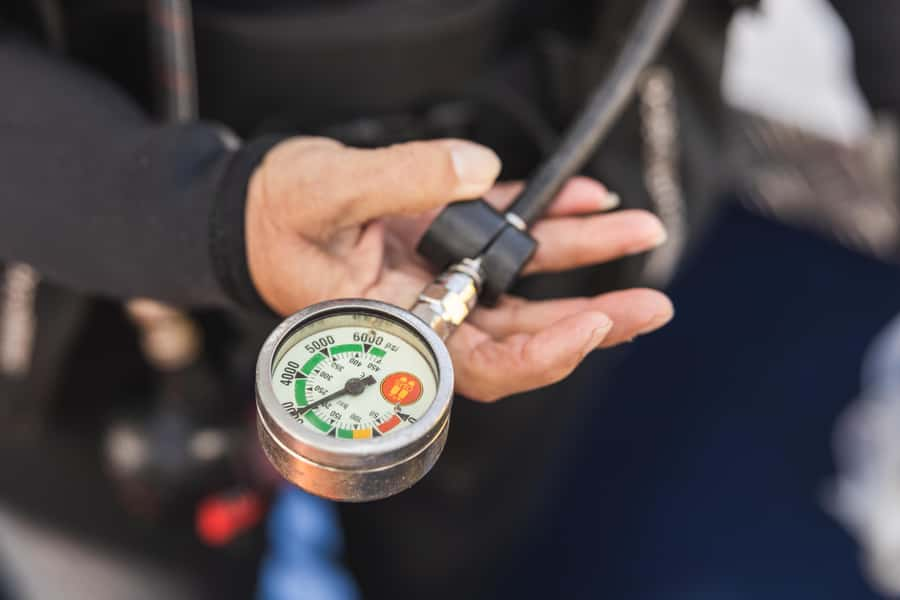
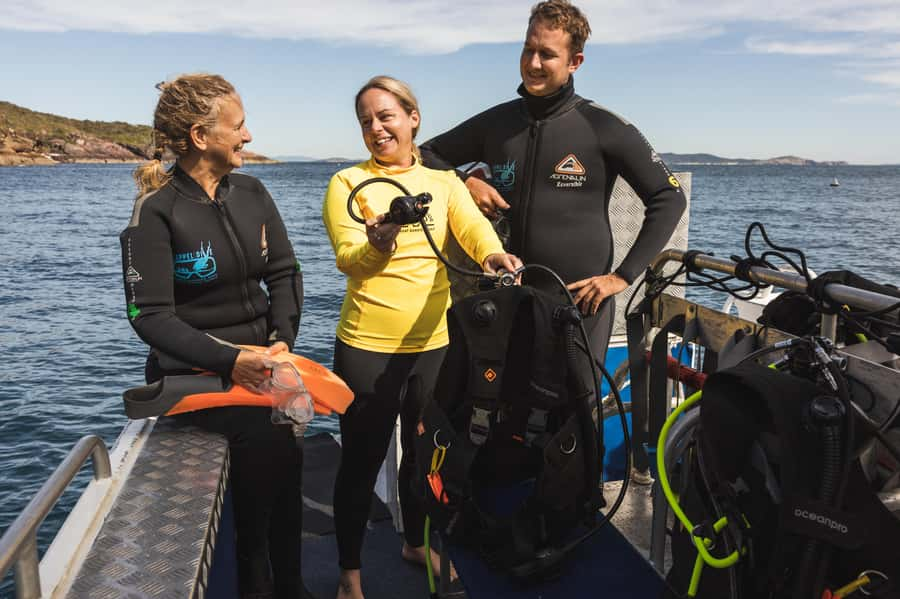
The session begins with the basic safety information needed for scuba. You’ll be shown the equipment used during the activity and learn how it helps you move around underwater. For a first-timer, this is the part that turns an unfamiliar pile of gear into something you can understand.
The aim is not to make you a certified diver in two hours. Instead, you get a clear look at the steps involved in learning the sport properly. You’ll hear about the PADI Open Water Diver course, which is the next path if this short introduction leaves you wanting more.
That distinction is important. This is a controlled introduction, not a qualification. You can try the activity without committing to a longer course, but you will still learn the basic habits used during later scuba sessions.
The instructor remains responsible for your supervision. You are not being sent off to manage the equipment or make decisions alone. For a beginner, that direct support can make the first few minutes far less intimidating.
A previous participant singled out instructor Anto for being patient, attentive, and fun. That is especially useful information for a first lesson, since a calm instructor can make the difference between feeling curious and feeling overwhelmed. Instructor availability can change, but Anto is one of the named instructors associated with a particularly positive session.
Breathing underwater for the first time
The central moment is learning to breathe underwater. It sounds obvious, but it can feel unusual at first, particularly when you are wearing equipment and relying on a regulator instead of breathing normally through your nose.
The class gives you time to understand that sensation under supervision. You’ll learn how the equipment works, how to move with it, and which basic skills you will use every time you go below the surface.
This is where the two-hour format makes sense. It is long enough to cover the essentials and give you a real taste of the activity, but short enough that you are not committing to a full day of training. You can decide afterward if the PADI Open Water Diver course is right for you.
I would not treat the short format as a weakness, but you should have realistic expectations. You are sampling scuba, not mastering it. The value comes from answering a basic question: do you enjoy the feeling of being underwater with the equipment?
Shallow-water practice before the open-water session
Before heading into the open water, you’ll practise a few more skills in shallow water. This is one of the most useful parts of the program because it gives you a controlled place to get used to the equipment and instructions.
You can work through the basics while still close to shore and under the watch of the PADI Professional. That makes the transition to the main underwater portion less abrupt. If you are nervous, shallow water gives you time to focus on one task at a time.
The exact skills are not listed in detail, so you should not expect a full account of every exercise before booking. What is clear is that you will cover key skills used during every scuba session and practise them before exploring farther.
This preparation also helps you judge your own comfort. Some people find that the equipment feels natural quickly. Others may need more time to adjust to breathing underwater or moving with the gear. The instructor’s direct supervision and the small group limit are valuable here, since beginners may need individual reminders.
Another way to get in the water in Australia:
- Great Barrier Reef Snorkeling and Diving Cruise from Cairns
★ 4.5 · 3,714 reviews - Ocean Freedom Great Barrier Reef Luxury Snorkel and Dive Cruise
★ 5.0 · 1,895 reviews - Cairns: Premium Snorkelling and Diving Reef Day Trip
★ 4.7 · 1,528 reviews - Cairns: Outer and Coral Cay Snorkel and Dive Cruise
★ 4.8 · 1,467 reviews
Exploring the Southern Great Barrier Reef
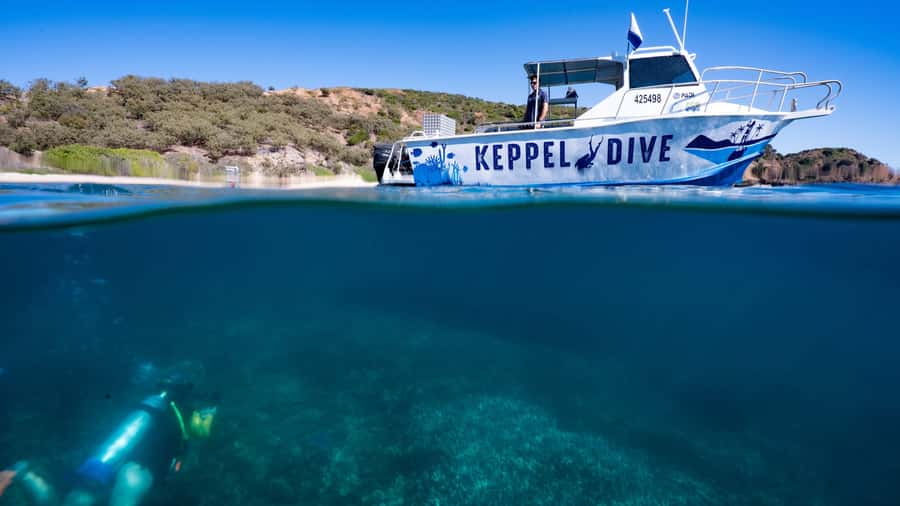
Once you have covered the safety points and practised in shallow water, you’ll have the chance to swim around and explore the underwater world near Great Keppel Island. The setting is the Southern Great Barrier Reef, a World Heritage listed marine area.
The information provided does not promise particular fish, coral, visibility, or a specific site. That is worth keeping in mind. Marine conditions can affect what you see, and the attraction here is the chance to experience the reef environment while learning, not a guaranteed wildlife checklist.
Still, the setting gives this introductory lesson more appeal than a pool-only class. You are not just rehearsing skills in an artificial setting. You are using those skills in a major Queensland reef destination, under professional supervision.
The open-water portion is also where the activity becomes more than an equipment lesson. You get to test how it feels to swim, breathe, and look around below the surface. For someone comparing a resort pool introduction with a reef-based session, Great Keppel Island offers the more meaningful first taste.
Why the small group matters
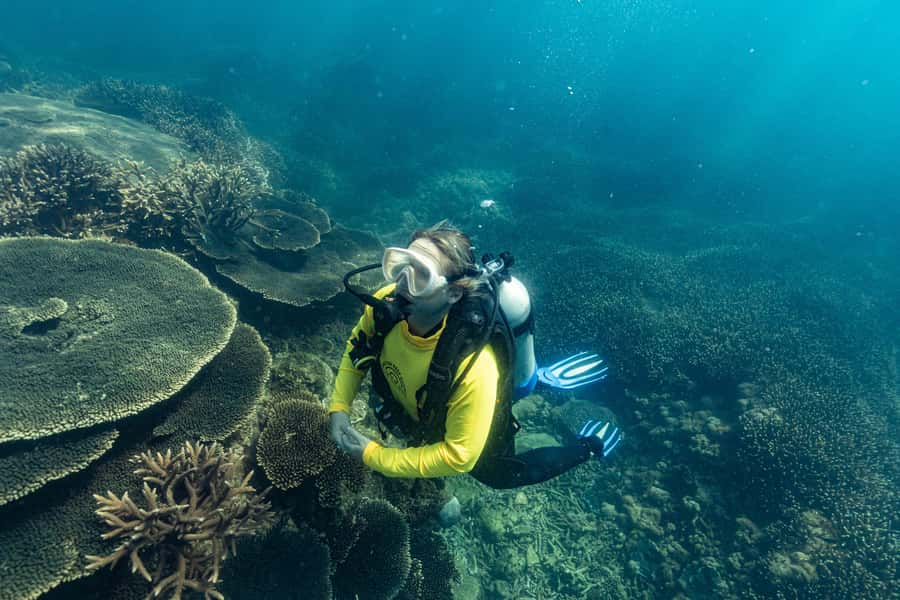
The group is limited to eight participants. That is not a private lesson, but it is small enough to make the class feel less anonymous than a large resort operation.
Beginners often need practical help rather than a long speech. You may need an instruction repeated, equipment explained again, or a little time before you feel ready to move on. A smaller group gives the PADI Professional a better chance to keep track of those needs.
The group size also affects the mood. An anxious participant does not have to feel like the only person who is uncertain. Everyone is learning the same basic skills, and the session is designed for people with no previous scuba experience.
The strongest praise connected to this activity focuses on the crew’s kindness, patience, and attention. That matters more than flashy extras during a first lesson. A friendly approach can help you stay calm while you learn a completely unfamiliar way to move and breathe.
Who should book this session
This activity suits you if you are curious about scuba but not ready to enrol in the PADI Open Water Diver course. It is also a sensible choice if you want a short introduction during a Great Keppel Island visit rather than a full certification program.
You do not need previous scuba experience. You must be at least 12 years old and in reasonable physical health. The program is not suitable for pregnant women or people with pre-existing medical conditions.
You also need to complete a medical form. If you answer yes to any of the questions, there is a possibility that you will not be allowed to participate. Do not treat the form as a routine detail. If you have a medical concern, check your suitability before arranging the rest of your island day.
The activity may also suit larger parties because bookings for larger groups are available. The standard session remains limited to eight participants, so ask the operator how a larger booking will be arranged rather than assuming everyone will be in one group.
Price, timing, and overall value
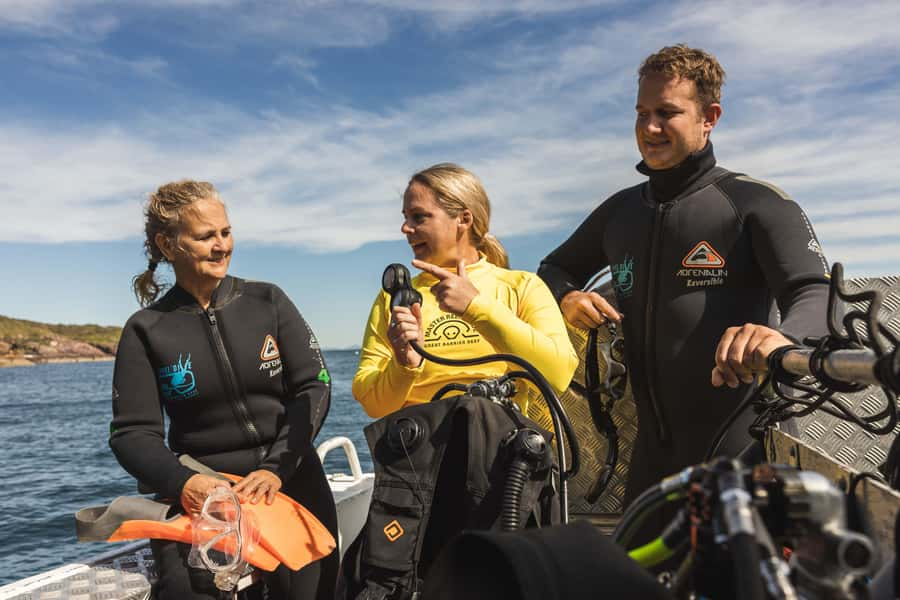
At $130 per person, this is a reasonable price for a supervised introduction that includes instruction, equipment orientation, shallow-water practice, and reef exploration. The value is strongest if you want to test scuba before paying for a full certification course.
The total cost is higher once you add the return ferry. You’ll also need to budget for food and drinks because neither is included. That makes this less of a simple two-hour purchase and more of an island day with a scheduled activity in the middle.
The 2-hour duration is a good fit for a first attempt. A longer session might provide more time underwater, but it could also be tiring for someone still learning the equipment. This format offers enough instruction to make the trial meaningful without asking you to commit to an entire day of training.
The timing of the ferry is the practical issue to watch. The 7:30am departure is recommended, and the return service leaves at 4pm. Confirm the available activity start time before booking your ferry, then leave yourself room to find the meeting point and prepare.
Free cancellation is available up to 24 hours before the activity for a full refund. You can also reserve and pay later, which is useful when your Queensland schedule is not yet fixed.
What to pack and how to prepare
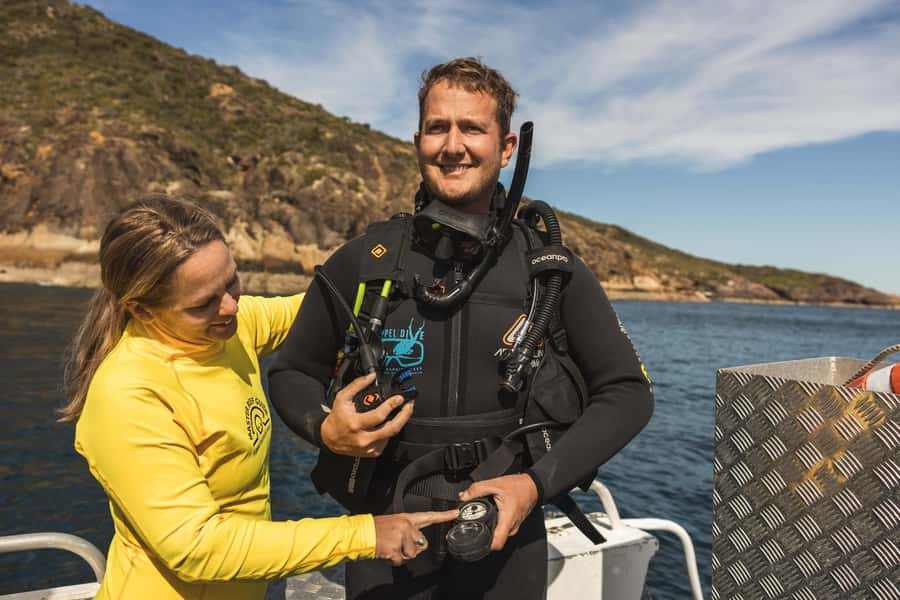
Bring swimwear. Since no food or drinks are provided, arrange those separately for the island day.
Wear something that works for a beach-based activity and allows you to change comfortably afterward. The meeting point is at Fisherman’s and Putney Beach, so knowing exactly where to go is more useful than wandering around looking for a large shop or office.
Arrive with enough time to locate the little blue dive shack and complete any required paperwork. The medical form is not something to ignore, especially if you have a pre-existing condition or answer yes to one of its questions.
Most of all, arrive ready for a lesson rather than a sightseeing cruise. The first part is about safety, equipment, and basic skills. The reef exploration comes after you have had time to understand what you are doing.
Should you book the Great Keppel Island scuba trial?
Book it if you want a proper first taste of scuba in a reef setting, with a PADI Professional close by and a group capped at eight. The session gives you enough instruction to make an informed choice about future certification, rather than simply handing you equipment and sending you into the water.
I would especially recommend it to confident swimmers who are curious but undecided about the PADI Open Water Diver course. Families with children aged 12 and older may also consider it, provided everyone meets the health requirements.
Skip it if you want a guaranteed list of marine animals, a full certification, or a simple activity with no ferry planning. The extra transport cost and medical screening are real considerations.
For the right person, $130 buys more than two hours in the water. It buys a careful introduction, a chance to learn from instructors such as Anto, and a clear answer to the question of whether scuba belongs in your future holiday plans.
FAQ
How long does the Great Keppel Island scuba activity last?
The activity lasts two hours. Starting times vary, so check availability when booking.
How much does the activity cost?
The listed price is $130 per person. Return ferry transfers, food, and drinks are not included.
Is scuba certification required?
No. You do not need previous scuba experience, and this is not a certification course. You will hear about the PADI Open Water Diver course as the next step toward certification.
What age do you need to be?
Participants must be at least 12 years old.
Where is the meeting point?
Meet at the little blue dive shack on the corner of Fisherman’s and Putney Beach on Great Keppel Island.
Is the ferry included?
No. You must book and pay for your return ferry transfers separately. The 7:30am Keppel Konnections ferry is recommended, and the return service leaves the island at 4pm.
What should you bring?
Bring swimwear. Food and drinks are not included, so arrange those separately.
Is the activity suitable for everyone?
No. It is not suitable for pregnant women or people with pre-existing medical conditions. You must complete a medical form, and answering yes to any question may mean you cannot participate.
More Discover Scuba Diving in Australia
- Gold Coast: Introductory SCUBA Diving Experience
★ 4.4 · 34 reviews - Great Keppel Island PADI Discover Scuba Dive with Keppel Dive
★ 5.0 · 25 reviews - Sydney: Discover Scuba Dive at Australia’s most Iconic Beach
★ 4.8 · 20 reviews - Try Scuba Diving at Cook Island – Guided Ocean Dive with Turtles
★ 4.5 · 6 reviews
Newest dives added in Australia
- Scuba Dive the S.S. Yongala Wreck on the Great Barrier Reef.★ 4.0 · 35 reviews
- Half-Day Private Discover Dive at Australia’s Iconic Beach★ 5.0 · 4 reviews
- Scuba Dive With Grey Nurse Sharks in Bushrangers Bay★ 5.0 · 7 reviews
- Wave Break Island Scuba Diving on the Gold Coast★ 4.5 · 81 reviews
- Great Keppel Island PADI Discover Scuba Dive with Keppel Dive★ 5.0 · 25 reviews
- Poseidon Outer Great Barrier Reef Snorkeling and Diving Cruise from Port Douglas★ 4.5 · 101 reviews
- Premium Guided Dive Trip – Outer Great Barrier Reef★ 5.0 · 63 reviews
- Try Scuba Diving at Cook Island – Guided Ocean Dive with Turtles★ 4.5 · 6 reviews
PADI Courses & Certification, compared.
Tossa de Mar: PADI Discovery Scuba Diving in Costa Brava
Read our review →
Full-Day Beginner Scuba Course with Private Tuition, Racha Yai
Read our review →
Heraklion: Beginner Scuba Diving Lesson with PADI Instructor
Read our review →
Discover Scuba Diving with No Certification in St Thomas
Read our review →
Try Dive – PADI Discover Scuba Diving in Tenerife
Read our review →
Browse the lists this dive appears in