
Reviewed · FREEDIVING
3-Day Freediving Level 1 Course
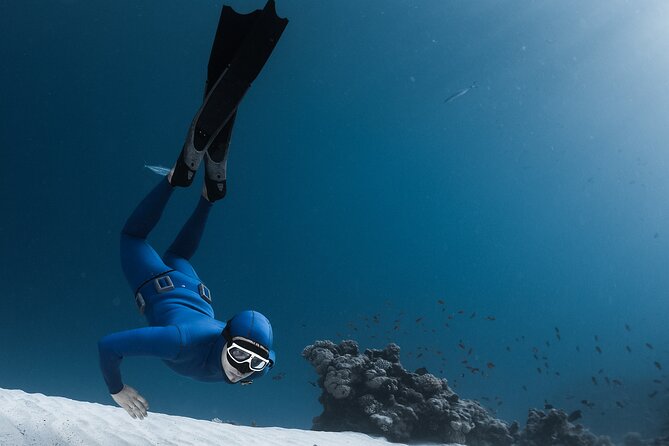
Nusa Penida is a fine place to learn freediving, with warm tropical water, coral, and fish below the surface. This three-day course takes you from breathing theory and pool work to open-water training, with most students reaching 15 to 20 meters and holding their breath for more than two minutes. Small groups and a patient teaching style are the big attractions.
I like the fact that you do not need to buy special equipment, and that underwater photos are included. I also like the steady progression: two confined-water sessions before three open-water sessions gives you time to build calm and control. The main drawback is the schedule. From 8:30 a.m. to 4:30 p.m. for three days, it is a serious course, and you must arrange your own transport, lodging, and lunch.
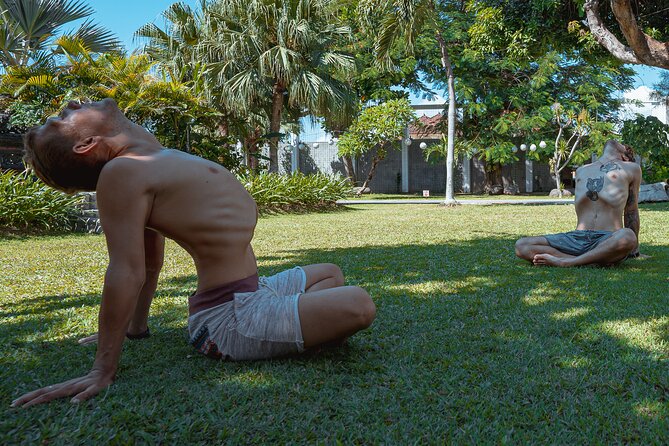
- Three days of structured training: Expect theory, land practice, two confined-water sessions, and three open-water sessions.
- Maximum four students per instructor: This allows close supervision and personal feedback.
- Equipment included: You can use the required freediving gear without purchasing anything special.
- Nusa Penida setting: Practice in a tropical sea among coral and fish, with underwater photos to take home.
- Beginner-friendly entry: No previous experience is required, but you must be able to swim.
- Certification included: The course price covers freediving certification and digital learning materials.
A calm beginning at Freedive Nusa
Your three days begin at Freedive Nusa, on Jl. Ped-Buyuk in Ped, Nusa Penida. The school operates from 8:30 a.m. to 4:30 p.m., and the course follows that full-day rhythm. You return to the same meeting point at the end.
This is not a quick morning tryout. You are signing up for a proper introductory course, with time set aside for classroom learning, breathing work, water skills, and repeated practice. That matters because freediving is not simply swimming underwater while holding your breath. You need to learn how to stay relaxed, use your breath sensibly, equalize pressure, and return to the surface safely.
The course welcomes first-timers. You do not need an earlier qualification or experience with underwater sports. The clear requirement is that you can swim and have a moderate level of physical fitness.
I would arrive ready for a focused day rather than a casual beach outing. The pace is measured, but the hours are long. A break for lunch is included in the daily timetable, though lunch itself is not included in the price.
Why four students per instructor matters
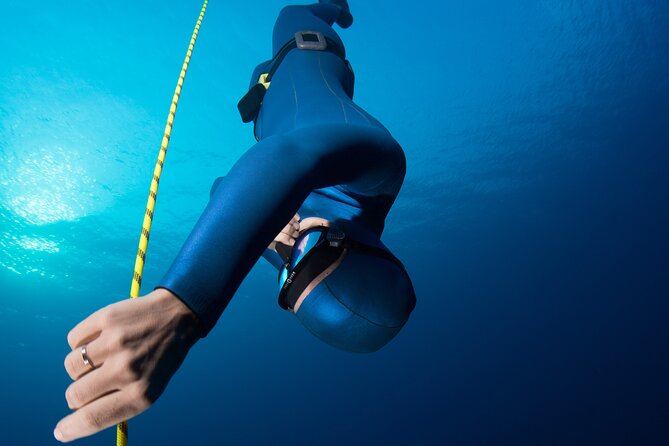
The maximum class size is four students for each instructor. That is one of the most important details here, especially if you are new to breath-hold training.
In a small group, your instructor can watch your technique, notice when you are tense, and give you a more useful correction than a quick general tip. You are also less likely to spend long periods waiting for your turn. For a sport built around relaxation and safety, that personal attention has real value.
The teaching team includes instructors such as Artem, Roberto, Seva, Gaston, Hamza, Sabli, and Chiara. The course information does not guarantee which instructor you will receive, but the names give you a sense of the school’s teaching team. Artem is described as considerate while still encouraging students to push in the right direction. Roberto is noted for helping a nervous beginner feel comfortable. Seva is praised for patience, humor, and careful instruction.
Those details are useful if you are worried about being a complete novice. You should still expect to work hard, but the teaching approach appears designed to challenge you without turning the course into a contest.
More Freediving in Indonesia
- Snorkeling and Freediving Trip around Nusa Penida
★ 4.5 · 77 reviews - Freedive Silfra Half Day Tour
★ 5.0 · 225 reviews - Thingvellir: Silfra Freedive Adevnture with a Guide
★ 4.8 · 40 reviews
Day one: theory, breath control, and confined water
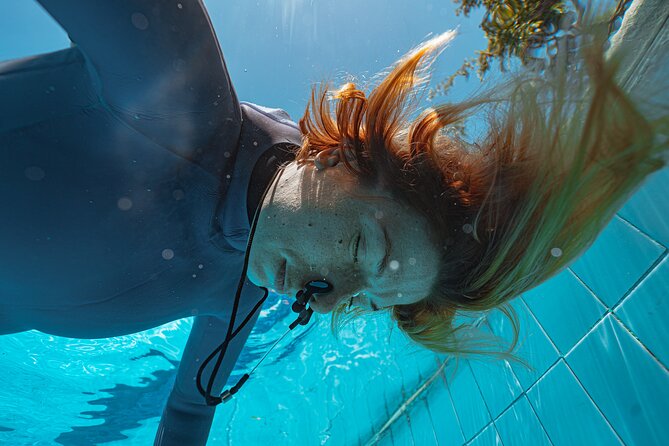
The first day lays the groundwork. You study the basic ideas behind freediving on land, then put them into practice in a confined-water setting. This sequence is valuable because you can focus on body position and breathing without immediately dealing with the wider ocean.
The theory is not filler. It explains how to prepare for a breath hold, how to remain relaxed, and how to manage your descent and ascent. You also begin learning the safety habits that make this activity suitable for supervised practice.
For a beginner, the first water session may feel strange. The course description openly recognizes that some people begin with fear about being underwater without breathing. The gradual move from land work to pool or confined water gives you a chance to get used to that feeling.
This is where a calm instructor matters. Roberto is specifically praised for helping a student overcome that early fear, while Artem is noted for balancing support with a gentle push. You should not expect to reach the course’s maximum depth on day one. The point is to make the water feel familiar and controlled.
The first day also helps you find out how your body responds. Some people can hold their breath comfortably on land but tense up in the water. Others need time to learn equalization. The small class format gives the instructor room to adjust the lesson to those differences.
Day two: two confined-water sessions and better control
The second day continues the practical work, including the second confined-water session. By now, you are working on smoother technique rather than simply trying to stay underwater for as long as possible.
The course aims to improve several skills at once: relaxation, breath control, body position, and safe movement. These skills work together. A tense swimmer uses energy quickly, while a relaxed swimmer can move more efficiently. The instruction is designed to help you notice that difference.
You also begin to understand the gap between a good breath hold and a safe one. More time underwater is not the only goal. You need to know how the hold feels, how to remain calm, and how to follow the instructor’s guidance. The course’s measured structure is helpful here because it discourages rushing.
Many beginners will find this stage challenging but encouraging. One former student described making major progress in only three days, while another began afraid of breath-hold swimming and gradually became comfortable. That is a reasonable expectation for the format: you can make clear progress, but you are not expected to become an expert in one visit.
The school provides the equipment, so you can focus on learning rather than shopping for fins, masks, or other freediving gear. The included kit also makes the course easier to book as part of a Bali trip.
Day three: open water around Nusa Penida
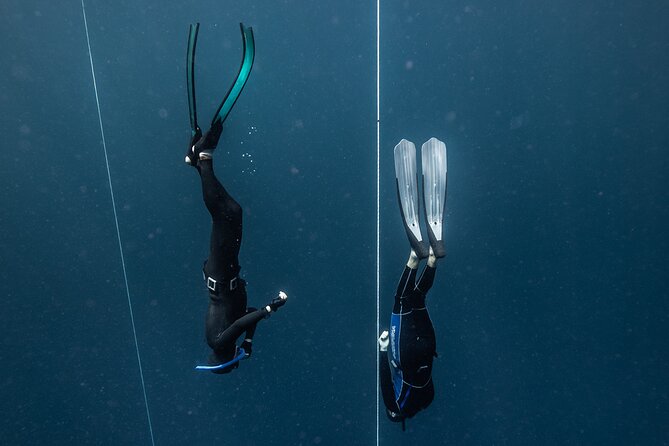
The third day brings the training into open water. Across the course, you complete three open-water sessions, giving you time to apply the skills from the pool in a natural setting.
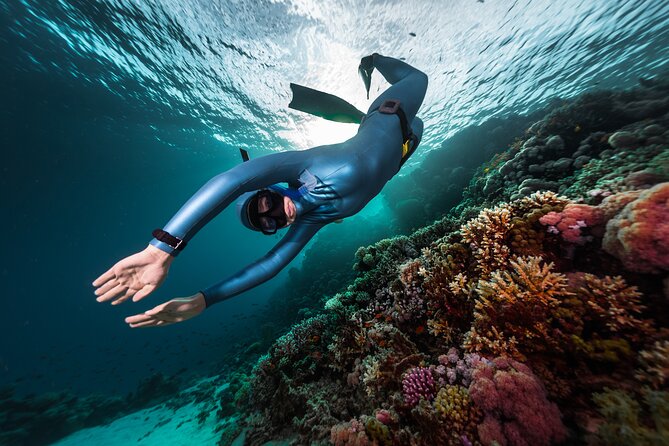
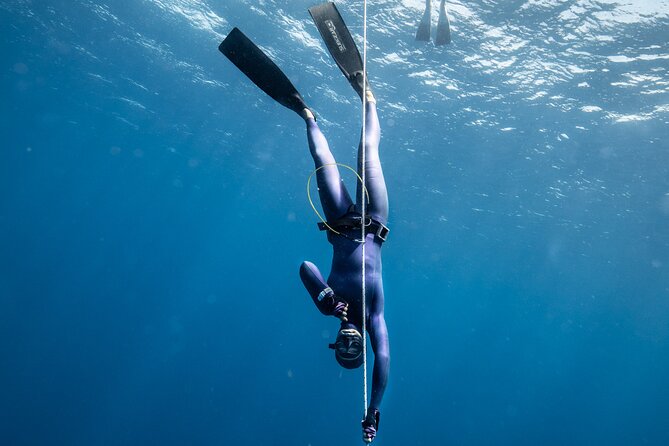
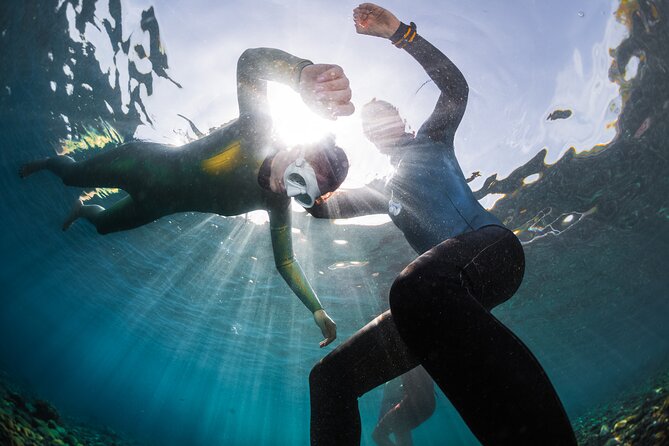
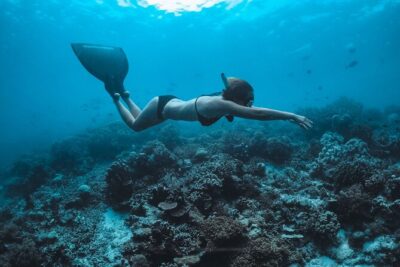
Nusa Penida adds much of the appeal. You may be swimming among coral and tropical fish, and underwater photos are included so you can take home a record of the experience. The photos are more than a souvenir. They can also help you see your body position and movement below the surface.
Open water brings new variables, including the feeling of greater space and the changing underwater view. That is exactly why the earlier sessions matter. You are not being sent straight from a classroom into your deepest attempt. You build up through theory, confined water, and then the sea.
The stated course result is ambitious but clearly framed as a typical outcome, not a promise. Most students can reach 15 to 20 meters, or about 50 to 65 feet, and hold their breath for more than two minutes by the end. Your result will depend on comfort, fitness, technique, and how your body responds to the training.
I would treat those figures as a useful benchmark, not a target you must force. A calm, controlled 10-meter session can be more valuable than an uncomfortable attempt at 20 meters. The course seems to place safety and technique ahead of bravado, which is the right approach.
More three-day trips in Indonesia
- Sanur Open Water Course learn diving in 3 Days – Get certified & Dive everywhere
★ 5.0 · 9 reviews - 3-Day PADI Open Water Diving Course in Dubai
★ 5.0 · 173 reviews - Padi open water diver course, become a diver in 3 days
★ 5.0 · 113 reviews - Become certified diver in 3 days – PADI Open Water Diver course on Koh Tao
★ 5.0 · 104 reviews
What the $450 price covers
At $450 per person, this is a substantial activity expense, but it covers three full days rather than a single introductory session. The price includes freediving equipment, all fees and taxes, certification, and digital learning materials.
The small instructor ratio improves the value. You are not paying only for access to the water. You are paying for repeated coaching, theory, confined-water practice, open-water work, and a qualification at the end.
The underwater photos add another practical benefit. They give you something tangible from the course and may help you remember the techniques you learned. The digital materials also let you continue reviewing the course content after leaving Nusa Penida.
You must budget separately for accommodation, private transportation, and lunch. Those exclusions matter because the course occupies most of the day. If you are staying on another part of Bali, getting to Ped and back may take planning. The meeting point is on Nusa Penida, and the activity ends there, so do not assume hotel transfers are built into the $450.
For someone who wants only a quick introduction, the price may feel high. For someone who wants a serious beginner course with certification and three days of instruction, the package is easier to justify.
The instructors and the learning atmosphere
The strongest pattern in the available feedback is the teaching. Different instructors are singled out for being patient, supportive, funny, considerate, and clear. That consistency matters more than any one instructor’s personality.
Sabli is praised for clear explanations and good equipment. Artem is described as attentive to each student while still encouraging progress. Roberto helped a nervous beginner settle into the activity. Seva is noted for being patient, kind, funny, and careful about safety. Gaston is associated with professional, supportive instruction, while Hamza is praised for his patience and ability to build confidence.
You should not expect every instructor to teach in exactly the same way. Some may be more playful, while others may be more technical. The common thread is individual guidance and encouragement.
The school’s reported rating is 5 out of 5 from 54 reviews, with 100 percent recommending it. Ratings alone cannot tell you how your own body will respond, but they do support the idea that the school’s strongest feature is its human side: clear instruction and personal care.
Who will enjoy this course most
This course suits you if you want to learn a real skill rather than simply take a short snorkeling outing. It is also a good fit if you like a structured schedule and want a certificate at the end.
You do not need previous freediving experience, so complete beginners are welcome. You do need to swim and manage three days of physical activity. The course may be less suitable if you want a flexible holiday activity with no fixed timetable.
It is also a good choice for people who feel nervous in the water but want to work through that feeling with supervision. The gradual progression and small group can help, though no course can guarantee that every person will become comfortable with breath holding.
Strong swimmers should not assume the course will be easy. Breath-hold technique is different from ordinary swimming, and the instruction still requires focus. You will get more from it if you arrive rested, prepared to listen, and willing to progress at a sensible pace.
Practical planning for Nusa Penida
You meet and finish at Freedive Nusa in Ped. Private transportation is not included, so check how you will reach the school each morning before booking. Accommodation is also your responsibility, as is lunch.
The operating hours are 8:30 a.m. to 4:30 p.m., Monday through Sunday. Plan your Nusa Penida stay around those hours rather than trying to squeeze the course between other major activities.
The booking uses a mobile ticket, and confirmation is provided at booking. If your plans change, you can cancel for a full refund up to 24 hours before the start time. Cancellations or changes made less than 24 hours in advance are not accepted for a refund, with cut-off times based on local time.
Because this is a three-day course, I would avoid booking it immediately before a tight ferry or flight connection. The provided details do not include a transfer service, so give yourself enough time to finish the final session and arrange your next move.
Should you book the Nusa Penida Level 1 course?
Book it if you want a careful, three-day introduction with equipment, certification, digital materials, small classes, and open-water practice. The combination of confined-water training and tropical sea sessions gives you a stronger start than a brief tryout.
I especially like the maximum of four students per instructor and the clear progression from theory to pool work to open water. Those features make the $450 price more reasonable for a person who intends to keep practicing after Bali.
Think twice if you want a low-cost activity, need hotel transport included, or do not want to commit most of three days. For a curious beginner who can swim and wants to learn safely, this is a focused and well-supported way to enter freediving on Nusa Penida.
FAQ
Is previous freediving experience required?
No. The course is open to beginners with no previous freediving experience.
Do I need to know how to swim?
Yes. You must be able to swim to participate.
How long does the course last each day?
The course runs from 8:30 a.m. to 4:30 p.m., including a lunch break.
How many students are assigned to each instructor?
The maximum is four students per instructor.
What water sessions are included?
The course includes two confined-water sessions and three open-water sessions.
Is freediving equipment included?
Yes. The use of freediving equipment is included in the price.
Are certification and learning materials included?
Yes. Freediving certification and digital learning materials are included.
Are transport, accommodation, and lunch included?
No. Private transportation, accommodation, and lunch are not included.
Where does the course start and finish?
It starts at Freedive Nusa, Jl. Ped-Buyuk No. Desa, Ped, Kec. Nusa Penida, Nusa Penida, Bali 80771, Indonesia, and ends back at the meeting point.
Newest dives added in Indonesia
- Bali: Tulamben Bay and the USAT Liberty Wreck Dive★ 4.9 · 58 reviews
- Tulamben Diving Tour Shipwreck USS Bali★ 5.0 · 13 reviews
- Tulamben Diving USS Liberty Shipwreck Scuba Dive★ 5.0 · 186 reviews
- Bali: Tulamben Bay Beginner’s Dive Experience★ 5.0 · 66 reviews
- 7 Fun Dives in Pemuteran (for certified divers) – Exploration in Menjangan Park★ 4.5 · 9 reviews
- 5 Fun Dives in Pemuteran (for certified divers) – Exploration in Menjangan Park★ 5.0 · 25 reviews
- Menjangan island for Certified Scuba Divers full day boat trip, 2 dives + lunch★ 5.0 · 25 reviews
- Discover Scuba Diving in Pemuteran – Diving Initiation in Bali (Menjangan Park)★ 5.0 · 36 reviews
Freediving, compared.
Snorkeling and Freediving Trip around Nusa Penida
Read our review →
Freediving and Snorkeling at Yawasam and Talu Island
Read our review →
Freediving in Phuket – SSI – AIDA – Molchanovs – PADI
Read our review →Browse the lists this dive appears in