
Reviewed · FREEDIVING
Try Freediving on Nusa Penida
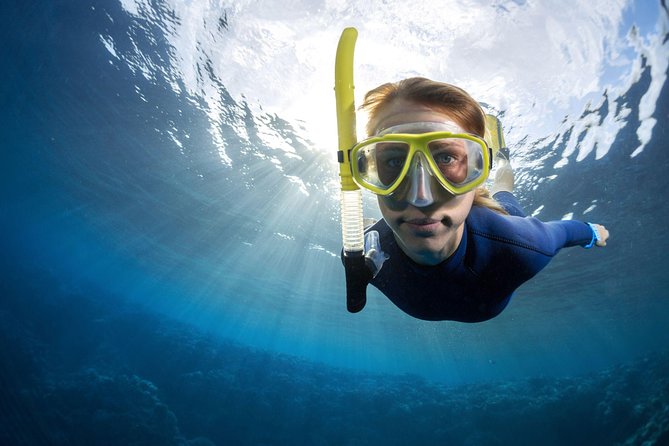
Nusa Penida’s best lesson here is not about chasing great depth. It is about learning to move calmly underwater, hold your breath safely, and see more of the reef than you can while bobbing at the surface. The first 90 minutes cover basic theory and technique, followed by hands-on practice on the reef beside the school.
I like the maximum-four group size, which gives the instructor room to watch your breathing, comfort, and form. I also like that underwater photography is included, along with drinking water, equipment, and digital learning materials. The main consideration is that this is a short introduction, not a full certification course, and transportation to the school is not provided.
Key points to know before booking
- Ninety minutes of classroom preparation comes before entering the water, so you learn the safety basics first.
- Practice takes place on the home reef directly in front of the school rather than requiring a separate transfer.
- Groups are limited to four people, an important feature for anyone new to breath-hold swimming.
- Instructors such as Roberto, Chiarra, and Heiko are praised for calm, reassuring instruction.
- Equipment, drinking water, digital materials, and underwater photography are included in the $150 price.
- The activity lasts about three hours and begins and ends at the school in Ped, Nusa Penida.
What this Nusa Penida breath-hold lesson really teaches
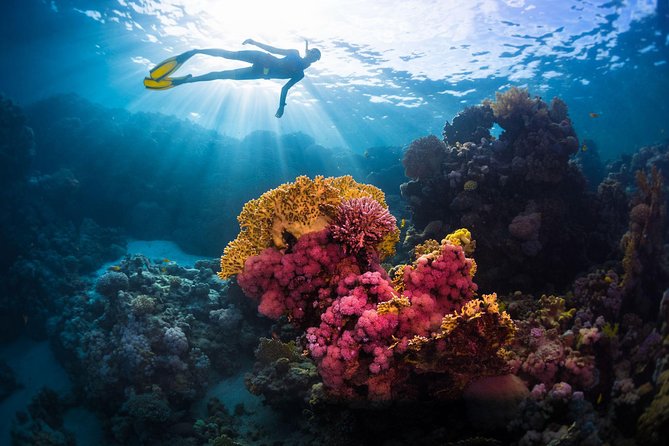
This experience is best understood as advanced snorkeling with formal instruction. You are not signing up for a long expedition or a course aimed at extreme depth. Instead, you learn how to use your breath more effectively, stay relaxed underwater, and extend your range around a tropical reef.
That difference matters. Many people can snorkel, but still feel rushed when they swim below the surface. They kick too hard, waste air, or become tense as soon as they leave the top few feet. This lesson addresses those habits in a controlled setting. I like that the goal is practical: help you feel more at ease in the ocean and give you more freedom while swimming.
The experience runs for about three hours. The school is in Ped, on Nusa Penida’s north coast, at Jl. Ped to Buyuk, No. Desa, Ped, Kec. Nusa Penida. You arrange your own way there, and the activity returns to the same meeting point.
More Freediving in Indonesia
- Snorkeling and Freediving Trip around Nusa Penida
★ 4.5 · 77 reviews - 3-Day Freediving Level 1 Course
★ 5.0 · 54 reviews - Freedive Silfra Half Day Tour
★ 5.0 · 225 reviews
The first 90 minutes: learning before entering the water
The opening hour and a half takes place in the classroom. You learn the basic theory behind breath-hold swimming, along with practical methods for entering the water, managing your breathing, and moving with less effort.
This part may sound less exciting than the reef, but it is where much of the value lies. A short lesson on technique can make your time in the water calmer and more productive. You also get digital learning materials, so the introduction does not end when you leave the school.
The instruction is designed for people who want to see more of the reef, not necessarily those training for impressive records. That makes the tone more approachable. You do not need to arrive as an experienced swimmer, but you should have a moderate level of physical fitness and be comfortable in the water.
The school has hosted first-timers and families, and instructors named in feedback include Roberto, Chiarra, and Heiko. Chiarra is specifically praised for a calm manner with beginners, while Heiko is described as reassuring and clear during early training. Those qualities matter more here than flashy credentials. When you are learning to stay relaxed while holding your breath, a patient teacher is a real advantage.
The home reef beside the school
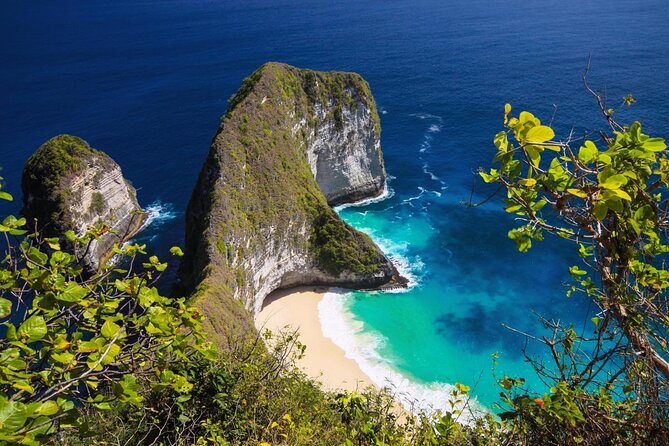
After the classroom session, you move into practical work on the reef directly in front of the school. This keeps the schedule simple. You do not lose time loading into another vehicle or boat, and you can focus on the new skills while the instruction is still fresh.
The reef is described as beautiful and full of marine life. Conditions can always affect visibility and comfort in the sea, so you should treat the water session as practice rather than a guaranteed wildlife show. The point is to apply the skills, move with better control, and become more confident below the surface.
The small group helps here. With no more than four people, the instructor can give individual guidance and keep an eye on each person. That is particularly useful if one member of the group is nervous, another wants to improve technique, and a third is already comfortable in the water.
You should expect a gradual introduction, not pressure to descend farther than feels right. Safe breath-hold practice depends on staying relaxed and listening to the instructor. The best result may be a smoother, shorter swim rather than a dramatic plunge.
Why the small group matters
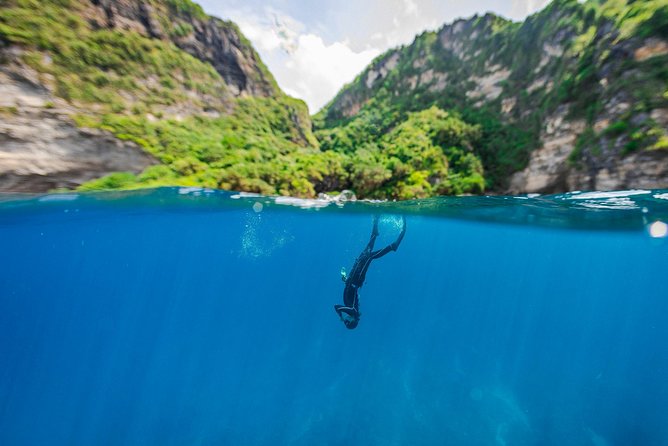
A four-person limit is one of the strongest features of this activity. Breath-hold training is not like standing on a crowded boat while someone explains where to look. Your breathing, body position, and comfort all need attention.
A large class would make that harder. With a small group, you have a better chance to receive corrections and ask questions without waiting behind a line of other participants. The instructor can also adapt the practice to different comfort levels.
This helps explain why the experience suits first-timers. The school’s instructors are repeatedly described as calm, friendly, and reassuring. One participant who had a physical limitation said the course was adjusted to accommodate it. That does not mean every medical or physical condition can be supported, so you should contact the school before booking if you need a specific adjustment.
Children are allowed from age four, but anyone under 18 must be accompanied by an adult. The minimum age alone should not be treated as proof that the activity suits every young child. A child needs enough water confidence and attention span to follow instructions, and the adult should be ready to support the process.
Another way to get in the water in Indonesia:
- 2 Days Discover Scuba Diving in Nusa Lembongan – Scuba Initiation
★ 5.0 · 506 reviews - Bali Diving for Beginners: Tulamben Liberty Wreck
★ 5.0 · 367 reviews - Discover Scuba Diving in Tulamben – Diving Initiation in Bali best diving sites
★ 5.0 · 353 reviews - 5 Fun Dives in Nusa Lembongan (for certified divers) – Swim with a Mola Mola
★ 5.0 · 205 reviews
From snorkeling to more controlled movement
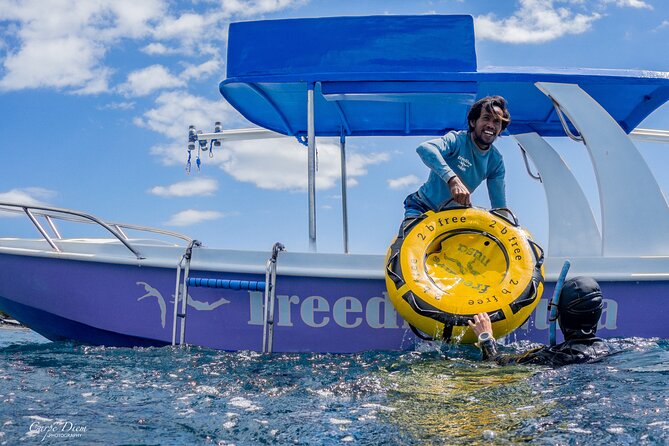
The biggest practical benefit is that you may return to ordinary snorkeling with better habits. You learn to use your body more economically, which can make short underwater visits feel less rushed.
That does not turn you into an expert after one morning. It gives you a foundation. If you enjoy the method, the school also offers longer courses and other trips, including programs in Nusa Penida and Komodo. The introductory session lets you test the sport before committing to more training.
I would recommend this format to someone who already likes snorkeling but feels limited by the surface. It is also a sensible first step for a person curious about breath-hold sports but not ready for a multi-day course.
It is less suitable if you want a full-day reef safari, a boat trip to several sites, or guaranteed encounters with large animals. The supplied material includes separate experiences involving manta encounters, but this particular session is built around instruction and the nearby reef.
Underwater photos add useful value
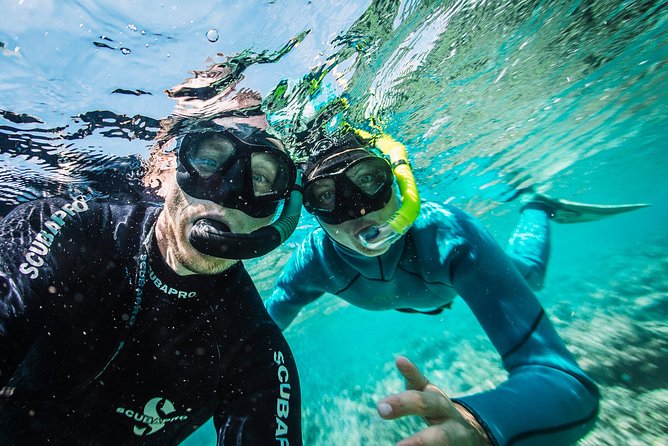
Underwater photography is included, which gives the morning a lasting record beyond the lesson itself. Photos can also help you notice body position and movement after the session, though the main value is simply having a visual reminder of the experience.
The photography should not be the reason you book. The lesson is about comfort, safety, and technique. Still, when you are paying $150, included images help make the price easier to accept, especially if you are traveling with a family member or friend.
The other inclusions are practical: drinking water, equipment, and digital learning materials. You do not need to arrange the basic gear separately. Since transportation is excluded, though, you must budget for your own journey to Ped and back.
Is $150 a fair price?
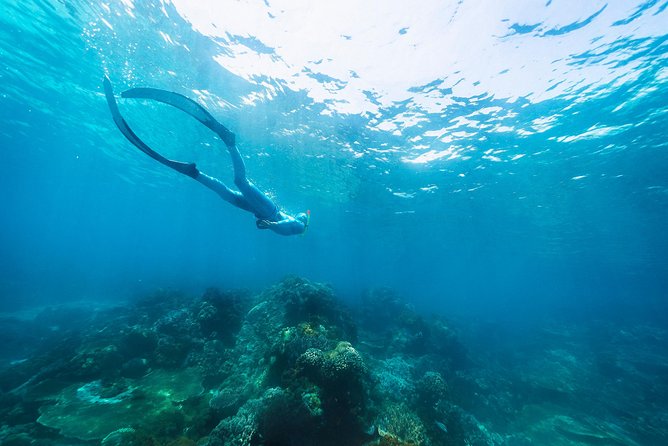
At $150 per person, this is not a cheap snorkeling outing. The value comes from the instruction rather than from the number of hours in the water.
You are paying for roughly three hours, with half of that time devoted to structured teaching. The small group, equipment, water, digital materials, instructor supervision, and underwater photos all add useful value. If you only want to float over a reef, a basic snorkeling trip may cost less and suit you better.
I see the price as reasonable for someone who specifically wants to learn breath-hold technique in a controlled setting. The four-person limit is important. A cheaper, larger class may not offer the same amount of personal attention.
The value is also stronger if you plan to continue snorkeling or take a later course. You can carry the breathing and movement skills into future time in the sea. If you want only a one-off wildlife outing, the price may feel high for a three-hour activity.
Getting to the school and planning your morning
The meeting point is the school on Jl. Ped to Buyuk in Ped, Nusa Penida. Pickup and drop-off are not included, and no transportation to other attractions is part of the activity.
The listed operating hours are Monday through Sunday from 8:30 a.m. to noon. Confirm your exact start time when booking, since the experience is tied to the school’s morning schedule. Plan enough time to reach Ped without rushing. Arriving calm is useful when the first part of the session focuses on breath and relaxation.
The activity ends where it begins. That makes it easy to pair with other plans on the island, but you should leave room for changing, getting your bearings, and arranging transport afterward. Do not assume you will be collected at your accommodation.
Bring the level of fitness you would want for a morning in the sea. The stated requirement is moderate physical fitness. Children must have an adult with them, and all participants should be prepared to follow safety instructions closely.
The instructors and the tone of the lesson
The individual instructors named in feedback give you a sense of the school’s teaching style. Roberto is praised for introducing a beginner to the wider idea of breath-hold sports. Chiarra is noted for her calm work with an adult and an eight-year-old child. Heiko is described as competent, patient, and reassuring during a first course.
Those details point to a school that puts comfort first. That is exactly what I want in this kind of activity. You do not need a loud instructor pushing you to go farther. You need someone who can explain the method, watch your progress, and help you stay relaxed.
Kirill is also praised for knowing good locations around Nusa Penida and Komodo, particularly on longer programs. For this short introduction, the key question is not how many sites you visit. It is how well the instructor helps you use the home reef safely and confidently.
The school has also received positive attention for caring about marine life during manta-related outings. That information comes from other programs, so I would not treat it as a promise of manta sightings here. It does suggest that responsible treatment of wildlife is part of the school’s wider approach.
Who should book this experience?
I would choose this for:
- A confident snorkeler who wants to spend more time below the surface.
- A beginner curious about breath-hold swimming but not ready for a longer course.
- A small family group with an adult accompanying any child.
- Someone who values a calm instructor and close supervision.
- A visitor who wants included equipment and photos rather than arranging everything separately.
I would think twice if you want a boat-based itinerary, several reef locations, or a full certification. I would also contact the school before booking if you have a physical limitation, even though one previous participant was accommodated successfully.
The course is a good fit for people who want a skill-building morning. It is not simply a sightseeing ride with a quick swim added on.
Cancellation and booking details
You can cancel for a full refund up to 24 hours before the local start time. Cancellations made less than 24 hours ahead are not refunded, and changes inside that window are not accepted.
Confirmation is provided at booking. Since the activity requires you to reach a specific school and transportation is not included, check the meeting address and start time carefully before committing.
Should you book the Nusa Penida breath-hold introduction?
Book it if you want to improve the way you snorkel, prefer a small group, and are happy to spend as much time learning technique as practicing on the reef. The strongest reasons are the four-person limit, calm teaching style, included equipment, and direct access to the home reef.
Skip it if your priority is a long wildlife tour or a cheap swim. At $150, the price makes sense only when you value instruction and personal attention. For the right person, this is a smart way to test breath-hold swimming without signing up for a larger course or a full day on the water.
FAQ
How long does the experience last?
The activity lasts approximately three hours. The first 90 minutes take place in the classroom, followed by practical work in the water.
Where does the activity begin?
It begins at the Freedive Nusa school on Jl. Ped to Buyuk No. Desa, Ped, Kec. Nusa Penida, Bali 80771, Indonesia.
Where does the activity end?
It ends back at the meeting point, at the school.
Is transportation included?
No. Hotel pickup, drop-off, and transportation to or from attractions are not included.
What is included in the price?
The experience includes drinking water, freediving equipment, and digital learning materials. Underwater photography is also part of the experience.
How many people can join the group?
The group has a maximum of four participants.
What is the minimum age?
The minimum age is four years old. Children must be accompanied by an adult.
Can I cancel for a refund?
Yes. You can cancel at least 24 hours before the local start time for a full refund. Cancellations or changes made less than 24 hours before the start are not accepted for a refund.
Newest dives added in Indonesia
- Bali Hai – PADI Advance Open Water Course in Menjangan★ 5.0 · 2 reviews
- All Inclusive Bali Scuba Diving at Tulamben with Lunch -Transport★ 5.0 · 4 reviews
- Bali Full Day Experience Scuba Diving Tour at Tulamben★ 5.0 · 4 reviews
- PADI Open water Course in Tulamben – Get certified & dive anywhere in the world★ 5.0 · 5 reviews
- 7 Fun Dives in Tulamben (for certified divers) – Premium Value Package★ 5.0 · 69 reviews
- Try Diving at USAT Liberty Wreck Tulamben with 1 or 2 Dives (Stay In Tulamben)★ 5.0 · 5 reviews
- 5 Fun Dives in Tulamben (for certified divers) – Discover famous diving sites★ 5.0 · 93 reviews
- Nusa Penida Private Diving Tour by Speedboat★ 5.0 · 2 reviews
Freediving, compared.
Snorkeling and Freediving Trip around Nusa Penida
Read our review →
Freediving and Snorkeling at Yawasam and Talu Island
Read our review →
Freedive trip Koh Kood or Koh Rang National Park ( start at Ko Kut)
Read our review →
Freediving in Phuket – SSI – AIDA – Molchanovs – PADI
Read our review →Browse the lists this dive appears in