
Reviewed · PADI COURSES & CERTIFICATION
DiveGurus – Open Water Diver Course SSI/PADI
The first underwater breath is the hook here. In three days, DiveGurus takes you from basic theory to an internationally recognized SSI or PADI Open Water certification, with at least five confined-water sessions and four boat sessions at local sites. I like the clear progression, and I like that you work with one instructor and your own private group. The main catch is time: three days is efficient, but it leaves little room for a missed session or a slow start.
I also like the human side of this course. Instructors Brian, Max, Karlo, Andrew Gritzka, and Max are praised for patience, calm explanations, and helping nervous beginners handle skills such as mask removal. You get free coffee and tea at the center, too. Just remember that the $580 price covers a serious certification course, not a quick holiday activity.
Key points at a glance
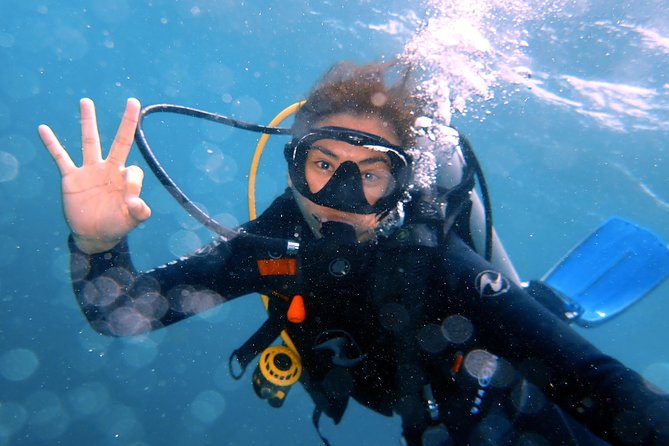
- Three days from theory to certification: You study basic principles, practice in shallow confined water, then complete four supervised boat sessions.
- Choose SSI or PADI: Both are entry-level certifications recognized worldwide.
- At least nine water sessions: The course includes five confined-water sessions and four sessions at local sites.
- Private group format: Only your group takes part, which can make questions and pacing easier.
- Patient instruction for beginners: Brian, Max, Karlo, and Andrew Gritzka are named instructors associated with supportive teaching.
- Simple meeting point: Start and finish at DiveGurus Boracay on Sitio Ambulong Road.
Your first three days under the water
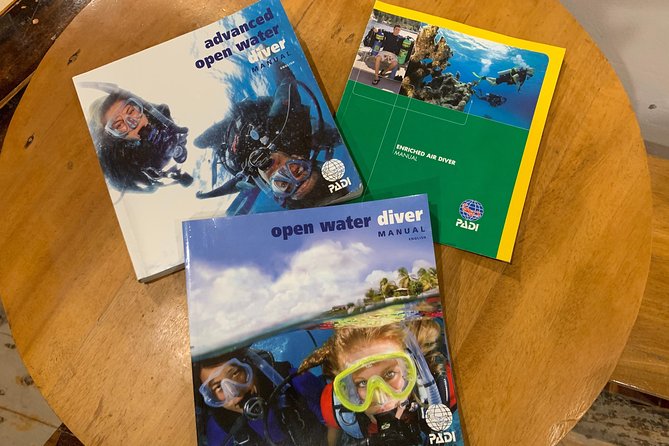
This is not a quick resort introduction. It is the full entry-level course that can begin your scuba career. Over roughly three days, you learn the basic rules, practice the essential skills, and show that you can use them in open water under an SSI or PADI instructor.
The course has three parts. First comes knowledge development, either online or in a classroom. Next, you practice in confined water, where the setting is shallow and controlled. Finally, you take four boat sessions at local underwater sites, using the skills you have already rehearsed.
I like this order because it removes some of the pressure from the first boat outing. You do not need to learn every skill for the first time while managing a new boat, new equipment, and open water. The confined-water work gives you a place to repeat the basics until they feel more natural.
The schedule is compact. Three days can suit a short stay in Boracay, but you should protect those days on your calendar. If you arrive tired, feel anxious in the water, or need extra practice, the timetable may feel full. The course is designed to be completed in three days, not stretched into a casual week of occasional lessons.
More PADI Courses in the Philippines
- Scuba Diving in Boracay: SSI Basic Diver for Beginners
★ 5.0 · 20 reviews - Scuba Diver Course (PADI)
★ 5.0 · 18 reviews - Open Water Course (PADI)
★ 5.0 · 12 reviews
Starting with the theory and safety basics
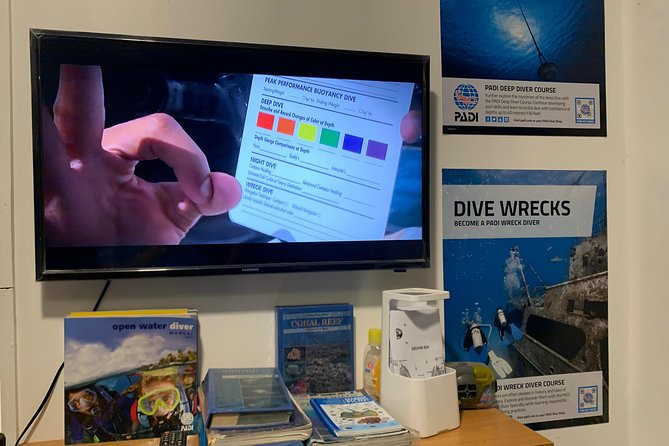
The first phase explains how scuba works and what you need to know before entering the water. The material covers basic principles, with the option of online study or a classroom briefing. That flexibility matters if you prefer to learn at your own pace before meeting the instructor.
Do not treat the theory as paperwork to rush through. It gives meaning to the skills you practice later. You need to understand the equipment, the basic rules of underwater travel, and the reasons behind safe habits. The information supplied for this course does not give a detailed classroom timetable, so confirm the exact study arrangement when booking.
The instructors named in the course feedback include Brian, Max, Karlo, and Andrew Gritzka. Their teaching is described as clear, patient, encouraging, and easy to understand. That matters more than flashy talk when you are learning a new physical skill. A calm explanation can make the difference between repeating a skill with confidence and feeling stuck.
The course is also suitable for people who are unsure about scuba. One student began with a dislike of snorkeling and a fear of staying underwater. The instructor adjusted the training slowly and helped that student become more comfortable. That does not promise that every fear disappears at once, but it shows why a patient instructor is worth seeking out.
Confined water practice before the boat
The next phase takes place in shallow, confined water. You complete at least five confined-water sessions, learning the practical skills needed for safe scuba use. The setting is less demanding than an open-water site, so you can focus on one task at a time.
This is where the course earns its keep. A short tryout can give you a memorable glimpse of scuba, but certification requires more than breathing through a regulator for a few minutes. You need to repeat skills, respond to instructions, and become comfortable using the equipment in water.
Mask removal is one skill that can trouble beginners. It is a normal part of training, but it can feel unpleasant if you are already nervous. The teaching team has helped students work through that concern with support and patience. If you are worried about this part, tell your instructor early rather than trying to hide it.
The private format should help here. Only your group takes part, so you are not placed in a large class with strangers moving at a different pace. You can ask questions without feeling that you are holding up a crowd. The course still follows certification requirements, but the personal setting may make the learning process feel less rushed.
The center also offers free coffee and tea, a small detail that can make a difference during a full training day. It will not change the course itself, but it gives you a simple place to pause, ask questions, and reset between sessions.
Four boat sessions at local sites
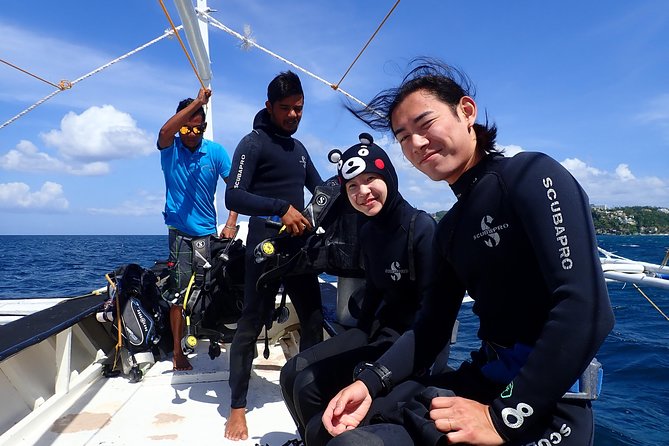
After the confined-water work, you move to four open-water boat sessions at local sites. These sessions let you review your skills in a real underwater setting and explore as part of the certification process.
The supplied information does not name the exact sites, guarantee particular marine life, or promise specific visibility. That is useful to remember when setting expectations. The value here is not a sightseeing checklist. It is the chance to apply your training in open water with an instructor supervising you.
Four boat sessions give you more practice than a single introductory outing. You have repeated opportunities to manage your breathing, use your equipment, follow instructions, and stay aware of your surroundings. The boat element also gives the course a clear sense of progression: shallow practice first, local sites later.
The underwater setting can be exciting, but it also demands attention. You are still learning, so some of your focus will go toward technique rather than scenery. I would think of the local sites as both an exploration opportunity and a practical test of your new skills.
The course description says the sessions are supervised by an SSI or PADI instructor. That supervision is especially important for a first certification. You are not expected to handle the whole process alone, and you can raise concerns before or during a session.
Another way to get in the water in the Philippines:
- Boracay: Helmet Diving Experience with Photos and Videos
★ 4.7 · 155 reviews - Cebu: Beach Scuba Diving Experience
★ 4.9 · 130 reviews - WaterColors – Discover Scuba Diving in Boracay
★ 5.0 · 127 reviews - Boracay: Introduction to Scuba Diving Experience
★ 4.8 · 104 reviews
Why the instructor matters so much
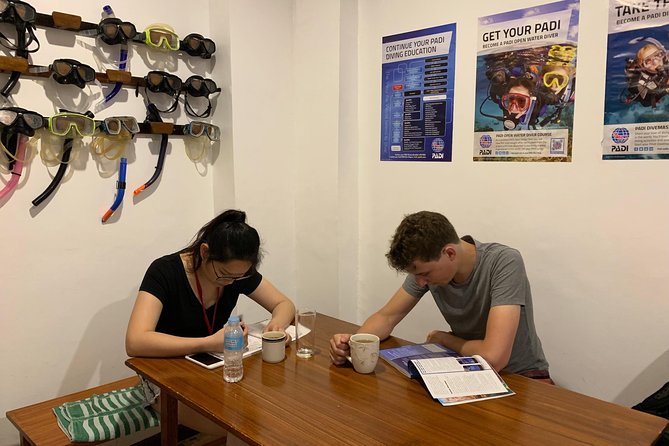
A good instructor can turn a frightening first lesson into a manageable challenge. The strongest pattern in the available feedback is the teaching style: calm, supportive, clear, and patient.
Brian is praised for guiding students through the full course, answering questions, and helping them feel confident. Karlo is described as encouraging, funny, and patient, with a welcoming approach that makes the center feel friendly over several days. Andrew Gritzka is praised for clear explanations, helpful support, and making students feel safe in a new environment.
Max is also singled out as the instructor to seek for a PADI course. Dom is associated with freediving rather than this specific Open Water course, so you should not assume that every instructor handles every program. Ask which instructor will lead your certification before you book.
That point is practical. If you have a strong preference for a particular teacher, request that person early, but do not assume availability. The booking information confirms an SSI or PADI instructor, while the named individuals come from individual course experiences.
The center also offers programs from first-time sessions through advanced training, including a path toward Divemaster according to one account. For this course, the important point is that the instructors work with beginners and understand that confidence may build slowly.
What the $580 price really buys
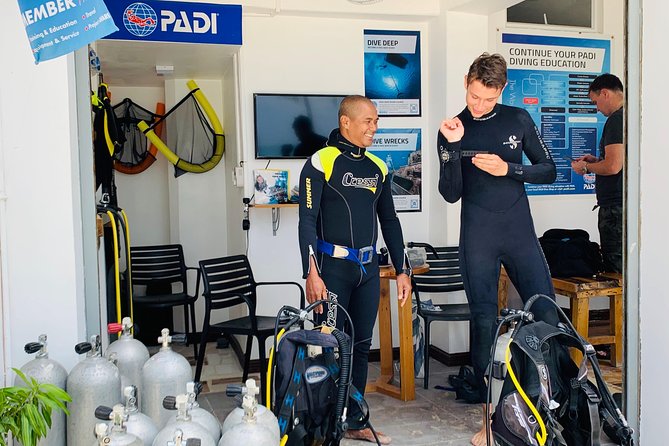
At $580 per person, this is a substantial holiday expense. I would not compare it with the price of a one-time introductory swim. You are paying for a structured certification course with theory, at least five confined-water sessions, four boat sessions, and instructor supervision.
The value is strongest if you want to keep scuba in your travel plans. SSI and PADI certifications are recognized worldwide, so the course can serve as a foundation for future sessions in other destinations. If you only want to try breathing underwater once, this may be more training than you need.
The private-group setup adds practical value. You get a course intended only for your group, rather than a large public class. That can mean more room for questions and a better chance to discuss a specific concern, though the price is still high for a short three-day schedule.
The course does not list every item included in the fee, such as equipment details, meals, transport beyond the meeting point, or certification processing. I would ask the center to confirm those points before paying. Do not assume that every extra cost is included simply because the course itself is priced as a package.
Meeting point, timing, and practical planning
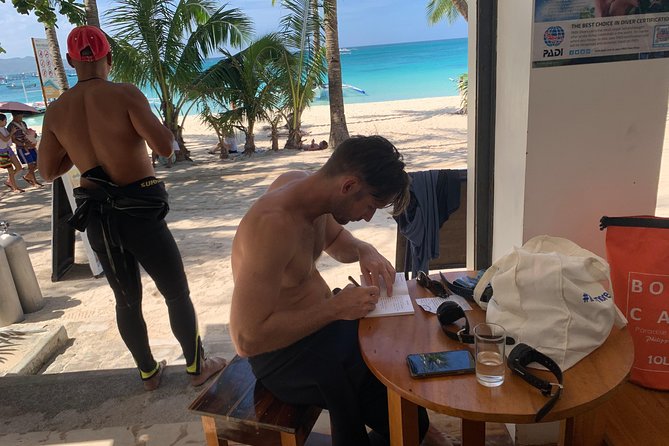
You start and finish at DiveGurus Boracay, Sitio Ambulong Road, Boracay Island, Malay, 5608 Aklan, Philippines. The activity ends back at that meeting point, and the center is near public transportation.
A mobile ticket is provided, and confirmation is received at booking. Keep the meeting details easy to access on your phone, especially if you are arranging your first morning around the class.
The activity is listed as suitable for most people, but you should still be honest about your comfort in water and tell the instructor about any concern. The course involves classroom work, confined-water practice, and four boat sessions, so it is more demanding than a short sightseeing stop.
You can cancel for a full refund if you do so at least 24 hours before the local start time. Cancellations within 24 hours are not refunded, and late changes are not accepted. That policy makes sense for a three-day course with instructors and boat arrangements, but it means you should confirm your schedule before booking.
Who will get the most from this course
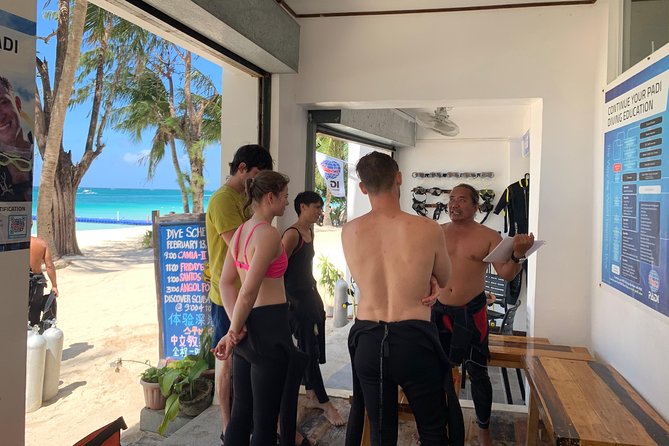
I would choose this course if you have always wanted an internationally recognized scuba qualification and can give three full days to the process. It suits a beginner who wants proper instruction rather than a quick introduction.
It is also a good match if you feel nervous. The confined-water stage, private group, and patient teaching style give you several ways to ask for help and repeat a skill. You will still need to take part fully, but you are not being thrown straight into four boat sessions without preparation.
This may not suit you if your schedule is uncertain or you only want a single underwater outing. The three-day format leaves little spare time, and the $580 price is difficult to justify if you do not expect to use the certification again.
Families and mixed groups should check the arrangements carefully. The course is private for your group, but the provided information does not give a minimum age, medical requirements, or detailed accessibility information. Ask those questions directly before you commit.
Should you book the DiveGurus course?
Book it if you want a real entry-level certification and value patient instruction over a rushed holiday activity. The course gives you a clear path from theory to shallow-water practice and then four supervised boat sessions. The named instructors, especially Brian, Karlo, Andrew Gritzka, and Max, are associated with the calm, supportive teaching that beginners need.
I would be more cautious if you have only one free day, dislike structured lessons, or are unsure you want to continue with scuba. In that case, a shorter introductory option may fit better, if available.
For the right student, the $580 is buying a skill you can use beyond Boracay, not just three days of holiday entertainment. Confirm the instructor, what the fee includes, and the exact schedule before booking. If those details suit you, this is a serious and practical way to begin.
FAQ
How long does the SSI or PADI Open Water course take?
The course takes approximately three days.
Which certifications are available?
You can choose either the SSI or PADI Open Water certification. Both are entry-level qualifications recognized worldwide.
How many water sessions are included?
The course includes at least five confined-water sessions and four open-water boat sessions at local sites.
Where does the activity start and finish?
You meet at DiveGurus Boracay, Sitio Ambulong Road, Boracay Island, Malay, 5608 Aklan, Philippines. The activity finishes back at the same meeting point.
Is this a private activity?
Yes. Only your group takes part in the activity.
Can I cancel for a full refund?
Yes, if you cancel at least 24 hours before the experience start time. Cancellations made within 24 hours are not refunded, and changes made within that period are not accepted.
Newest dives added in the Philippines
- Open Water Course (PADI)★ 5.0 · 12 reviews
- Scuba Diver Course (PADI)★ 5.0 · 18 reviews
- Boracay Helmet Diving★ 4.5 · 17 reviews
- DiveGurus -Scuba Diving in Boracay★ 5.0 · 25 reviews
- Scuba Diving in Boracay: SSI Basic Diver for Beginners★ 5.0 · 20 reviews
- Discover Scuba Diving in Boracay★ 4.9 · 22 reviews
- El Nido: Discover Scuba Diving with Manta Rays in Sibaltan★ 4.7 · 24 reviews
- Boracay: Island Hopping with Crystal Kayak & Helmet Diving★ 4.6 · 34 reviews
PADI Courses & Certification, compared.
Tossa de Mar: PADI Discovery Scuba Diving in Costa Brava
Read our review →
Full-Day Beginner Scuba Course with Private Tuition, Racha Yai
Read our review →
Heraklion: Beginner Scuba Diving Lesson with PADI Instructor
Read our review →
Discover Scuba Diving with No Certification in St Thomas
Read our review →
Try Dive – PADI Discover Scuba Diving in Tenerife
Read our review →
Browse the lists this dive appears in