
Reviewed · PADI COURSES & CERTIFICATION
Ko Tao: Open Water Scuba Diving 4-Day Course
Ko Tao’s open-water course takes you from nervous first steps in a swimming pool to certified sea descents around one of Thailand’s best-known islands for underwater training. The clever part is the pace: you learn the awkward skills on land before dealing with currents, depth, and real sea life.
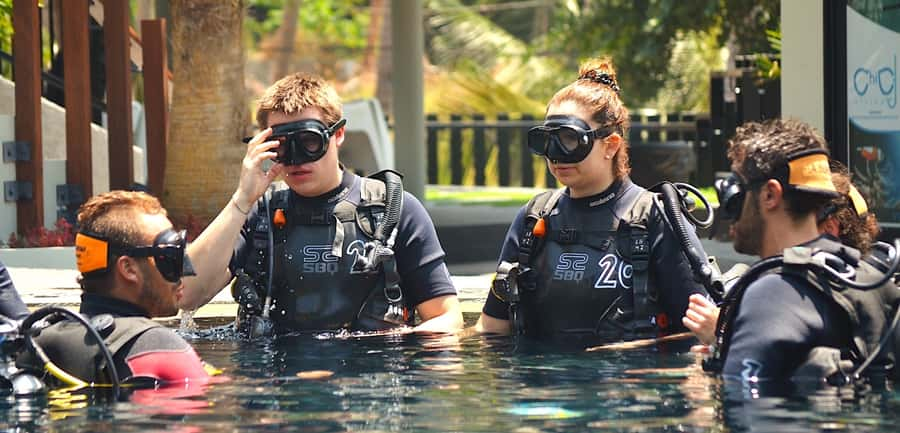
I like the pool-first format, which gives you time to practice mask clearing, regulator recovery, and emergency procedures without waves in your face. I also like the small-group feel reported by Alex, who trained with only four people and found the classroom work manageable.
The main thing to consider is the time commitment. This is not a quick try-out session. You’ll need four days, an early final morning, and enough energy for classroom work, pool practice, boat travel, and four sea descents.
Key points to know before booking
- Start in a swimming pool: Build comfort with essential skills before heading into open water.
- Four sea descents: The first two reach 12 meters, while the final two use more advanced sites and reach 18 meters.
- Real certification: Finish the course as an open-water scuba diver, certified to 18 meters according to the course details.
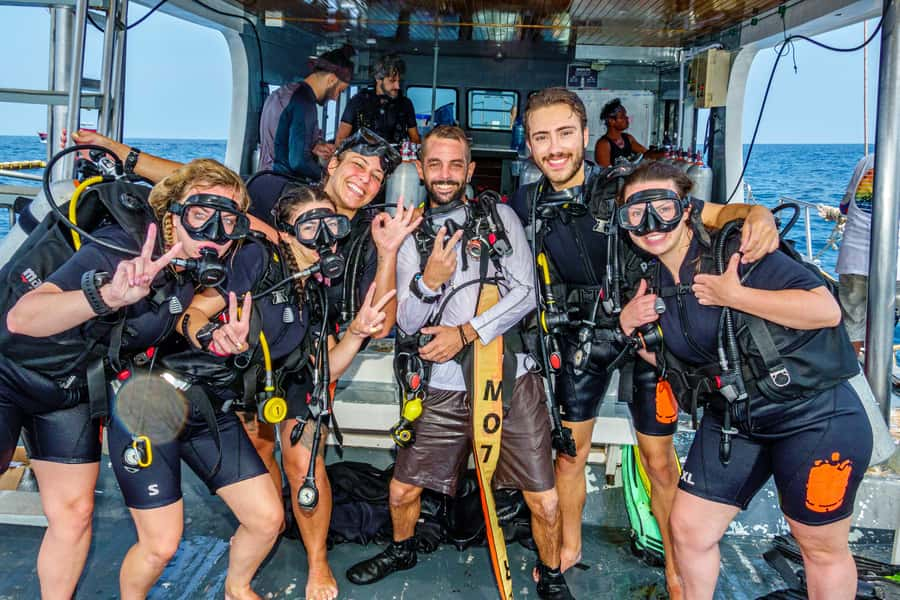
- Strong instructor support: Adrian, Juan, Joy, Joe, Az, Nico, Armand, and Elena are praised for patience, clear teaching, and calming nervous students.
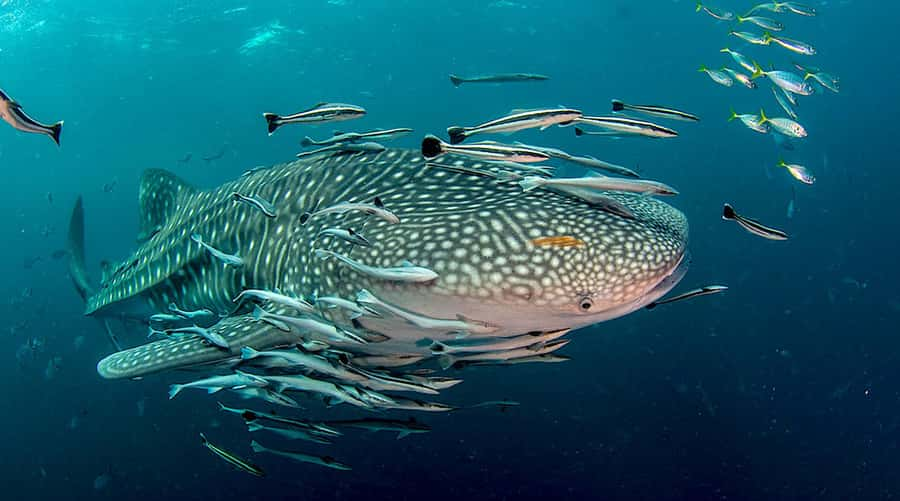
- Sea life can be excellent: Look for stingrays, pufferfish, moray eels, barracuda, queenfish, reef fish, and, with rare luck, whale sharks.
- Price and flexibility: At $353 per person, equipment, instruction, a T-shirt, and a celebration drink are included, with free cancellation up to 24 hours before the start.
Why this Ko Tao course makes sense for beginners
Many first-time scuba experiences let you try a few basic skills and then send you into shallow water. That can be fun, but it does not give you much room to build confidence or understand what your equipment is doing.
This four-day course follows a more useful path. You begin with an orientation, learn the basic theory, practice in a pool, and only then head out by boat. By the end, you are not simply trying scuba for an afternoon. You are working toward a qualification that can be used at dive centers around the world.
I like that the course treats confidence as a skill. Clearing a mask or finding a misplaced regulator can feel simple when explained on land. Underwater, even small problems can cause panic. Practicing these actions in a controlled pool gives you a much better chance of staying calm later.
The teaching team also gets high marks for how they handle nerves. Adrian is praised for patience and clear explanations. Juan is described as especially effective at making the course feel approachable. Joy is credited with keeping panic under control and maintaining a good mood. Joe taught a group of four, a size that made it easier to ask questions and receive attention.
That does not mean every moment will feel easy. You still need to listen carefully, study the material, and complete the required skills. But the structure gives beginners a sensible progression instead of asking you to learn everything at once.
More PADI Courses in Thailand
- La Bombona Diving Koh Tao Open Water Course
★ 5.0 · 172 reviews - Become certified diver in 3 days – PADI Open Water Diver course on Koh Tao
★ 5.0 · 104 reviews - PADI Discover Scuba Diving in Koh Tao – half day and two dives
★ 4.5 · 74 reviews
Day one: a 4:00 PM orientation
The course opens at 4:00 PM with an afternoon orientation. This is a useful first step because it gives you a chance to understand the schedule, meet the instructor, and prepare for the next day before the serious training begins.
Do not treat this as a casual welcome meeting. Your next sessions begin at fixed times, and the program moves quickly once the classroom and pool work starts. The orientation is the point to ask questions about the equipment, the training sequence, and anything that makes you uneasy.
You will want to arrive ready to focus. The course lasts 84 hours, but that figure reflects the full booking period rather than 84 hours of constant instruction. The actual training is spread over four days, with classroom lessons, pool practice, and boat-based sessions.
Day two: theory at 10:00 AM, pool skills at noon
The second day begins at 10:00 AM in the classroom. You learn the foundations of scuba, including how the equipment works and how to behave safely underwater.
At noon, the setting changes to a swimming pool. This is where the course becomes practical. Your instructor teaches you how to clear a flooded mask, retrieve your regulator, and respond to an unlikely emergency.
These skills are not filler. They are the basic habits that help you solve small problems before they become frightening ones. You learn how to keep breathing, stay calm, and use the equipment properly.
The pool is also a good place to discover how your body reacts to breathing underwater. Some people adjust quickly. Others need time to settle into the sensation. The patient teaching style reported from instructors such as Az, Elena, and Armand matters here, especially for anyone who feels uneasy at first.
You should expect the day to require concentration. The classroom material may be straightforward, but you still need to remember instructions while managing your breathing and equipment in the water. The course is designed for beginners, not for people who already know everything.
Day three: navigation, safety, and the first sea descents
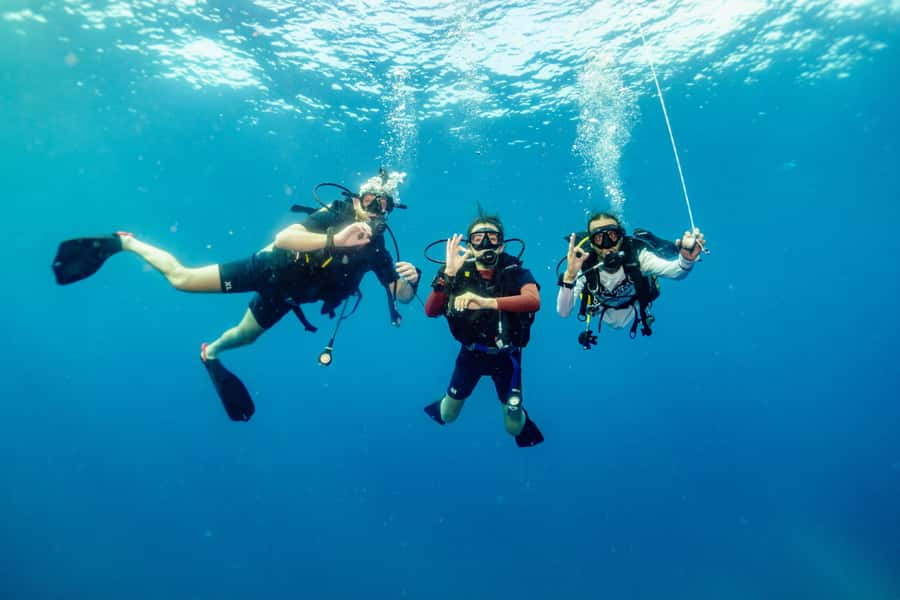
The third day starts at 9:30 AM with another classroom session. Lessons include how scuba affects the human body, basic underwater navigation, and more safety procedures.
This part gives the sea time a clear purpose. You are not simply visiting a reef and looking around. You are learning to monitor yourself, understand your surroundings, and follow procedures that help you return safely to the boat.
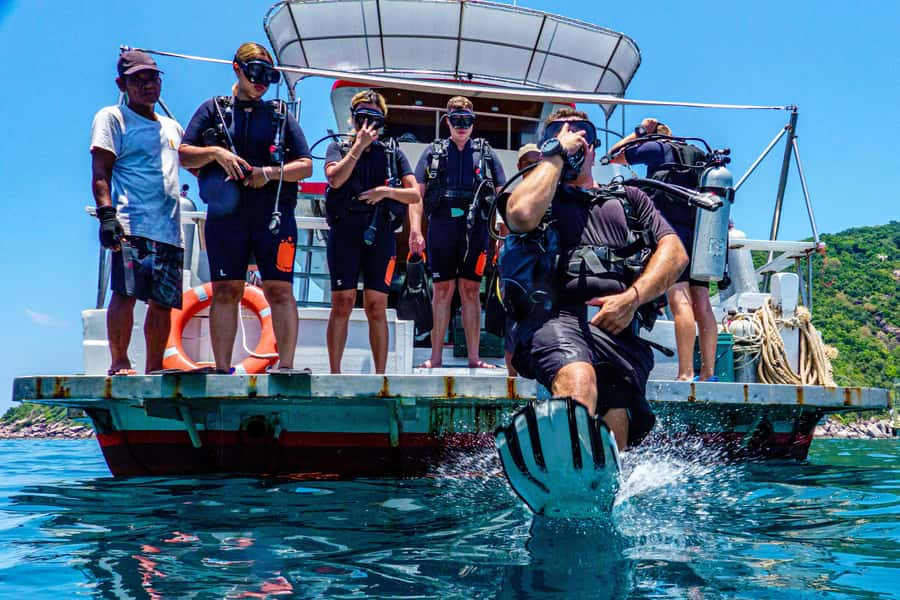
In the afternoon, you head out by boat for your first two open-water descents. The maximum depth is 12 meters, which keeps the first sea session within a sensible range for new students.
Underwater, you might see stingrays, pufferfish, moray eels, and schools of reef fish in bright natural colors. The exact sightings cannot be promised, but Ko Tao’s sites provide a lively setting for putting your new skills to work.
The first sea session is where the pool practice starts to feel worthwhile. Clearing a mask in a pool is one thing. Doing it in open water while surrounded by fish is a more memorable test. The instructor’s job is to keep the learning goal in view while helping you enjoy the scenery.
You should also expect the boat day to feel more tiring than the classroom and pool sessions. Two descents, equipment handling, sun, and time on the water can use up your energy. Get a good night’s sleep before this day and avoid treating the afternoon as a sightseeing cruise.
More PADI Courses in Koh Tao
- Koh Tao: PADI Premium Open Water Diver Course
★ 5.0 · 54 reviews - Koh Tao: PADI Try Diving Experience
★ 5.0 · 33 reviews - Barcelona: PADI Discover Scuba Diving
★ 4.7 · 1,016 reviews - PADI Open Water Diver Course
★ 5.0 · 626 reviews
Day four: advanced sites and certification
The final day begins at 7:45 AM with two descents at more advanced Ko Tao sites. The early start matters. You need to be ready for a full morning in the water, and the schedule leaves little room for a slow start.
These final descents reach the course limit of 18 meters. At that depth, you can encounter larger animals, including barracuda and queenfish. Whale sharks are possible but rare, so treat one as a fortunate bonus rather than a promised feature.
The final day is not only about seeing bigger creatures. You are showing that you can apply the skills learned in the pool and during the first sea session. You have already practiced safety procedures, learned basic navigation, and experienced open-water conditions. Now you use those lessons with more independence.
After completing the required work, you can call yourself an open-water diver. The course information states certification to 18 meters anywhere in the world. Some customer accounts refer to the qualification as 20 meters, so it is sensible to confirm the exact certification depth with LBD Diving Koh Tao before booking if that distinction matters to you.
The instructors are a major part of the value
A scuba course is only as good as the instructor guiding you through the uncomfortable moments. Equipment can be first-rate, and the reef can be beautiful, but a rushed instructor can ruin the whole experience.
The teaching team here receives particularly strong praise for patience and emotional support. Adrian is described as encouraging from the first lesson through certification. Juan is credited with explaining the course clearly. Joy helped remove unnecessary panic, while Joe kept a four-person group comfortable and focused.
Az is praised for being both fun and attentive, especially with nervous students. One person who trained with Az went on to complete another course after finishing the open-water qualification. That suggests the teaching did more than get students through an exam. It helped create confidence for further training.
Nico is also singled out for clear explanations, and Elena is praised for her availability, advice, and good humor. Instructor languages are English, Spanish, and Catalan, which gives you a useful choice if you are more comfortable learning in one of those languages.
Instructor assignments can change, so you should not book expecting a particular person unless the center confirms it. Still, the repeated pattern is clear: calm instruction and supportive coaching are central to this course.
What the $353 price includes
At $353 per person, this is not the cheapest way to spend four days on Ko Tao. It is also not a simple sightseeing outing. You are paying for a structured qualification, classroom teaching, pool training, four sea descents, an instructor, and all equipment.
The equipment inclusion matters. Buying or renting every item separately would add complexity, especially for a first-time student who does not yet know what gear suits them. Having the course center provide the equipment lets you focus on learning the skills.
You also receive a T-shirt and a celebration drink. These extras will not determine the value of the course, but they provide a pleasant finish after several demanding days.
The real value is the certification. A short introductory session may cost less and take less time, but it leaves you needing another course if you want to scuba independently within the limits of a recognized open-water qualification. Here, the time and money move you toward a lasting skill.
That value depends on your plans. If you only want a single underwater look during a beach holiday, four days may be too much. If you expect to scuba again in Thailand or elsewhere, completing the qualification now can make more sense.
Who should choose this course
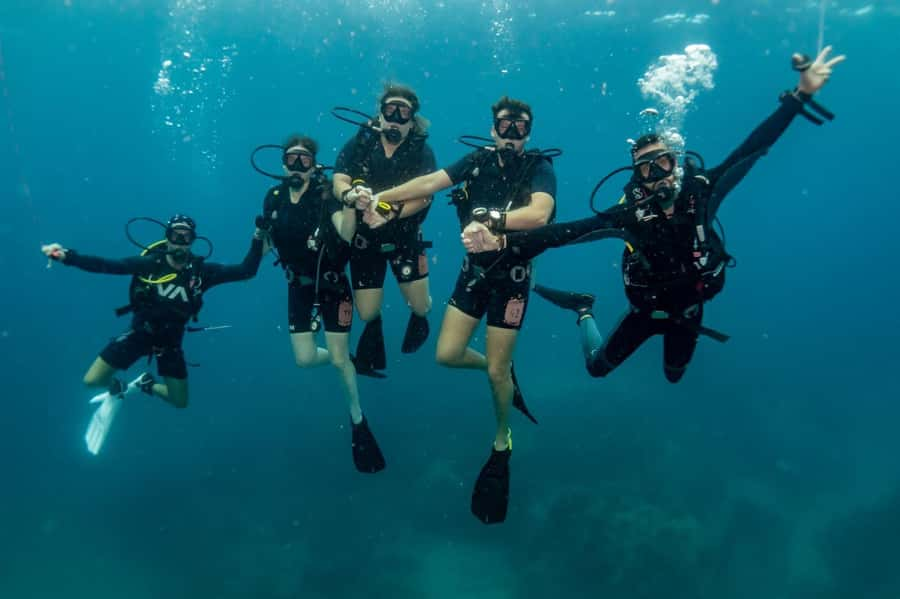
This course suits you if you are a beginner who wants proper instruction rather than a quick introduction. It is also a good match if you are nervous about breathing underwater and want time in a pool before heading into the sea.
You should choose it if you like learning in stages. The schedule gives you theory, practical skills, shallow open-water work, and then deeper sites. That progression is more useful than being thrown into the most exciting part at once.
It may also suit someone who wants to continue with further qualifications. The course gives you a foundation, and one person moved directly into another program after finishing the open-water level.
The course is less suitable if you have only one free afternoon. It is also a poor match if you dislike early starts, classroom lessons, or following a set training schedule. The final morning begins at 7:45 AM, and the program requires steady attention across all four days.
If you become ill during the course, flexibility may be possible. Ryan was able to move sessions after being sick, but this should not be treated as a guaranteed policy. Ask the center before booking if your schedule is uncertain.
Practical planning for your four days
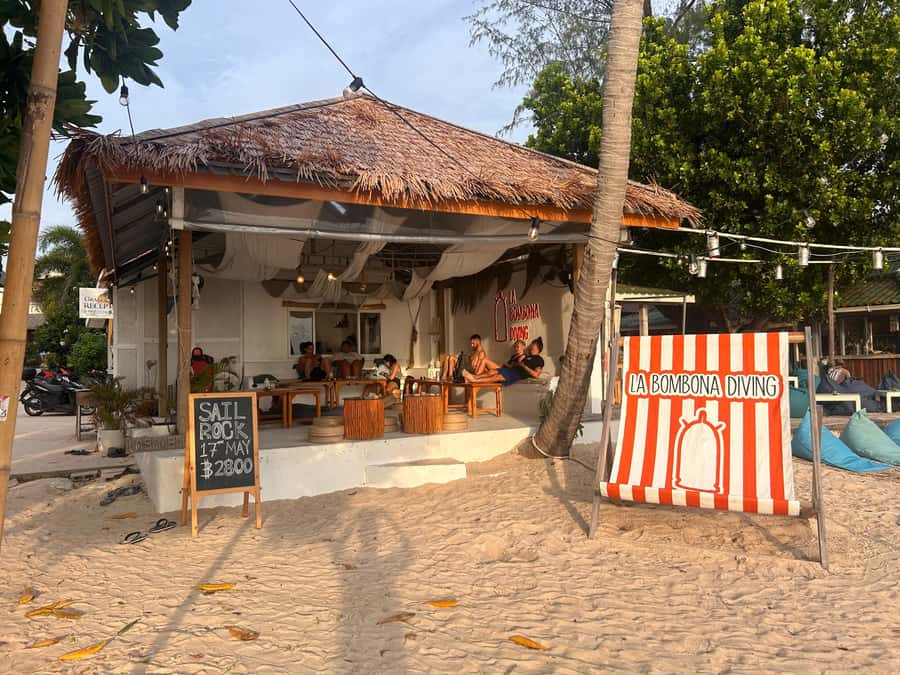
Keep the course days fairly open. Trying to fit major sightseeing plans between classroom lessons, pool practice, and boat sessions could leave you tired and distracted.
You should also allow time to rest before the early final morning. The course is enjoyable, but it is still physical training. You are carrying equipment, managing breathing, concentrating on safety, and spending time on the water.
The free cancellation policy allows you to cancel up to 24 hours before the start for a full refund. You can also reserve now and pay later, which is useful if your island plans are not fully fixed.
Check the available starting times before booking. The listed schedule begins at 4:00 PM on the first day, followed by morning sessions, afternoon sea work, and the early final day. Your exact meeting arrangements should be confirmed with LBD Diving Koh Tao.
Should you book the Ko Tao open-water course?
I would choose this course if you want a real qualification and have four days to give it. The pool-first training, calm teaching style, equipment inclusion, and progression to 18 meters make it a sensible choice for a first certification.
The main reason to hesitate is the commitment. This is not a quick holiday activity, and whale sharks are not guaranteed. You must also be comfortable with a fixed schedule and enough study to complete the required lessons.
Book it if you want more than a one-time underwater taste. Skip it if you only have a short stop on Ko Tao or prefer a low-commitment introduction. At $353, the course earns its value through the certification and instruction, not just the reef scenery.
FAQ
How long does the Ko Tao scuba course last?
The activity lasts 84 hours and is arranged across four days. It begins with a 4:00 PM orientation, followed by classroom lessons, pool training, and open-water sessions.
What time does the first full training day begin?
The second day begins at 10:00 AM with classroom instruction. Pool practice follows at noon.
How many open-water descents are included?
You complete two open-water descents on the third day and two more on the final day, for four in total.
How deep do the descents go?
The first two sea sessions reach a maximum of 12 meters. The final two use more advanced sites and reach 18 meters. The course information states certification to 18 meters.
Which languages are available?
Instruction is available in English, Spanish, and Catalan.
What is included in the price?
The $353 price includes an experienced instructor, all equipment, a T-shirt, and a celebration drink.
More four-day trips in Koh Tao
- Cairns: 4-Day PADI Open Water Course
★ 4.8 · 44 reviews - 4 Day Certified PADI Open Water Scuba Diver in Dubai
★ 5.0 · 37 reviews - Quicksilver Dive 4 Day PADI Learn to Dive Course
★ 5.0 · 35 reviews - 4-Day PADI Open Water Dive Course – Learn to Dive on the Great Barrier Reef
★ 5.0 · 27 reviews
Newest dives added in Koh Tao
- La Bombona Diving Koh Tao Try Dive★ 4.5 · 14 reviews
- PADI Discover Scuba Diving in Koh Tao – half day and two dives★ 4.5 · 74 reviews
- Try Scuba Diving★ 5.0 · 46 reviews
- 1 Day Discover Scuba Diving Experience in Koh Tao★ 5.0 · 2 reviews
- Koh Tao: PADI Try Diving Experience★ 5.0 · 33 reviews
- Koh Tao: Private Basic Diver Experience with 2 Dives★ 5.0 · 3 reviews
- Koh Tao: PADI Premium Open Water Diver Course★ 5.0 · 54 reviews
- Koh Samui: Dive Tour to Koh Tao★ 4.1 · 3 reviews
PADI Courses & Certification, compared.
Tossa de Mar: PADI Discovery Scuba Diving in Costa Brava
Read our review →
Full-Day Beginner Scuba Course with Private Tuition, Racha Yai
Read our review →
Heraklion: Beginner Scuba Diving Lesson with PADI Instructor
Read our review →
Discover Scuba Diving with No Certification in St Thomas
Read our review →
Try Dive – PADI Discover Scuba Diving in Tenerife
Read our review →
Browse the lists this dive appears in