
Reviewed · SCUBA DIVING FOR BEGINNERS
Beginners Scuba Diving Experience in Gran Canaria
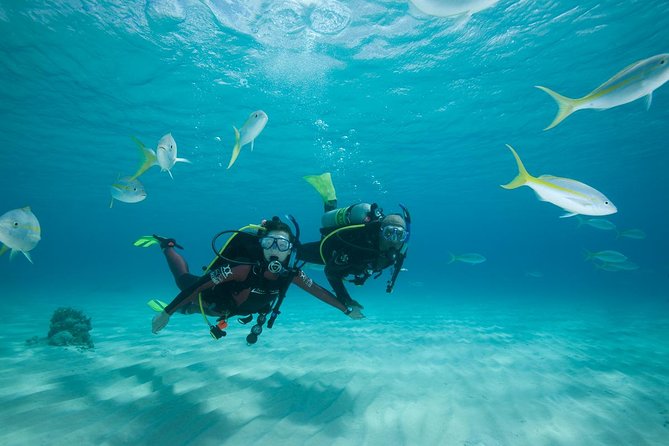
The strange, thrilling part of this beginner scuba experience is learning to breathe underwater. You begin in shallow water, kneeling on the harbor floor while an instructor helps you settle into the mask and regulator. Once you are comfortable, you move to a reef and spend about 30 minutes exploring at a modest depth.
I like two things right away: all equipment is included, and the group is limited to eight people. The instructors stay close, explain hand signals, and work at a pace that helps nervous beginners. The main caution is timing. One account describes feeling hurried, and the meeting information is not fully consistent about the exact location, so confirm the address before you set out.
Key points to know before booking
- Shallow-water practice comes first: You learn basic skills before heading toward the reef.
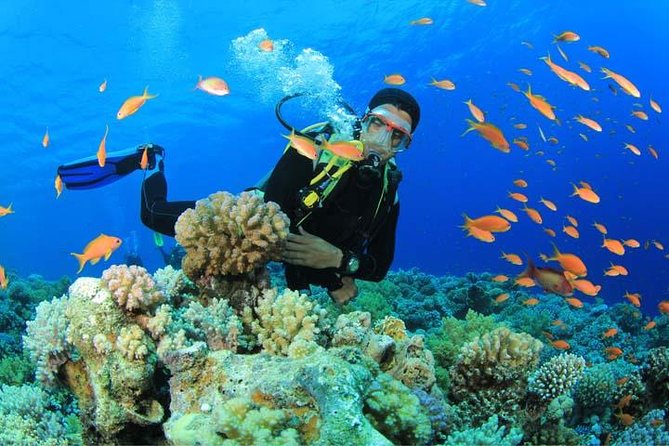
- Expect real marine life: Fish, crabs, sea cucumbers, anemones, barracuda, and even a large stingray have been spotted.
- Calm instruction is a major strength: Chris, Kate, Keko, Jiles, Ari, Ailin, and other team members are singled out for patient support.
- The underwater time is substantial for a first try: Some participants reached about 8 to 11 meters and stayed below for more than 30 minutes.
- The price is $108.89 per person: That is fair if you want a one-time introduction without paying for a full certification course.
- Check the location carefully: The supplied meeting address is in Gran Canaria, while accounts place the activity at Amadores Beach in Puerto de Mogán.
What this Gran Canaria scuba session is really like
This is not a full certification course. It is a first taste of scuba, designed to show you what it feels like to breathe through a regulator, control your body underwater, and move over a reef with an instructor beside you.
That distinction matters. You will not finish with an open-water qualification. You will, however, get enough instruction and supervised practice to decide if a longer course is worth your time and money.
The entire activity takes about two hours. That includes paperwork, health questions, equipment preparation, shallow-water training, the reef session, and the return to the meeting point. It is a compact experience, but the underwater portion can feel surprisingly generous for a first attempt.
The most praised feature is the staff. Chris is mentioned for helping nervous beginners regain control of their breathing. Kate receives similar praise for keeping people calm and secure. Keko is noted for clear instructions and for pointing out marine life that a first-time visitor might miss.
That personal attention is important here. Scuba equipment can feel awkward at first, and breathing underwater does not come naturally to everyone. Several people needed time to relax. The instructors’ job is not just to explain the gear, but to help you feel safe enough to use it.
More Scuba Diving for Beginners in Spain
- Mallorca: Discover Scuba Diving for Beginners
★ 4.7 · 805 reviews - Tenerife: Beginner’s Dive at a Spot with Turtle Sightings
★ 4.7 · 627 reviews - Scuba Diving Experience for Beginners in Gran Canaria
★ 5.0 · 561 reviews
Starting at the Blue Water Diving meeting point
You meet the instructor at Blue Water Diving, listed at Calle Olimpicos, C. Doreste y Molina, s/n, 35130 Gran Canaria, Las Palmas, Spain. The activity ends back at the meeting point.
There is a location issue worth taking seriously. The official information names Las Palmas, but a detailed account places the activity at Amadores Beach in Puerto de Mogán, about 30 miles south of Las Palmas. Other accounts refer to Puerto Rico. These may reflect different meeting arrangements or a listing error, but you should confirm the precise location directly before booking transport.
That is especially important if you are arriving from a cruise ship or staying in the north of the island. Hotel pickup and drop-off are not included. You must make your own way to the meeting point, and a bus or taxi journey could take a meaningful part of your morning.
The activity is offered in English and uses a mobile ticket. Confirmation arrives at booking. Public transportation is nearby at the stated meeting point, but the information does not include a pickup service, so allow extra time for the journey and check the return plan.
Paperwork, health checks, and equipment fitting
Your session begins with a meet-and-greet, paperwork, and equipment preparation. Everyone must complete a health questionnaire before entering the water.
This is not a formality to rush through. Conditions such as asthma or heart problems can prevent participation, and you should consult a doctor if you are unsure. You should also avoid scuba activity within 12 hours of flying.
The operator provides all necessary equipment. You only need swimwear, although bringing a bottle of water for afterward is sensible. One useful clothing tip is to pack something easy to pull over a wet swimsuit after the session.
The equipment fitting is a valuable part of the morning. A mask that does not fit well or gear that feels loose can make a beginner anxious before the session even starts. The instructors check the setup before taking you farther from shore.
The group size is capped at eight people. That is small enough for individual attention, though the exact amount of one-to-one time will depend on how many people are booked that day and how quickly the group settles.
Learning to breathe underwater in shallow water
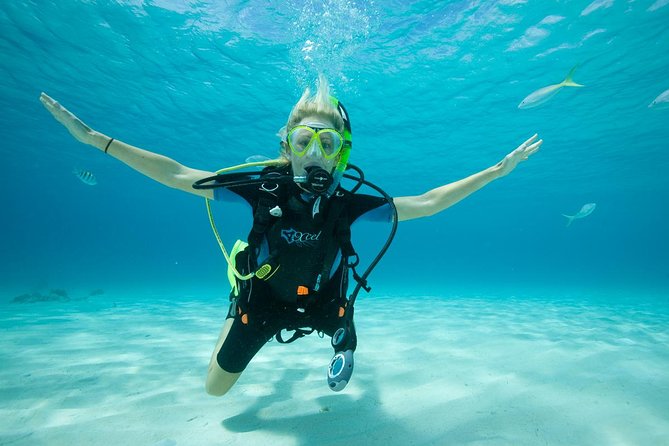
The first water session takes place in a shallow area. In one detailed account, participants went into the harbor one at a time with an instructor, practiced basic skills while kneeling on the harbor floor, and learned to breathe through the equipment before going farther.
This is the make-or-break part of the experience. You learn how to breathe steadily, clear or adjust your mask, and use basic underwater signals. The instructions are simple, but the sensation can be unusual. Several people arrived nervous, and at least one person experienced an anxiety attack before the instructors helped them continue.
If you feel tense, tell the instructor immediately. The best accounts describe staff who slowed down, stayed close, and gave people time to settle. You should not feel pressured to continue until you can breathe calmly and understand the basic signals.
There is one important qualification. One participant felt pushed to leave the shallow area instead of having more time to practice. That experience appears to be at odds with the many accounts describing patient instruction, but it is still useful information. If you need extra time, say so clearly at the start and ask how much shallow-water practice is possible within the schedule.
Another way to get in the water in Spain:
- Tenerife: Your First Scuba Diving Experience in Turtle Area
★ 4.7 · 1,679 reviews - Barcelona: PADI Discover Scuba Diving
★ 4.7 · 1,016 reviews - Lanzarote Introductory Scuba Diving Experience
★ 5.0 · 766 reviews - Tenerife First Time Scuba Dive – Turtle Habitat, Small Groups
★ 4.5 · 456 reviews
Heading to the reef and meeting the fish
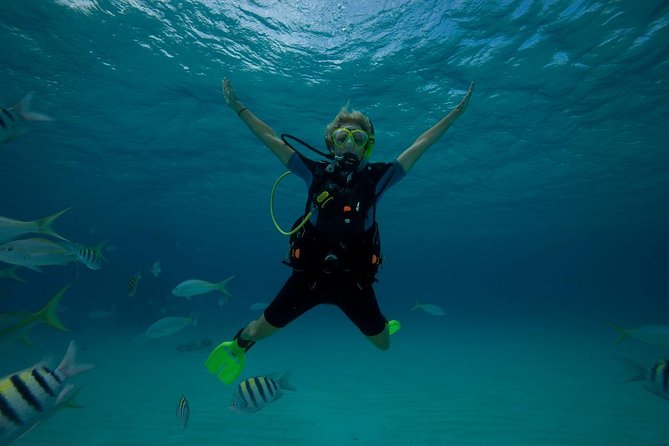
Once the group is comfortable, you head to a reef area for the main underwater session. Some accounts describe a boat ride to the site, while the supplied schedule simply says you move from the shallow practice area to the reef. The exact route may depend on conditions and the day’s plan.
Reported depths range from about 8 to 11 meters. That is enough to give you a real sense of underwater freedom without turning the experience into an advanced technical session.
The sea life is a strong part of the appeal. You might see shoals of fish, baby barracuda, crabs, sea cucumbers, anemones, and other reef creatures. One memorable account describes a stingray around 2.5 meters long that rested on the sea floor before gliding away.
You should keep expectations sensible. Marine life is wild, and no particular animal is guaranteed. A seahorse was missed on one outing, while other people saw far more than they expected. The best approach is to watch slowly and let the instructor point out small creatures hiding among the reef.
The underwater time can last just over 30 minutes. That may not sound long on land, but breathing from a tank while managing your buoyancy and watching the sea floor makes the time pass quickly. Many first-timers are surprised by how soon it is time to return.
Why instructor support matters so much
A beginner session succeeds or fails on the quality of its supervision. You are handling unfamiliar equipment in an unfamiliar setting, so a calm instructor makes a large difference.
The staff praised by name include Chris, Kate, Keko, Jiles, Ari, Ailin, and Jerry. Their roles may vary from session to session, but the common theme is close support. Instructors are described as staying beside participants, watching their comfort, and helping them manage early nerves.
One person who had nearly drowned after a cramp the previous summer was able to try scuba with support from Jiles, Ari, and Ailin. Another person who disliked being underwater said the patient teaching helped them move past that fear.
That does not mean the experience is risk-free or suitable for everyone. You must complete the health questionnaire, follow instructions, and be honest about your comfort level. A professional instructor can help with nerves, but cannot remove every medical or personal limitation.
The hand signals and clear briefing also have practical value. Once underwater, you cannot have a normal conversation. Learning simple signs before you enter the sea lets you communicate if you need help, want to slow down, or spot something interesting.
Is $108.89 a fair price?
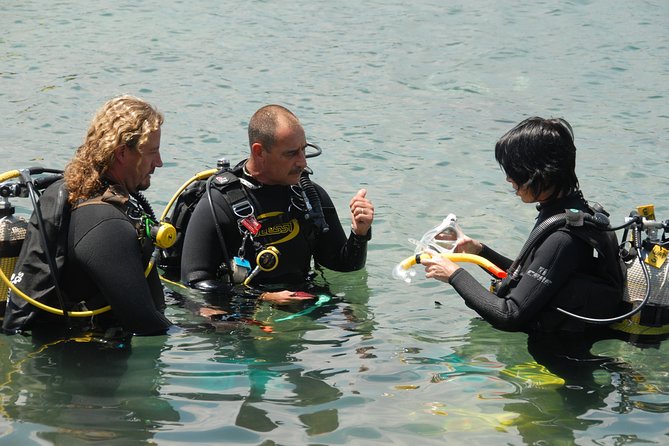
At $108.89 per person, this is not a cheap beach activity. It is still reasonable if you want a supervised introduction without signing up for a full training course.
The price includes a professional guide and all necessary equipment. You are paying for instruction, gear, supervision, shallow-water practice, and a reef session. Food, drinks, and transport are extra.
Compared with a full certification program, the value comes from keeping the commitment small. You can test the experience before spending more money on lessons and certification. If you already know you want an open-water qualification, this session may feel like an introductory step rather than a complete solution.
It also offers better value for someone who wants one memorable holiday activity. Seeing a stingray, barracuda, or a shoal of fish while breathing underwater is a very different experience from snorkeling at the surface.
The value drops if transport is difficult or if you expect a long, relaxed day at sea. This is a roughly two-hour activity, and scheduling appears tight on some mornings. Confirm the location and return arrangements before deciding.
Who should book this experience?
This is best for first-timers aged 10 and older who are curious about scuba but do not want to commit to a course. It also suits people who have some experience and want a short supervised reef session, although the experience is built around beginners.
It may be a good choice for families with older children, couples, friends, solo visitors, and anyone who wants to try something outside the usual beach routine. One 16th birthday outing became a particularly memorable gift, and a 14-year-old completed the session with a parent.
You should be comfortable entering the water and willing to follow instructions. The activity is not suitable for everyone with certain medical conditions, including some heart and asthma conditions. Check with a doctor if you are uncertain.
Service animals are allowed, and most people can participate, but the health questionnaire is still required. Do not treat the general participation note as a guarantee that you will be medically cleared.
Practical planning for a smoother morning
Wear swimwear and bring dry clothes for afterward. Pack water, since drinks are not included. You should also bring your mobile ticket and leave enough time to reach the meeting point without rushing.
Do not schedule a flight within 12 hours after the session. That rule applies even if you feel fine afterward.
Weather can affect the activity. If poor conditions cause cancellation, you will be offered another date or a full refund. You can cancel for a full refund if you do so at least 24 hours before the start time. Cancellations or changes made later are not refunded or accepted.
Because the activity is usually booked about 15 days ahead, reserving early is sensible during busy holiday periods. The small group limit can make popular time slots fill quickly.
Should you book the Blue Water beginner session?
I would book it if you want a genuine first taste of scuba, value close instruction, and are prepared to confirm the meeting location before paying. The combination of shallow-water training, a reef session, included equipment, and a maximum of eight people gives you a solid introduction for $108.89.
I would be more cautious if you dislike fixed schedules, need a long time to adjust in the water, or cannot easily reach the stated meeting point. Ask about the exact location and how much practice time is available before the reef session.
For most suitable beginners, this is a memorable way to see Gran Canaria from a new angle. Go in expecting a compact, supervised introduction rather than a certification course, and you will have a clearer idea of what you are buying.
FAQ
How long does the beginner scuba experience last?
The activity lasts approximately two hours, including paperwork, equipment preparation, shallow-water practice, the reef session, and the return to the meeting point.
What is included in the price?
A professional guide and all necessary scuba equipment are included.
Is hotel pickup included?
No. Hotel pickup and drop-off are not included, so you must arrange your own transport to and from the meeting point.
Where does the activity meet?
The supplied meeting address is Blue Water Diving, Calle Olimpicos, C. Doreste y Molina, s/n, 35130 Gran Canaria, Las Palmas, Spain. Some detailed accounts place the activity at Amadores Beach in Puerto de Mogán, so confirm the exact location before traveling.
What is the minimum age?
The minimum age is 10 years old.
Do I need previous scuba experience?
No. The session is designed as a beginner introduction and includes shallow-water practice before the reef session.
Can I fly soon after the activity?
Scuba activity within 12 hours of flying is not recommended.
Do I need to complete a health questionnaire?
Yes. All participants must complete a health questionnaire before taking part. Some medical conditions, including certain asthma and heart conditions, may prevent participation.
What happens if bad weather cancels the experience?
You will be offered an alternative date or a full refund if poor weather causes the activity to be canceled.
Newest dives added in Spain
- Lanzarote: Scuba Dive at Museo Atlántico for Beginners★ 4.8 · 86 reviews
- Tenerife: Costa Adeje Private Diving Lesson Experience★ 4.9 · 47 reviews
- Tenerife: Private Scuba Diving–Certified Instructor & Photos★ 4.9 · 65 reviews
- Tenerife: 2-Dive Private Scuba Discovery Course★ 4.3 · 22 reviews
- PADI Open Water Diver Course (OWD) – 2.5 days★ 5.0 · 98 reviews
- Basic Diver course for beginners with 1 dive in the Ocean★ 5.0 · 41 reviews
- PADI Discover Scuba Diving Course in Tenerife★ 4.8 · 64 reviews
- Mallorca: Discover Scuba Diving from the boat★ 5.0 · 95 reviews
Scuba Diving for Beginners, compared.
First-Time Scuba Diving in Honolulu + Free Videos
Read our review →
Beginner Scuba Diving with Turtles and Videos, San Juan
Read our review →
Intro Diving 2 Stops For Beginners with Pick-up and Lunch – Hurghada
Read our review →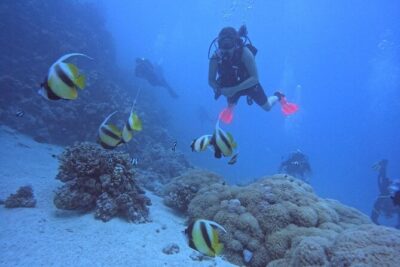
Intro Diving Beginner and Discover Red Sea Underwater
Read our review →
Beginner’s Dive at a Spot with Turtle Sightings
Read our review →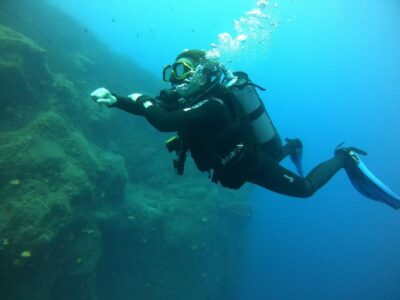
Scuba Diving Experience in Caldera for Beginners
Read our review →Browse the lists this dive appears in