
Reviewed · PADI COURSES & CERTIFICATION
PADI Rescue Diver
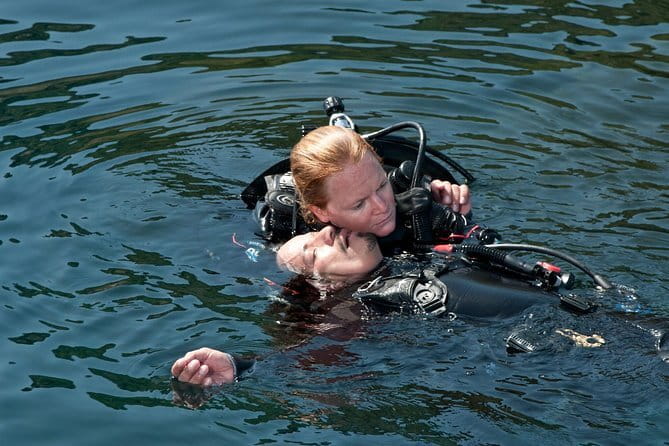
The most useful part of the PADI Rescue Diver course is its focus on problems before they become emergencies. You learn how to spot trouble, assist a buddy, and manage both minor and serious incidents through classroom work and hands-on exercises.
I like the flexible three to five-day schedule, which gives you room to match theory with pool or open-water practice. I also like the small maximum of eight participants, since rescue work makes more sense when you can ask questions and repeat skills until they feel natural.
The main catch is cost clarity. The advertised price is $378.02 per person, but the separate PADI manual and certification fee of 70 Euros is not included. You also need Advanced Open Water Diver and recent Emergency First Response training before you begin.
Key points to know before booking
- Five theory sections and a final exam: You work through Knowledge Reviews before completing the written course assessment.
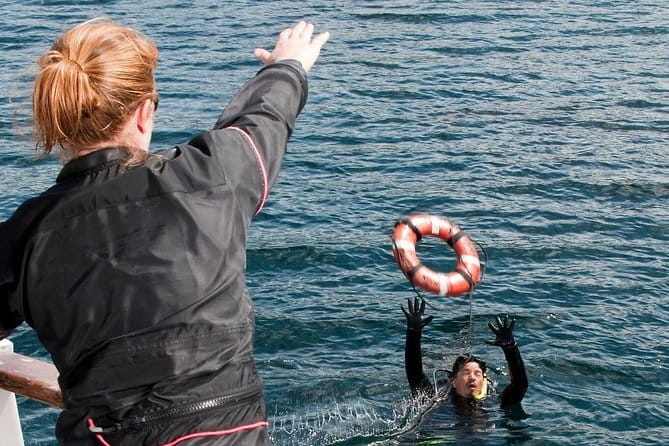
- Ten practical exercises and two rescue scenarios: The course moves beyond theory into structured emergency practice.
- Three to five flexible days: Classroom and in-water sessions are arranged around your ability and fitness.
- Small groups of up to eight: This matters when you need close attention during rescue drills.
- Emergency First Response is required: If your certification is older than 24 months, you may need the EFR course first.
- Equipment and refreshments are included: Scuba equipment, bottled water, coffee, tea, and snacks are supplied, but lunch is not.
What the Rescue Diver course really teaches
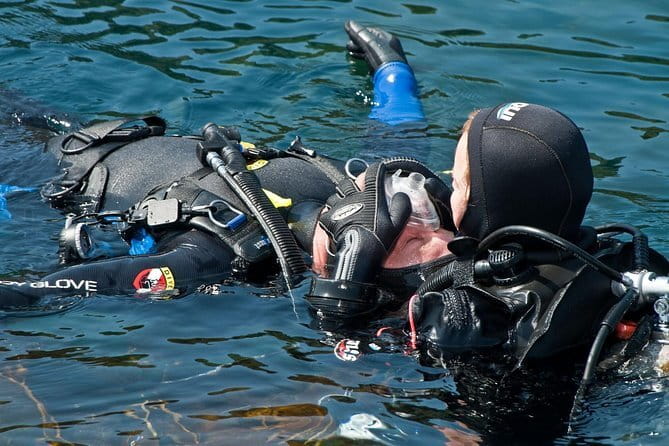
This is not simply another certificate to add to your logbook. The PADI Rescue Diver course is about becoming a more useful buddy when something goes wrong.
You practice identifying stress, responding to problems at the surface, and helping another person in the water. The aim is to make problem solving more automatic, so you are not trying to remember every step for the first time during a real emergency.
The course covers both minor and major incidents. That range matters. Not every problem is dramatic. A tired, anxious, disoriented, or uncomfortable diver may need calm help long before a situation becomes dangerous.
You also learn to manage your own response. Rescue work can be physically and mentally demanding, so the course expects a moderate level of fitness. You should arrive ready to work, repeat skills, and take instructions carefully.
There is still room for humor. The course description makes clear that the training is serious, but not grim. That balance is useful because people tend to learn better when they can relax between focused exercises.
More PADI Courses in Sri Lanka
- PADI Scuba Diver Course
★ 5.0 · 30 reviews - PADI Scuba Diver Course
★ 5.0 · 11 reviews - PADI Advanced Open Water Diver Course
★ 5.0 · 7 reviews
The first stage: theory, Knowledge Reviews, and the final exam
The course includes five theoretical sections, each with a Knowledge Review, followed by a final exam. This part gives you the reasoning behind the practical work.
You will not simply memorize rescue steps. You will consider what to look for, how to respond, and how to prevent a situation from worsening. That background helps you make better choices when conditions change.
The theory can be completed through the center’s classroom program or through PADI Rescue Diver eLearning. If you choose eLearning, you purchase it directly through the PADI website and register with Divinguru Unawatuna, listed as PADI 5 Star IDC Dive Resort S-36133.
That choice affects how you use your time. Online study can reduce classroom hours at the center, while in-person theory gives you a direct chance to ask questions during the course. The supplied information does not promise a fixed classroom schedule, so confirm the exact plan before arrival.
The PADI manual and certification fee are not covered by the main course price. Budget an additional 70 Euros for the manual, certification, and card if you do not use eLearning.
Ten exercises that turn theory into action
The practical section includes 10 exercises. These are the building blocks of the course, allowing you to repeat individual skills before combining them in larger scenarios.
That repetition is important. Rescue skills need to become familiar enough that you can focus on the person in trouble rather than freeze over the order of each step.
The exact timing of each exercise depends on your ability and fitness. Some people may need more practice with particular tasks, while others may move through them more quickly. The flexible schedule is designed to allow for this difference.
You use scuba equipment supplied by the center. Bottled water, coffee, tea, and snacks are included, which is helpful during physically active sessions. Lunch is not included, so plan for that separately.
The course is limited to eight participants. That is not a private lesson, but it is a sensible group size for practical training. You should have opportunities to watch other participants, learn from their mistakes, and receive corrections from the instructor.
Two rescue scenarios put the pieces together
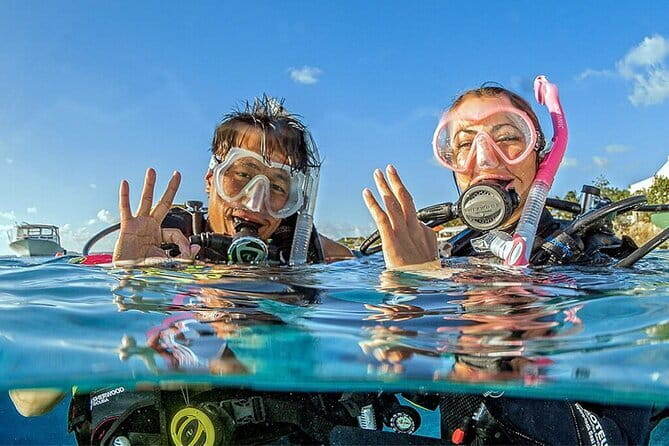
After the individual exercises, you complete two rescue scenarios. These are where the course begins to feel like real problem solving rather than a series of isolated drills.
Scenarios ask you to observe, decide, and act. You may need to recognize what is happening, approach the problem safely, assist the person, and coordinate the response. The value is in combining the skills under pressure while still working in a controlled training setting.
The scenarios also show why the Rescue Diver course is different from basic certification. You are not only responsible for your own equipment and comfort. You are practicing the habits needed to help a buddy.
The course team places emphasis on understanding the importance of the rescue role. Karthik is specifically named as an instructor who helped one participant understand that responsibility and later supported that person toward the first professional level of PADI Divemaster.
Ellie, Norbert, and Fraser are also named as members of the Divinguru team. The center’s approach appears attentive and encouraging, especially for people who feel unsure in the water. That support can matter when the exercises bring out weaknesses you did not notice during ordinary recreational sessions.
More Scuba Diving in Sri Lanka
- Fun Dives For Certified Divers
★ 5.0 · 44 reviews - Fun Dives For Certified Divers
★ 5.0 · 30 reviews - Discover SCUBA Diving in Beautiful Unawatuna Bay
★ 5.0 · 30 reviews - Fun Dives For Certified Divers
★ 5.0 · 22 reviews
A flexible three to five-day schedule
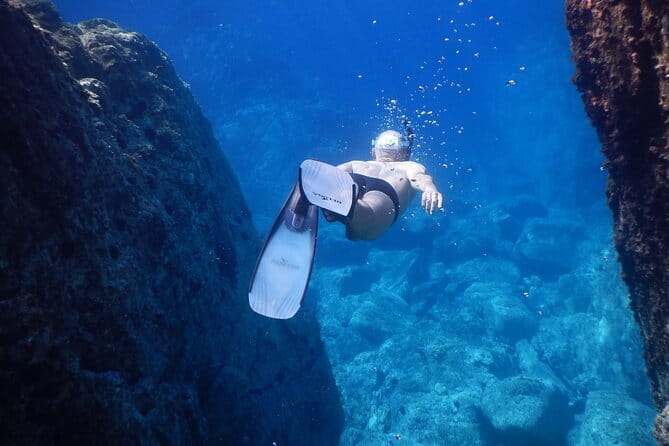
Expect the course to take around three to five days. The schedule mixes classroom work with in-water practice, and it changes according to your ability and fitness.
This is better than a rigid one-size-fits-all timetable. Rescue training is not a good place to rush simply to finish by a certain afternoon. You need time to understand the theory, perform the exercises, and repeat anything that does not yet feel secure.
The flexible format also means you should avoid packing every part of your Sri Lanka trip too tightly around the course. The published duration is approximate, and weather or group needs may affect the plan.
The course is described as taking place through Divinguru Unawatuna, even though the broader tour information names Negombo as the location. The stated meeting point is Divinguru Unawatuna, PADI 5 Star IDC Dive Resort, S-3613, 294 Matara Road, Unawatuna 80600, Sri Lanka.
That difference is worth checking before you pay or arrange transport. Pickup is offered, but the listed start and end point is the Unawatuna center. The activity ends back at the meeting point.
The prerequisites are strict for good reason
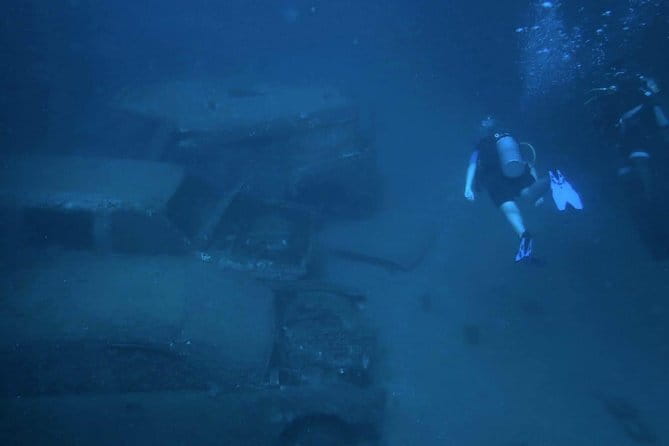
You must already be an Advanced Open Water Diver. This is not an entry-level course, and the training assumes that you already have basic underwater skills and experience managing your own equipment.
You also need proof of Emergency First Response Primary and Secondary Care training completed within the previous 24 months. Bring evidence of that certification when you register.
If you do not meet the EFR requirement, the center can run the EFR course alongside the Rescue Diver course. It takes half a day to one day and costs 95 Euros, plus 70 Euros for the EFR manual, certification, and card.
That extra time and cost can change the value calculation. Someone with current EFR training can focus on the Rescue Diver course. Someone without it may need four to six days of combined instruction and an additional 165 Euros before any other personal expenses.
The minimum certification age is 12. Age alone is not enough, since the participant must also fulfill the certification and fitness requirements.
How much value do you get for $378.02?
At $378.02 per person, the course is a substantial purchase, especially once you add the 70 Euro PADI fee. If you need EFR training, add another 95 Euros plus its 70 Euro materials and certification charge.
Still, the price includes the core practical resources. You receive scuba equipment, bottled water, coffee, tea, and snacks. More important, you receive structured instruction, 10 exercises, two rescue scenarios, five theory sections, and the final exam.
The small group limit improves the value. With no more than eight people, the instructor can watch your technique and help you correct problems. That matters more here than it would on a simple sightseeing activity.
The price makes the most sense if you are already committed to becoming a stronger buddy or moving toward professional training. It is less attractive if you only want a casual recreational session or are unlikely to use the rescue skills again.
The course can also be a useful bridge toward Divemaster training. Karthik’s support of a participant progressing to the first professional PADI level suggests that the center can work with people who want a longer path in the sport. Still, the Rescue Diver course itself does not include professional certification.
What is included, and what you still need to arrange
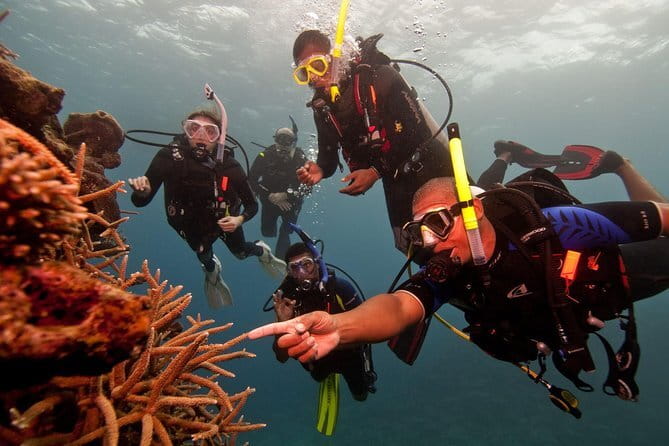
The center supplies scuba equipment, so you do not need to bring your own full set to participate. Bottled water, coffee, tea, and snacks are also included.
Lunch is not included. You will need to handle that yourself during the training days, and the flexible schedule means you should ask the center how breaks are arranged.
The manual and certification costs are separate. The wording supplied for the course includes a confusing reference to an AOWD course, but the clear cost information for this experience is that the PADI fee is 70 Euros and is not part of the advertised course price.
Pickup is offered, yet the stated meeting point remains the Unawatuna center. Confirm the pickup area, time, and any transport charge before setting your plans.
Confirmation is normally sent when you book. If you book within one day of the start, confirmation arrives as soon as possible and depends on availability.
Who will get the most from this training?
I would choose this course if you already hold Advanced Open Water certification and want to become calmer and more capable when helping another person.
It suits you especially well if you plan to continue toward Divemaster training, spend a lot of time with dive buddies, or simply want stronger emergency skills before taking on more challenging trips.
It is also a good fit if you appreciate patient instruction. The course requires practice, reflection, and repeated corrections. The named team members, including Karthik, Ellie, Norbert, and Fraser, give the center a personal feel rather than a purely transactional one.
I would think twice if you dislike classroom work. Five theory sections and a final exam are part of the course, not optional extras.
You should also postpone booking if your EFR training is more than 24 months old, if you cannot prove it, or if you are not yet an Advanced Open Water Diver.
Booking, weather, and cancellation details
The activity requires suitable weather. If poor weather cancels the course, you are offered another date or a full refund.
It also requires a minimum number of participants. If the minimum is not met, you can choose a different date or experience, or receive a full refund.
For your own cancellation, you receive a full refund if you cancel at least 24 hours before the local start time. Cancellations or changes made less than 24 hours ahead are not accepted for a refund.
The course is near public transportation, but you should still verify the exact meeting arrangements because the location information refers to Negombo in one place and Unawatuna in another.
Should you book the Divinguru Rescue Diver course?
Book it if you want serious, practical training rather than a simple certificate. The mix of theory, 10 exercises, and two rescue scenarios gives you a clear path from understanding a problem to responding to it.
The strongest reasons to choose it are the small maximum group size, flexible three to five-day format, included equipment, and the supportive team approach associated with Karthik, Ellie, Norbert, and Fraser.
Before committing, confirm the Unawatuna meeting point, check your Advanced Open Water and EFR paperwork, and add the 70 Euro PADI charge to your budget. If you need EFR training, include its extra time and fees as well.
For a prepared diver who wants to become a better buddy or take a first step toward professional training, this course offers useful value. For anyone seeking a relaxed introduction to scuba, it is the wrong level and the wrong kind of commitment.
FAQ
Where does the PADI Rescue Diver course meet?
The stated meeting point is Divinguru Unawatuna, PADI 5 Star IDC Dive Resort, S-3613, 294 Matara Road, Unawatuna 80600, Sri Lanka. The activity ends back at this meeting point.
How long does the course take?
The course takes approximately three to five days. The schedule is flexible and combines classroom and in-water practice based on your ability and fitness.
What certification do I need before starting?
You must be an Advanced Open Water Diver and must fulfill the stated prerequisites. You also need proof of Emergency First Response Primary and Secondary Care training completed within the past 24 months.
Can I take Emergency First Response training at the center?
Yes. If you do not have the required EFR certification, you can take the EFR course with the Rescue Diver course. It takes half a day to one day and costs 95 Euros, plus 70 Euros for the EFR manual, certification, and card.
Is the PADI fee included in the course price?
No. The PADI manual and certification costs are an additional 70 Euros. This fee is separate from the advertised $378.02 course price.
What does the course include?
The course includes scuba equipment, bottled water, coffee, tea, and snacks. Lunch is not included.
How old must I be to take the course?
The minimum certification age is 12 years.
How many people can join the course?
The maximum group size is eight participants. Confirmation depends on availability, especially for bookings made within one day of the start date.
Newest dives added in Sri Lanka
- 3 Hour Guided Scuba Diving in Trincomalee★ 5.0 · 2 reviews
- Scuba Diving For Beginners★ 5.0 · 18 reviews
- PADI Scuba Diver Course★ 5.0 · 11 reviews
- Scuba Diving For Beginners★ 5.0 · 10 reviews
- PADI Advanced Open Water Diver Course★ 5.0 · 7 reviews
- Scuba Diving in Kalpitiya★ 5.0 · 2 reviews
- Scuba Diving in Unawatuna★ 5.0 · 12 reviews
- Scuba Diving in Mirissa★ 5.0 · 12 reviews
PADI Courses & Certification, compared.
Tossa de Mar: PADI Discovery Scuba Diving in Costa Brava
Read our review →
Full-Day Beginner Scuba Course with Private Tuition, Racha Yai
Read our review →
Heraklion: Beginner Scuba Diving Lesson with PADI Instructor
Read our review →
Discover Scuba Diving with No Certification in St Thomas
Read our review →
Try Dive – PADI Discover Scuba Diving in Tenerife
Read our review →
Browse the lists this dive appears in