
Reviewed · PADI COURSES & CERTIFICATION
PADI Scuba Diver Course
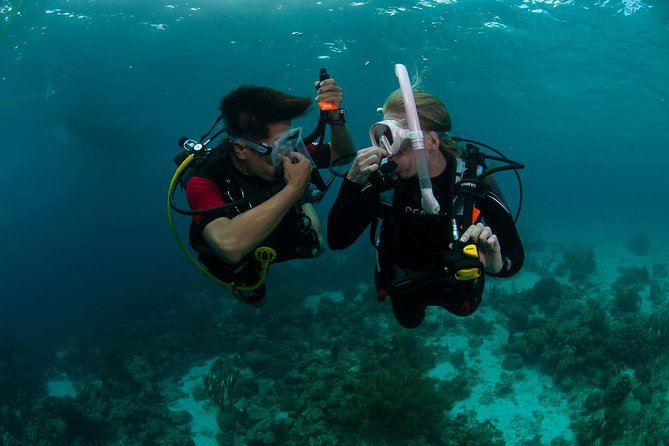
The best part of this PADI Scuba Diver course is its clear progression: classroom basics, controlled-water practice, then two ocean sessions. You learn the essential skills without committing to the longer Open Water Diver program.
I like the small maximum group of eight, which should give you more instructor attention, and I like that equipment, private transport, drinks, and snacks are included. The main catch is important: this is a limited certification, and the separate PADI manual and certification fee of 70 euros is not included.
Key points before you book
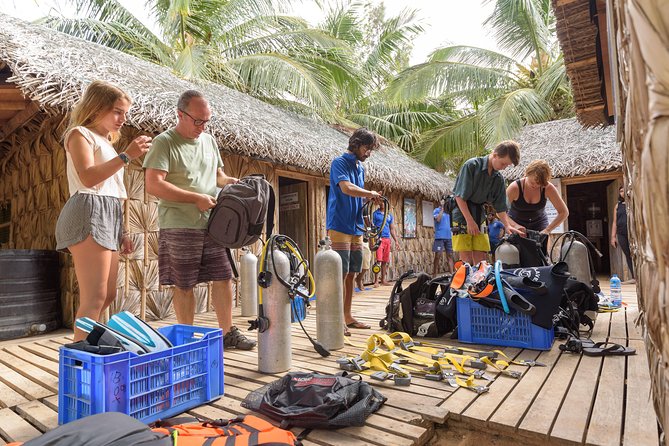
- Two to three days of training: Half a day covers theory, half a day covers confined-water skills, and one morning is reserved for two ocean sessions.
- A restricted first certification: You may go to a maximum depth of 12 meters, but only with a PADI Professional.
- Equipment is included: Scuba gear, bottled water, coffee or tea, snacks, and private transportation are provided.
- Small class size: The maximum is eight people, useful when you are learning breathing, buoyancy, and safety skills.
- Experienced named instructors: Fabio, Alex, Ellie, Norbert, Eliska, and Delphine are associated with recent course experiences.
- Check the location carefully: The summary says Negombo, but the stated meeting point is Divinguru in Unawatuna, near Matara Road.
What this two-day scuba course actually teaches
This course is designed as an entry point into scuba. You are not simply taken underwater for a quick look. You first learn how the equipment works, how to breathe from a regulator, how to manage basic problems, and how to behave safely in the water.
The program follows the first three sections of the PADI Open Water Diver course. You complete the theory without the full Open Water exam, then work through the first three confined-water sessions before making two open-water descents.
That sequence matters. A first underwater experience can feel strange. You are wearing unfamiliar equipment, breathing in a new way, and learning to control your movement without standing or swimming normally. Practicing first in controlled water gives you a chance to get comfortable before the ocean portion.
The course takes around two to three days. The published schedule describes roughly half a day for theory, half a day for confined-water training, and one day for two ocean sessions from about 8:30 a.m. to 1 p.m. Allow some flexibility around those times, since weather and water conditions can affect the final schedule.
More PADI Courses in Sri Lanka
- PADI Scuba Diver Course
★ 5.0 · 30 reviews - PADI Advanced Open Water Diver Course
★ 5.0 · 7 reviews - PADI Rescue Diver
★ 5.0 · 2 reviews
The theory session gives you the safety basics
The first part is classroom work, lasting about half a day. You study the first three sections of the Open Water Diver material, but you do not take the full Open Water exam as part of this shorter qualification.
This section is not filler. You need to understand pressure, breathing, equipment, communication, and basic underwater procedures before you enter the sea. The best instructors use this time to explain not only what to do, but why it matters.
The course material is available in different languages, according to the experience of past participants. If English is not your strongest language, ask about the available options when booking. Clear instruction is especially important when learning safety procedures.
You should also ask exactly what paperwork and study materials you receive. The separate PADI fee of 70 euros covers the PADI Scuba Diver manual and certification costs, but it is not included in the advertised course price of $240.23 per person.
There is a wording problem in the supplied information: one note refers to the fee for an AOWD course, even though this experience is described as a PADI Scuba Diver course. Treat that as something to confirm before paying. Ask whether the 70 euros covers your exact certification, manual, and registration.
Confined-water practice before the ocean
The next half day is devoted to confined-water training. This is where you learn the practical tasks that are difficult to absorb in a classroom.
You work through the first three confined-water sessions from the Open Water course. Expect practice with the basic equipment and the skills needed to stay calm, communicate, and respond to simple problems underwater.
This portion is especially useful if you are nervous. The water is controlled, and the instructor can stop, explain, and repeat a skill without the added movement and uncertainty of an ocean session.
Instructor quality matters here. The most praised teaching traits in the course feedback are patience, calm explanations, kindness, and close attention to safety. Ellie is described as a calm and patient instructor, while Norbert is noted for taking time with an individual learner. Eliska is associated with a reassuring first underwater experience. Fabio and Alex are also named as instructors who explained the skills well, and Delphine is praised for patient teaching.
Those names do not guarantee who will teach your course, so ask for your instructor’s name in advance if that matters to you. The important point is that the school has several instructors and that the reported teaching style is personal rather than rushed.
Two ocean sessions from 8:30 a.m. to 1 p.m.
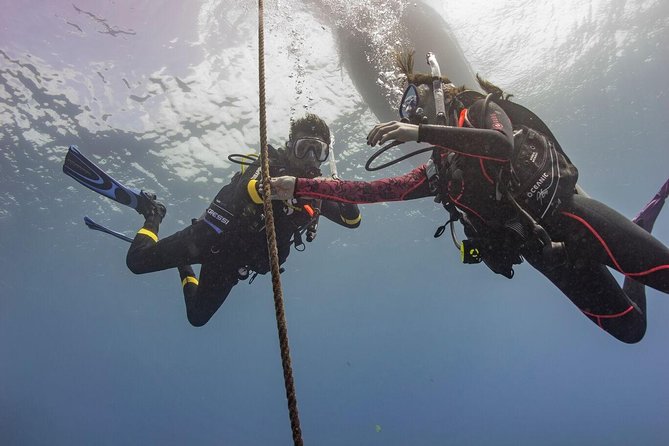
The final training day includes two open-water sessions, scheduled from about 8:30 a.m. until 1 p.m. This is the part most people are waiting for, but it works best when you treat it as a practical lesson rather than a sightseeing trip.
You will use the skills learned in confined water while managing real conditions. The instructor remains responsible for the training structure, safety procedures, and depth limits. You should expect time to complete required exercises as well as time to look around underwater.
The course description does not promise a particular reef, wreck, animal, or visibility level. That is a good reason to keep your expectations flexible. Sri Lankan sea conditions can change, and the activity can be rescheduled if weather is poor.
The two sessions give you more than a quick introduction. You have a chance to settle down after the first ocean experience and apply the skills again. Still, the schedule is compact. If you need extra time to feel comfortable, tell your instructor early rather than quietly struggling.
The course feedback repeatedly emphasizes feeling safe, having fun, and receiving personal help in the water. That combination is valuable for a first certification. You want firm safety standards, but you also need an instructor who can explain a skill in another way when the first explanation does not work.
More Scuba Diving in Sri Lanka
- Fun Dives For Certified Divers
★ 5.0 · 44 reviews - Fun Dives For Certified Divers
★ 5.0 · 30 reviews - Discover SCUBA Diving in Beautiful Unawatuna Bay
★ 5.0 · 30 reviews - Fun Dives For Certified Divers
★ 5.0 · 22 reviews
What the PADI Scuba Diver certificate allows
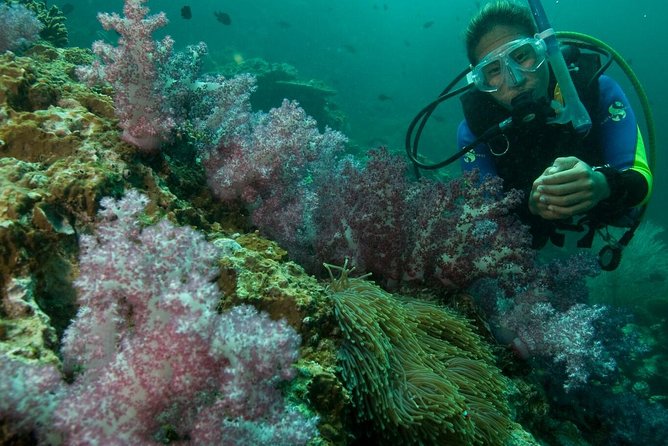
This is not the same qualification as PADI Open Water Diver. The Scuba Diver certificate allows you to descend to a maximum of 12 meters, but only when accompanied by a PADI Professional.
That restriction is the central tradeoff. You receive a recognized first certification in less time, but you cannot use it as an independent scuba qualification with a buddy.
If your aim is to join normal recreational scuba outings independently, the Open Water Diver course is the better choice. That course allows you to go to 18 meters with a buddy, subject to the usual conditions and operator requirements.
The Scuba Diver course makes more sense if you have limited holiday time, want a first step before committing to the full course, or know you will only scuba with a professional guide. It can also suit someone who wants structured exposure to scuba but does not yet feel ready for the full Open Water program.
Be honest about your goal. The shorter course may look attractive because it saves time, but upgrading later can involve more training and cost. Ask Divinguru how your completed sections can be applied if you later decide to finish the Open Water certification.
Equipment, transport, and what is not covered
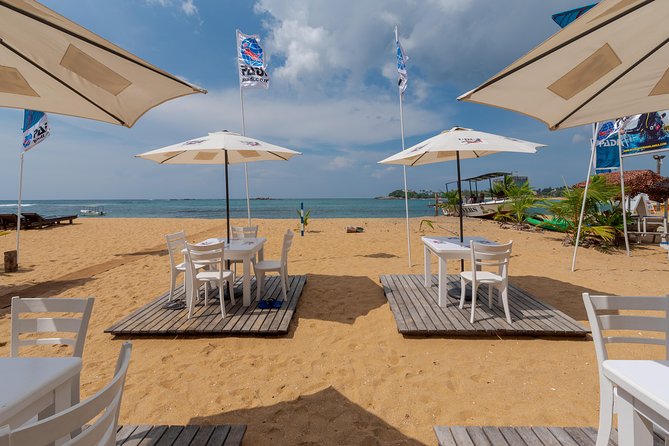
The course includes use of scuba equipment. That removes one major complication for a beginner, since you do not need to arrive with your own regulator, tank, mask, fins, or other standard gear.
Private transportation is also listed as included, along with bottled water, coffee or tea, and snacks. These are small details, but they make a long training morning easier. You will be concentrating on breathing and skills, so having water and a light snack available is useful.
Lunch is not included. Plan for that, especially since the ocean sessions finish around 1 p.m. The activity ends back at the meeting point, so you can arrange lunch afterward in the Unawatuna area.
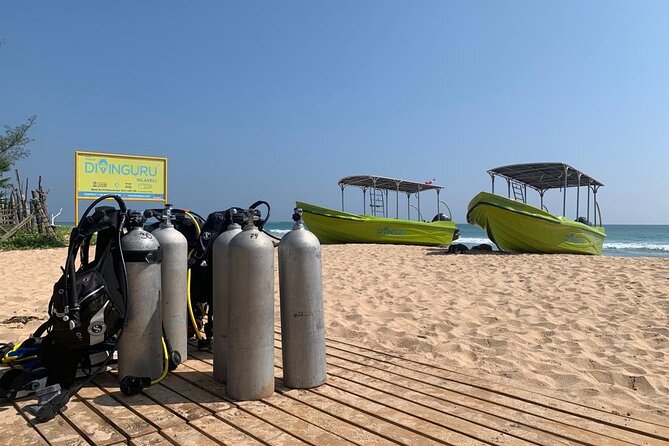
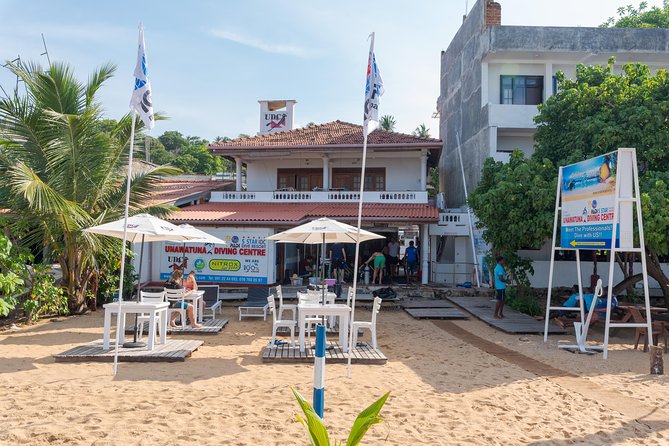
The stated start and end point is DIVINGURU Unawatuna, PADI 5 Star IDC Dive Resort, S-36133294 Matara Road, Unawatuna 80600, Sri Lanka. Pickup is offered, but the information also says to meet at the resort. Confirm the pickup area and timing rather than assuming transport will collect you from any hotel.
There is another location inconsistency worth taking seriously. The general tour summary names Negombo, while the detailed meeting point is in Unawatuna, near Matara Road. These are not the same base. Confirm that your booking is for Unawatuna before arranging accommodation or transport.
Is $240.23 a fair price?
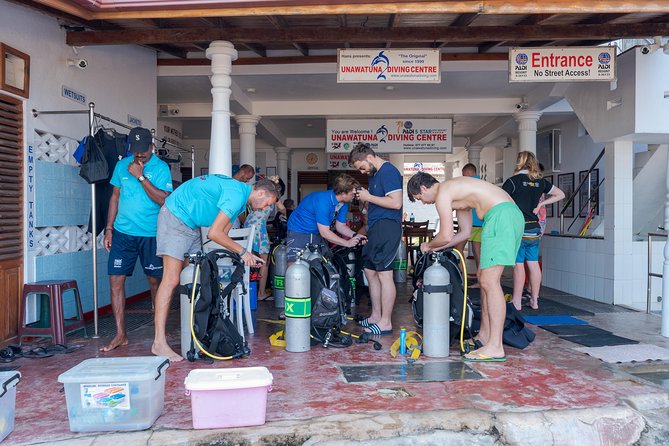
At $240.23 per person, the course is not a cheap casual activity. It is a training program with instruction, equipment, transport, refreshments, confined-water practice, and two ocean sessions.
The value depends on what you want from it. If you simply want to try breathing underwater once, a short introductory session may cost less and take less time. If you want a real first certification, this course gives you a more structured start and a safety foundation.
Remember to add the separate 70 euro PADI charge. That changes the final price considerably, and you should include it in your budget from the beginning. Lunch is also extra.
The maximum class size of eight helps support the price. A small group should make it easier to ask questions and receive corrections, although the actual amount of personal attention depends on how many people attend your date and how many instructors are assigned.
For a person who plans to continue with scuba, the Open Water course may offer better long-term value despite requiring more time. For someone with only two or three days available, this shorter certificate can be a sensible compromise.
Who will enjoy this course most?
You should consider this course if you have always wanted to try scuba but prefer a proper lesson to a quick demonstration. It suits people with a moderate level of physical fitness who are comfortable following instructions and spending time in the water.
It also works well for solo visitors. The school has experience welcoming individual learners, and the small group limit can make it easier to meet other people without being placed in a large class.
You should choose the course only if you understand the 12-meter limit and the requirement to remain with a PADI Professional. If you want to plan independent scuba outings with a buddy, book the Open Water Diver course instead.
The course may not suit anyone seeking a completely relaxed morning with no academic work. You will study, practice skills, and complete a certification process. The fun comes from learning to manage the equipment and becoming more comfortable underwater.
A moderate fitness level is required. The supplied information does not give a detailed medical screening policy, so ask the operator about health requirements before booking if you have a medical concern.
Practical booking advice for Unawatuna
Confirm four things before you commit:
- Your actual meeting point is Unawatuna, not Negombo.
- The extra 70 euro PADI fee applies to your Scuba Diver certification and manual.
- Pickup is available from your accommodation or location.
- Your chosen dates have enough participants and suitable weather.
Confirmation is normally provided at booking. If you book within one day of departure, confirmation may arrive later and remains subject to availability.
The cancellation policy is straightforward. You can receive a full refund if you cancel at least 24 hours before the local start time. Cancellations or changes made inside that window are not accepted for a refund. Poor weather or failure to reach the required minimum number of participants can lead to a different date, another experience, or a full refund.
Should you book the Divinguru course?
Book it if you want a genuine first scuba qualification, have two to three days available, and are comfortable staying with a professional to a maximum of 12 meters. The course has a sensible learning sequence, a small maximum group, named instructors associated with patient teaching, and useful inclusions such as equipment and private transport.
I would not book it without first clearing up the Negombo versus Unawatuna location and the 70 euro certification charge. I would also compare it with the Open Water Diver course if you already know you want independent scuba access.
For a cautious beginner, this is a practical starting point. For a committed future scuba enthusiast, it may be smarter to take the longer Open Water course now and gain the 18-meter buddy qualification in one program.
FAQ
How long does the PADI Scuba Diver course take?
The course takes about two to three days. The schedule includes roughly half a day of theory, half a day of confined-water practice, and one day with two ocean sessions from about 8:30 a.m. to 1 p.m.
How deep can I go with the PADI Scuba Diver certification?
You may go to a maximum depth of 12 meters, and you must be accompanied by a PADI Professional.
Is the PADI fee included in the course price?
No. The PADI manual and certification charge of 70 euros is separate from the course fee. Confirm the exact charge before booking because one note refers to an AOWD course even though this experience is for the PADI Scuba Diver certification.
Is scuba equipment provided?
Yes. Use of scuba equipment is included in the course price.
Is lunch included?
No. Lunch is not included. Bottled water, coffee or tea, and snacks are included.
Where does the course start and end?
The stated meeting point is Divinguru Unawatuna, PADI 5 Star IDC Dive Resort, S-36133294 Matara Road, Unawatuna 80600, Sri Lanka. The activity ends back at the meeting point. Pickup is offered, but you should confirm the exact pickup details.
Newest dives added in Sri Lanka
- 3 Hour Guided Scuba Diving in Trincomalee★ 5.0 · 2 reviews
- Scuba Diving For Beginners★ 5.0 · 18 reviews
- Scuba Diving For Beginners★ 5.0 · 10 reviews
- PADI Advanced Open Water Diver Course★ 5.0 · 7 reviews
- PADI Rescue Diver★ 5.0 · 2 reviews
- Scuba Diving in Kalpitiya★ 5.0 · 2 reviews
- Scuba Diving in Unawatuna★ 5.0 · 12 reviews
- Scuba Diving in Mirissa★ 5.0 · 12 reviews
PADI Courses & Certification, compared.
Tossa de Mar: PADI Discovery Scuba Diving in Costa Brava
Read our review →
Full-Day Beginner Scuba Course with Private Tuition, Racha Yai
Read our review →
Heraklion: Beginner Scuba Diving Lesson with PADI Instructor
Read our review →
Discover Scuba Diving with No Certification in St Thomas
Read our review →
Try Dive – PADI Discover Scuba Diving in Tenerife
Read our review →
Browse the lists this dive appears in