
Reviewed · SCUBA DIVING
Tokyo: Japanese Experiece Dinner with Diving Ama Performance
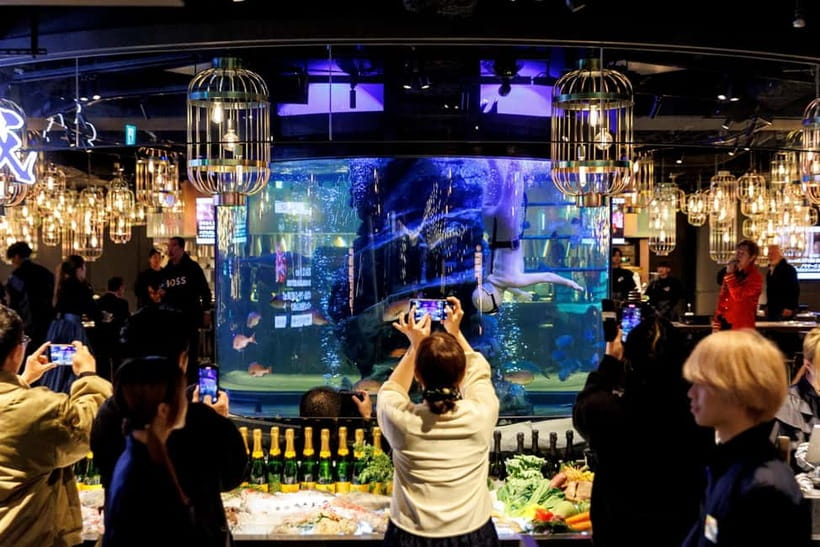
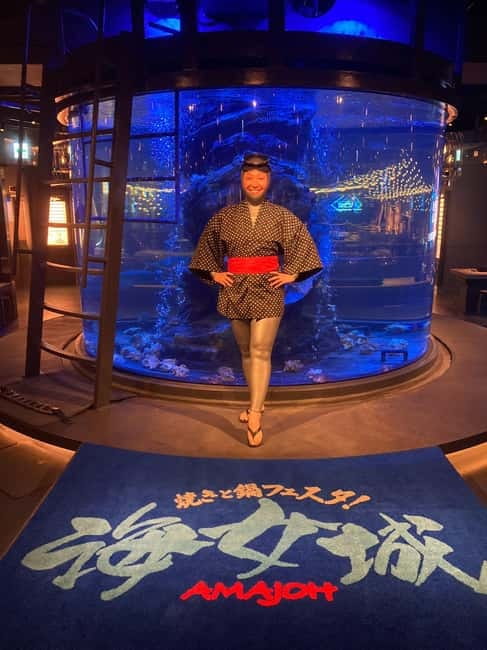
The main event here is an Ama fishing performance staged inside a restaurant, with the action taking place beside a 20-ton aquarium. Ama are traditional Japanese women divers who gather seafood by hand, and this culture reaches back more than 2,000 years.
I like two things right away: you get a proper meal rather than a short cultural demonstration, and the one-person hotpot lets you choose ingredients and broth. The blue aquarium light also gives the room a memorable setting. The catch is finding the entrance. It is in a basement, and the building can be hard to identify, even for people nearby.
Key points
- A 20-ton aquarium forms the stage: Seating faces the tank, so the performance is part of the meal rather than a separate show.
- Ama culture takes center place: The presentation introduces a fishing tradition with more than 2,000 years of history.
- Your hotpot can be personalized: Choose from seafood, black wagyu, shabu-shabu, sukiyaki, grilled seafood, or wagyu yakiniku.
- The food and show fit into two hours: This works well before or after an evening around Shimbashi.
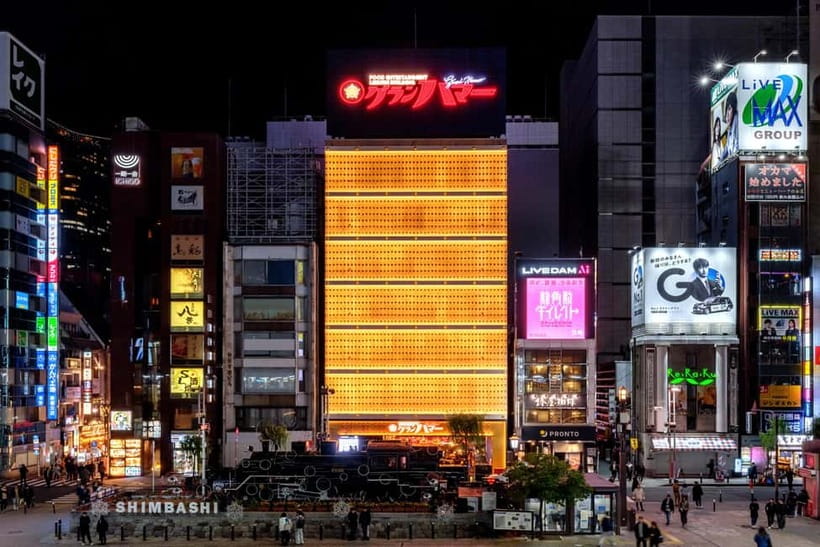
- The meeting point needs care: Find Grandhammer B1F, AMAJOH, one minute from Shimbashi Station’s West Exit 7.
- Drinks are extra: Food, the performance, tax, and service are included, but drinks require a separate cash payment.
A Restaurant Where the Aquarium Takes the Stage
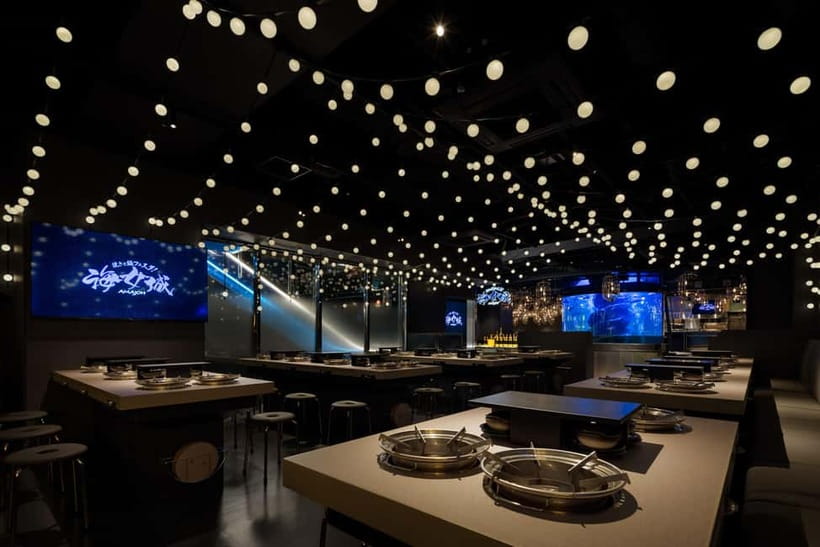
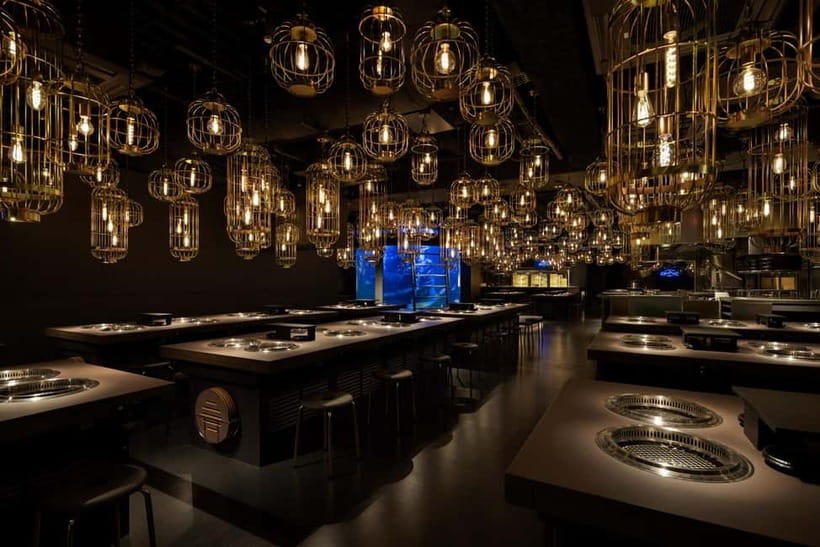
AMAJOH is not simply a restaurant with a fish tank in the corner. The aquarium is the room’s central feature, and the seating is arranged around it so you can watch the Ama presentation while eating.
The tank holds 20 tons of water, a substantial size for an indoor dining room. Blue light from the aquarium mixes with warmer lighting around the restaurant, creating a theatrical mood. If you like dining rooms with a strong sense of place, this setting is one of the experience’s best reasons to book.
The performance presents Ama fishing as a living cultural practice. These divers are connected to coastal communities and the work of gathering seafood from the sea. The restaurant’s purpose is to bring that tradition closer to people in Tokyo, where a meal and a cultural display can happen in the same room.
You should keep your expectations in the right place. This is not a visit to a coastal fishing village, and it is not a full-day cultural lesson. It is a compact stage presentation during dinner. Still, the setting gives the tradition more weight than a standard restaurant performance because the aquarium provides a visual link to the sea.
Other dives divers compare in Japan:
What the Two-Hour Visit Feels Like
The activity lasts about two hours. That gives you enough time to settle in, see the Ama performance, and eat at an unhurried pace, though the exact order of the meal and show can vary.
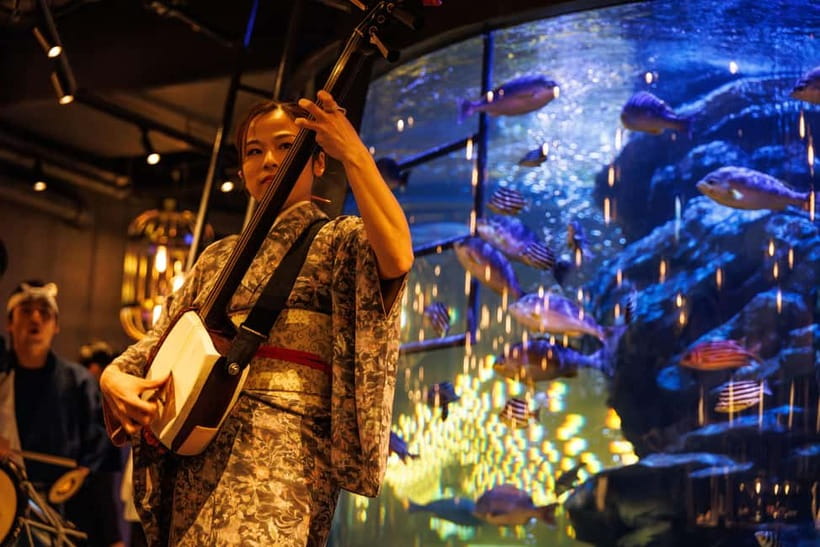
The performance is the cultural centerpiece. You watch the Ama demonstration in the aquarium area, then continue with your meal in the same setting. The arrangement keeps you close to the action instead of sending you from one part of Tokyo to another.
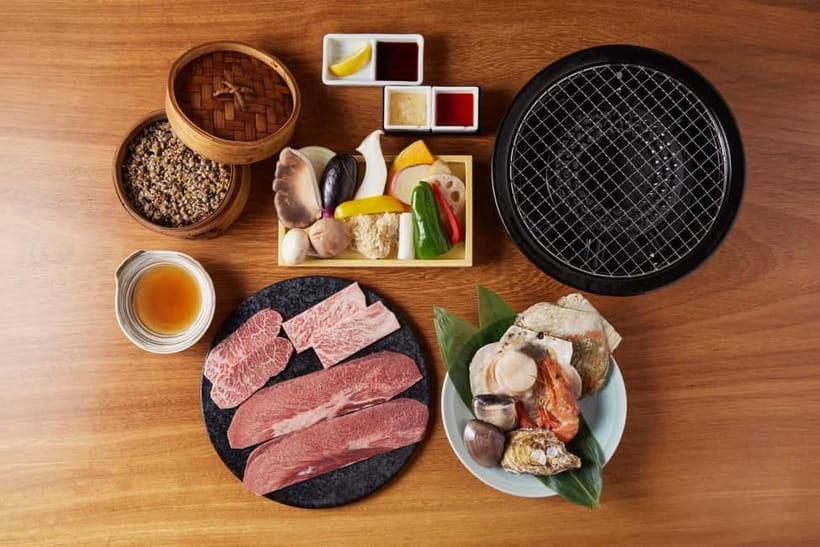
The food portion is built around a personal hotpot. This matters because you do not have to share one large pot with an entire table. Your choices can reflect your taste, from a meat-focused meal with black wagyu to a seafood-based pot.
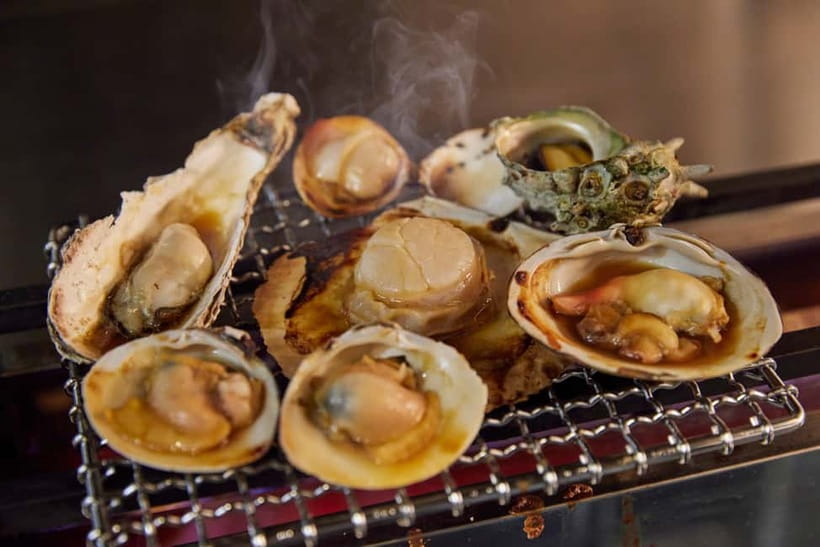
Some options are cooked in the pot, while others can be prepared as grilled dishes. The choices listed include shabu-shabu, sukiyaki, seafood hotpot, wagyu yakiniku, and grilled seafood. If you enjoy Japanese food but want control over the ingredients, this format is more flexible than a fixed set meal.
The experience provider is Hamakura-style. No individual guide name is provided, so do not book this expecting a named English-speaking host. The activity information also does not promise interpretation in a particular language.
Ama Fishing Culture, Explained Through a Meal
The Ama tradition is the reason to choose this experience instead of an ordinary hotpot restaurant. Ama communities have practiced this form of fishing for more than 2,000 years, making it one of Japan’s long-running links between food and local coastal life.
The presentation gives you a direct visual introduction. You see the diver culture represented in the aquarium rather than only reading about it on a menu or hearing a short speech. That can help younger visitors and anyone who learns best by watching.
The broader idea is also worthwhile. Seafood reaches Tokyo through long supply chains, and diners often see only the finished dish. This restaurant tries to connect urban dining with the people and regions associated with Ama fishing. The cultural message is simple: food has a place, a method, and a human tradition behind it.
You will not get a full account of every Ama community or a detailed lecture on fishing methods from the information provided. For that reason, I would treat the performance as an introduction, not a complete study of the tradition. If you want more context, make a note of questions before you arrive and ask the staff if language allows.
Building Your Hotpot: Seafood, Wagyu, and Broth Choices
The meal is included in the price, and the menu structure gives you useful control. You can select the ingredients and broth for your hotpot, with seafood and premium black wagyu among the headline choices.
Black wagyu adds a special-occasion feel. If you prefer a lighter meal, fresh seafood may be the better choice. The range also lets people at the same table choose different styles, which is helpful when one person wants shabu-shabu and another prefers sukiyaki.
Here is how the listed styles differ in practical terms:
- Shabu-shabu: A gentle hotpot approach that suits thinly prepared ingredients and a lighter meal.
- Sukiyaki: A sweeter, more seasoned style for diners who want a stronger Japanese flavor.
- Seafood hotpot: The natural pick if you want the meal to stay focused on the sea.
- Wagyu yakiniku: A grilled beef option rather than a broth-based dish.
- Grilled seafood: A good alternative if you like seafood but do not want it simmered.
The supplied details do not list exact cuts, portion sizes, broth names, or a full menu. I would avoid choosing this activity based on one particular ingredient unless you confirm it when booking. The important advantage is the ability to select a general style and main ingredients.
The format also helps with pacing. A personal pot gives you something to do during the meal, and the cooking becomes part of the experience. It is more interactive than receiving a finished plate, though it may feel less relaxed if you want a meal that requires no attention.
Another way to get in the water in Japan:
- From Naha Scuba Diving Trip in Kerama(for certified divers)
★ 5.0 · 46 reviews - EDOCCO Tea House–A Quick Dive into Japanese Traditional Culture
★ 5.0 · 34 reviews - Blue Cave Introductory Dive–Private Guide, Boat Tour&Free Photos
★ 5.0 · 34 reviews - Okinawa: Scuba Diving Tour with Wagyu Lunch and English guide
★ 5.0 · 32 reviews
The Aquarium Atmosphere and Seating
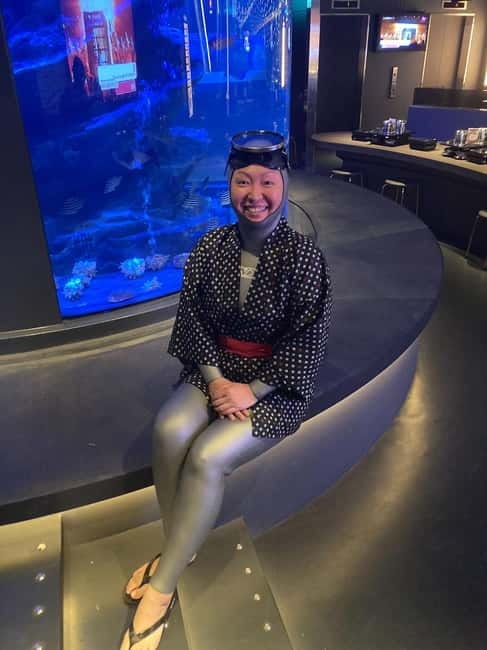
The room’s design will shape your impression as much as the food. Blue light from the aquarium creates a cool, unusual backdrop, while the warmer lamps keep the restaurant from feeling like a public aquarium exhibit.
The seating is arranged to provide a view of the tank. That is important because your enjoyment depends partly on where you sit and how clearly you can see the presentation. The activity is designed around the aquarium, so the performance should be easier to follow than it would be in a room where the tank is off to one side.
At the same time, one piece of direct feedback described the atmosphere as stuffy. That is worth taking seriously, especially if you dislike crowded or enclosed rooms. The space is in a basement, and the combination of indoor seating, warm lighting, and aquarium equipment may not suit everyone.
Comfortable clothing is recommended. You are sitting for two hours, eating at a personal hotpot, and spending time in a lower-level restaurant. Loose, practical clothes make more sense than formal outfits.
Finding AMAJOH Near Shimbashi Station
The restaurant is listed as one minute from Shimbashi Station, at West Exit 7. The nearby landmark is Shimbashi SL Square, and the address within the building is Grandhammer B1F, AMAJOH.
The short walking distance is useful, but do not assume the entrance will be obvious. The restaurant is in a basement and shares space within a larger co-op restaurant setting. One family lost time walking around the same block in the rain because the location was difficult to identify, and even local people were not familiar with the venue.
My advice is simple: leave extra time, use West Exit 7, and look specifically for Grandhammer B1F rather than only searching for a large AMAJOH sign at street level. If you are arriving with children, luggage, or a tight dinner schedule, this small buffer matters.
This is a central Tokyo location, so the activity fits neatly into an evening around Shimbashi. You can pair it with nearby sightseeing or use it as a planned dinner stop. The meeting point is convenient once you know exactly where to look, but the final approach may be the least polished part of the outing.
Is the $88 Price Fair?
At $88 per person, the value depends on what you want from dinner. You are paying for a two-hour meal, the Ama performance, fresh seafood, premium black wagyu options, tax, and service. Drinks are not included and must be paid for separately in cash.
For a standard hotpot meal, $88 would be a serious price. The added value comes from the cultural presentation and the unusual aquarium setting. If you would otherwise pay for a Tokyo dinner and a separate cultural activity, combining them can make the price easier to justify.
The cost is also more reasonable for someone who wants premium ingredients. Black wagyu and seafood can push up the price of a meal on their own, though the available details do not specify the exact portion sizes or wagyu cut.
I would not choose this solely as a bargain meal. The strongest case is the combination of food, live Ama presentation, and a dining room built around the aquarium. The weaker case is for someone who only wants a large amount of food or a quiet, low-cost dinner.
Who Will Enjoy This Most
I think this experience suits you best if you want a distinct Tokyo evening rather than another restaurant meal. It works for couples, families, and small groups who enjoy food with a visual or cultural element.
Families should consider the arrival issue carefully. The performance and aquarium can make the meal more engaging for children, but the difficult entrance and possible stuffy atmosphere may add stress, particularly in poor weather.
Food lovers have a good reason to book because the meal is not locked into one preparation. You can lean toward seafood, choose black wagyu, or pick a cooking style that suits you. The personal pot also gives diners more control than a communal course.
This is less suitable if you need detailed explanations in English. The activity information does not confirm multilingual guiding, and one direct account described the experience as difficult for people who do not speak Japanese. It is also not the best match if the scheduled starting time is awkward for you. A 5 p.m. start was specifically described as inconvenient by one person, so check the available times before paying.
The venue is wheelchair accessible, which makes it a practical option for people who need step-free access. You should still allow time to locate the correct basement entrance.
Booking Advice Before You Go
The activity has a current rating of 4.2 from five pieces of booking feedback. The strongest praise centers on the performer, the service, and the food. Those are the parts I would place most weight on when deciding.
The main concerns are also clear: the entrance can be hard to locate, the basement setting may feel stuffy, and language support is not guaranteed. None of these issues cancels out the appeal, but they affect how smoothly the evening will run.
You can cancel up to 24 hours in advance for a full refund, and the reserve-now, pay-later option lets you hold a place without paying immediately. Those terms are useful if your Tokyo plans are still shifting.
Plan to arrive early enough to find Grandhammer B1F without rushing. Wear comfortable clothes, bring cash for drinks, and confirm the starting time. Those three small steps address most of the practical problems attached to the experience.
Should You Book the Ama Performance Dinner?
Book it if you want a memorable meal built around Japanese coastal culture, especially if the aquarium setting and Ama tradition interest you. The combination of a live presentation, customizable hotpot, fresh seafood, and black wagyu is unusual enough to justify a place in a Tokyo itinerary.
Skip it if you want a quiet restaurant, guaranteed language support, or a simple entrance you can find without preparation. At $88, the experience needs to deliver more than dinner, and its value depends on your interest in the performance.
For me, the best reason to choose it is the connection between the meal and the Ama tradition. Just arrive early, follow the Shimbashi directions closely, and treat the presentation as a short cultural introduction rather than a full history lesson.
FAQ
Where is the Ama dinner located?
AMAJOH is at Grandhammer B1F, one minute from Shimbashi Station at West Exit 7, directly in front of Shimbashi SL Square.
How long does the experience last?
The activity lasts two hours.
What does the price include?
The price includes food, the Ama performance, consumption tax, and the service fee.
Are drinks included?
No. Drinks are separate and require a cash payment.
What food choices are available?
You can choose ingredients and broth for a personal hotpot. Listed options include fresh seafood, premium black wagyu, shabu-shabu, sukiyaki, wagyu yakiniku, grilled seafood, and seafood hotpot.
Is the activity wheelchair accessible?
Yes, the activity is listed as wheelchair accessible.
What should I bring?
Wear comfortable clothes. It is also wise to bring cash for drinks and allow extra time to locate the basement meeting point.
Newest dives added in Japan
- Shared Scuba Diving Trip in Kushimoto★ 5.0 · 2 reviews
- Tokyo Ikebukuro Morning Tour Dive into Japanese Culture★ 5.0 · 5 reviews
- EDOCCO Tea House–A Quick Dive into Japanese Traditional Culture★ 5.0 · 34 reviews
- Tokyo Ikebukuro Evening Tour Dive into Japanese culture★ 5.0 · 15 reviews
- Deep Dive into the World of Daruma Dolls★ 5.0 · 4 reviews
- Deep Dive: Osaka Food Markets from Local to Luxurious!★ 5.0 · 31 reviews
- Boat entry diving at the Blue Cave in Onna Village, Okinawa!★ 5.0 · 4 reviews
- Blue Cave Introductory Dive–Private Guide, Boat Tour&Free Photos★ 5.0 · 34 reviews
Scuba Diving, compared.
Great Barrier Reef Snorkeling and Diving Cruise from Cairns
Read our review →
First-Time Scuba Diving in Honolulu + Free Videos
Read our review →
Diving Between Tectonic Plates – Meet on Location
Read our review →
Ocean Freedom Great Barrier Reef Luxury Snorkel and Dive Cruise
Read our review →
Beginner Scuba Diving with Turtles and Videos, San Juan
Read our review →
Your First Scuba Diving Experience in Turtle Area
Read our review →
Browse the lists this dive appears in