
Reviewed · PADI COURSES & CERTIFICATION
PADI Scuba Diver Course
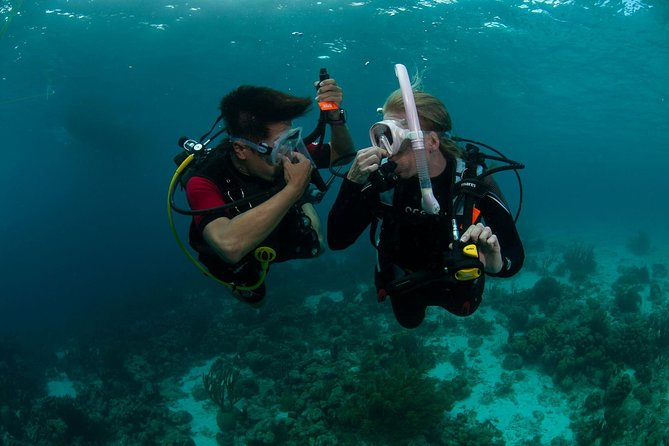
Sri Lanka’s east coast gives this beginner course a fine setting: you learn the basics on land, practice in confined water, then head into the sea for two supervised sessions. Divinguru Nilaveli keeps the group small, with no more than eight people, and instructors such as Ellie, Norbert, Nico, and Yannis are available depending on the schedule.
I like the clear progression from theory to practice, and I like that equipment, private transport, snacks, tea, coffee, and bottled water are included. The main catch is important: the 70 euro PADI charge is extra, covering the manual and certification costs. Also, this is a limited certification that requires you to stay with a PADI professional.
Key points to know before booking
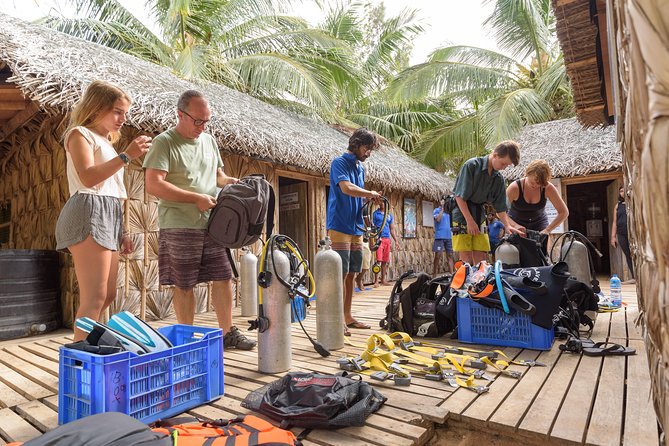
- Two to three days: Half a day covers theory, half a day covers confined-water skills, and one morning includes two sea sessions.
- Maximum depth of 12 meters: You may take part only with a PADI professional.
- Not the full Open Water certificate: Choose PADI Open Water if you want to use your own buddy system to 18 meters.
- Small group size: The course accepts a maximum of eight people.
- Equipment and transport included: You also receive snacks, bottled water, tea, and coffee.
- Extra 70 euro PADI fee: This covers the manual and certification card and is not part of the advertised price.
- Strong safety focus: The instructors are repeatedly praised for patience, calm explanations, and helping beginners feel at ease.
What this Nilaveli course actually teaches
The PADI Scuba Diver course is the shorter, more limited part of the PADI Open Water program. It is a first qualification, but it is not the full certification most independent recreational divers seek.
You learn the first three theory sections of the Open Water course, without the full Open Water exam. You then complete the first three confined-water sessions, followed by two open-water sessions in the sea. The structure is sensible for a beginner because each stage builds on the last.
The qualification allows you to go to a maximum depth of 12 meters, but only alongside a PADI professional. You do not qualify to plan and conduct independent outings with another certified friend.
That distinction matters. If you want a gentle introduction before deciding if scuba suits you, this course offers a manageable route. If your goal is to travel with a buddy and arrange ordinary recreational outings on your own, book the PADI Open Water Diver course instead. That qualification allows buddy-based outings to 18 meters, subject to the usual certification and safety rules.
More PADI Courses in the world
- Barcelona: PADI Discover Scuba Diving
★ 4.7 · 1,016 reviews - PADI Open Water Diver Course
★ 5.0 · 626 reviews - Tossa de Mar: PADI Discovery Scuba Diving in Costa Brava
★ 4.7 · 392 reviews
A practical two to three day schedule
The schedule takes roughly two to three days, although the exact pace can vary. You should expect a half day of classroom work, a half day of confined-water instruction, and one morning at sea.
Half a day of theory
The course begins with the first three sections of the PADI Open Water theory program. You learn the ideas needed to use scuba equipment safely and understand what happens to your body underwater.
There is no Open Water exam for this shorter course. That can make the first step less intimidating, especially if you are new to scuba and still deciding if you want a full qualification.
Still, do not treat the classroom portion as filler. You need to listen carefully, ask questions, and understand the basic procedures before entering the water. The instructors are described as patient and clear, with Ellie and Norbert receiving particular praise for their calm teaching style.
Half a day in confined water
The next stage moves from explanation to practice. You work through the first three confined-water sessions from the full Open Water course.
This is where you get used to breathing through a regulator, wearing the equipment, and managing yourself in the water. You also have time to repeat skills and ask for help before the sea sessions begin.
For a first-time participant, this is likely the most useful part of the course. The sea can feel busy and unfamiliar, while confined water gives you room to concentrate on one task at a time. The training approach also lets your instructor see how comfortable you are before moving ahead.
Past course participants have singled out the instructors’ patience and calm manner. That matters more here than flashy talk. A relaxed instructor can help you slow your breathing, fix a small equipment issue, or repeat a skill without making you feel rushed.
More Scuba Diving in the world
- Great Barrier Reef Snorkeling and Diving Cruise from Cairns
★ 4.5 · 3,714 reviews - First-Time Scuba Diving in Honolulu + Free Videos
★ 5.0 · 3,123 reviews - Oahu Shark Dive
★ 5.0 · 2,903 reviews - Silfra: Diving Between Tectonic Plates – Meet on Location
★ 5.0 · 2,139 reviews
One morning with two sea sessions
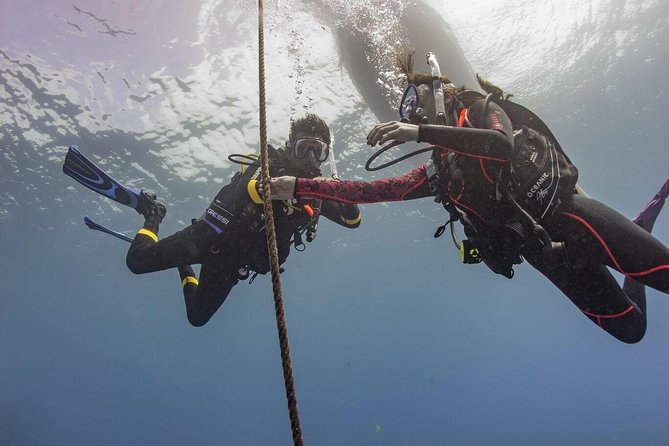
The final scheduled stage runs from about 8:30 a.m. until 1 p.m. and includes two open-water sessions.
This is the part most people are waiting for, but it is also where you should keep your expectations sensible. Your instructor remains responsible for the group, and you are still completing a beginner qualification rather than taking an independent recreational outing.
Nilaveli is known through this operation for varied underwater sites, marine life, corals, stingrays, moray eels, turtles, and wrecks. The exact sights depend on the site, weather, sea conditions, and visibility on the day, so no particular animal should be treated as guaranteed.
The two sessions give you a chance to use your new skills in a real setting rather than simply ticking off classroom tasks. You can expect the morning to include equipment preparation, instructions before entering the water, the session itself, and time to return and reset between outings.
Why the small group matters
The maximum group size is eight people. That is not a private lesson, but it is a useful limit for a beginner course.
A smaller group gives the instructor a better chance to see how each person is coping. It also reduces the feeling of being lost in a large class, which can matter when you are learning breathing control or dealing with unfamiliar equipment.
The operation has received strong praise for its instructors and equipment. Ellie is repeatedly described as patient and encouraging, while Norbert is praised for calm explanations and a steady manner underwater. Nico and Yannis are also named as instructors connected with successful courses and advanced training.
You should still ask who will teach your group when you book. The instructor roster can change, and the supplied details do not promise a particular person.
Equipment, transport, and what is included
The course price is listed at $232.57 per person. Use of scuba equipment is included, along with private transportation, bottled water, coffee or tea, and snacks.
That is a useful package for a beginner because you do not need to arrive with your own regulator, cylinder, or other scuba kit. It also keeps the day simpler if you are staying outside easy walking distance of the centre.
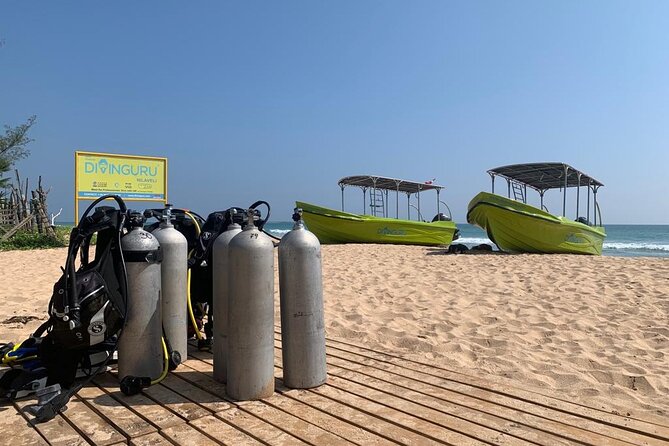
Pickup is offered, but the stated meeting point is Divinguru Nilaveli, PADI 5 Star IDC Dive Resort, S-23912 Ward No. 3, 9th Mile Post, Nilaveli 31010, Sri Lanka. The activity ends back at this meeting point.
Lunch is not included. The sea sessions finish around 1 p.m., so plan for your own meal afterward or confirm the day’s arrangements before setting out. Snacks and drinks help during the course, but they are not a substitute for lunch.
The centre is near public transportation, although private transport is part of the package. If you are staying in the Nilaveli area, pickup may be especially convenient. Confirm the pickup details after booking rather than assuming every nearby address is covered.
The extra 70 euro cost is easy to miss
The advertised price does not include the PADI fee. You must budget an additional 70 euros for the PADI Scuba Diver manual and certification card.
This is the most important price detail. At $232.57, the course is not simply a one-day tryout. It includes several teaching stages, equipment, transport, refreshments, and two sea sessions. The value looks better if you want a recognized first certification and plan to continue with scuba later.
Your final cost is higher than the headline figure once the manual and card are added. Ask the centre how the 70 euro payment is handled and confirm that you understand what is included before the course starts.
You should also compare this total with the price of the full PADI Open Water course. If you already know you want to scuba regularly, paying for the shorter qualification first may not be the most efficient route. If you prefer to start slowly, the Scuba Diver option can make sense.
What makes the underwater sessions worthwhile
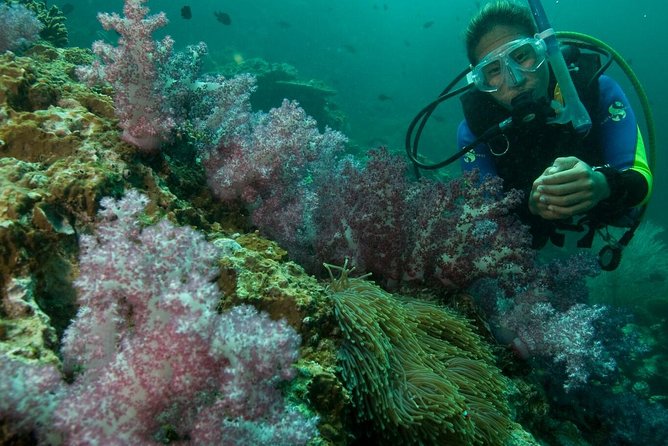
The Nilaveli area offers more than a basic training setting. The centre works around sites where you might see colorful fish, coral, stingrays, moray eels, turtles, and wrecks.
That variety gives the final stage some real character. You are not only practicing skills in a controlled setting. You are also beginning to understand how underwater sites feel, how to watch marine life without chasing it, and how to keep your attention on both safety and the surroundings.
The word might is important here. Marine sightings depend on conditions, and the supplied details do not promise a specific site or animal. Weather can also force a change of date or cancellation.
You will get more from the sea sessions if you treat them as training with an enjoyable setting rather than as a wildlife guarantee. Stay close to your instructor, follow the briefing, and focus on steady breathing and good control.
Safety and confidence for first-timers
The strongest pattern in the course feedback is the attention given to beginner confidence. Instructors are praised for explaining procedures clearly, staying calm underwater, and helping people feel safe.
That is especially valuable if you have never used scuba equipment. The first breaths through a regulator can feel strange, and minor uncertainty can grow quickly if nobody gives clear guidance.
The course is not physically extreme, but a moderate fitness level is required. You should be comfortable taking part in several water-based sessions and handling the basic effort involved in wearing scuba equipment.
If you feel anxious, tell your instructor early. The structure allows skills to be repeated in confined water before you move to the sea. This is one of the better reasons to choose a course with a small maximum group rather than a large introductory session.
Who should choose Scuba Diver instead of Open Water?
Choose this course if you want a shorter first step, prefer to learn at a measured pace, or want to test your comfort with scuba before committing to full Open Water certification.
It also suits people who expect to take future sessions with a professional guide. The 12-meter limit and professional supervision are not major problems if that is how you plan to use the qualification.
Choose PADI Open Water instead if you want to arrange outings with a buddy, use a maximum depth of 18 meters, and become a more independent recreational diver. The Scuba Diver course is not a substitute for that full qualification.
Families and small groups may also find the setup appealing. The centre has taught young people as well as adults, and the teaching style described by past participants emphasizes patience, clear instructions, and encouragement.
Booking, weather, and cancellation details
Confirmation is normally sent at booking. If you book within one day of the scheduled start, confirmation comes as soon as possible and depends on availability.
The course requires suitable weather and a minimum number of participants. If poor weather cancels the session, you can receive a different date or a full refund. The same applies if the minimum group is not reached.
You may cancel for a full refund up to 24 hours before the start time. Cancellation or changes made less than 24 hours before the start are not refunded or accepted. The cutoff follows local Sri Lankan time.
Bring enough flexibility into your Nilaveli plans. A weather change can affect the sea sessions, and a spare day is useful if the course needs to move.
Should you book the Divinguru Scuba Diver course?
I would book this course if you want a carefully staged introduction to scuba in Nilaveli, especially if calm instruction and a small group matter to you. The combination of classroom work, confined-water practice, two sea sessions, equipment, refreshments, and transport gives you more than a quick underwater trial.
I would not book it without first understanding the limits of the certificate. You will not be an independent buddy diver afterward, and you must add the 70 euro PADI fee to the advertised price.
For a cautious beginner, the course offers a sensible first qualification and access to Nilaveli’s marine life. For someone already committed to regular scuba, compare the total cost with the full Open Water course before paying. That small bit of homework could save you time and money.
FAQ
How long does the PADI Scuba Diver course take?
The course takes approximately two to three days. It includes about half a day of theory, half a day of confined-water training, and one day with two open-water sessions.
How deep can I go after completing this course?
The PADI Scuba Diver qualification allows you to go to a maximum depth of 12 meters with a PADI professional.
Can I dive independently with a buddy after this course?
No. Independent buddy-based diving is not included in this qualification. The PADI Open Water Diver course is recommended if you want to dive with a buddy to a maximum depth of 18 meters.
Is the PADI manual and certification fee included?
No. You must pay an additional 70 euros for the PADI manual and certification card. This cost is separate from the course price.
What is included in the course price?
The course includes scuba equipment, private transportation, bottled water, coffee or tea, and snacks. Lunch is not included.
Where does the course begin and end?
The course begins at Divinguru Nilaveli, PADI 5 Star IDC Dive Resort, S-23912 Ward No. 3, 9th Mile Post, Nilaveli 31010, Sri Lanka. The activity ends back at the meeting point.
What happens if the weather is poor?
The course requires good weather. If it is canceled because of poor conditions, you will be offered a different date or a full refund.
Newest dives added in the world
- Bali: Tulamben Bay and the USAT Liberty Wreck Dive★ 4.9 · 58 reviews
- From Pattaya: Snorkeling or Beginner Scuba Diving Tour★ 4.1 · 68 reviews
- From Punta Cana: ScubaDoo, Snorkel & Glass Bottom Boat Tour★ 3.9 · 73 reviews
- Punta Cana Party Cruise with Snorkeling, Hooka Diving and Parasailing★ 4.5 · 79 reviews
- Fun Dives For Certified Divers★ 5.0 · 44 reviews
- Discover SCUBA Diving in Beautiful Unawatuna Bay★ 5.0 · 30 reviews
- Phuket Scuba Diving Maiton Private Island Small Group or Snorkel★ 5.0 · 9 reviews
- Fun Dives For Certified Divers★ 5.0 · 30 reviews
PADI Courses & Certification, compared.
Tossa de Mar: PADI Discovery Scuba Diving in Costa Brava
Read our review →
Full-Day Beginner Scuba Course with Private Tuition, Racha Yai
Read our review →
Heraklion: Beginner Scuba Diving Lesson with PADI Instructor
Read our review →
Discover Scuba Diving with No Certification in St Thomas
Read our review →
Try Dive – PADI Discover Scuba Diving in Tenerife
Read our review →
Browse the lists this dive appears in